Miss Merivale's Mistake
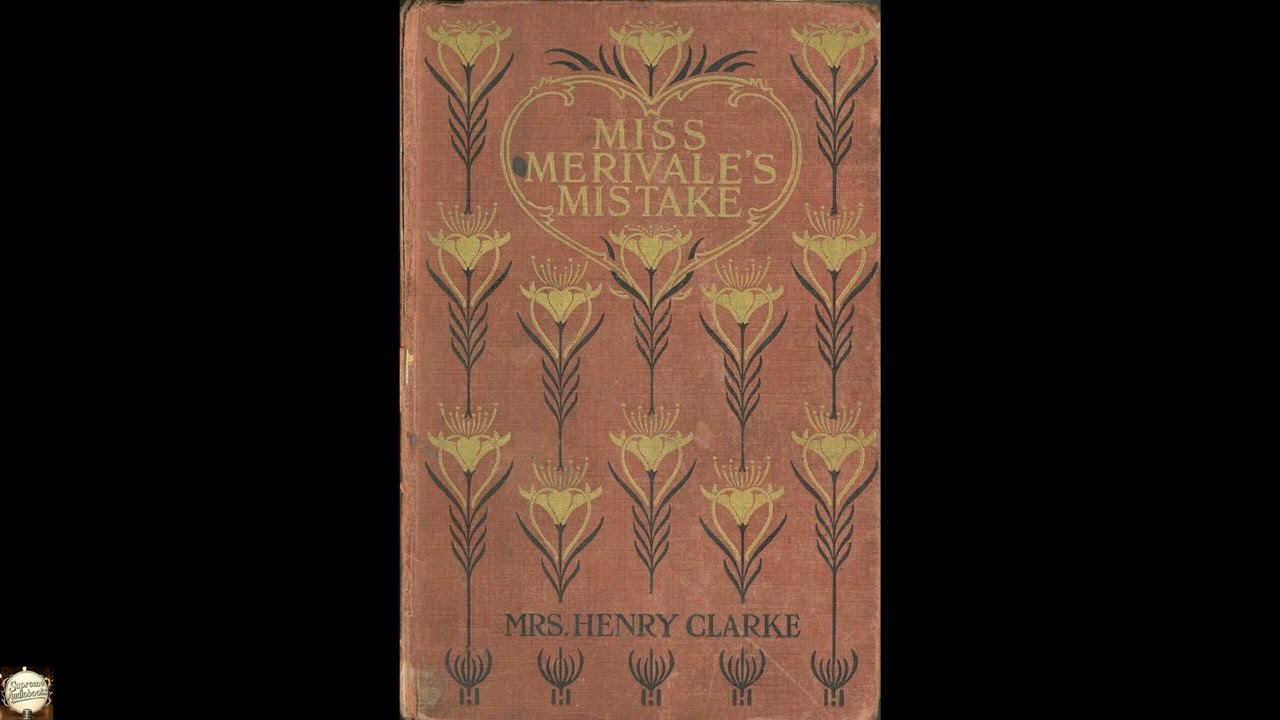
Stepping back into the gaslit drawing rooms and hushed country estates of late Victorian England, one finds "Miss Merivale's Mistake" waiting. This novel by Mrs. Henry Clarke is more than a simple period drama; it’s a penetrating study of reputation, societal judgment, and the quiet courage required to navigate a world obsessed with appearances. At its core, the book presents a seemingly minor social misstep that ripples outward, threatening to undo a young woman's standing and expose the brittle foundations of a supposedly upright community. Listeners today will find themselves drawn into a story where personal conviction clashes with public expectation, a struggle as relevant in the modern era of constant scrutiny as it was in the rigid social circles of a bygone century. The story unfolds in the idyllic-sounding but deceptively complex village of Ashworth, a place where gossip travels faster than any carriage and every action is subject to the keen observation of one's neighbors. Our protagonist is Eleanor Merivale, a woman of good birth and modest means, whose quiet life as a companion to the somewhat eccentric but kindhearted Mrs. Ashworth seems perfectly settled. Eleanor possesses an independent spirit and a keen intellect, qualities not always celebrated in a young woman of her position. Her "mistake" begins subtly, born of a genuine desire to assist a new arrival to Ashworth—a Mrs. Thorne, an enigmatic widow whose past is shrouded in whispers and whose unconventional manners immediately raise the collective eyebrow of the village doyennes. Eleanor, seeing beneath the surface, extends a hand of friendship, a gesture perceived by many as a dangerous endorsement. As Eleanor continues to defend and assist Mrs. Thorne, she finds herself increasingly isolated. Her position becomes precarious, especially when the dashing but cynical Mr. Alistair Finch arrives, ostensibly to manage his deceased uncle’s estate but clearly intent on uncovering the truth behind Ashworth’s secrets. His presence introduces a romantic tension but also intensifies the scrutiny on Eleanor, as his own reputation is not entirely above reproach. The central conflict escalates when a series of unfortunate events—a stolen heirloom, a whispered accusation, and a letter found out of place—all point a finger, directly or indirectly, back to Mrs. Thorne and, by association, to Eleanor. The arc of the story follows Eleanor’s desperate attempts to protect her friend, clear her own name, and understand the true motives of those around her, all while grappling with the possibility that her initial judgment of Mrs. Thorne might have been catastrophically flawed. The novel brilliantly builds towards a dramatic confrontation, forcing Eleanor to choose between loyalty and her own future, without revealing the ultimate resolution of her difficult choice. Mrs. Henry Clarke, born Henrietta Eleanor Clarke (née Ainsworth) in 1845, was a distinguished voice among the late Victorian novelists, though often overshadowed by her more overtly sensational contemporaries. Hailing from a respectable but not aristocratic family in Kent, her early life was marked by a keen observation of English provincial society. She married Henry Clarke, a clergyman, in 1867, and it was under his name, as was common practice for many female writers of the era, that her works found publication. Living in various rectories across the English countryside provided her with an intimate understanding of the intricate social hierarchies and moral dilemmas that animated her narratives. Her literary output, though not voluminous, consistently demonstrated a sharp wit and an empathetic understanding of human frailties. Beyond "Miss Merivale's Mistake," she is remembered for titles such as "The Rector's Daughter" (1878), a poignant study of duty and forbidden affection, and "Whispers at Cranbrook Manor" (1892), a nuanced commentary on inheritance and family secrets. Mrs. Clarke belonged to a generation of writers who, while upholding Victorian morality, subtly questioned its rigid applications, portraying characters who wrestled with conscience and societal demands. Her place in the literary tradition is that of a quiet chronicler of domestic life, a writer who, without resorting to grand statements, effectively illuminated the personal cost of societal expectation, making her a valued contributor to the tradition of social realism. "Miss Merivale's Mistake" enacts several enduring themes, most notably the destructive power of social judgment and the fragility of reputation. Eleanor's simple act of kindness toward Mrs. Thorne is immediately distorted and magnified through the lens of village gossip, illustrating how quickly a good name can be sullied by mere association and assumption. For instance, a scene where Eleanor is pointedly ignored at the local charity bazaar, her usual friendly acquaintances turning their backs, powerfully conveys the immediate and isolating consequences of societal censure. Another core theme is the struggle between personal conviction and external expectation. Eleanor frequently finds herself at odds with the "proper" behavior demanded of her. When an elder advises her to simply abandon Mrs. Thorne to protect her own standing, Eleanor's quiet refusal, rooted in her sense of justice, underscores her belief in her own moral compass despite the mounting social pressure. The book also subtly questions the nature of truth itself, showing how readily rumors and appearances can be mistaken for fact, causing irreparable harm before clarity can prevail. The publication of "Miss Merivale's Mistake" likely occurred in the late 1880s or early 1890s, a period of significant cultural and social flux in Victorian England. While the outward appearance of strict morality and decorum persisted, anxieties simmered beneath the surface. The New Woman movement was gaining traction, challenging traditional roles for women, though slowly and often with great resistance. Society was also grappling with the aftermath of industrialization, the shifting class system, and a growing questioning of established institutions. In the literary world, the novel was firmly established as the dominant form of entertainment and social commentary. There was a strong demand for stories that combined moral instruction with engaging narratives, often focusing on domestic life, social customs, and the individual's place within a complex social fabric. "Miss Merivale's Mistake" emerged from this environment as a commentary on these very anxieties—the fear of social downfall, the precariousness of female independence, and the rigid structures that often stifled genuine connection and understanding. It offered a mirror to its contemporary audience, reflecting their own unspoken fears and prejudices through Eleanor's predicament. Listening to "Miss Merivale's Mistake" as an audiobook offers a unique opportunity to immerse oneself fully in its nuanced world. The several hours of narration provide ample time for the listener to become intimately familiar with Eleanor's internal struggles and the distinct voices of Ashworth's inhabitants. A skilled narrator will undoubtedly bring out the subtle wit and understated drama of Mrs. Clarke’s prose, allowing the listener to appreciate the delicate inflections of Victorian dialogue and the precise pacing with which the mystery of Mrs. Thorne—and Eleanor’s own fate—unfurls. The narration enhances the atmosphere, transporting one directly into the drawing rooms, garden paths, and hushed chambers where reputations are made and broken, where every glance and spoken word carries weight. It's an ideal way to savor the slow burn of social tension and personal discovery, much like settling in with a good novel by the fireside, allowing the story to unfold purely through sound and imagination.
Enjoyed Miss Merivale's Mistake? A few ways to support us
Audible & Amazon links are affiliate; we may earn a small commission at no extra cost.
About this production
Human narration by a volunteer reader from LibriVox.org, the public-domain audiobook project. LibriVox volunteers record literary works whose copyright has expired in the United States, releasing the resulting recordings into the public domain.
Miss Merivale's Mistake by Mrs. Henry Clarke. The underlying text is in the U.S. public domain. We do not republish any modern copyrighted edition, translation, or commentary.
The 4K cinematic visuals accompanying this audiobook are generated by an AI image model from prompts derived from the source text. No copyrighted photos, paintings, or stock footage are used. AI generation is disclosed on every video on our YouTube channel as required by YouTube's altered/synthetic content policy.
English subtitles are transcribed from the LibriVox recording with OpenAI Whisper. Translations into the 11 other supported languages are produced by Meta's NLLB-200 neural translation model. No human translator's copyrighted translation is used.
Questions about sourcing or rights? See our DMCA & Sourcing policy or contact us.
Enjoyed this audiobook?
If you'd like to own a copy of Miss Merivale's Mistake or hear a professionally produced edition, the links below help support free audiobook production at no extra cost to you.
As an Amazon Associate we earn from qualifying purchases. Audible / print links are affiliate.