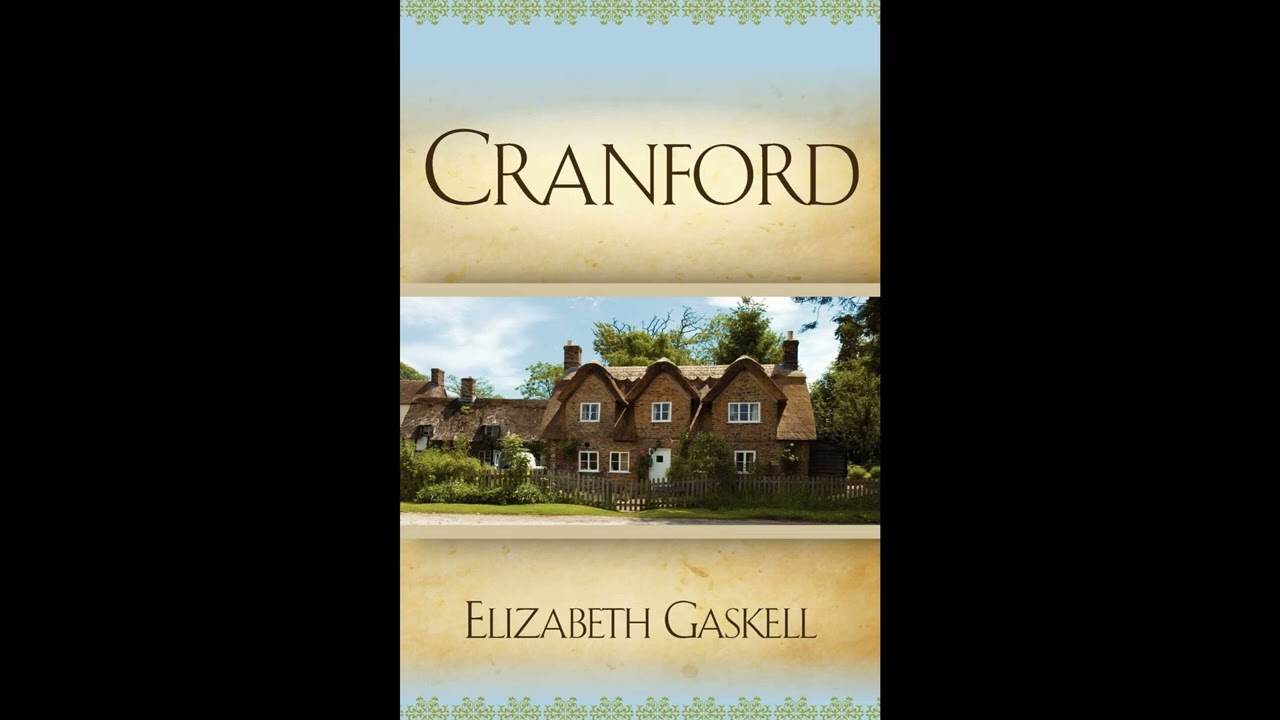
Cranford
Step into the quaint, quiet world of Cranford, a charming English village where elegant economy is a way of life, where social rituals are meticulously observed, and where the most significant events often unfold within the confines of a teacup. Elizabeth Gaskell’s beloved novel is a warm, witty, and surprisingly moving portrait of a community largely made up of gentlewomen living on reduced means, each upholding their own eccentricities and affections with grace and dignity. It is a book that offers a delightful escape into a bygone era, yet its core observations about friendship, resilience, and the quiet courage of everyday lives resonate deeply even today, providing a comforting counterbalance to our own fast-paced, often impersonal, existence. This is a story that reminds us of the profound value found in human connection and the unique beauty of finding joy and humor in life's smaller moments. The narrative unfolds through the eyes of Mary Smith, a practical young woman who frequently visits Cranford and serves as our affectionate, often amused, guide. She observes the intricate social fabric of this unique town, where ladies like the formidable Miss Deborah Jenkyns (known mostly through reputation and anecdote) and her sweet, somewhat naive younger sister, Miss Matty Jenkyns, strive to maintain their genteel respectability despite shrinking incomes. Cranford is a place where every penny is counted, but never overtly, and where inventive methods of saving — from using "spillikin" cards for candle wicks to carefully sharing a single sedan chair — are considered marks of refinement. The daily rhythm is punctuated by tea parties, social calls, and the gentle ebb and flow of village gossip, always delivered with politeness and decorum. As Mary continues her visits, the quietude of Cranford is occasionally stirred by external forces or minor internal dramas. The unexpected arrival of Captain Brown, a kindly and forthright gentleman, introduces a breath of fresh, if initially unsettling, air into the ladies’ established routines. His plain speaking and modern ways—even his habit of quoting Pickwick — challenge the delicate sensibilities of Cranford, yet he soon proves himself a valuable, if unconventional, member of the community. Through these subtle interactions, the story tenderly illustrates how tradition can adapt to change, and how genuine affection and mutual support can overcome even the most rigid social barriers. The narrative gracefully follows the lives of these women, their small triumphs and their quiet sorrows, painting an enduring picture of a world where kindness and neighborly care are paramount. Elizabeth Gaskell (1810-1865) stands as one of the most significant novelists of the Victorian era, renowned for her empathetic depictions of industrial life and nuanced portrayals of women. Born Elizabeth Cleghorn Stevenson in Chelsea, London, her early life was marked by the loss of her mother, leading her to be raised by an aunt in Knutsford, Cheshire—a town widely believed to be the inspiration for Cranford. This childhood experience undoubtedly provided her with a rich reservoir of detail for her later work, capturing the essence of genteel village life. Her marriage to William Gaskell, a Unitarian minister in Manchester, placed her at the heart of the burgeoning industrial city, profoundly influencing her social conscience and the themes that would come to define many of her most celebrated novels. Gaskell's literary career began relatively late in life, spurred in part by personal tragedy, including the death of her only son, William. Her first novel, Mary Barton (1848), vividly exposed the harsh realities of working-class life in Manchester, earning her both acclaim and criticism. She followed this with other powerful social novels like Ruth (1853), which controversially addressed the plight of a "fallen woman," and North and South (1855), a nuanced examination of industrial conflict and class division. Beyond her social commentary, Gaskell also penned the definitive biography of her friend, Charlotte Brontë, The Life of Charlotte Brontë (1857), which remains an invaluable resource for literary scholars. Cranford, first serialized in Charles Dickens's magazine Household Words from 1851 to 1853, showcases a lighter, more comedic facet of her talent, yet still retains her characteristic warmth and keen observation of human nature, securing her enduring place in the canon of English literature. At its core, Cranford is a deep exploration of community and female friendship, themes that resonate with profound sincerity. The women, many of them spinsters or widows, form a tightly knit, mutually supportive network. When a crisis inevitably strikes one of their own, as it does with Miss Matty's unforeseen financial difficulties, the entire village rallies around her. We see this enacted not through grand gestures, but through countless small acts of generosity—a shared meal, an offer of companionship, a quiet pooling of meager resources to ensure a friend's comfort and continued dignity. Their collective spirit demonstrates the strength and solace found in genuine human connection, particularly for women who often lacked independent means in a patriarchal society. Another significant theme is "elegant economy" or the art of maintaining genteel appearances on limited incomes. The ladies of Cranford are experts at this delicate balancing act. Miss Pole, for example, might recount a meticulously planned meal where every scrap is transformed, or the women might hold back from buying new clothes until absolutely necessary, creating imaginative ways to refresh existing wardrobes. These examples are not depicted as miserliness, but as a point of pride, a refined skill born of necessity, highlighting their resilience and resourcefulness in preserving a certain standard of living and social standing without complaint or ostentation. The book also touches upon nostalgia and the passing of an era, depicting Cranford as a gentle refuge from the accelerating pace of the Industrial Revolution, where old values and traditions are cherished even as the outside world slowly but surely encroaches. Cranford emerged during a period of immense social and economic transformation in Victorian England. The mid-19th century was defined by the rapid expansion of the Industrial Revolution, with burgeoning cities, new technologies like the railway, and profound shifts in social structure. Gaskell herself lived in Manchester, a crucible of this industrial change, and her major works often confronted its grimmer realities. Cranford, however, provides a striking counterpoint. It represents a more pastoral, pre-industrial way of life, a quiet corner of England where the rhythms of daily existence remained largely unchanged. The novel can be understood as a nostalgic look back at a fading world, a deliberate contrast to the progress and turmoil of the wider nation. Gaskell, through Mary Smith's observations, quietly examines how such a community, largely composed of women navigating shifting social roles and economic insecurities, maintained its cohesion and dignity. The subtle tension between Cranford's cherished traditions and the encroaching modern world — embodied by the railway and new ideas — is a central undercurrent, making the book a fascinating social document that illuminates the anxieties and affections of a society grappling with profound change. Listening to Cranford as an audiobook offers a unique opportunity to immerse oneself in its distinctive atmosphere and subtle charms. A skilled narrator brings to life the gentle humor, the delicate nuances of character, and the precise, often idiosyncratic, dialogue of the Cranford ladies. One can truly hear the careful inflections, the unspoken understandings, and the occasional burst of affectionate exasperation that define their interactions. The conversational tone adopted by Mary Smith, our narrator within the story, becomes particularly engaging when delivered through voice, making the listener feel like a privileged confidante in the village's unfolding tales. The run length is perfectly suited for savoring this quiet narrative, whether during a relaxing afternoon, a peaceful commute, or while engaged in daily tasks. As you listen, pay attention to the narrator's pacing, which should reflect the unhurried rhythm of Cranford life, and how they differentiate the various, memorable voices, allowing each lady's unique personality to shine through every carefully chosen word.
Enjoyed Cranford? A few ways to support us
Audible & Amazon links are affiliate; we may earn a small commission at no extra cost.
About this production
Human narration by a volunteer reader from LibriVox.org, the public-domain audiobook project. LibriVox volunteers record literary works whose copyright has expired in the United States, releasing the resulting recordings into the public domain.
Cranford by Elizabeth Gaskell. The underlying text is in the U.S. public domain. We do not republish any modern copyrighted edition, translation, or commentary.
The 4K cinematic visuals accompanying this audiobook are generated by an AI image model from prompts derived from the source text. No copyrighted photos, paintings, or stock footage are used. AI generation is disclosed on every video on our YouTube channel as required by YouTube's altered/synthetic content policy.
English subtitles are transcribed from the LibriVox recording with OpenAI Whisper. Translations into the 11 other supported languages are produced by Meta's NLLB-200 neural translation model. No human translator's copyrighted translation is used.
Questions about sourcing or rights? See our DMCA & Sourcing policy or contact us.
Enjoyed this audiobook?
If you'd like to own a copy of Cranford or hear a professionally produced edition, the links below help support free audiobook production at no extra cost to you.
As an Amazon Associate we earn from qualifying purchases. Audible / print links are affiliate.