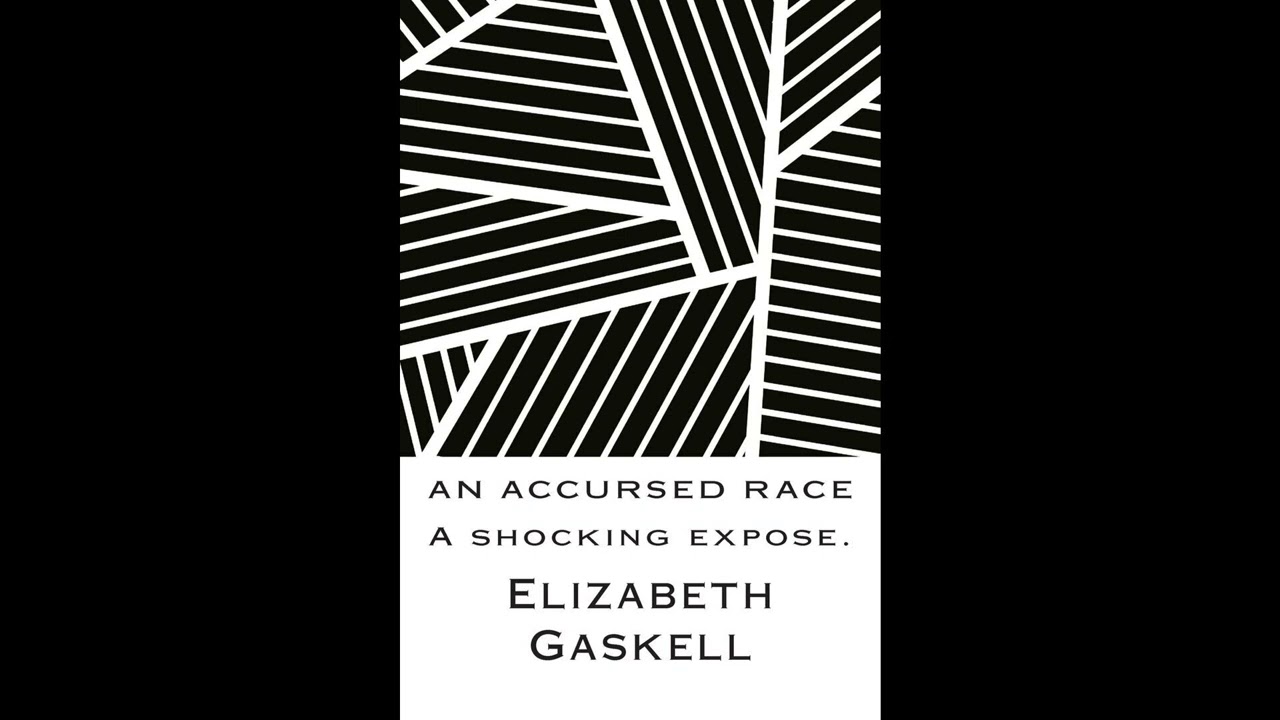
An Accursed Race: A shocking expose
“An Accursed Race: A shocking expose” offers a sobering look into a forgotten chapter of European history, a stark reminder of how fear and misinformation can calcify into generations of systematic oppression. Elizabeth Gaskell, renowned for her empathetic portrayals of Victorian society, turns her keen observational eye to a distinct and tragic phenomenon: the institutionalized persecution of a people deemed outcast, a “race” condemned without reason. This isn't a fictional narrative, but a meticulously researched account that strips away centuries of myth to reveal the painful reality of those labeled "unclean" or "cursed." In an age grappling with resurgent xenophobia and the dangerous ease with which narratives of hate can spread, Gaskell’s work resonates with an uncomfortable, urgent relevance, compelling us to consider the echoes of such historical prejudice in our own time. Gaskell’s "expose" transports us to the wild, rugged terrain of central Europe, particularly the remote valleys and mountainous regions of Alsace, Lorraine, and parts of Germany, where isolated communities maintained traditions often at odds with dominant societal norms. Rather than focusing on individual characters, Gaskell shines a light on a collective "character": the marginalized groups known by various names—Cagots, Caqueux, Geschöpfe—people who, for reasons lost to history or based on spurious claims, were designated as inherently inferior. The central conflict of the piece is the profound, irrational prejudice that poisoned their existence. Gaskell systematically documents the humiliating restrictions and social ostracization these groups endured: forbidden from entering churches through the main door, relegated to separate sections, sometimes even marked with a tell-tale sign like a goose or duck's foot sewn onto their clothing. The story Gaskell unfolds is one of quiet suffering and the pervasive power of baseless rumor. She gathers historical accounts, local legends, and snippets of legal texts to paint a picture of lives circumscribed by fear and contempt. We witness how absurd superstitions—claims of leprosy, webbed hands, or even cannibalism—were accepted as truth, used to justify extreme social and professional segregation. These communities were often confined to specific, menial trades, prohibited from marrying outside their own group, and subjected to a host of degradations that speak to a profound societal paranoia. Gaskell’s narrative arc moves from documenting these cruel realities to subtly questioning their origins, presenting the reader with the stark evidence of prejudice without offering easy answers, inviting reflection on the endurance of such baseless hatred. She avoids sensationalism, allowing the accumulated weight of her observations to deliver the "shocking expose." Elizabeth Gaskell (born Elizabeth Cleghorn Stevenson in 1810, died 1865) stands as one of the most significant literary figures of the Victorian era, a novelist and short story writer whose profound empathy and keen social observation shaped the landscape of English letters. The daughter of a Unitarian minister, she spent her formative years in Knutsford, Cheshire, a town that would later inspire the beloved village of Cranford in her writing. Her marriage to William Gaskell, also a Unitarian minister, led her to Manchester, a burgeoning industrial city whose stark contrasts between wealth and poverty, progress and suffering, deeply influenced her literary output. It was in Manchester that she witnessed firsthand the harsh realities of industrialization, a backdrop that would fuel her powerful social novels. Gaskell's literary career truly began with the publication of Mary Barton in 1848, a groundbreaking novel that unflinchingly depicted the lives of the working class and the devastating impact of industrial strife. This was followed by a string of successful works, including the much-loved Cranford, a humorous yet tender portrayal of genteel village life, and North and South, a complex exploration of the divide between industrial North and agrarian South. Her unfinished final novel, Wives and Daughters, is widely regarded as a pinnacle of domestic realism. Beyond fiction, Gaskell also penned The Life of Charlotte Brontë, a definitive and pioneering biography of her fellow novelist. Across her diverse oeuvre, Gaskell consistently demonstrated a remarkable ability to blend incisive social commentary with psychological depth and vivid characterization, earning her a secure and honored place in the canon of nineteenth-century literature. "An Accursed Race" enacts several enduring themes, most notably the destructive nature of prejudice and xenophobia. Gaskell meticulously details how unfounded fears of "the other" translated into generations of systematic oppression, showing how a perceived difference—be it physical, professional, or social—could brand entire groups with an indelible, negative identity. For instance, she recounts how these communities were compelled to use specific, segregated entrances in churches, or even how they were forbidden from touching produce in markets, illustrating the deeply ingrained societal revulsion. Another potent theme is the insidious power of superstition and rumor. Gaskell reveals how strange, often contradictory, myths about these groups' supposed origins or physical deformities—like having no earlobes or being descendants of lepers—became accepted as fact, justifying their degradation without any basis in reality. The narrative also powerfully illustrates the theme of social exclusion and marginalization. Gaskell highlights the devastating practical and psychological toll of being an outcast, showing how restrictions on marriage, profession, and even basic social interaction created a perpetual underclass. Their very names, such as "Cagot," became pejorative terms synonymous with revulsion. Finally, the work speaks to the vital role of the observer and historical inquiry. Gaskell, through her careful documentation and questioning of existing narratives, implicitly demonstrates how critical investigation can challenge long-held biases and expose the arbitrary cruelty inherent in such systematic discrimination, acting as a historical detective to unearth a hidden truth. Gaskell composed "An Accursed Race" during the mid-Victorian era, a period of immense social change, rapid industrialization, and burgeoning scientific inquiry, yet also one marked by rigid social hierarchies and anxieties. Culturally, Britain was grappling with the challenges of urbanization, the rise of a powerful working class, and an increasingly interconnected global landscape that brought new peoples and ideas into focus. While scientific thought was slowly beginning to chip away at old superstitions, deeply ingrained prejudices—about class, religion, and national origin—persisted. Political anxieties about social order and the potential for unrest were high, often fueling a desire to define and control perceived outsiders. Literarily, this was a golden age of realistic fiction and social commentary. Writers like Gaskell, Charles Dickens, and George Eliot were using their platforms to observe and critique society, often publishing their works in serial form in popular magazines. "An Accursed Race" first appeared in Charles Dickens’s influential weekly periodical, Household Words, a publication known for its blend of entertainment, education, and social reform. Gaskell’s non-fiction piece aligned perfectly with the magazine’s mission to shed light on societal issues and promote understanding, offering readers a glimpse into a forgotten form of human cruelty that resonated with contemporary discussions of poverty, disease, and social responsibility. Listening to "An Accursed Race" as an audiobook allows Gaskell’s meticulously crafted prose and her empathetic yet objective tone to truly come alive. The narrator's voice becomes crucial in conveying the quiet urgency and deep compassion embedded within Gaskell's investigation. With a run length of several hours, this piece is substantial enough for thoughtful, extended listening, perhaps during a commute or a leisurely afternoon, offering ample time to absorb the historical detail and Gaskell’s insightful observations. The measured pacing of a skilled narrator will underscore Gaskell's careful accumulation of evidence, allowing the listener to feel the weight of centuries of prejudice without being overwhelmed. There is no traditional dialogue here, but the historical accounts and documented regulations against the "accursed race" gain a powerful resonance through oral delivery, transforming what could be dry facts into a vivid, atmospheric journey into a dark corner of human history.
Enjoyed An Accursed Race: A shocking expose? A few ways to support us
Audible & Amazon links are affiliate; we may earn a small commission at no extra cost.
About this production
Human narration by a volunteer reader from LibriVox.org, the public-domain audiobook project. LibriVox volunteers record literary works whose copyright has expired in the United States, releasing the resulting recordings into the public domain.
An Accursed Race: A shocking expose by Elizabeth Gaskell. The underlying text is in the U.S. public domain. We do not republish any modern copyrighted edition, translation, or commentary.
The 4K cinematic visuals accompanying this audiobook are generated by an AI image model from prompts derived from the source text. No copyrighted photos, paintings, or stock footage are used. AI generation is disclosed on every video on our YouTube channel as required by YouTube's altered/synthetic content policy.
English subtitles are transcribed from the LibriVox recording with OpenAI Whisper. Translations into the 11 other supported languages are produced by Meta's NLLB-200 neural translation model. No human translator's copyrighted translation is used.
Questions about sourcing or rights? See our DMCA & Sourcing policy or contact us.
Enjoyed this audiobook?
If you'd like to own a copy of An Accursed Race: A shocking expose or hear a professionally produced edition, the links below help support free audiobook production at no extra cost to you.
As an Amazon Associate we earn from qualifying purchases. Audible / print links are affiliate.