KATHLEEN
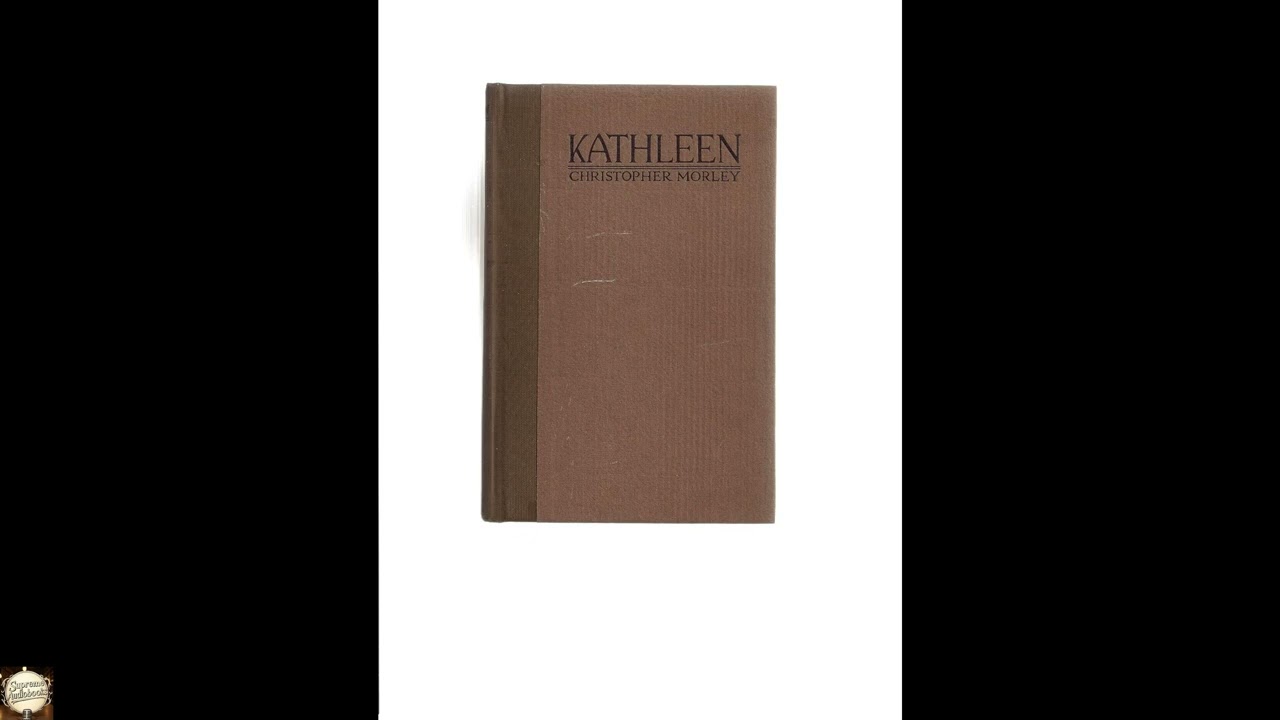
Step into a delightful pocket of literary history with Christopher Morley’s Kathleen, a charming and inventive novel that remains as refreshing today as it was when first published. Imagine a world where wit and whimsy are currency, where the lines between academic pursuits and fanciful games blur, and where a transatlantic correspondence can lead to unexpected adventures of the heart and mind. This early twentieth-century gem offers a gentle escape from the cacophony of modern life, inviting listeners to slow down, savor intelligent humor, and revel in the power of imagination. It speaks to anyone who has ever found magic in the mundane, or who understands the sweet absurdity of youthful idealism. The story unfolds within the hallowed, often misty, grounds of Oxford University, shortly after the close of the Great War. We meet a spirited group of undergraduates, bright and a little bored by the staid rhythms of academic life, who decide to inject some much-needed excitement into their routine. Their ringleader, a particularly imaginative young man named Gissing, proposes a grand, elaborate game: they will invent a fictional American girl named Kathleen, a kind of collective ideal, and together they will write her letters. Each student contributes to the creation of this imagined persona, pouring their youthful hopes, intellectual banter, and romantic notions onto the page. What begins as a delightful intellectual exercise quickly gains a life of its own. The students craft increasingly elaborate and witty missives, addressing them to a fictitious address in Philadelphia, Pennsylvania, and delighting in the collaborative artistry of their shared invention. But the boundaries between their created reality and the actual world begin to thin when, to their astonishment, a reply arrives. Suddenly, their "game" takes an unforeseen turn, leading them down a path filled with humorous complications, romantic misunderstandings, and the thrilling prospect that their imagined Kathleen might, in fact, be real. The novel follows the charming unraveling of this clever ruse, exploring the delightful chaos that ensues when fantasy spills over into everyday life, forcing the Oxford scholars to confront the consequences of their own elaborate fun. Christopher Morley, the author, was a prolific and beloved American writer, born in Bryn Mawr, Pennsylvania, in 1890. The son of a mathematics professor and a poet, Morley grew up in an intellectually stimulating household. He attended Haverford College, where he was a gifted student, before earning a Rhodes Scholarship to New College, Oxford, from 1910 to 1913—an experience that undoubtedly provided the vivid backdrop and authentic feel for Kathleen. Upon his return to the United States, Morley embarked on a distinguished career in journalism, working for the New York Evening Post and later becoming a popular columnist and contributing editor for The Saturday Review of Literature, which he also helped found. Morley's literary output was vast and varied, encompassing novels, essays, poetry, and even plays. He is perhaps best known for his "book-lover" novels such as Parnassus on Wheels (1917) and The Haunted Bookshop (1919), which celebrate the joy of reading and the bohemian charm of literary life. While Kathleen, published in 1920, shares some of this genial spirit, it stands out for its unique premise and its effervescent wit. Later in his career, Morley demonstrated his versatility with more serious works, including the Pulitzer Prize-winning novel Kitty Foyle (1939). Throughout his life, Morley cultivated a persona as a genial humanist and a champion of the written word, deeply appreciated for his light touch, clever observations, and warm humor, cementing his place as an accessible and cherished voice in early to mid-twentieth-century American letters. He passed away in 1957. At its core, Kathleen playfully examines the complex interplay between imagination and reality. The Oxford students, in their inventive game, conjure a detailed persona for Kathleen, demonstrating how human creativity can construct entire worlds and relationships out of thin air. Yet, the story shows how these mental constructs can subtly begin to influence actual perceptions and actions, blurring the lines until the imagined ideal feels profoundly real. Another compelling theme is the nature of idealism and youthful romanticism. The students, particularly Gissing, project their collective longing for an ideal companion onto Kathleen, chasing a vision of perfection that is ultimately a reflection of their own desires. This pursuit, though born of fantasy, leads to genuine emotional engagements and comedic dilemmas, highlighting the inherent human tendency to seek out and idealize the unknown. The novel also charmingly observes youthful folly and intellectual play. The premise itself, of bright young men engaging in such an elaborate and ultimately absurd game, showcases the delightful humor that arises when intelligence is applied to trivial or whimsical pursuits. Morley contrasts the rigorous academic environment of Oxford with the students' lighthearted rebellion, underscoring the universal desire for fun and mischief even in the most studious settings. Finally, Kathleen offers a poignant glimpse into the art of connection and communication in a pre-digital era. The very act of writing and sending letters – the careful composition, the anticipation of a reply – is central to the plot. It evokes a time when communication was slower, more deliberate, and perhaps more deeply cherished, offering a fascinating contrast to our instant-message world. Kathleen emerged at a pivotal moment in history, published in 1920, as the world was transitioning from the long shadow of World War I into the nascent "Roaring Twenties." While the decade would soon be characterized by rapid social change and modernism in the arts, Morley's novel often reflects a more gentle, almost Edwardian sensibility, tinged with a quiet post-war longing for simpler pleasures and intellectual camaraderie. It harks back to his own idyllic student days at Oxford before the war irrevocably altered the European landscape. In the literary world, while experimental modernism was gaining ground with writers like T.S. Eliot and James Joyce pushing boundaries, there remained a strong and popular tradition of accessible, character-driven fiction, especially in America. Morley, with his urbane wit and humanist outlook, represented a significant voice within this tradition, offering readers intelligent entertainment that didn't demand a re-evaluation of narrative form but rather a celebration of charming storytelling and keen observation. This particular story, with its witty dialogue and gentle unfolding, is perfectly suited for an audiobook experience. The narration brings the distinct voices of the Oxford undergraduates to life, allowing their individual quirks and collective banter to shine. Over several hours, a skilled narrator can capture the nuanced pacing, from the initial playful scheming to the more earnest and sometimes perplexing developments, guiding listeners through the novel's subtle humor and romantic undertones. Pay close attention to the crafting of the letters themselves, as hearing them read aloud can amplify their cleverness and charm. The atmosphere of collegiate life, of late-night discussions and intellectual mischief in an ancient university town, truly comes alive when delivered through spoken word, transporting you directly into Morley's imaginative and delightful world.
Enjoyed KATHLEEN? A few ways to support us
Audible & Amazon links are affiliate; we may earn a small commission at no extra cost.
About this production
Human narration by a volunteer reader from LibriVox.org, the public-domain audiobook project. LibriVox volunteers record literary works whose copyright has expired in the United States, releasing the resulting recordings into the public domain.
KATHLEEN by CHRISTOPHER MORLEY. The underlying text is in the U.S. public domain. We do not republish any modern copyrighted edition, translation, or commentary.
The 4K cinematic visuals accompanying this audiobook are generated by an AI image model from prompts derived from the source text. No copyrighted photos, paintings, or stock footage are used. AI generation is disclosed on every video on our YouTube channel as required by YouTube's altered/synthetic content policy.
English subtitles are transcribed from the LibriVox recording with OpenAI Whisper. Translations into the 11 other supported languages are produced by Meta's NLLB-200 neural translation model. No human translator's copyrighted translation is used.
Questions about sourcing or rights? See our DMCA & Sourcing policy or contact us.
Enjoyed this audiobook?
If you'd like to own a copy of KATHLEEN or hear a professionally produced edition, the links below help support free audiobook production at no extra cost to you.
As an Amazon Associate we earn from qualifying purchases. Audible / print links are affiliate.