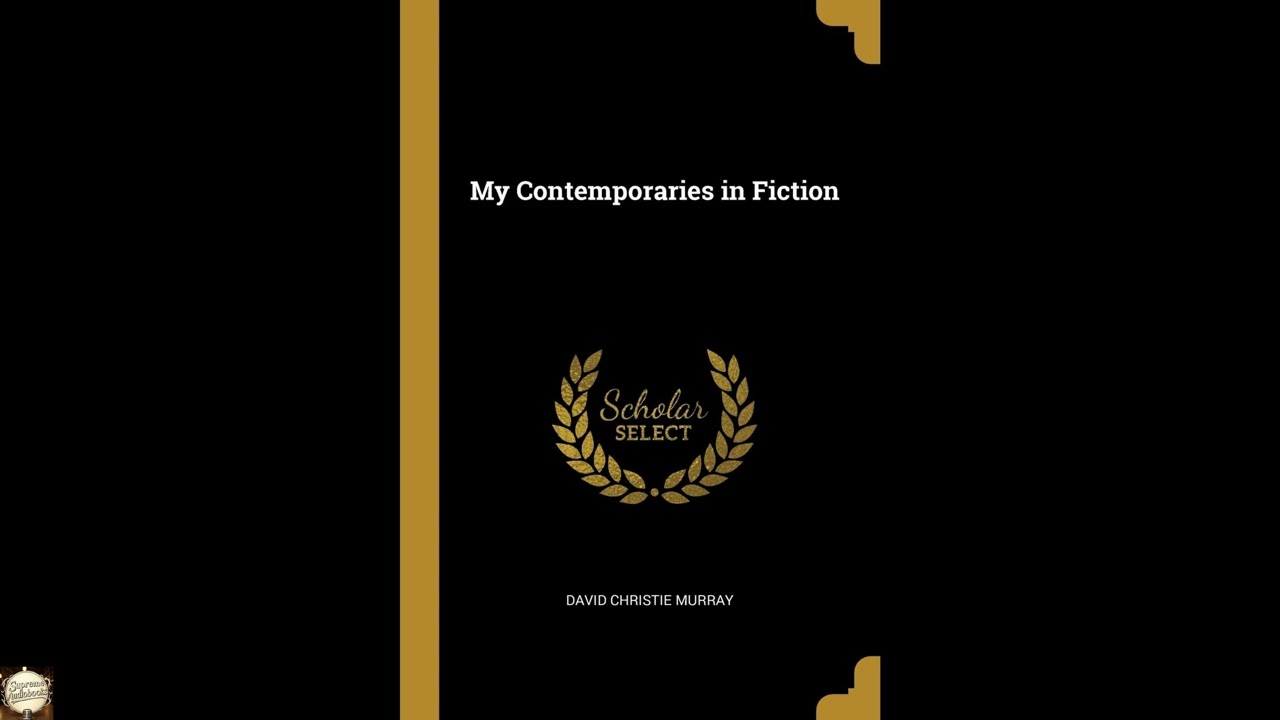
My Contemporaries in Fiction
In the shifting landscape of literary tastes, where new voices constantly vie for attention, there is a distinct pleasure in pausing to reflect on the giants who shaped the very ground beneath our feet. David Christie Murray's My Contemporaries in Fiction offers precisely such an opportunity: an intimate, often spirited survey of the late Victorian literary scene through the eyes of an accomplished practitioner himself. This is not a dry academic tome, but a lively conversation with a well-read friend who knew the authors, understood their craft, and had strong opinions about their successes and shortcomings. For anyone eager to understand the dynamics that fueled the novel's evolution at the close of the nineteenth century, or simply to hear firsthand accounts of the era's great writers, Murray's unique perspective makes this a compelling listen even today. Murray's work unfolds not as a conventional narrative with a single protagonist, but as a series of keenly observed portraits and critical appraisals, woven together by his own engaging voice and personal experiences. The "setting" is the bustling literary world of London and beyond in the latter half of the nineteenth century, a period marked by prolific output and intense public interest in fiction. The main "characters" are, in essence, the prominent novelists of the day: figures like Charles Dickens, William Makepeace Thackeray, George Meredith, Thomas Hardy, Robert Louis Stevenson, and Rudyard Kipling, among many others, whose works Murray dissects with a blend of admiration and critical insight. He also turns the lens on lesser-known writers, providing a comprehensive, if subjective, snapshot of the era's talent pool. The central "arc" of this book traces Murray's journey through the development of the modern novel, from the expansive realism of his Victorian predecessors to the emerging styles of his immediate peers. He frequently discusses the challenges faced by writers of his generation, the pressures of serialization, the demands of the reading public, and the perennial debates surrounding artistic integrity versus commercial success. Listeners will find Murray not merely chronicling the works but often recalling personal encounters, sharing anecdotes that illuminate the personalities behind the printed page, and offering candid assessments that reveal both his literary values and the prevailing critical currents of his time. His aim is not to provide an exhaustive scholarly review, but rather to present a practitioner's view, colored by his own triumphs and tribulations within the demanding world of letters. David Christie Murray, born in West Bromwich, England, in 1847, was a man whose life mirrored the adventurous spirit often found in the novels of his time. Before gaining recognition as a writer, he worked a variety of professions, including journalist and even war correspondent during the Franco-Prussian War. This varied background undoubtedly provided him with a keen eye for human nature and the dramatic possibilities of circumstance, qualities that would later define his own fictional output. A prolific novelist, Murray produced dozens of books, many of them popular adventure tales and social commentaries that appeared serialized in magazines before being published in volume form. Works such as A Life's Atonement (1879), Joseph's Coat (1881), and Aunt Rachel (1886) garnered him a significant readership and established his place among the Victorian literary establishment. Murray was part of a generation of writers who navigated the transition from the mid-Victorian literary giants to the more modern voices emerging at the turn of the century. While not as consistently remembered today as some of the luminaries he discusses, his influence and popularity during his lifetime were considerable. He was known for his clear, direct prose, his strong narrative drive, and his ability to craft compelling stories that resonated with the public. My Contemporaries in Fiction, published in 1897, stands out as a unique contribution to his oeuvre, offering a rare window into the critical faculties and personal opinions of a working novelist grappling with the legacy and future of his chosen art form. Murray died in London in 1907, leaving behind a substantial body of work that provides valuable insights into the literary and social fabric of his era. One prominent theme threading through My Contemporaries in Fiction is the very nature of storytelling itself. Murray consistently champions clarity, moral purpose (without being overtly didactic), and compelling narrative over what he perceives as overly complex or deliberately obscure literary experimentations. For example, he might praise the straightforward emotional impact of a Dickensian character while subtly critiquing the perceived intellectual aloofness of a George Meredith novel. He frequently engages with the idea of realism versus romanticism, arguing for a balanced approach that captures truth without sacrificing the imaginative appeal essential to fiction. He dissects how authors like Thomas Hardy manage to imbue their starkly realistic settings with a sense of tragic grandeur, or how Robert Louis Stevenson masterfully constructs suspense and adventure while maintaining psychological depth. Another significant theme is the evolving role of the author in society and the dynamics of literary reception. Murray, having experienced the competitive world of journalism and publishing, offers insights into the business side of writing, the impact of serialization on plot development, and the fickle tastes of the reading public. He might illustrate this by recounting how a particular author achieved fame through a serial success, or how another struggled to find an audience for a more unconventional work. He shows how individual genius often intersects with commercial necessity, and how authors constantly adapt their craft to both their artistic vision and the demands of the marketplace. This book becomes a vital document for understanding the professional life of a writer in the late Victorian period, beyond just the published works. The cultural and literary landscape in which My Contemporaries in Fiction emerged was one of profound change. The late 1890s marked the fin de siècle, a period characterized by a sense of cultural weariness alongside a vigorous exploration of new artistic and intellectual currents. The great Victorian era, with its emphasis on moral certainty and social progress, was giving way to more skeptical and introspective viewpoints. Literary realism and naturalism, influenced by European trends, challenged older romantic conventions, while the aesthetic movement championed "art for art's sake." The reading public was expanding, but so too was the sheer volume of published material, making critical discernment increasingly important. Murray's book arrived at a moment when readers were actively looking to understand the shifting paradigms in fiction, eager for guides to navigate the burgeoning literary output. His personal, opinionated survey thus served as a timely and relevant contribution to the ongoing conversation about literature's purpose and direction. To experience My Contemporaries in Fiction as an audiobook is to gain direct access to the articulate and opinionated voice of David Christie Murray himself. The several hours of narration provide ample time to settle into his distinctive rhythm, allowing listeners to fully appreciate the conversational yet intellectually rigorous prose. A good narrator will bring out the warmth and humor in Murray's anecdotes, as well as the conviction in his critical assessments. Listen for the subtle inflections that convey his admiration for certain writers, or his gentle exasperation with others. The pacing will likely be measured, reflecting the thoughtful nature of the content, encouraging reflection on the literary figures and debates discussed. This aural presentation transforms a historical critical text into an engaging exchange, making the listener feel like a direct participant in a lively, turn-of-the-century literary salon, gaining insights directly from one who lived and breathed that world.
Enjoyed My Contemporaries in Fiction? A few ways to support us
Audible & Amazon links are affiliate; we may earn a small commission at no extra cost.
About this production
Human narration by a volunteer reader from LibriVox.org, the public-domain audiobook project. LibriVox volunteers record literary works whose copyright has expired in the United States, releasing the resulting recordings into the public domain.
My Contemporaries in Fiction by David Christie Murray. The underlying text is in the U.S. public domain. We do not republish any modern copyrighted edition, translation, or commentary.
The 4K cinematic visuals accompanying this audiobook are generated by an AI image model from prompts derived from the source text. No copyrighted photos, paintings, or stock footage are used. AI generation is disclosed on every video on our YouTube channel as required by YouTube's altered/synthetic content policy.
English subtitles are transcribed from the LibriVox recording with OpenAI Whisper. Translations into the 11 other supported languages are produced by Meta's NLLB-200 neural translation model. No human translator's copyrighted translation is used.
Questions about sourcing or rights? See our DMCA & Sourcing policy or contact us.
Enjoyed this audiobook?
If you'd like to own a copy of My Contemporaries in Fiction or hear a professionally produced edition, the links below help support free audiobook production at no extra cost to you.
As an Amazon Associate we earn from qualifying purchases. Audible / print links are affiliate.