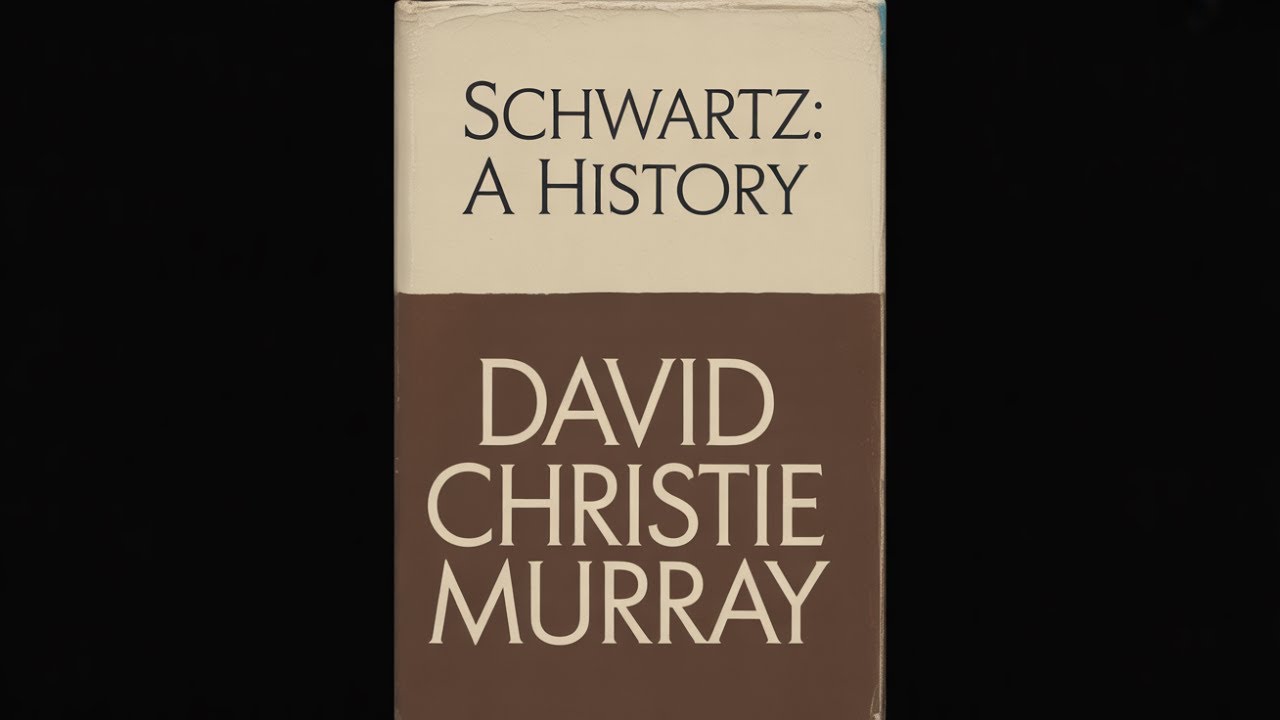
Schwartz: A History From Schwartz
Some books arrive quietly, yet their impact resonates with an unexpected force, inviting us to look closer at the foundational questions of identity and belonging. David Christie Murray's Schwartz: A History From Schwartz, first published in the early 1890s, is precisely such a work. Far from a mere chronicle, it plunges listeners into the profound internal world of its titular character, offering a perspective as intimate as it is expansive. Why should a listener today turn to a story penned over a century ago? Because its core concerns—how we define ourselves against the backdrop of our personal pasts, our families, and our wider communities—are as urgent and universal now as they were then. It is a testament to the enduring human quest for self-understanding, delivered through a voice both singular and deeply resonant. The story centers on Schwartz, a figure whose very name suggests a rich, perhaps shadowed, heritage, and whose personal account forms the very fabric of the narrative. Set against the shifting backdrop of late Victorian society, which might variously be the bustling streets of an unnamed European city or a more secluded, traditional enclave, the narrative charts Schwartz's evolving relationship with his own background. We meet Schwartz at a crucial juncture in his life, where the comfortable certainties of his upbringing begin to fray, replaced by nagging doubts and the pull of divergent paths. His experiences unfold not always linearly, but with the organic rhythm of memory and reflection, presenting a mosaic of encounters and revelations. Central to Schwartz's narrative is his struggle to reconcile the expectations placed upon him by his lineage and community with his own burgeoning sense of self. He grapples with the weight of tradition, the whispers of history, and the often-conflicting advice of those around him—be they stern elders, enigmatic acquaintances, or figures of romantic interest. The story follows Schwartz through moments of profound introspection and outward engagement, observing how these internal and external pressures shape his choices. From a foundational challenge to his inherited identity to the complex relationships he cultivates, the story describes Schwartz’s growth and the gradual unveiling of his true nature, culminating in a deeper understanding of what it means to carry one’s own history while forging an individual path, all without revealing the ultimate resolution of his quest. David Christie Murray, the author behind this distinctive narrative, lived a life as varied and compelling as some of his characters. Born in West Bromwich, England, in 1847, Murray was a man of diverse talents and experiences before finding his footing as a novelist. His early career saw him serve briefly in the military, tread the boards as an actor, and hone his observational skills as a journalist and shorthand reporter. This varied background provided him with a keen eye for human nature and the complexities of society, which he would later bring to his fiction. He began publishing novels in the late 1870s and quickly became a prolific and popular writer, known for his accessible yet often thought-provoking storytelling. Murray’s output included several notable works beyond Schwartz, such as the sensation novel Joseph’s Coat (1881) and A Life’s Atonement (1880), which demonstrated his range across different popular genres of the time. While perhaps not as widely studied in academic circles as some of his more highbrow contemporaries, Murray occupied a significant place in late Victorian popular literature, admired for his narrative drive and ability to weave engaging tales. He often tackled themes of social justice, moral dilemmas, and the consequences of past actions, securing his reputation as a craftsman of readable and emotionally resonant fiction until his passing in 1907. At its heart, Schwartz: A History From Schwartz enacts several enduring themes that resonate strongly even today. One such theme is the nature of identity, particularly how it is shaped by heritage and personal choice. Schwartz constantly confronts the question of who he is meant to be versus who he desires to be. For instance, an early scene describes his resistance to a particular family custom, not out of rebellion, but from a genuine need to understand its true meaning for himself, rather than simply accepting it. This small act sets the stage for a broader engagement with his roots. Another central theme is the power of narrative and memory – how stories, both individual and communal, define our present and future. Throughout the book, Schwartz encounters fragmented recollections and ancestral tales that compel him to re-evaluate his present circumstances. A particularly poignant moment describes Schwartz hearing an old family legend, previously dismissed as mere folklore, which suddenly takes on new significance, illuminating a hidden aspect of his own character. A third prominent theme is the tension between tradition and individual agency. Schwartz frequently finds himself at a crossroads where his personal desires or convictions clash with the established norms of his community. He yearns for a sense of belonging while also asserting his right to self-determination. For example, he might find himself drawn to a particular intellectual pursuit or a unconventional friendship, causing quiet friction with those who expect him to follow a more prescribed path. This constant negotiation between the old ways and the personal will forms much of the story’s dramatic engine, showcasing the perpetual human struggle to honor one’s past while living authentically in the present. The late nineteenth century, when Schwartz: A History From Schwartz emerged, was a period of significant cultural ferment in Europe, profoundly influencing the kinds of stories authors felt compelled to tell. It was an era marked by the rapid pace of industrialization, the growth of vast urban centers, and the concomitant social shifts that reshaped traditional communities. Ideas about national identity, class structure, and individual freedom were vigorously debated. In the literary world, realism was gaining ascendancy, with writers striving to depict life as it truly was, often focusing on the lives of ordinary people and the social conditions that affected them. Murray’s work, while maintaining a popular appeal, often touched on these broader concerns, reflecting a society grappling with the erosion of old certainties and the emergence of new, often unsettling, realities. The period saw a burgeoning interest in psychological depth and the internal lives of characters, a trend Schwartz certainly aligns with, presenting an intimate mental landscape that was both a product of its time and a precursor to more modern narrative techniques. For an audiobook listener, Schwartz: A History From Schwartz offers an immersive experience, uniquely suited to the medium. With a running length of several hours, it presents an unfolding narrative that can be savored over a series of commutes, during quiet evenings, or across focused listening sessions. A skilled narrator can bring out the distinctive voice of Schwartz himself, making his internal monologues and reflective moments particularly compelling. Listen for the subtle shifts in pacing – moments of quiet contemplation might give way to lively dialogue or scenes of dramatic action, each delivered with appropriate emotional weight. The narration has the opportunity to differentiate the various characters Schwartz encounters, giving each a distinct presence, and to establish the late Victorian atmosphere, transporting listeners directly into Schwartz's world with every carefully chosen inflection.
Enjoyed Schwartz: A History From Schwartz? A few ways to support us
Audible & Amazon links are affiliate; we may earn a small commission at no extra cost.
About this production
Human narration by a volunteer reader from LibriVox.org, the public-domain audiobook project. LibriVox volunteers record literary works whose copyright has expired in the United States, releasing the resulting recordings into the public domain.
Schwartz: A History From Schwartz by David Christie Murray. The underlying text is in the U.S. public domain. We do not republish any modern copyrighted edition, translation, or commentary.
The 4K cinematic visuals accompanying this audiobook are generated by an AI image model from prompts derived from the source text. No copyrighted photos, paintings, or stock footage are used. AI generation is disclosed on every video on our YouTube channel as required by YouTube's altered/synthetic content policy.
English subtitles are transcribed from the LibriVox recording with OpenAI Whisper. Translations into the 11 other supported languages are produced by Meta's NLLB-200 neural translation model. No human translator's copyrighted translation is used.
Questions about sourcing or rights? See our DMCA & Sourcing policy or contact us.
Enjoyed this audiobook?
If you'd like to own a copy of Schwartz: A History From Schwartz or hear a professionally produced edition, the links below help support free audiobook production at no extra cost to you.
As an Amazon Associate we earn from qualifying purchases. Audible / print links are affiliate.