A Study of Hawthorne
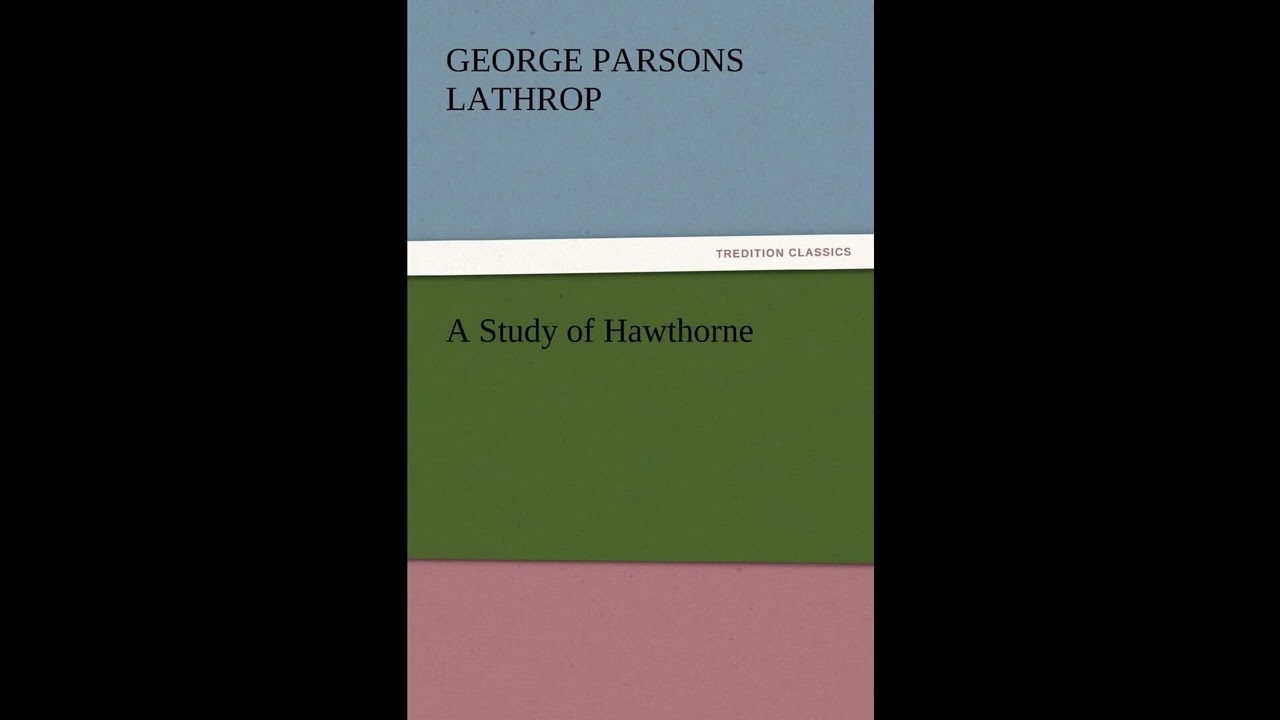
To truly understand a literary titan, sometimes it takes the perspective of someone who knew the man, not just the myth. "A Study of Hawthorne" by George Parsons Lathrop offers precisely this unique vantage point, inviting listeners into a rare, intimate conversation with the life and legacy of Nathaniel Hawthorne. Penned by his own son-in-law, this work is more than a mere biographical sketch or a dry academic analysis; it is a thoughtful, insightful portrait of one of America's most enigmatic and profound authors, filtered through the lens of personal connection and keen literary judgment. For anyone wishing to grasp the genesis of Hawthorne's dark romances, the roots of his moral vision, or the intricate symbolism that permeates his tales, Lathrop provides an indispensable guide, illuminating the past in a way that resonates deeply with our understanding of art and humanity today. Lathrop’s comprehensive examination begins not with a dry enumeration of facts, but with an intimate portrayal of Hawthorne’s early life, painting a vivid picture of the formative years spent in Salem and the quiet solitude that profoundly shaped his imagination. The text details the subtle influences of his Puritan ancestry, the prolonged period of reclusion often referred to as his "twelve years' hermitage," and the subsequent emergence of his prodigious talent as a writer of short stories. This foundational section lays the groundwork for understanding the deep-seated psychological currents that flow through all of Hawthorne's subsequent work. From these personal beginnings, Lathrop systematically transitions into a thorough reading of Hawthorne’s major literary output. He analyzes the intricate layers of symbolism in The Scarlet Letter, dissects the psychological depths of The House of the Seven Gables, and weighs the philosophical underpinnings of The Marble Faun. The study methodically unpacks Hawthorne’s recurring motifs—guilt, isolation, the oppressive weight of the past, and the pervasive shadow of human sin—demonstrating how these powerful ideas coalesce and evolve across his different periods of writing. Lathrop does not simply summarize plots; he engages with the very fabric of Hawthorne's creative process, offering an illuminating insight into the author’s philosophical leanings and his distinctive narrative strategies. His analysis builds toward a comprehensive understanding of Hawthorne’s artistic vision, charting the intellectual and emotional growth evident in his progression from early tales to his longer, more ambitious romances. George Parsons Lathrop was himself a significant literary figure of the late nineteenth century, known for his work as a poet, critic, and novelist. Born in Honolulu in 1851, the son of a diplomat, Lathrop’s life would become inextricably linked with American literary aristocracy when he married Rose Hawthorne in 1871, the youngest daughter of Nathaniel Hawthorne. This marital union placed Lathrop in a uniquely privileged position to understand and interpret his father-in-law's genius, affording him access to personal papers, anecdotes, and a familial context that few other critics could ever hope to attain. Beyond his association with the Hawthorne family, Lathrop made notable contributions to American letters. He served as assistant editor of the Atlantic Monthly, a prestigious literary magazine of the era, and later founded the American Copyright League, working tirelessly to protect authors' intellectual property rights at a time when such protections were often minimal. His own creative output included several volumes of poetry, novels like An Echo of Passion, and a significant body of literary criticism, all marking him as an active participant in the literary conversations of his time. His critical approach, exemplified in A Study of Hawthorne, bridged the gap between personal appreciation and scholarly rigor, making him a respected voice in a burgeoning American literary landscape. One prominent argument emerging from Lathrop’s pages is the profound influence of personal biography and ancestral legacy on literary creation. He illustrates this by connecting Hawthorne’s own Puritan ancestry and his perceived isolated youth directly to the brooding atmosphere and moral quandaries that define tales like "Young Goodman Brown" and the character of Hester Prynne. Lathrop suggests that Hawthorne’s struggles with inherited guilt and the somber legacy of his New England forebears were not merely subject matter, but integral components of his creative psyche. He shows how Hawthorne internalized these historical and personal burdens, transforming them into universal questions of human nature and moral responsibility. Another significant aspect Lathrop illuminates is Hawthorne’s pioneering use of symbolism and allegory as primary narrative tools. He shows, for instance, how the scarlet letter ‘A’ transcends its initial meaning as 'adultery,' growing to encompass 'angel' and 'able,' thereby illustrating the fluid and evolving nature of sin and redemption within a rigid societal framework. Lathrop’s critical gaze reveals how Hawthorne consistently transformed abstract moral dilemmas into tangible, often unsettling, images and situations, inviting readers to look beyond the surface of his narratives for deeper, often ambiguous, truths. This ability to weave layers of meaning into everyday objects and actions is, Lathrop contends, a hallmark of Hawthorne's enduring power. "A Study of Hawthorne" emerged during a pivotal period in American literary history—the latter half of the nineteenth century, following the intense social and political upheaval of the Civil War. This era saw a concerted effort to define and celebrate a distinctly American literary canon. Figures like Nathaniel Hawthorne, who had already established themselves before the war, were now being re-evaluated and solidified as foundational voices. Lathrop's work fit perfectly into this cultural moment, providing a definitive assessment of a national icon from a position of informed authority. It was a time when literary criticism was professionalizing, moving beyond mere reviews to more sustained, interpretive studies, and Lathrop’s book served as a significant contribution to this developing field, shaping how future generations would understand the complex mind of a distinctly American writer. To listen to "A Study of Hawthorne" as an audiobook is to gain a deeper appreciation for the nuanced arguments and sensitive insights Lathrop brings to his subject. A well-modulated narration can elevate Lathrop’s prose, allowing listeners to fully absorb his carefully constructed interpretations of Hawthorne’s life and works. The spoken word can highlight the conversational tone Lathrop employs, making the analysis feel less like an academic lecture and more like a thoughtful discussion with a knowledgeable guide. Over several hours of listening, the consistent voice of the narrator allows Lathrop's insights to build steadily, creating a cohesive and enriching understanding of Hawthorne that might be missed in a hurried reading. It encourages reflection, inviting listeners to pause and consider the complex interplay between Hawthorne's life, his times, and the timeless art he created.
Enjoyed A Study of Hawthorne? A few ways to support us
Audible & Amazon links are affiliate; we may earn a small commission at no extra cost.
About this production
Human narration by a volunteer reader from LibriVox.org, the public-domain audiobook project. LibriVox volunteers record literary works whose copyright has expired in the United States, releasing the resulting recordings into the public domain.
A Study of Hawthorne by George Parsons Lathrop. The underlying text is in the U.S. public domain. We do not republish any modern copyrighted edition, translation, or commentary.
The 4K cinematic visuals accompanying this audiobook are generated by an AI image model from prompts derived from the source text. No copyrighted photos, paintings, or stock footage are used. AI generation is disclosed on every video on our YouTube channel as required by YouTube's altered/synthetic content policy.
English subtitles are transcribed from the LibriVox recording with OpenAI Whisper. Translations into the 11 other supported languages are produced by Meta's NLLB-200 neural translation model. No human translator's copyrighted translation is used.
Questions about sourcing or rights? See our DMCA & Sourcing policy or contact us.
Enjoyed this audiobook?
If you'd like to own a copy of A Study of Hawthorne or hear a professionally produced edition, the links below help support free audiobook production at no extra cost to you.
As an Amazon Associate we earn from qualifying purchases. Audible / print links are affiliate.