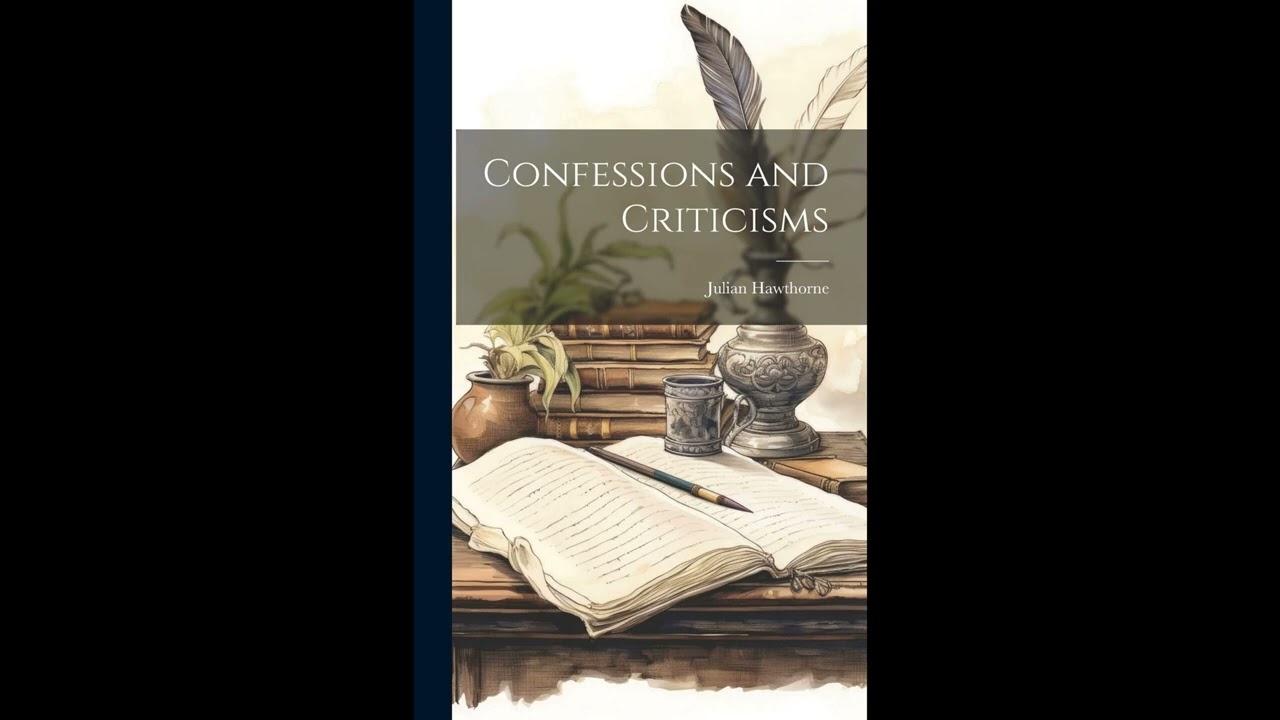
Confessions and Criticisms
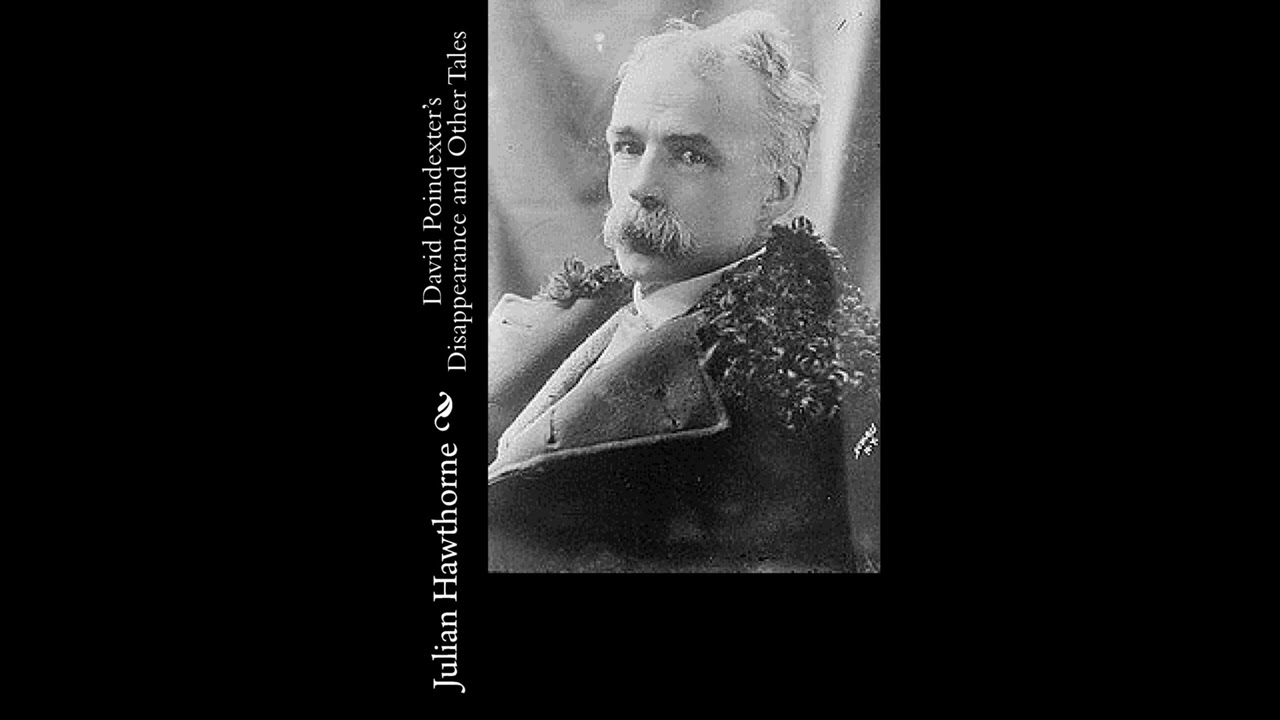
Step back into an era when literature was a dynamic, evolving landscape, a realm of passionate debate and profound self-reflection. "Confessions and Criticisms" by Julian Hawthorne offers just such a perspective, a unique and probing look into the mind of a prominent writer navigating the intellectual currents of his time. This is more than a mere collection of essays; it is a direct confrontation with the very act of creating and evaluating art, a personal reckoning that resonates with anyone who has ever wrestled with their own place in the world or dared to challenge accepted wisdom. Listening today provides a rare opportunity to witness a keen intellect grappling with enduring questions about truth, beauty, and the often-uncomfortable intersection of personal experience with public judgment. Within these pages, Julian Hawthorne presents a compelling intellectual drama, unfolding not through a traditional narrative with characters and a linear plot, but through the rigorous examination of ideas and the candid revelation of a searching spirit. The book largely comprises two distinct yet interwoven threads: the "confessions" that offer glimpses into the author’s subjective insights, doubts, and perhaps even regrets regarding his own life and literary calling, and the "criticisms" where he turns his sharp analytical gaze upon the works of his contemporaries and the prevailing literary trends of the late nineteenth century. The setting is primarily the realm of thought and the burgeoning literary salons and publishing houses of a period eager for new voices, yet often resistant to radical change. The central conflict arises from the tension between the author's personal vision and the standards of an often-unforgiving critical establishment. Hawthorne acts as both the protagonist and the observer in this intellectual landscape. He challenges the reader to consider the often-paradoxical nature of artistic creation, where genius can spring from the most unexpected sources and where critical acclaim does not always align with intrinsic worth. He engages with specific works, dissecting their strengths and weaknesses with an astute eye, moving from an appreciation of form and style to a deeper consideration of their moral and philosophical underpinnings. The arc of "Confessions and Criticisms" is thus a journey of the mind, a series of thoughtful engagements that push the boundaries of what literary analysis can be, blurring the lines between the personal and the objective, inviting listeners to weigh the author’s pronouncements against their own understanding of art and life. Julian Hawthorne (1846-1934) was an author whose life was as eventful and complex as many of his fictional creations. Born in Boston, Massachusetts, he carried the weighty legacy of his father, Nathaniel Hawthorne, one of America's literary giants. This inheritance shaped much of his early life, providing both an entry into literary circles and a constant pressure to forge his own distinct identity. He attended Harvard University, initially studying civil engineering before turning to literature, an early indication of his diverse interests and intellectual curiosity. His travels took him across Europe, exposing him to different cultures and literary traditions, broadening his perspective before he settled into a career as a prolific writer. Throughout his career, Julian Hawthorne published over thirty novels, numerous short stories, and a considerable body of non-fiction, including biographies and literary criticism. His novels, such as "Archibald Malmaison" and "Garth," often blended elements of psychological realism, adventure, and the supernatural, placing him loosely within the broader movements of late American Romanticism and early Realism, yet always with a unique gothic inflection. He was also a prominent journalist, contributing to many leading periodicals, which gave him a platform for his critical perspectives. Later in life, a significant turn of events saw him implicated in a mining stock fraud, leading to a period of incarceration—a stark contrast to his literary background and a testament to the unpredictable nature of his existence. This tumultuous personal history undoubtedly informed the introspective and often unsparing self-examination present in his "Confessions." "Confessions and Criticisms" allows us to observe Julian Hawthorne confronting several potent themes. One prominent thread is the weight of literary inheritance, specifically the challenge of forging one's own voice when shadowed by a famous parent. Listeners will notice moments where Hawthorne seems to wrestle with this legacy, subtly asserting his independence even as he acknowledges the profound influence of his upbringing. For instance, he might discuss the pitfalls of imitation in a broader sense, yet one can detect a personal resonance as he navigates the expectations placed upon him as "Nathaniel Hawthorne's son." Another central theme is the integrity of the artist versus the demands of public opinion. Hawthorne presents a fascinating argument for the artist's right to pursue truth and beauty as they see it, even if it means defying popular taste or critical consensus. One can imagine him discussing a contemporary novel—perhaps one he deems overly sentimental or commercially driven—and articulating a defense of artistic purity over mere popularity, showcasing his commitment to a higher standard. Further themes include the very nature of literary criticism itself—its biases, its responsibilities, and its potential for both enlightenment and destruction. Hawthorne doesn't just offer criticisms; he critiques the act of criticism, pondering what makes an evaluation truly valuable. He might cite examples of unfair or misguided reviews, demonstrating how a critic's personal prejudices can distort their judgment of a work. This introspection into the critical process offers a meta-commentary that is still relevant today. Moreover, the book touches upon the shifting landscape of American letters, contrasting older literary values with newer, emergent forms. He might observe the decline of certain literary forms or the rise of new genres, providing a snapshot of the intellectual ferment occurring during the fin-de-siècle era. This work emerged during a fascinating period in American history, broadly spanning the late nineteenth and early twentieth centuries, a time often referred to as the Gilded Age. Culturally, America was undergoing rapid industrialization and urbanization, leading to significant social changes and a growing sense of national identity. In the literary world, it was an era of transition. The romanticism of authors like his father was giving way to the realism and nascent naturalism of writers such as William Dean Howells, Henry James, and Stephen Crane. This shift sparked considerable debate about the purpose and style of literature. Julian Hawthorne, as a prominent literary figure and journalist, was uniquely positioned to both observe and participate in these discussions. The proliferation of magazines and newspapers during this time also created a robust market for literary essays and criticism, providing authors like Hawthorne with a ready platform to voice their opinions and engage with the intellectual concerns of the day, making such a collection not just plausible, but essential to the literary discourse. Listening to "Confessions and Criticisms" as an audiobook offers a singular opportunity to engage with a complex mind on a deeply personal level. The several hours of narration provide ample time to settle into Hawthorne's analytical rhythm, allowing his voice—or rather, the narrator’s embodiment of his voice—to become a thoughtful companion. Pay close attention to the pacing, which should reflect the contemplative nature of the "confessions" and the deliberate, often assertive tone of the "criticisms." A skilled narrator will differentiate these registers, conveying the introspection of personal revelation alongside the intellectual rigor of his literary evaluations. Listen for the subtle inflections that hint at the author’s conviction, perhaps even his occasional disdain for what he considers lesser art. The spoken word brings a directness to his arguments, transforming what might otherwise be dense prose into an engaging conversation, allowing the listener to truly appreciate the atmosphere of late-nineteenth-century intellectual life.
Enjoyed Confessions and Criticisms? A few ways to support us
Audible & Amazon links are affiliate; we may earn a small commission at no extra cost.
About this production
Human narration by a volunteer reader from LibriVox.org, the public-domain audiobook project. LibriVox volunteers record literary works whose copyright has expired in the United States, releasing the resulting recordings into the public domain.
Confessions and Criticisms by Julian Hawthorne. The underlying text is in the U.S. public domain. We do not republish any modern copyrighted edition, translation, or commentary.
The 4K cinematic visuals accompanying this audiobook are generated by an AI image model from prompts derived from the source text. No copyrighted photos, paintings, or stock footage are used. AI generation is disclosed on every video on our YouTube channel as required by YouTube's altered/synthetic content policy.
English subtitles are transcribed from the LibriVox recording with OpenAI Whisper. Translations into the 11 other supported languages are produced by Meta's NLLB-200 neural translation model. No human translator's copyrighted translation is used.
Questions about sourcing or rights? See our DMCA & Sourcing policy or contact us.
Enjoyed this audiobook?
If you'd like to own a copy of Confessions and Criticisms or hear a professionally produced edition, the links below help support free audiobook production at no extra cost to you.
As an Amazon Associate we earn from qualifying purchases. Audible / print links are affiliate.