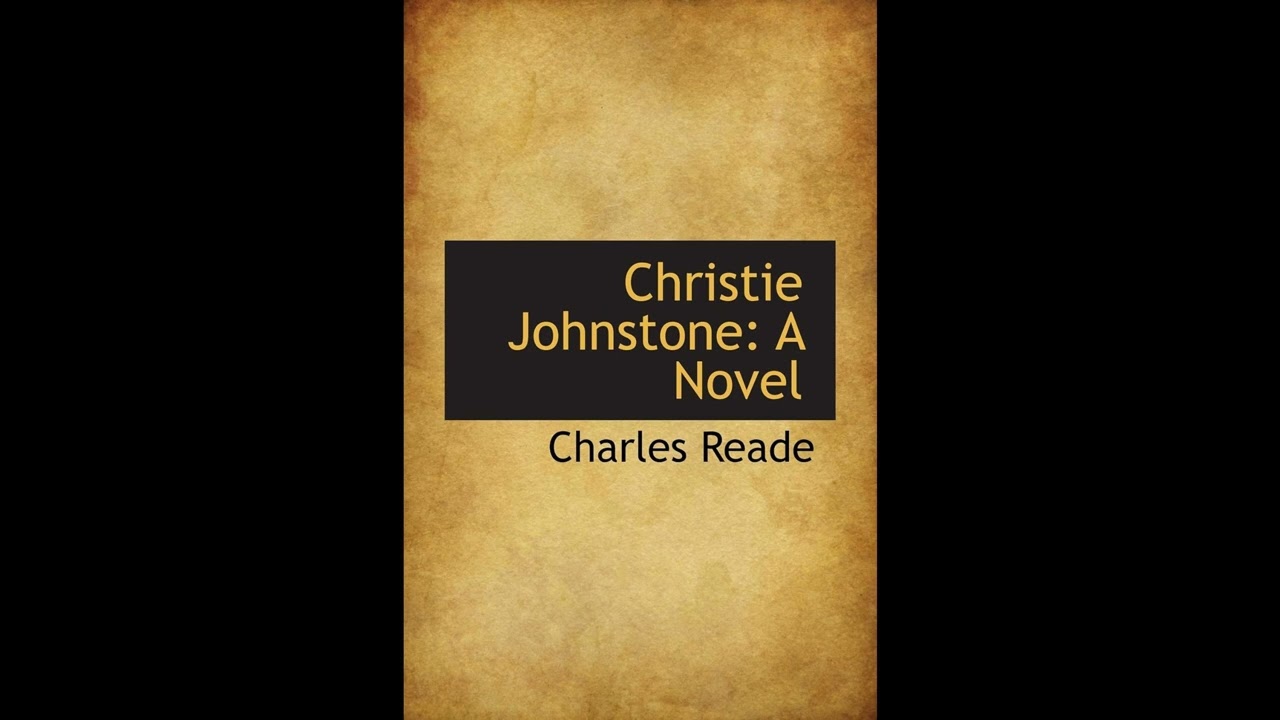
Christie Johnstone: A Novel
Step into a world where the grit of human labor meets the refining power of observation, where simple lives hold profound lessons for the privileged. Charles Reade's Christie Johnstone: A Novel offers a rare window into the heart of a Scottish fishing village in the mid-19th century, presenting a narrative that is at once a social critique, a romance, and a testament to the dignity of a life lived close to the elements. This is not merely a historical curiosity; it is a story that speaks to enduring questions of class, purpose, and what it truly means to live authentically, themes as relevant today as when the book first saw print. It invites listeners to shed preconceptions and discover wisdom in unexpected places. The story opens by introducing us to Charles Gatty, a young, well-to-do Englishman who finds himself adrift in London society. Disillusioned by his university studies and weary of the empty pursuits of the upper classes, Gatty is an individual in search of meaning, perhaps even a purpose to his seemingly comfortable existence. A chance encounter, or perhaps a more deliberate move driven by his ennui, leads him to the remote Scottish fishing community of Newhaven, a place dramatically different from anything he has ever known. Here, against the backdrop of crashing waves and the pungent scent of the sea, he encounters the eponymous Christie Johnstone. Christie is a fisherwoman, spirited and independent, a woman whose life is defined by hard work, resourcefulness, and an undeniable strength of character. She is a stark contrast to the refined, often artificial, women of Gatty's social circle. Through Gatty’s eyes, we witness the daily routines, the close-knit bonds, and the inherent dangers faced by the fisherfolk. The central conflict arises from Gatty’s initial condescension and his gradual, often humbling, education in the ways of this community. He struggles to reconcile his privileged upbringing with the stark realities of their existence, finding himself drawn into their lives, observing their resilience in the face of poverty and the ever-present threat of the sea. His presence inevitably stirs the placid waters of Newhaven, leading to misunderstandings, challenges, and an unfolding realization about what constitutes genuine value and virtue. Charles Reade, the author of this compelling narrative, was a distinguished figure in Victorian literature. Born in 1814, he was educated at Magdalen College, Oxford, and was later called to the bar, though he primarily dedicated his life to writing. Reade distinguished himself not only as a novelist but also as a dramatist, often adapting his own stories for the stage. His writing career, which spanned several decades of the 19th century, saw him produce a significant body of work, much of it characterized by meticulous research and a keen interest in social issues. He was a contemporary of literary giants like Charles Dickens and George Eliot, and like them, used his fiction as a vehicle for examining the societal fabric of his time. Among Reade’s most acclaimed works are It is Never Too Late to Mend, a powerful critique of the prison system, and The Cloister and the Hearth, a monumental historical novel set in the 15th century, often considered his magnum opus. Reade’s work is marked by a blend of realism, particularly in his detailed portrayal of specific professions and social conditions, and a dramatic narrative flair that kept readers engrossed. He was a dedicated advocate for justice and reform, frequently using his stories to highlight injustices and stir public conscience. His position within the Victorian literary canon is secure as a writer who combined compelling storytelling with a genuine commitment to social observation, earning him a place among the significant voices of his era. Christie Johnstone is rich with compelling themes that resonate beyond its mid-Victorian setting. One prominent theme is the stark contrast between social classes and the fluidity, or rigidity, of social mobility. Gatty represents the educated gentry, initially viewing the fisherfolk with a mixture of anthropological curiosity and detached superiority. His gradual understanding and respect for Christie and her community dismantles his ingrained prejudices, illustrating how genuine worth transcends birthright or accumulated wealth. The novel challenges the audience to question their own assumptions about status and value, showing how superficial distinctions often obscure true human dignity. Another central theme is the dignity of labor, particularly manual labor and the resilience found in hard work. Reade paints a vivid portrait of the fisherwomen, especially Christie, as powerful, capable figures whose lives are physically demanding but imbued with a profound sense of purpose. Their struggles against the sea, their reliance on each other, and their unwavering spirit in the face of economic hardship stand in stark opposition to Gatty's initial idleness and existential angst. The text repeatedly emphasizes the moral and personal strength forged through honest toil, making a compelling case for the inherent nobility in work that supports life and community. The independent spirit of Christie herself stands as a powerful testament to female agency in a period often restrictive for women. When Christie Johnstone was published in 1853, Britain was deep in the throes of the Victorian era, a period of immense social and economic change. Industrialization had transformed landscapes and livelihoods, leading to growing urbanization and widening disparities between the wealthy and the working classes. Literature of the time increasingly reflected these societal shifts, with authors moving towards realism and social commentary. Reade's novel emerged from this literary milieu, offering a carefully researched glimpse into a specific, traditional way of life—that of the Scottish fishing communities—which, even then, might have seemed poised for change amidst the march of progress. It represents a Victorian fascination with both regional cultures and the moral lessons that could be drawn from the lives of ordinary people, often presented as more authentic than their urban, industrialized counterparts. Listening to Christie Johnstone: A Novel as an audiobook offers a particularly immersive way to experience this story. The several hours of listening time allow for the nuanced character developments and the gradual unfolding of Gatty's perspective to sink in without rush. A skilled narrator can bring to life the distinct dialects and speech patterns of the Scottish fisherfolk, adding an authentic layer to Reade's prose and truly capturing the atmosphere of Newhaven. The evocative descriptions of the sea, the village, and the daily lives of its inhabitants gain an added dimension through vocal performance, allowing listeners to visualize the setting more vividly and feel the spray of the waves. The conversational tone, at times humorous, at times earnest, flows naturally when interpreted by an expressive voice, making the enduring wisdom of Christie Johnstone's world profoundly accessible.
Enjoyed Christie Johnstone: A Novel? A few ways to support us
Audible & Amazon links are affiliate; we may earn a small commission at no extra cost.
About this production
Human narration by a volunteer reader from LibriVox.org, the public-domain audiobook project. LibriVox volunteers record literary works whose copyright has expired in the United States, releasing the resulting recordings into the public domain.
Christie Johnstone: A Novel by Charles Reade. The underlying text is in the U.S. public domain. We do not republish any modern copyrighted edition, translation, or commentary.
The 4K cinematic visuals accompanying this audiobook are generated by an AI image model from prompts derived from the source text. No copyrighted photos, paintings, or stock footage are used. AI generation is disclosed on every video on our YouTube channel as required by YouTube's altered/synthetic content policy.
English subtitles are transcribed from the LibriVox recording with OpenAI Whisper. Translations into the 11 other supported languages are produced by Meta's NLLB-200 neural translation model. No human translator's copyrighted translation is used.
Questions about sourcing or rights? See our DMCA & Sourcing policy or contact us.
Enjoyed this audiobook?
If you'd like to own a copy of Christie Johnstone: A Novel or hear a professionally produced edition, the links below help support free audiobook production at no extra cost to you.
As an Amazon Associate we earn from qualifying purchases. Audible / print links are affiliate.