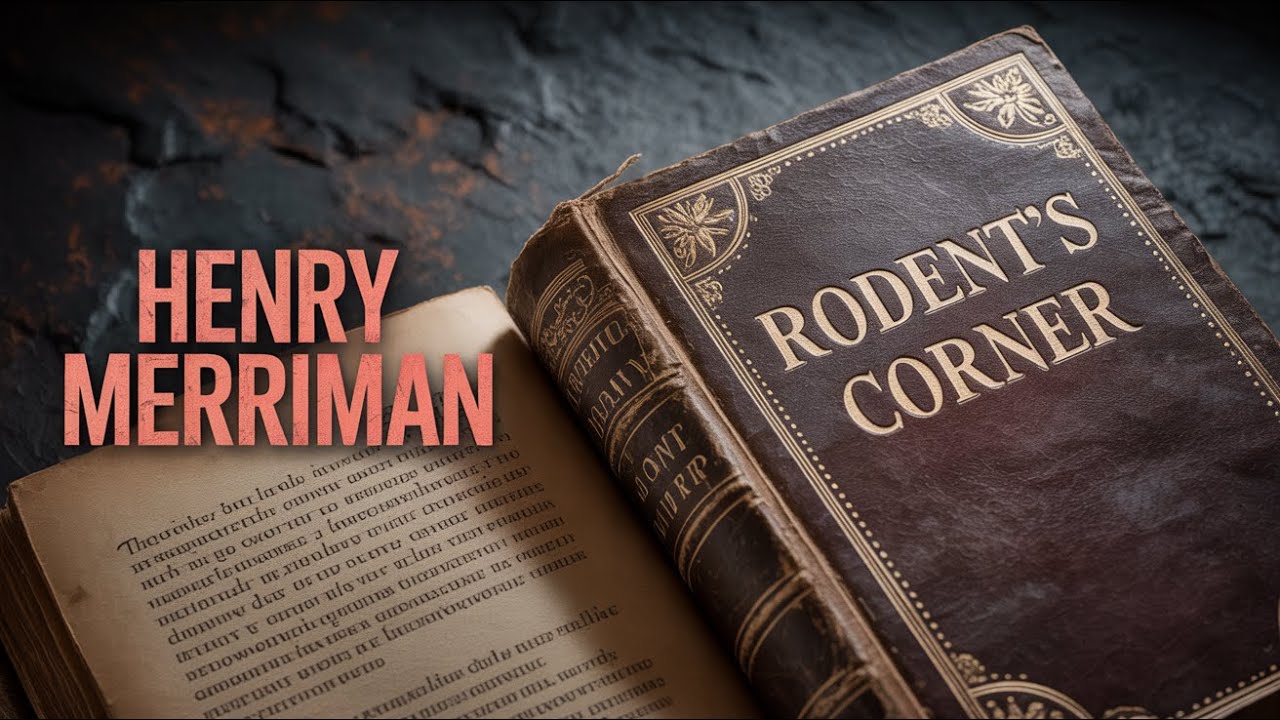
Roden's Corner
Imagine a world where the lines between loyalty and betrayal blur, where personal ambition clashes with national interest on a stage stretching from the salons of London to the shadowy corners of continental Europe. Roden's Corner plunges listeners into just such a labyrinth, a tale of intrigue and moral compromise penned by Henry Seton Merriman, an author renowned for his keen eye on human nature and the complexities of international politics at the turn of the twentieth century. More than a mere period piece, this classic offers a resonant examination of the choices individuals make when faced with immense pressure, a narrative that speaks to the ethical quandaries inherent in power and influence that remain strikingly relevant even today, reminding us that the human heart, with its capacity for both great good and great corruption, changes little across the centuries. At the heart of Roden's Corner lies the enigmatic figure of Lord Roden, a man whose seemingly benevolent philanthropic endeavors mask a deeper, more unsettling agenda. The story unfurls in the genteel drawing rooms and corridors of influence of late Victorian society, primarily London, but with its tendrils reaching out to international capitals. Roden has conceived an ambitious "scheme for reclaiming desert lands in Egypt," a venture that promises immense benefit for humanity but requires substantial capital and political maneuvering. Into his orbit falls Margaret Damer, a young woman of strong principles and a keen intellect, who is initially drawn to the grandeur of Roden's vision, believing in the purity of his motives. As the narrative progresses, other key players emerge, each with their own stake in the unfolding drama. Kenneth Lee, an honest and capable engineer, becomes entangled in Roden's project, initially seeing it as an opportunity for genuine constructive work, but soon finding himself questioning the ethics of those above him. Count Fersen, a cynical and morally ambiguous diplomat, observes the proceedings with a detached amusement, a shrewd operator who understands the hidden currents of power. The central conflict arises as the true nature of Roden's plan begins to reveal itself, hinting at financial irregularities, manipulation, and a ruthless pursuit of personal gain under the guise of public good. Characters find their loyalties tested, their moral compasses challenged, and their very lives imperiled as the grand scheme spirals towards an uncertain fate, forcing them to choose between complicity and exposure. Henry Seton Merriman, the pen name of Hugh Stowell Scott (1862-1903), was a prolific and highly regarded novelist of the late Victorian and early Edwardian eras, a writer whose relatively short life yielded an impressive body of work. Born in Newcastle-on-Tyne, England, Scott initially pursued a career in business, an experience that likely granted him insights into the machinations of finance and human ambition that would later infuse his fiction. However, his true calling was literature, and he soon dedicated himself fully to writing, producing a novel almost annually for nearly two decades. Merriman became known for his distinctive blend of adventure, psychological depth, and international intrigue, often setting his stories against vividly rendered foreign backdrops. His narratives frequently featured characters grappling with moral dilemmas in high-stakes situations, earning him a place among the popular authors of his time, alongside figures like Anthony Hope and Stanley J. Weyman. Other notable works include The Sowers (1896), set against the backdrop of revolutionary Russia, and Barlasch of the Guard (1902), a historical novel centered on Napoleon's Russian campaign. Merriman’s writing style, characterized by its crisp prose and insightful observations, solidified his reputation as a master of the intelligent adventure story, bridging the gap between pure romance and more grounded realism in late nineteenth-century British fiction. One dominant theme running through Roden's Corner is the corrosive nature of unchecked ambition. Characters, driven by a desire for power, wealth, or even a misguided sense of philanthropic glory, find themselves making increasingly dubious ethical choices, illustrating how noble intentions can become distorted under pressure. We see this in the subtle shifts of certain individuals' loyalties, where a small compromise leads inevitably to a larger betrayal, slowly eroding their moral integrity. For instance, the meticulous way Lord Roden constructs his elaborate scheme, leveraging his social standing and reputation, serves as a chilling example of how charisma can mask deeply unethical foundations. Another potent thread is the tension between public duty and private morality. Merriman often places his protagonists in situations where their personal code is tested against the demands of a larger cause or the expectations of society, forcing them to navigate a treacherous landscape of conflicting obligations. Margaret Damer's internal struggle, as she slowly discerns the true character of Roden's project, powerfully enacts this theme. She must weigh her initial admiration and commitment against the emerging evidence of wrongdoing, deciding whether to remain silent or to risk everything by exposing the truth. The narrative expertly portrays the moral grey areas that exist, challenging easy distinctions between hero and villain, and asking listeners to consider the true cost of silence and complicity. Published in 1900, Roden's Corner emerged at a time when the British Empire was at its zenith but also facing growing international rivalries and the increasing complexity of global finance. This was an age of rapid technological advancement, extensive imperial expansion, and burgeoning geopolitical tensions, where the pursuit of trade and influence often went hand-in-hand with clandestine operations and diplomatic maneuvering. Merriman's narratives frequently tapped into the public's fascination with exotic locales and the shadowy world of espionage, reflecting a broader cultural interest in the forces shaping international relations and the moral compromises inherent in empire-building. Literary trends of the period also saw a shift towards more realistic portrayals of character motivation and the complexities of moral choice. Authors were moving beyond simplistic heroic narratives to explore the deeper psychological currents beneath the surface of polite society, often questioning the veneer of respectability. Merriman, with his keen focus on ethical dilemmas and the subtle corruption of the human spirit, captured this shift, offering readers stories that were both thrilling adventures and thoughtful explorations of character and conscience, perfectly reflecting the anxieties and aspirations of a society grappling with its own changing identity on the world stage. Listening to Roden's Corner as an audiobook offers a uniquely immersive experience, allowing the listener to truly sink into Merriman's meticulously crafted world. The story, unfolding over several hours, benefits immensely from skilled narration, which can bring to life the author's nuanced characterizations and the subtle shifts in atmosphere. Imagine hearing the hushed tones of conspiratorial dialogue in a dimly lit study, or the authoritative pronouncements of a powerful figure—each voice carefully distinct, adding layers of depth to the unfolding drama. The measured pacing often characteristic of novels from this period, punctuated by moments of intense suspense, becomes particularly engaging when delivered by a thoughtful voice artist, drawing the listener ever deeper into a tale where every carefully chosen word matters, and the unfolding moral choices resonate with stark clarity through the spoken word.
Enjoyed Roden's Corner? A few ways to support us
Audible & Amazon links are affiliate; we may earn a small commission at no extra cost.
About this production
Human narration by a volunteer reader from LibriVox.org, the public-domain audiobook project. LibriVox volunteers record literary works whose copyright has expired in the United States, releasing the resulting recordings into the public domain.
Roden's Corner by Henry Seton Merriman. The underlying text is in the U.S. public domain. We do not republish any modern copyrighted edition, translation, or commentary.
The 4K cinematic visuals accompanying this audiobook are generated by an AI image model from prompts derived from the source text. No copyrighted photos, paintings, or stock footage are used. AI generation is disclosed on every video on our YouTube channel as required by YouTube's altered/synthetic content policy.
English subtitles are transcribed from the LibriVox recording with OpenAI Whisper. Translations into the 11 other supported languages are produced by Meta's NLLB-200 neural translation model. No human translator's copyrighted translation is used.
Questions about sourcing or rights? See our DMCA & Sourcing policy or contact us.
Enjoyed this audiobook?
If you'd like to own a copy of Roden's Corner or hear a professionally produced edition, the links below help support free audiobook production at no extra cost to you.
As an Amazon Associate we earn from qualifying purchases. Audible / print links are affiliate.