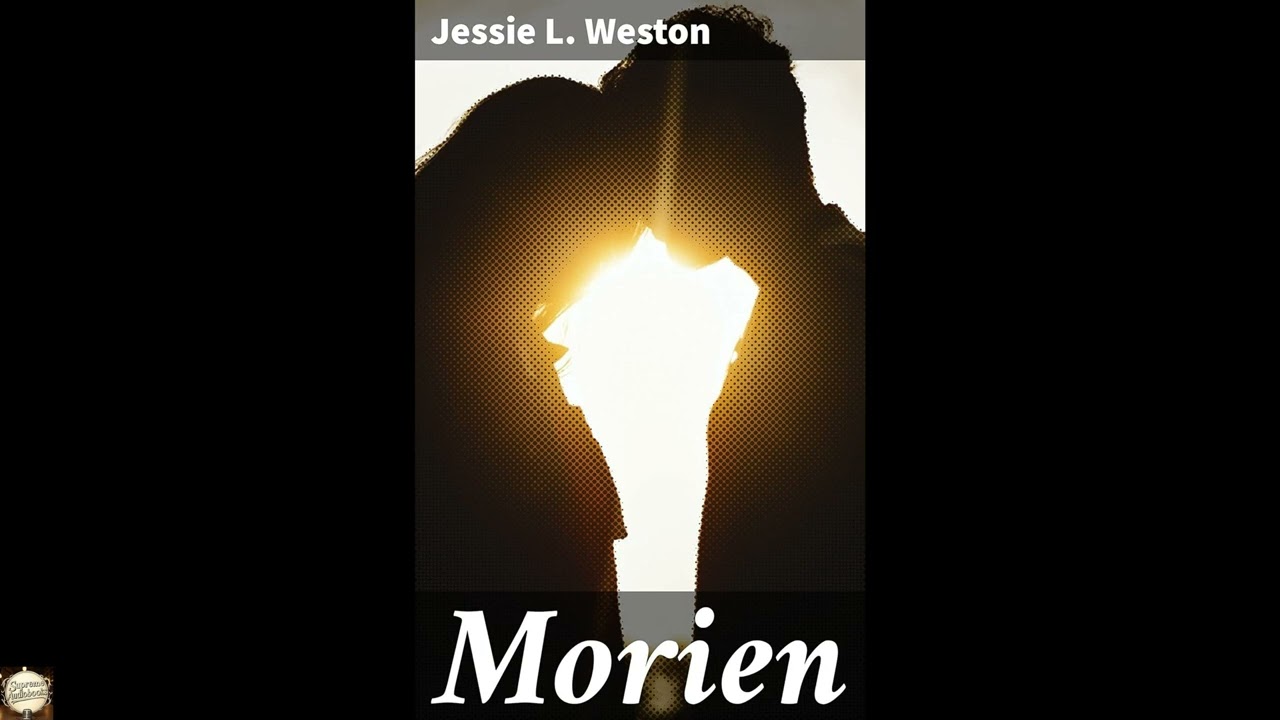
Morien: A Metrical Romance Rendered into English Prose from the Mediæval Dutch
Step into a world where chivalry's gleam meets the shadows of a forgotten past, where the most valiant knight of Arthur's court must confront the consequences of a youthful indiscretion. Morien: A Metrical Romance Rendered into English Prose from the Mediæval Dutch brings forth a story that, despite its origins centuries ago, still resonates with profound questions about identity, belonging, and the search for truth. This is more than just a tale of adventure; it's a poignant quest for a father's recognition, set against the backdrop of legendary heroes and ancient grievances. It presents a unique figure in the Arthurian cycle—a formidable Black Knight whose very existence challenges preconceived notions and asks what truly defines nobility and honor. If you've ever pondered the weight of lineage or the courage required to claim one's rightful place, this narrative offers a stirring reflection on enduring human experiences. The story unfolds within the familiar yet perpetually surprising realm of King Arthur's court, where the greatest knights gather to uphold justice and seek renown. It is here that Sir Lancelot, Arthur's most trusted and celebrated champion, finds himself drawn into a mysterious circumstance. A young knight, possessing extraordinary prowess and a striking dark complexion, arrives at court, urgently seeking Lancelot. This powerful stranger is Morien, a warrior of formidable skill and unyielding determination, whose lineage extends to a distant Moorish land. Morien reveals a startling truth: he is Lancelot's son, born of a passionate union with a princess in a far-off kingdom years ago, a history Lancelot has either forgotten or willfully suppressed. The central conflict ignites as Morien demands Lancelot acknowledge him and assist in finding his long-lost mother, who has disappeared. This revelation sends Lancelot on a quest of personal redemption, forcing him to confront his past and assume responsibility for a son he never knew. Morien, meanwhile, proves himself a knight of exceptional valor, participating in jousts and battles, demonstrating a chivalry equal to, if not surpassing, that of many Arthurian stalwarts. His quest intertwines with various trials and encounters, testing his courage, his loyalty, and his very understanding of justice. The narrative follows Morien's relentless pursuit of his heritage and his mother's whereabouts, as he navigates a world that is at once admiring of his martial prowess and sometimes bewildered by his appearance. Through these events, the story builds towards a climactic reunion and the resolution of the long-standing family mystery, ultimately affirming the bonds of kinship and the power of perseverance. The authorship of the original "Morien" romance remains unknown, as is common with many cherished works from the Middle Ages. Such narratives were often transmitted orally for generations before being committed to parchment by scribes whose personal identities were rarely recorded. The text we know today originates from a medieval Dutch metrical romance, a popular form of entertainment and instruction during its era. This tradition of Arthurian storytelling spread throughout Europe, with tales like Morien taking on unique inflections based on regional cultures and languages. The specific rendering into English prose that makes this story accessible to modern audiences was undertaken by Jessie L. Weston, a prominent scholar and folklorist. Born in the mid-nineteenth century, Weston dedicated her intellectual life to the study of medieval literature and mythology. Weston was a pivotal figure in the late Victorian and Edwardian literary landscape, a period marked by a significant revival of interest in medieval romance and folklore. Her work, including her well-known study From Ritual to Romance, which greatly influenced T.S. Eliot's The Waste Land, positioned her as a leading authority on the Grail legends and the broader Arthurian cycle. It was at the turn of the twentieth century, specifically in 1901, that her prose translation of Morien was published, making this unique story available to English readers. This act of preservation and translation was crucial, allowing a wider public to appreciate the narrative traditions and imaginative scope of earlier centuries, ensuring that works which might otherwise have been lost to linguistic evolution could continue to be read and understood. One of the central ideas animating Morien is the theme of identity and heritage. Morien's very existence is defined by his search for his father and his place within a noble lineage. His distinctive appearance, often described as a Black Knight or Moor, immediately sets him apart and forces both characters within the narrative and listeners outside it to consider how identity is perceived and acknowledged. His pursuit of Lancelot is not merely for paternal affection, but for recognition of his legitimate claim to noble birth and all the honor that entails. Another vital theme is chivalry and honor. Morien consistently demonstrates the highest ideals of knighthood: courage in battle, loyalty to those he aids, and an unwavering commitment to justice. For instance, when he takes up a challenge in a tournament or confronts those who have wronged his family, his actions exemplify the code of conduct that defined the best of Arthur's knights, proving his worth through deed rather than mere birthright. Furthermore, the narrative addresses racial difference and acceptance, an aspect that makes "Morien" particularly remarkable for its time. Morien's dark skin is a prominent feature, and while it occasionally elicits curiosity or comment, the story ultimately portrays him as a powerful, respected, and undeniably heroic figure. This portrayal encourages a contemplation of how appearances are interpreted and whether true valor transcends superficial distinctions. The story also touches on parental responsibility and the consequences of past actions. Lancelot's initial reluctance and eventual embrace of his son underscores the lasting impact of choices made in youth and the moral imperative to rectify wrongs and nurture family bonds. The emotional weight of Lancelot coming to terms with his son’s existence and Morien’s earnest desire for a family reunion gives the chivalric action a deeply human core. When the original medieval Dutch romance of "Morien" was created, likely in the thirteenth century, Europe was in the midst of a flourishing period for chivalric literature. The legends surrounding King Arthur and his knights had already spread widely from Britain, taking root in France, Germany, and the Low Countries, each region adding its own cultural flavor and narrative twists. This era saw the rise of elaborate courtly romances, often performed for aristocratic audiences, which blended adventure, love, and moral instruction. The popularity of such tales reflected a societal fascination with ideals of knighthood, valor, and the quest for spiritual or worldly perfection. The unique inclusion of a prominent knight of African descent within the Arthurian canon further speaks to a broader, albeit sometimes limited, awareness of the wider world beyond European borders, even if filtered through medieval perceptions. The later rendering into English prose by Jessie L. Weston, published in 1901, positioned Morien within a very different historical context. The late nineteenth and early twentieth centuries were a time of intense scholarly and popular interest in medievalism. Figures like William Morris and the Pre-Raphaelite Brotherhood had already rekindled an aesthetic appreciation for the Middle Ages, while historians and philologists were meticulously translating and analyzing ancient texts. Weston's work emerged from this environment, driven by a desire to preserve and popularize these literary treasures. Her rendering of Morien allowed a wider English-speaking public to access a less familiar corner of the Arthurian cycle, introducing them to a compelling figure whose story offered a fresh perspective on familiar tropes and expanded the boundaries of heroic representation within the tradition. Listening to Morien as an audiobook offers an ideal way to experience the narrative's inherent drama and character. The narrator's voice becomes the conduit for the lyrical echoes of the original metrical romance, even in its prose form, guiding the listener through the dense forests, bustling courts, and intense battlefields of the Arthurian world. With a run length of several hours, this allows for a fully immersive engagement, perfect for long commutes or dedicated listening sessions. The pacing of the narration will ebb and flow with the story's demands—quickening during descriptions of jousts and confrontations, slowing for moments of introspection or significant dialogue. A skilled narrator will differentiate characters, giving voice to Lancelot's conflicted heart and Morien's resolute spirit, bringing to life the clashes of swords, the rustle of banners, and the solemn oaths of chivalry, truly transporting the listener to a time when honor was fought for, and identities were forged in fire.
Enjoyed Morien: A Metrical Romance Rendered into English Prose from the Mediæval Dutch? A few ways to support us
Audible & Amazon links are affiliate; we may earn a small commission at no extra cost.
About this production
Human narration by a volunteer reader from LibriVox.org, the public-domain audiobook project. LibriVox volunteers record literary works whose copyright has expired in the United States, releasing the resulting recordings into the public domain.
Morien: A Metrical Romance Rendered into English Prose from the Mediæval Dutch. The underlying text is in the U.S. public domain. We do not republish any modern copyrighted edition, translation, or commentary.
The 4K cinematic visuals accompanying this audiobook are generated by an AI image model from prompts derived from the source text. No copyrighted photos, paintings, or stock footage are used. AI generation is disclosed on every video on our YouTube channel as required by YouTube's altered/synthetic content policy.
English subtitles are transcribed from the LibriVox recording with OpenAI Whisper. Translations into the 11 other supported languages are produced by Meta's NLLB-200 neural translation model. No human translator's copyrighted translation is used.
Questions about sourcing or rights? See our DMCA & Sourcing policy or contact us.
Enjoyed this audiobook?
If you'd like to own a copy of Morien: A Metrical Romance Rendered into English Prose from the Mediæval Dutch or hear a professionally produced edition, the links below help support free audiobook production at no extra cost to you.
As an Amazon Associate we earn from qualifying purchases. Audible / print links are affiliate.