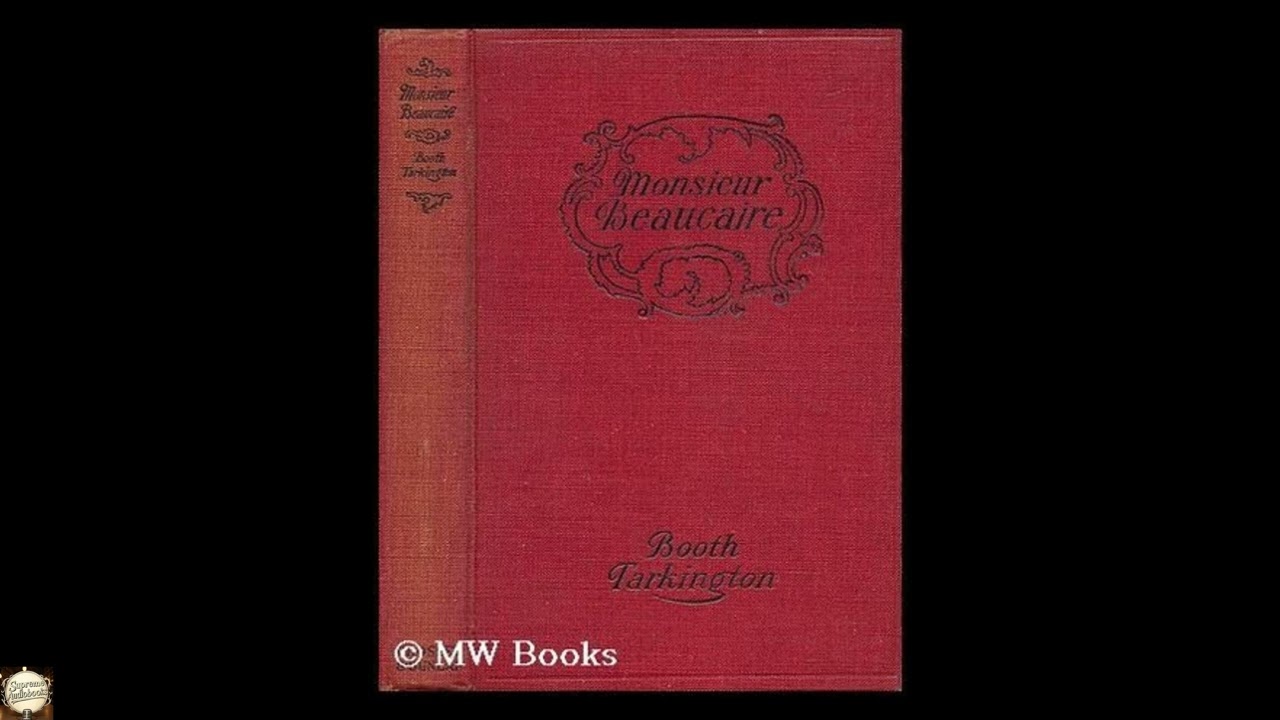
Monsieur Beaucaire, 1900
Monsieur Beaucaire, Booth Tarkington’s delightful novella from 1900, whisks listeners away to a world of powdered wigs, glittering ballrooms, and hidden identities, all set against the deceptively genteel backdrop of eighteenth-century Bath, England. This isn't merely a romantic trifle; it's a keen observation of social pretense and the often-harsh realities of class distinction, wrapped in a thrilling tale of honor, love, and mistaken assumptions. At its heart, it asks whether true nobility lies in birthright or character, a question that remains surprisingly relevant even as the centuries pass and social structures evolve. Prepare for an elegant dance of wit and swordplay, where reputation is everything, and one man dares to defy the superficial judgments of high society for the sake of integrity and affection. The story unfolds in Bath, a fashionable spa town favored by English aristocracy. Here, the charming, enigmatic Monsieur Beaucaire arrives, a Frenchman who, to all appearances, is a barber. Despite his supposed low station, Beaucaire possesses an undeniable grace that both attracts and confounds the local gentry. He quickly finds himself drawn to the stunning Lady Mary Carlisle, a celebrated beauty whose icy demeanor and demanding standards are legendary. Beaucaire, with audacious confidence, begins to court Lady Mary, much to the disdain of the arrogant Duke of Winterset and his circle, who uphold the rigid English class system. Beaucaire’s pursuit of Lady Mary is complicated by a secret agreement with the Duke of Winterset, born from a high-stakes card game and the exposure of the Duke’s dishonorable behavior. This understanding grants Beaucaire temporary entry into Bath’s exclusive social gatherings, allowing him opportunities to interact with Lady Mary. He demonstrates quick wit, talent for swordsmanship, and a profound sense of honor. However, the Duke of Winterset, consumed by pride, schemes relentlessly to expose Beaucaire as a fraud and cast him back into social ignominy. The central conflict becomes Beaucaire's struggle to maintain his fragile position and win Lady Mary’s heart, all while his true identity hangs precariously in the balance, threatened by societal prejudices. The narrative builds toward dramatic confrontations, culminating in a grand public ball where truths are unveiled, loyalties tested, and the true cost of honor is revealed—the ultimate resolution remains a discovery for the listener. Booth Tarkington (1869-1946), born in Indianapolis, Indiana, became a leading American literary figure of the early twentieth century. He achieved a prolific and highly successful career, notably becoming one of only three novelists to win the Pulitzer Prize for Fiction twice—for The Magnificent Ambersons (1919) and Alice Adams (1922). Tarkington initially pursued illustration before dedicating his talents to writing, contributing to magazines like McClure's and Harper's, establishing himself as a prominent voice. His diverse literary output encompassed historical romances, social satires, and character studies. Major successes like The Gentleman from Indiana (1899) and tales of youth such as Penrod (1914) and Seventeen (1916) solidified his reputation. Tarkington belonged to a generation of writers who observed the societal changes of industrialization and the evolving American dream. His novels frequently commented on class structure and individual struggles in a modernizing world, blending regional realism with universal themes. His place in the American literary canon is secure as a chronicler of his era. Monsieur Beaucaire artfully employs several compelling themes, perhaps none more central than appearance versus reality. Beaucaire’s disguise as a barber functions as a powerful symbol, exposing the superficiality of Bath society. His initial low status renders him an object of condescension, despite his inherent nobility. Only through his courageous actions and dignified bearing does a glimmer of his true self emerge—a truth deliberately ignored by those unwilling to see past class prejudices. Lady Mary Carlisle, swayed by the Duke of Winterset’s disapproval, struggles to reconcile Beaucaire’s perceived standing with his genuine character. Another significant theme is social class and prejudice. The eighteenth-century English aristocracy is a rigid system where birthright often outweighs character. Beaucaire’s presence as a "commoner" daring to court a noblewoman offends this order, highlighting the snobbery and exclusionary practices of the upper echelons. The Duke of Winterset embodies this prejudice, using his position to orchestrate Beaucaire’s downfall, not due to actual wrongdoing, but because he threatens the established hierarchy. Tarkington critiques this blind adherence to status, suggesting that true honor can reside in unexpected places and that judging by social label leads to injustice. Published in 1900, Monsieur Beaucaire arrived at a fascinating crossroads. The turn of the twentieth century in America saw the end of the Gilded Age. Tarkington, an American author, set his story in eighteenth-century England, allowing him to comment on universal social structures from a historical remove. Literary trends were shifting from Victorian sentimentalism to realism, yet a strong appetite for historical romance and adventure persisted. Readers found escape in tales from previous eras, which offered a canvas for exploring themes without directly confronting the complexities of rapid industrialization and social reform of their present. Tarkington’s setting in Georgian England allowed him to subtly satirize lingering social snobberies present in his own time, offering a commentary on judging by outward show rather than inner substance. To experience Monsieur Beaucaire as an audiobook truly immerses listeners in its eighteenth-century elegance and drama. A skilled narrator brings the sharp wit of the dialogue to life, making the verbal sparring crackle with energy. You can discern subtle inflections in Lady Mary’s voice and feel the weight of the Duke of Winterset’s contempt. The story’s pace—from hushed whispers to exhilarating sword clashes—is perfectly suited to audio, allowing visualization of grand balls and tense encounters. Over its several hours run time, the performance draws you into Bath’s sophisticated, yet often cruel, society, letting the atmosphere and period details settle as the narrative unfolds, an ideal companion for a quiet afternoon or a long drive.
Enjoyed Monsieur Beaucaire, 1900? A few ways to support us
Audible & Amazon links are affiliate; we may earn a small commission at no extra cost.
About this production
Human narration by a volunteer reader from LibriVox.org, the public-domain audiobook project. LibriVox volunteers record literary works whose copyright has expired in the United States, releasing the resulting recordings into the public domain.
Monsieur Beaucaire, 1900 by Booth Tarkington. The underlying text is in the U.S. public domain. We do not republish any modern copyrighted edition, translation, or commentary.
The 4K cinematic visuals accompanying this audiobook are generated by an AI image model from prompts derived from the source text. No copyrighted photos, paintings, or stock footage are used. AI generation is disclosed on every video on our YouTube channel as required by YouTube's altered/synthetic content policy.
English subtitles are transcribed from the LibriVox recording with OpenAI Whisper. Translations into the 11 other supported languages are produced by Meta's NLLB-200 neural translation model. No human translator's copyrighted translation is used.
Questions about sourcing or rights? See our DMCA & Sourcing policy or contact us.
Enjoyed this audiobook?
If you'd like to own a copy of Monsieur Beaucaire, 1900 or hear a professionally produced edition, the links below help support free audiobook production at no extra cost to you.
As an Amazon Associate we earn from qualifying purchases. Audible / print links are affiliate.