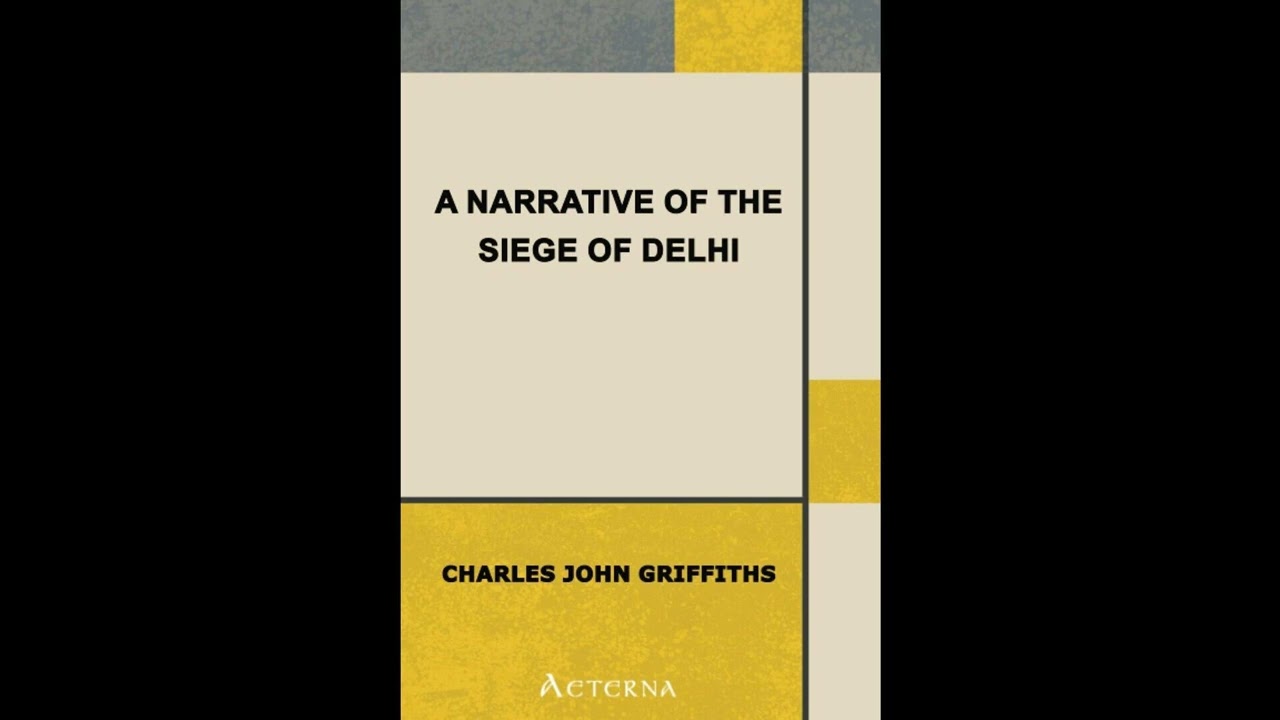
A Narrative of the Siege of Delhi. With an Account of the Mutiny at Ferozepore
The year 1857 etched itself into the annals of history as a period of profound upheaval across the Indian subcontinent, and at its searing heart lay the events chronicled in “A Narrative of the Siege of Delhi. With an Account of the Mutiny at Ferozepore.” This document, a stark and immediate testimony from an anonymous voice, offers a unique window into one of the most brutal and pivotal conflicts of the British Raj—a struggle that reverberated through empires and forever altered the course of South Asian history. While over a century and a half has passed since these events unfolded, the raw human experience of conflict, the clashing of cultures, and the desperate fight for survival depicted within these pages retain an urgent resonance, inviting us to bear witness to the foundational stresses of colonial rule and the enduring legacy of resistance. The account opens not in the grand theater of Delhi, but with the chilling prelude of rebellion at Ferozepore, a vital military cantonment. Here, the sudden, violent eruption of the Sepoy Mutiny is captured with an almost disbelieving immediacy. The narrative plunges the listener into the chaos and confusion of a military station turning against itself, describing the initial acts of insubordination, the burning of bungalows, and the desperate attempts of British officers and their families to find safety amidst widespread revolt. This initial section paints a vivid picture of the sheer terror and disarray as order collapses and the meticulously constructed apparatus of imperial control shatters under the weight of simmering grievances. It is a story of immediate, existential threat, forcing those caught in its sweep to make split-second decisions with life-or-death consequences. From the disquiet of Ferozepore, the narrative swiftly shifts focus to the monumental struggle for Delhi, the ancient Mughal capital that became the symbolic heart of the rebellion. The anonymous chronicler places the listener directly within the British camp outside the city walls, detailing the strategic maneuvers, the arduous daily life of the besieging forces, and the grim reality of sustained warfare. The text meticulously records the skirmishes, the desperate assaults and counter-assaults, the constant bombardment, and the grinding attrition that characterized the long weeks of the siege. We hear of the challenges of maintaining morale, the toll of disease and relentless fighting, and the shifting fortunes of both sides as they grapple for control of a city saturated with historical and political meaning. The account portrays not just military strategy, but the profound human cost of such an extended conflict, painting a picture of endurance, loss, and the unyielding will to prevail. The author of this compelling historical record remains unknown, a common circumstance for many personal accounts that emerged from the crucible of nineteenth-century colonial conflicts. This anonymity, however, lends the narrative a certain universality, suggesting a voice less concerned with personal aggrandizement than with the truthful recording of momentous events. While we cannot assign specific birth or death dates, or a known literary pedigree, the meticulous detail and clear perspective strongly suggest a British observer present on the ground, likely a civilian or a non-commissioned officer, given the blend of strategic overview and intimate personal observation. This kind of primary source material, unburdened by later revision or official censorship, holds immense value for historians and general listeners alike, offering an unvarnished glimpse into the lived experience of the time. This document stands within a significant tradition of British literary responses to empire – personal testimonies, letters, and memoirs that sought to make sense of often bewildering and brutal events. Unlike the grand, authoritative histories penned later, these immediate accounts offer a rawer, less filtered view. They are akin to dispatches from the front, written under duress, driven by the immediate need to document what transpired. The lack of a named author allows the focus to remain purely on the narrative itself, granting the listener the impression of direct access to a witness, a person whose life was irrevocably shaped by the events they describe, making their contribution to the historical canon particularly potent. Several profound themes emerge from the unadorned prose of “A Narrative of the Siege of Delhi.” Primarily, it serves as a stark testament to the inherent brutality of war and rebellion. The account does not shy away from describing the visceral horrors of battle—the loss of life, the devastating injuries, and the destruction of the urban landscape. We hear, for instance, of the relentless cannonades that pulverize Delhi’s ancient walls and the desperate hand-to-hand fighting within its streets, illustrating the sheer physical and psychological toll exacted on all participants. This unflinching portrayal underscores the tragic consequences when political tensions erupt into widespread armed conflict. Another significant theme is the clash of colonial power dynamics and fierce resistance. The narrative, while presumably from a British viewpoint, implicitly reveals the deep-seated resentments and cultural misunderstandings that fueled the uprising. The initial shock at Ferozepore, for example, conveys the profound bewilderment of the British at what they perceived as an inexplicable betrayal, while simultaneously, the determination of the rebels to hold Delhi speaks to a powerful assertion of indigenous agency against foreign domination. The daily skirmishes and the protracted siege itself become metaphors for the larger struggle between an established imperial order and a populace determined to reclaim its sovereignty, highlighting the human cost of empire and the violent birth of nascent nationalisms. This account originated during a period of intense global expansion for the British Empire, following decades of consolidating its hold over India through the East India Company. The year 1857 marked a cataclysmic turning point, igniting what the British termed the "Sepoy Mutiny" and Indians later recognized as the "First War of Independence." The rebellion fundamentally reshaped British policy, leading to the dissolution of the East India Company and the direct assumption of control by the British Crown. Culturally, such narratives of conflict and adventure held significant sway in the Victorian literary world, appealing to a public eager for accounts of imperial exploits, bravery, and the perceived "burden" of empire. This anonymous narrative emerges from that crucible, providing not just a historical record, but a snapshot of contemporary attitudes, fears, and understandings of a crisis that sent shockwaves across the globe. Listening to “A Narrative of the Siege of Delhi” as an audiobook provides an unparalleled opportunity to immerse oneself in this visceral piece of history. The skilled narration can imbue the plain prose with the gravity and immediacy it deserves, allowing the listener to experience the narrative’s shifts from the initial bewildering chaos of Ferozepore to the grinding, desperate resolve of the Delhi siege. The several hours of run length permit a sustained focus, drawing the listener deep into the historical moment. A narrator’s careful pacing can underscore the dramatic tension of the early rebellion, slow down to convey the arduous daily life of the siege, and quicken during descriptions of fierce engagements. The very lack of a named author lends itself well to a voice that embodies not just an individual’s perspective, but a broader, collective experience of a monumental conflict, making the sounds of cannon fire, the cries of battle, and the quiet moments of reflection resonate with profound authenticity.
Enjoyed A Narrative of the Siege of Delhi. With an Account of the Mutiny at Ferozepore? A few ways to support us
Audible & Amazon links are affiliate; we may earn a small commission at no extra cost.
About this production
Human narration by a volunteer reader from LibriVox.org, the public-domain audiobook project. LibriVox volunteers record literary works whose copyright has expired in the United States, releasing the resulting recordings into the public domain.
A Narrative of the Siege of Delhi. With an Account of the Mutiny at Ferozepore. The underlying text is in the U.S. public domain. We do not republish any modern copyrighted edition, translation, or commentary.
The 4K cinematic visuals accompanying this audiobook are generated by an AI image model from prompts derived from the source text. No copyrighted photos, paintings, or stock footage are used. AI generation is disclosed on every video on our YouTube channel as required by YouTube's altered/synthetic content policy.
English subtitles are transcribed from the LibriVox recording with OpenAI Whisper. Translations into the 11 other supported languages are produced by Meta's NLLB-200 neural translation model. No human translator's copyrighted translation is used.
Questions about sourcing or rights? See our DMCA & Sourcing policy or contact us.
Enjoyed this audiobook?
If you'd like to own a copy of A Narrative of the Siege of Delhi. With an Account of the Mutiny at Ferozepore or hear a professionally produced edition, the links below help support free audiobook production at no extra cost to you.
As an Amazon Associate we earn from qualifying purchases. Audible / print links are affiliate.
More by Unknown
Notes and Queries, Index of Volume 3, January-June, 1851 (Classic Books)
Disturbances of the heart, discussion of the treatment of the heart in its various

The Light of Egypt: Volume Two, the Science of the Soul and the Stars