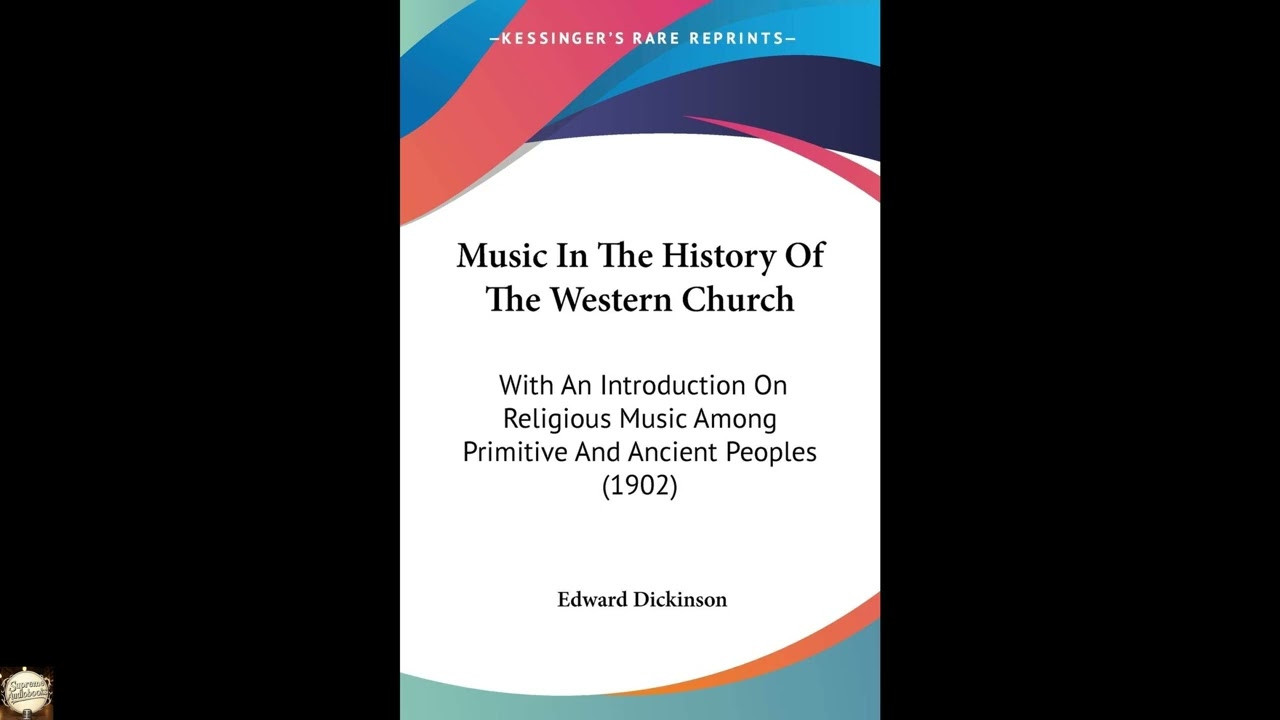
Music In The History Of The Western Church: With An Introduction On Religious Music
Step into the grand sonic cathedral of Western civilization with Music In The History Of The Western Church: With An Introduction On Religious Music, a foundational text that meticulously traces the evolution of sacred sound across millennia. This audiobook offers far more than a mere chronology; it presents a profound understanding of how music has shaped, reflected, and often driven the spiritual and cultural landscape of the West. For anyone seeking to comprehend the profound connection between faith, art, and human expression, this comprehensive account illuminates the very heart of our heritage, revealing why certain sounds move us, what they represent, and how they came to be. It invites listeners to appreciate the deep roots of both religious practice and musical artistry that continue to resonate in contemporary culture. The narrative unfurls with an encompassing introduction to religious music in general, establishing a universal context for humanity's sonic devotion before narrowing its focus to the specific trajectory within the Western Christian tradition. It begins at the very dawn of Christianity, charting the modest, often spontaneous vocalizations of early communities — simple psalmody and hymns that served as expressions of faith and communal identity in an often-hostile world. From these humble beginnings, the story progresses through the formative centuries, detailing the gradual codification of liturgical chant, often associated with Pope Gregory I, which provided a standardized framework for worship across the Latin West. This period saw the anonymous development of a vast repertoire of monophonic melodies, each designed to elevate prayer and imbue sacred texts with spiritual gravity, effectively shaping the soundscape of medieval Europe. As the centuries unfold, the book charts the gradual shift from solo line to intricate texture, presenting the revolutionary development of polyphony. We witness how successive melodic lines began to interweave, first in rudimentary organum, then blossoming into the complex, soaring architectures of Gothic motets and Renaissance masses. This musical progression mirrors theological and architectural developments, as composers, often working within monastic orders or cathedral chapters, pushed the boundaries of sonic possibility while still serving the strictures of liturgy. The narrative culminates around the pivotal eras of the Reformation and Counter-Reformation, illustrating how seismic theological shifts spurred equally profound transformations in sacred music, giving rise to figures like Martin Luther, who championed congregational hymnody, and the Roman Catholic Church’s careful reforms, exemplified by the clear, reverent counterpoint of composers such as Palestrina. The story provides a detailed unfolding of how faith found its voice, constantly adapting and enriching its forms while striving to articulate the ineffable. While the specific identity of the author of Music In The History Of The Western Church remains unrecorded, a common occurrence for foundational scholarly works from earlier centuries, the work itself stands as a testament to a particular era of intellectual endeavor. Such comprehensive surveys, meticulously compiling historical detail and critical analysis, often emerged from a collective scholarly spirit or from academic institutions where individual authorship was sometimes secondary to the pursuit of knowledge itself. The anonymity lends a certain gravitas, allowing the subject matter — the music and its history — to take center stage without the personality of a single writer. Instead, we perceive the voice of dedicated scholarship, a testament to the enduring power and importance of this musical heritage. Classified as "Classic Literature," this book earns its place not for fictional narratives, but for its authoritative and enduring contribution to understanding a vital aspect of Western culture, a resource that scholars and enthusiasts have turned to for generations. The work enacts several profound themes through its historical account. One central idea is the evolution of form in service of purpose. The book illustrates how sacred music continuously adapted its structure and complexity, from the simplicity of early Christian psalmody to the elaborate polyphony of the Renaissance. For example, it shows how the need for clarity in expressing scripture during the Council of Trent directly influenced the style of composers like Palestrina, whose music became a model of reverent textual declamation. Another significant theme is the interplay between theological doctrine and artistic expression. The book illuminates how specific spiritual beliefs informed musical choices, such as the use of particular modes to evoke specific emotional states, or the avoidance of overly virtuosic elements that might distract from worship. It demonstrates how, for centuries, music was not merely an accompaniment to faith, but an integral, living embodiment of it, with every note and interval imbued with devotional meaning. Furthermore, the text consistently highlights music's role as a communal and unifying force. From the shared hymns of the earliest Christian gatherings to the grand choral works performed in cathedrals, sacred music has always served to bind congregations together, fostering a collective experience of reverence and identity. Finally, it underscores the tension between tradition and innovation. The history presented is a continuous dialogue between preserving established forms and experimenting with new sounds and structures. Each stylistic shift — from monophony to polyphony, from an emphasis on vocal purity to the eventual inclusion of instruments — represented a moment where established norms were challenged, adapted, or transcended, shaping the ever-changing sound of worship. This extensive survey likely emerged during the late nineteenth or early twentieth century, a period marked by a surging interest in systematic historical inquiry and the formal academic study of music. This era witnessed the rise of musicology as a distinct discipline, with scholars dedicating themselves to the painstaking collection, classification, and analysis of historical musical sources. There was a broader cultural impulse to understand the origins and development of Western institutions, and the Christian Church, with its deep historical roots and pervasive cultural influence, naturally became a central subject. The availability of printed musical scores, improvements in archival practices, and a growing appreciation for music as an academic field all contributed to an intellectual climate ripe for such a comprehensive and scholarly account of sacred music's vast history. It speaks to a desire to codify knowledge and present a definitive account, serving as a landmark publication for future studies. Listening to Music In The History Of The Western Church: With An Introduction On Religious Music as an audiobook transforms what could be a dense academic study into an accessible and immersive experience. A skilled narrator brings clarity and nuance to the historical details, guiding the listener through complex musical periods and theological discussions with an authoritative yet engaging voice. The several hours of listening time allow for a deep, uninterrupted immersion in the material, letting the listener absorb the intricate connections between faith, history, and musical form at a thoughtful pace. The narration helps to differentiate between the various eras, individuals, and musical forms discussed, lending an atmosphere of intellectual discovery. Without the visual demands of reading, one can truly focus on the ideas being presented, imagining the sounds described and grasping the profound significance of each development in the grand narrative of Western sacred music.
Enjoyed Music In The History Of The Western Church: With An Introduction On Religious Music? A few ways to support us
Audible & Amazon links are affiliate; we may earn a small commission at no extra cost.
About this production
Human narration by a volunteer reader from LibriVox.org, the public-domain audiobook project. LibriVox volunteers record literary works whose copyright has expired in the United States, releasing the resulting recordings into the public domain.
Music In The History Of The Western Church: With An Introduction On Religious Music. The underlying text is in the U.S. public domain. We do not republish any modern copyrighted edition, translation, or commentary.
The 4K cinematic visuals accompanying this audiobook are generated by an AI image model from prompts derived from the source text. No copyrighted photos, paintings, or stock footage are used. AI generation is disclosed on every video on our YouTube channel as required by YouTube's altered/synthetic content policy.
English subtitles are transcribed from the LibriVox recording with OpenAI Whisper. Translations into the 11 other supported languages are produced by Meta's NLLB-200 neural translation model. No human translator's copyrighted translation is used.
Questions about sourcing or rights? See our DMCA & Sourcing policy or contact us.
Enjoyed this audiobook?
If you'd like to own a copy of Music In The History Of The Western Church: With An Introduction On Religious Music or hear a professionally produced edition, the links below help support free audiobook production at no extra cost to you.
As an Amazon Associate we earn from qualifying purchases. Audible / print links are affiliate.
More by Unknown

More Audiobooks
Great Violinists And Pianists
A Medieval Mystic: A Short Account of the Life and Writings of Blessed John Ruysbroe- Full Audiobook
American Lutheranism Volume 2: The United Lutheran Church (General Synod, General Co- Full Audiobook