Boris Lensky
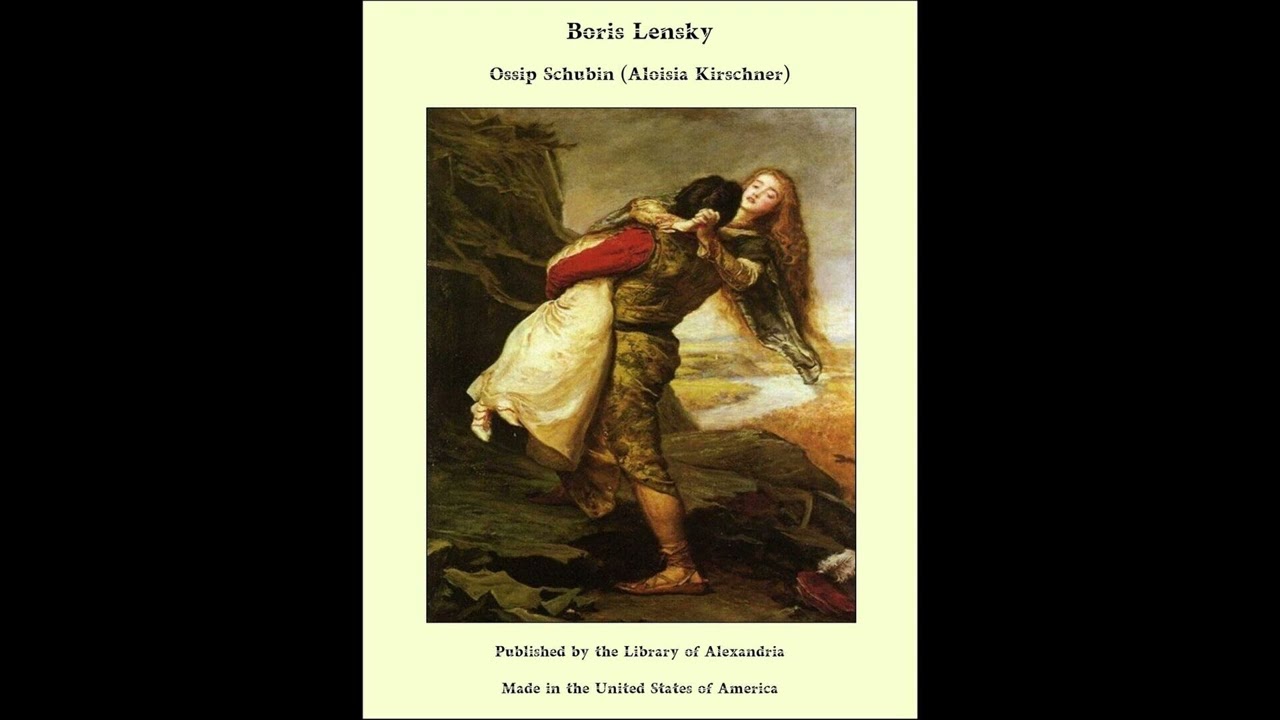
Enter the gilded, gaslit world of a European society caught between its rigid traditions and the yearning for individual freedom with "Boris Lensky," a compelling novel that continues to resonate with readers who wrestle with the eternal conflict between duty and desire. This story by Ossip Schubin, the pen name of the remarkable Aloisia Kirschner, invites listeners into a realm where social standing dictates destiny, yet the heart insists on its own logic. It is a story not just of forbidden love, but of the fierce struggle for authenticity in a world that often values appearance over truth, making its central dilemmas as relevant today as they were over a century ago. The story unfolds within the glittering salons and quiet country estates of late 19th-century European aristocracy, a setting both elegant and stiflingly restrictive. At its heart stands Countess Helene, a woman of intelligence, spirit, and beauty, expected to fulfill a predetermined role within her elite social circle. Her path seems clear, a future of respectable marriage and societal perpetuation, yet fate introduces her to Boris Lensky, a young musician of extraordinary talent and magnetic charisma. Lensky, though undeniably gifted and passionate, possesses neither the inherited wealth nor the aristocratic lineage deemed suitable for Helene's world. Their immediate, undeniable connection sets the stage for a compelling and emotionally charged conflict. As their relationship deepens, Helene finds herself increasingly torn between the dictates of her family and society—the relentless pressure to marry within her class, to uphold tradition and status—and the profound, unconventional love she develops for Boris. He, in turn, grapples with his own ambitions, the demands of his art, and the daunting challenge of existing in a social sphere that views his profession as less than noble and his origins as less than acceptable. The novel meticulously traces the blossoming of their affection against a backdrop of expectation, judgment, and the subtle, often insidious, forces that govern personal choice in such a stratified environment. Their struggle becomes a poignant examination of whether true feeling can overcome the formidable barriers erected by class, convention, and the pursuit of artistic renown, pushing both Helene and Boris to confront the true cost of their desires. The author behind the pseudonym Ossip Schubin was Aloisia Kirschner, born in Prague, Bohemia, in 1854, during the era of the Austrian Empire. Kirschner was a fascinating figure, her life mirroring the independent spirit often found in her fictional heroines. From a relatively privileged background—her father was a factory owner—she received a good education and, perhaps more importantly, possessed a keen intellect and a restless spirit. Unlike many women of her time, Kirschner chose a path of extensive travel and dedicated literary pursuit over conventional marriage. She journeyed throughout Europe, living for significant periods in Italy, France, and Germany, absorbing the cultures and social nuances that would later enrich the settings of her novels. This cosmopolitan lifestyle provided her with a unique perspective on European society, one that allowed her to observe and critique its customs with an outsider's clarity, even as she was often an insider. Schubin—the pen name she adopted—became a celebrated name in German-language literature during the late 19th and early 20th centuries. She was remarkably prolific, producing over 30 novels and numerous novellas, and her works were widely read and translated into several languages. She belonged firmly to the literary movement of Realism, distinguishing herself with a particular talent for psychological depth and sharp social commentary. Her novels frequently centered on intelligent, strong-willed women navigating the restrictive social expectations of their class and era. While today her name might not be as immediately recognizable as some of her male contemporaries, her contributions to the literary landscape—especially in giving voice to the inner lives and societal struggles of women—were significant, solidifying her reputation for compelling narratives that resonated deeply with her readership. At its core, "Boris Lensky" powerfully enacts the enduring tension between rigid social conventions and the fierce pull of individual desire. Helene’s predicament—a woman of status expected to marry advantageously—serves as a poignant case study. We see her wrestling with the weighty expectations of her family and class, the silent judgments of her peers, and the lure of a secure, predictable future, all of which stand in stark opposition to her profound emotional connection with Boris. For instance, Helene might find herself attending a grand ball, outwardly performing her expected role while inwardly yearning for a life beyond the gilded cage of her position. The novel illuminates how societal pressures can subtly erode personal freedom, making even the most private choices feel like public declarations. Another central theme revolves around the precarious and often undervalued position of the artist within a society fixated on lineage and wealth. Boris Lensky, with his undeniable musical genius, finds himself perpetually at odds with an aristocratic world that views his profession as a charming diversion rather than a noble calling. He might face instances where his talent is appreciated, yet his social standing is dismissed, perhaps invited to perform at a salon but never truly accepted as an equal. Schubin subtly portrays the inherent conflict between artistic integrity and the pragmatic need for patronage and acceptance. Furthermore, the novel critically examines the limits of women's agency in the late 19th century. Helene, despite her intelligence and spirit, confronts the profound restrictions placed upon her sex, particularly concerning marriage and personal autonomy. Her choices are not truly her own, but are heavily circumscribed by a patriarchal system that dictates her value based on her suitability as a wife and preserver of family honor. "Boris Lensky" emerged from the fertile and often turbulent intellectual landscape of late 19th-century Europe, a period of profound social and cultural transformation. The grand empires of the continent were still largely intact, but underneath the surface of aristocratic splendor, the forces of industrialization, urbanization, and nascent social reform were beginning to reshape society. This era witnessed a growing middle class, whose values often contrasted sharply with the established traditions of the landed aristocracy. Questions of class, social mobility, and the individual's place within a rapidly changing world were paramount. Literarily, this was the zenith of Realism, a movement that sought to depict life as it truly was, focusing on everyday experiences, psychological depth, and societal observation, often with a critical eye. Writers like Schubin moved away from the more idealized narratives of earlier Romanticism, instead grounding their stories in believable social circumstances and exploring the detailed workings of human motivation. For women writers in particular, this period offered new, albeit still challenging, opportunities to articulate the specific pressures and aspirations of female experience. "Boris Lensky" thus stands as a sensitive barometer of its time, capturing the anxieties surrounding inter-class marriage, the societal value placed on artistic endeavor, and the persistent constraints on women's autonomy, all against a backdrop of opulence and societal expectation. To experience "Boris Lensky" as an audiobook is to be truly immersed in its meticulously crafted world. A skilled narrator breathes life into Schubin's nuanced prose, allowing the listener to fully appreciate the subtle social cues and profound emotional undercurrents that define the era. The narrator's voice becomes the guide through the elegant salons and constrained drawing rooms, articulating the formal yet often charged dialogue with precision, distinguishing the various characters—from the spirited Helene to the passionate Boris and their formidable societal counterparts—with clarity and depth. The run length of several hours makes it an ideal companion for long drives, quiet evenings, or a sustained period of focused listening, offering ample time to sink into the story's rhythm. Listen for the precise pacing, which allows the detailed psychological observations to unfold naturally, and the atmospheric rendering that transports you directly into the heart of a society grappling with tradition and the stirrings of personal freedom. This auditory presentation ensures that the novel's examination of love, ambition, and social barriers resonates with a fresh, immediate power.
Enjoyed Boris Lensky? A few ways to support us
Audible & Amazon links are affiliate; we may earn a small commission at no extra cost.
About this production
Human narration by a volunteer reader from LibriVox.org, the public-domain audiobook project. LibriVox volunteers record literary works whose copyright has expired in the United States, releasing the resulting recordings into the public domain.
Boris Lensky by Ossip Schubin. The underlying text is in the U.S. public domain. We do not republish any modern copyrighted edition, translation, or commentary.
The 4K cinematic visuals accompanying this audiobook are generated by an AI image model from prompts derived from the source text. No copyrighted photos, paintings, or stock footage are used. AI generation is disclosed on every video on our YouTube channel as required by YouTube's altered/synthetic content policy.
English subtitles are transcribed from the LibriVox recording with OpenAI Whisper. Translations into the 11 other supported languages are produced by Meta's NLLB-200 neural translation model. No human translator's copyrighted translation is used.
Questions about sourcing or rights? See our DMCA & Sourcing policy or contact us.
Enjoyed this audiobook?
If you'd like to own a copy of Boris Lensky or hear a professionally produced edition, the links below help support free audiobook production at no extra cost to you.
As an Amazon Associate we earn from qualifying purchases. Audible / print links are affiliate.