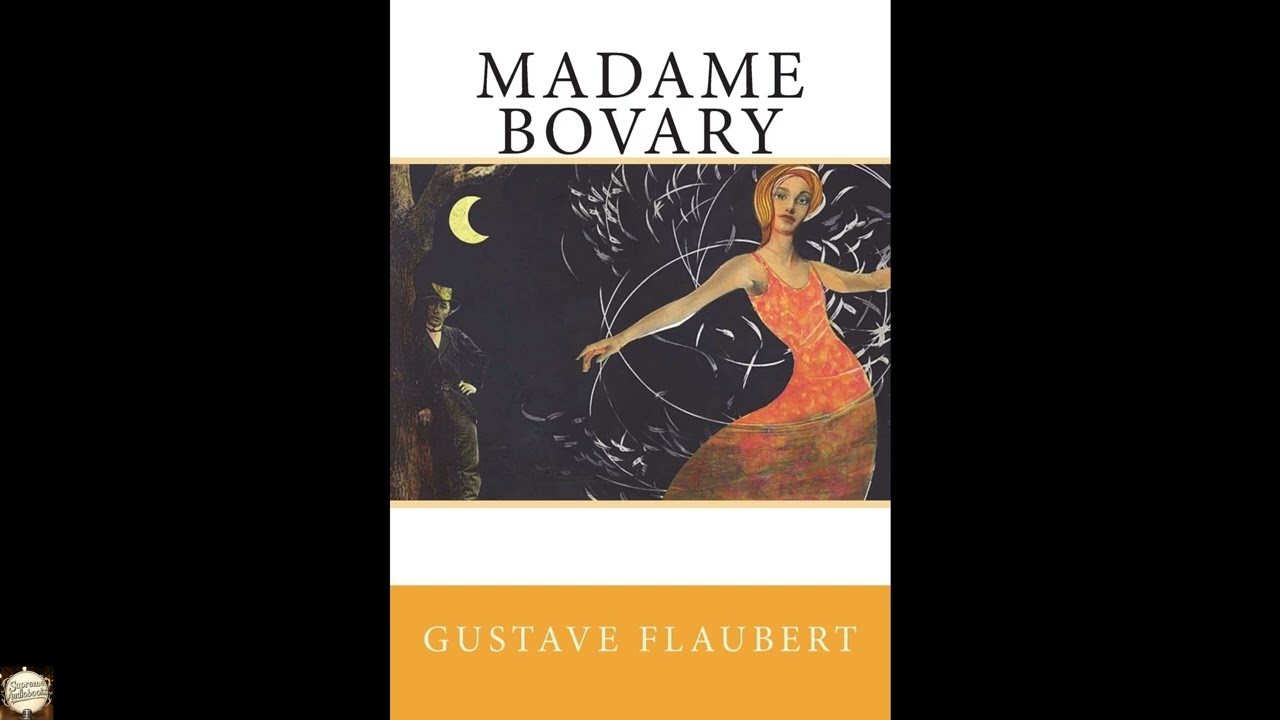
Madame Bovary
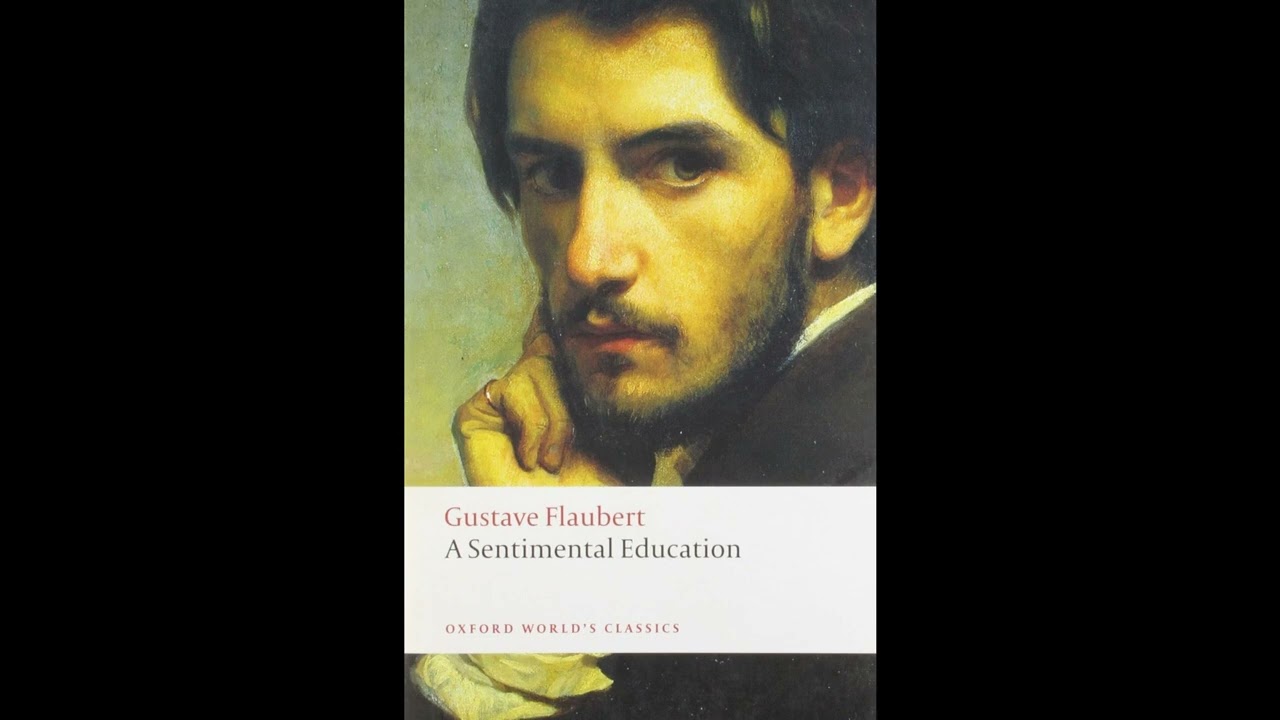
Gustave Flaubert's Madame Bovary stands as a monumental achievement in the landscape of world literature, a work that, more than a century and a half after its initial publication, continues to probe the enduring human struggle between desire and reality. It is a story not just about a woman's tragic search for a life of passion and grandeur, but a searing commentary on the suffocating nature of provincial existence, the perils of unbridled romantic fantasy, and the slow, insidious grind of societal expectation. In an age saturated with curated images of perfection and instant gratification, Emma Bovary's yearning for an idealized life, her relentless pursuit of a happiness just beyond her grasp, resonates with an unsettling familiarity. Her story reminds us of the delicate balance between dreaming and living, and the profound consequences when one consumes the other. The novel opens in the quiet, unexceptional world of rural Normandy, introducing us to Charles Bovary, a kindly but dull country doctor. His marriage to a drab, older widow is soon cut short, paving the way for his encounter with Emma Rouault, the beautiful, convent-educated daughter of one of his patients. Emma, whose imagination has been thoroughly shaped by sentimental novels and romantic poetry, sees in marriage not merely a union of two people, but the gateway to an exalted existence, filled with grand passions and elegant living. However, her wedding to Charles, and the subsequent move to the sleepy market town of Tostes, quickly proves a profound disappointment. The reality of domestic life with the unimaginative Charles, the endless routine, and the stifling lack of sophistication rapidly transforms her ardent hopes into bitter disillusionment. As Charles’s practice moves them to the even smaller village of Yonville, Emma’s boredom intensifies, finding no solace in motherhood and little intellectual companionship. Her fervent imagination, starved of genuine stimulus, begins to cast ordinary men in the roles of her storybook heroes. Two men, in particular, attract her attention: Leon Dupuis, a young law student whose romantic sensibilities mirror her own, and Rodolphe Boulanger, a cynical but charming landowner. In her desperation to escape the mundane and fulfill her romantic fantasies, Emma finds herself drawn into increasingly dangerous liaisons and extravagant spending, convinced that true happiness lies just beyond her reach, purchasable with money and illicit affection. The narrative follows her desperate attempts to reconcile the world of her dreams with the harsh, often ugly, truths of her provincial life, all while the threads of her existence slowly, inexorably, begin to unravel. Gustave Flaubert, the exacting architect of this literary landmark, was born in Rouen, France, in 1821, and lived until 1880. From a privileged background, his father being a prominent surgeon, Flaubert initially pursued a legal education, but health issues—believed to be epilepsy—forced him to abandon law for a secluded life dedicated to writing at his family estate in Croisset. He became renowned for his meticulous prose, spending years polishing sentences, famously searching for le mot juste—the perfect word. His literary output, though not extensive, includes other significant works such as the exotic historical novel Salammbô, the philosophical satire Bouvard and Pécuchet, and the equally acclaimed Sentimental Education, another examination of romantic disillusionment in a changing society. Flaubert’s place in the literary canon is secure as one of the preeminent figures of French literature and a foundational voice of literary realism. His commitment to objective narration, psychological depth, and precise detail marked a significant departure from the more subjective and melodramatic tendencies of Romanticism that preceded him. His methodical approach to composition and his relentless pursuit of stylistic perfection laid much of the groundwork for modern narrative technique. The initial publication of Madame Bovary in serial form in 1856 led to an infamous obscenity trial, with Flaubert ultimately acquitted, a controversy that only served to solidify the novel's reputation and bring it wider attention. At the heart of Madame Bovary lies a profound examination of romantic idealism clashing head-on with prosaic reality. Emma, steeped in the escapist narratives of the time, expects life to mimic the grand gestures and passionate intensity of her novels. Her wedding day, for instance, filled with her imagined splendors, quickly devolves into a dreary, unremarkable affair, setting the tone for her entire married life. She continually seeks to impose her fantastical visions onto a world stubbornly devoid of them, leading to a relentless cycle of disappointment and a yearning for an ever-receding ideal. The novel also functions as a sharp social critique of the stifling boredom and hypocrisies of provincial bourgeois life. Flaubert portrays the small-mindedness and intellectual barrenness of Yonville and its inhabitants with biting irony, such as during the agricultural fair scene where lofty speeches about industry are juxtaposed with Rodolphe’s whispered seductions, revealing the true concerns beneath the veneer of respectability. Another central theme is the destructive power of materialism and debt. Emma’s desperate attempts to fashion a more glamorous life for herself involve compulsive spending on clothes, furniture, and trinkets she cannot afford, seeing these objects as essential props for the idealized existence she craves. Her escalating debt to the cunning merchant Lheureux illustrates how material desires, initially meant to elevate her, become an inescapable trap, tightening around her with increasing urgency. Furthermore, the novel powerfully portrays the constraints on female agency in 19th-century society. Emma’s attempts to find fulfillment outside the domestic sphere—through her affairs and her extravagant purchases—are ultimately desperate bids for control and happiness in a world that offers her few legitimate avenues for self-expression, highlighting the tragic consequences of societal and personal limitations. The mid-19th century in France was a period of significant social and political transformation. Under the Second Empire of Napoleon III, there was a veneer of stability and prosperity, yet beneath it simmered social unrest and a growing sense of disillusionment with both romantic ideals and strict moral codes. Flaubert published Madame Bovary between 1856 and 1857, a time when France was industrializing, the bourgeois class was consolidating its power, and scientific thought was beginning to challenge established religious and philosophical viewpoints. The novel itself emerged as a direct response to the lingering sentimentalism of Romanticism, signaling a new literary movement—Realism—that sought to depict life with unflinching accuracy, psychological depth, and social observation. Flaubert’s precise, objective style was revolutionary, reflecting the era's growing interest in empirical observation over emotional excess. Listening to Madame Bovary as an audiobook offers a unique opportunity to immerse oneself in Flaubert’s renowned prose and the intimate tragedy of Emma’s life. The narration brings to life the painstaking detail of Flaubert’s descriptions—from the dusty streets of Yonville to the rustle of Emma’s silk dresses—allowing the listener to absorb the novel’s rich atmosphere through sound. The substantial run length makes it an ideal companion for extended periods of focused listening, whether during commutes, long walks, or dedicated quiet time. A skilled narrator can convey the subtle nuances of Flaubert’s irony, the shifting emotions in Emma’s internal monologue, and the distinct voices of the provincial characters, enriching the experience of dialogue and social interactions. Hearing the story unfold helps to emphasize the rhythmic quality of Flaubert’s writing and the slow, inevitable build-up of Emma’s personal catastrophe, creating an unforgettable auditory journey into one of literature’s most enduring psychological portraits.
Enjoyed Madame Bovary? A few ways to support us
Audible & Amazon links are affiliate; we may earn a small commission at no extra cost.
About this production
Human narration by a volunteer reader from LibriVox.org, the public-domain audiobook project. LibriVox volunteers record literary works whose copyright has expired in the United States, releasing the resulting recordings into the public domain.
Madame Bovary by Gustave Flaubert. The underlying text is in the U.S. public domain. We do not republish any modern copyrighted edition, translation, or commentary.
The 4K cinematic visuals accompanying this audiobook are generated by an AI image model from prompts derived from the source text. No copyrighted photos, paintings, or stock footage are used. AI generation is disclosed on every video on our YouTube channel as required by YouTube's altered/synthetic content policy.
English subtitles are transcribed from the LibriVox recording with OpenAI Whisper. Translations into the 11 other supported languages are produced by Meta's NLLB-200 neural translation model. No human translator's copyrighted translation is used.
Questions about sourcing or rights? See our DMCA & Sourcing policy or contact us.
Enjoyed this audiobook?
If you'd like to own a copy of Madame Bovary or hear a professionally produced edition, the links below help support free audiobook production at no extra cost to you.
As an Amazon Associate we earn from qualifying purchases. Audible / print links are affiliate.