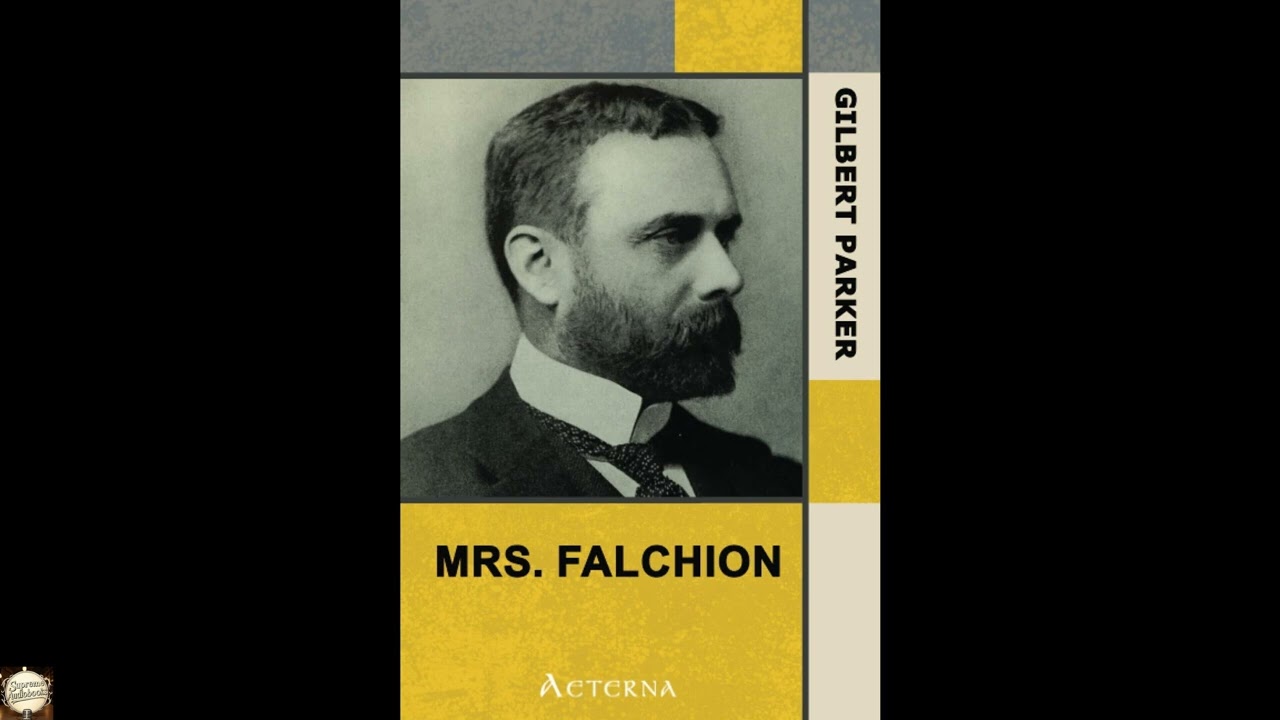
Mrs. Falchion
Step into the parlor of a bygone era, where appearances are everything and a carefully constructed life can shatter with a single whisper. Gilbert Parker's Mrs. Falchion offers more than just a glimpse into the social intricacies of the late nineteenth century; it presents a penetrating character study of a woman grappling with a shadowed past, the fierce desire for reinvention, and the ever-present threat of exposure. This is a story that resonates today, long after its initial publication, as it cuts to the core of human vulnerability, the longing for acceptance, and the courage required to confront one's true self, even when the world prefers a more convenient fiction. Listeners will find themselves drawn into a compelling narrative that asks profound questions about identity, forgiveness, and the enduring power of secrets. The story unfolds within a seemingly tranquil, yet rigidly stratified, Canadian society. We are introduced to Mrs. Falchion, a woman of striking beauty and refined manners who has, by all outward appearances, built a respectable life for herself. She resides in a comfortable home, engages in appropriate social circles, and generally maintains an air of quiet dignity. However, beneath this polished exterior lies a profound tension, a constant awareness of a past she has meticulously buried, a history that threatens to erupt and dismantle everything she has painstakingly created. Her interactions are often tinged with a subtle reserve, a guardedness that suggests an unspoken burden. The central conflict arises not from an external villain, but from the relentless pressure of her own suppressed history, embodied by the potential return of figures from that former life, or the accidental revelation of details that could betray her carefully crafted present. As the narrative progresses, Mrs. Falchion finds herself in a precarious balance. She is torn between the desire to maintain her newfound peace and the creeping anxiety that her façade might crumble at any moment. The story meticulously details her internal struggles, her attempts to navigate polite society while shielding her true self from scrutiny. Key relationships develop, testing her resolve and presenting dilemmas that force her to confront the moral ambiguities of her situation. These relationships often highlight the stark contrast between the person she pretends to be and the woman she genuinely is, or wishes to become. The tension builds through subtle clues and escalating coincidences, drawing the listener deeper into Mrs. Falchion's world, where every interaction carries the weight of potential discovery and every decision has far-reaching consequences. Gilbert Parker, born in Camden East, Ontario, in 1862, rose to prominence as one of the most celebrated Canadian authors of his era. Educated at Trinity College, Toronto, he initially pursued a career in journalism and teaching before dedicating himself to writing. His early career saw him travel widely, particularly to Australia and the South Seas, experiences that later colored some of his lesser-known works. However, it was his tales of colonial Canada, particularly the lives of French Canadians and First Nations people, that solidified his literary reputation. Parker possessed a keen eye for historical detail and a robust storytelling style that captivated a wide readership on both sides of the Atlantic. Parker’s body of work spans numerous novels, short stories, and even a book of poetry. Notable titles such as The Seats of the Mighty, The Right of Way, and When Valmond Came to Pontiac exemplify his ability to blend historical romance with elements of adventure and social commentary. He was a prolific writer, often publishing several works a year, and his popularity endured throughout the late Victorian and early Edwardian periods. His narratives often wrestled with themes of identity, honor, and the clash of cultures within the expanding British Empire. Beyond his literary pursuits, Parker also served as a Member of Parliament in the British House of Commons, representing Gravesend for over two decades, demonstrating a remarkable blend of literary and political ambition. He was knighted in 1902, a testament to his significant contributions to literature and public life, and he passed away in 1932, leaving behind a substantial legacy. Mrs. Falchion enacts several profound themes that lend it enduring power. One prominent theme is the burden of the past and its inescapable influence on the present. Mrs. Falchion's entire existence is shaped by the secret she carries; every decision, every social interaction, is filtered through the lens of potential exposure. For instance, a seemingly innocuous comment about a distant town can send her into an internal panic, her mind racing to connect it with her hidden history. This constant vigilance underscores how past actions, even when deeply regretted, continue to cast long shadows. Another compelling theme is the nature of identity and the possibility of reinvention. Mrs. Falchion actively attempts to construct a new self, shedding her former life like an old skin. Her polite demeanor and careful social performance are not merely acts of deception, but rather a desperate effort to become the person she aspires to be – respected, untroubled, and free from judgment. Furthermore, the novel subtly addresses the theme of societal judgment and the unforgiving nature of rumor. The strict social codes of the period meant that a single blemish on one's reputation could lead to ostracization, a fate Mrs. Falchion dreads above all else. The narrative demonstrates how quickly whispers can spread and how devastating their impact can be, regardless of their accuracy. We see characters observe Mrs. Falchion with a mixture of admiration and suspicion, their internal biases reflecting the prevailing attitudes towards women who did not conform to conventional narratives. The story also touches on the complexities of love and trust, exploring how these powerful emotions are tested when built upon a foundation of secrecy, forcing characters to weigh devotion against the painful truths of another's history. Mrs. Falchion emerged during a period of significant social and literary transition. The late 19th century, often termed the fin de siècle, saw traditional Victorian values beginning to give way to the more modern sensibilities of the Edwardian era. There was a growing interest in psychological realism, moving beyond purely adventurous or romantic narratives to focus more on the internal lives and moral dilemmas of characters. Parker's work, while still retaining elements of popular romance, reflected this shift by placing a complex female protagonist at the center of a drama driven by internal conflict rather than solely external events. Culturally, society remained highly sensitive to issues of reputation, especially for women, making a story about a hidden past particularly potent. The burgeoning literary market also meant that authors like Parker were catering to an increasingly diverse readership, eager for stories that combined compelling plots with deeper human insights. Listening to Mrs. Falchion as an audiobook offers a unique opportunity to immerse oneself fully in its subtly building tension and period atmosphere. The several hours of its run length allow the story to unfold at a deliberate, measured pace, mirroring the slow revelation of Mrs. Falchion's character and the gradual heightening of suspense. A skilled narrator can bring to life the nuances of the dialogue, capturing the restrained emotions and unspoken anxieties that permeate the text. Pay attention to the shifts in voice and tone, which can effectively convey Mrs. Falchion's internal struggles – the fear, the hope, the quiet determination – without explicit exposition. The auditory experience can also enhance the sense of the setting, allowing the listener to visualize the grand parlors and hushed social gatherings, and to feel the weight of societal expectations as the narrative steadily progresses towards its compelling, untold resolution.
Enjoyed Mrs. Falchion? A few ways to support us
Audible & Amazon links are affiliate; we may earn a small commission at no extra cost.
About this production
Human narration by a volunteer reader from LibriVox.org, the public-domain audiobook project. LibriVox volunteers record literary works whose copyright has expired in the United States, releasing the resulting recordings into the public domain.
Mrs. Falchion by Gilbert Parker. The underlying text is in the U.S. public domain. We do not republish any modern copyrighted edition, translation, or commentary.
The 4K cinematic visuals accompanying this audiobook are generated by an AI image model from prompts derived from the source text. No copyrighted photos, paintings, or stock footage are used. AI generation is disclosed on every video on our YouTube channel as required by YouTube's altered/synthetic content policy.
English subtitles are transcribed from the LibriVox recording with OpenAI Whisper. Translations into the 11 other supported languages are produced by Meta's NLLB-200 neural translation model. No human translator's copyrighted translation is used.
Questions about sourcing or rights? See our DMCA & Sourcing policy or contact us.
Enjoyed this audiobook?
If you'd like to own a copy of Mrs. Falchion or hear a professionally produced edition, the links below help support free audiobook production at no extra cost to you.
As an Amazon Associate we earn from qualifying purchases. Audible / print links are affiliate.