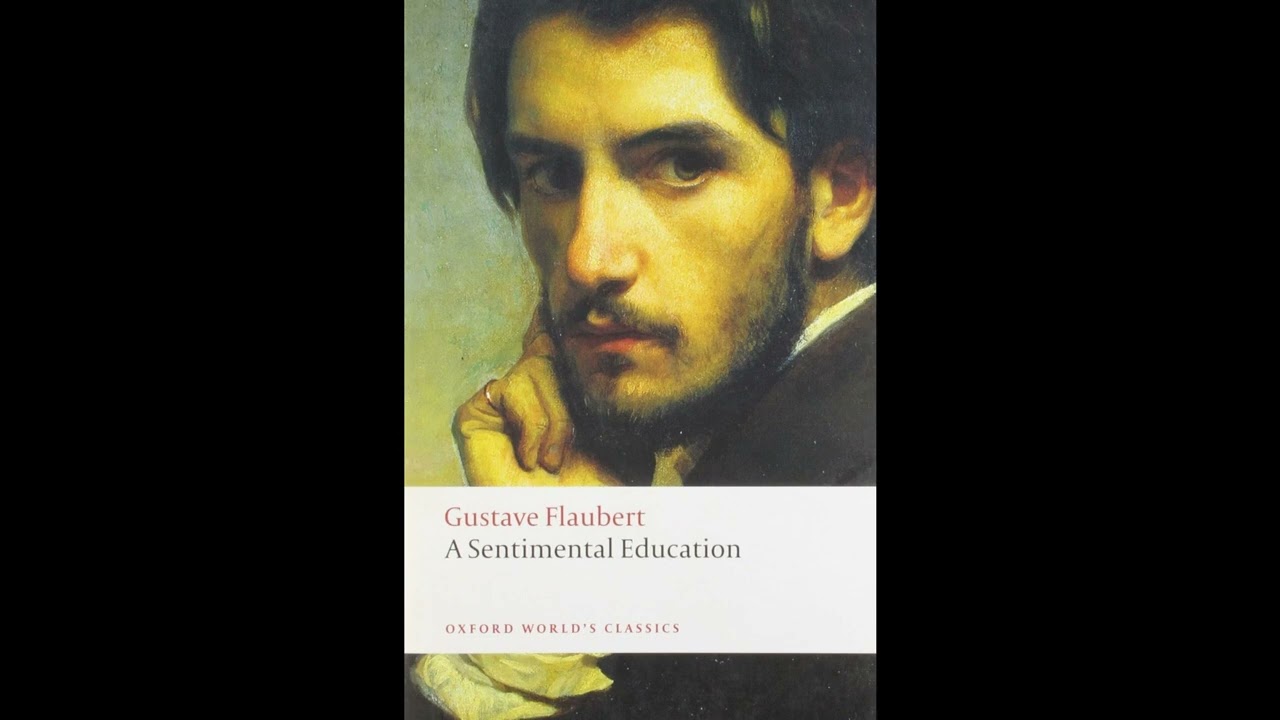
A Sentimental Education
Gustave Flaubert’s A Sentimental Education arrives on the digital shelves not as a dusty relic, but as a surprisingly fresh and resonant commentary on aspiration, disillusionment, and the often-unfulfilled promise of youth. Written over a century and a half ago, this novel charts the meandering course of a young man’s life through a period of immense social and political upheaval in France. Yet, its true power lies in its unflinching portrayal of human passivity, the failure of grand ideals, and the bittersweet ache of unrequited love and missed opportunities. It speaks to anyone who has ever felt adrift, caught between personal ambition and the currents of history, or who has watched their most fervent hopes dissolve into regret. It is a story about the education of the heart and mind, not through triumph, but through a series of quiet, devastating renunciations. The narrative centers on Frédéric Moreau, a young man of modest means but considerable expectations, as he leaves his provincial home to seek his fortune and fulfill his destiny in Paris during the mid-19th century. We first meet him in 1840, a law student returning home for the summer, when he encounters Madame Arnoux on a riverboat. This fleeting meeting ignites within him an all-consuming, idealized passion that will define – and ultimately paralyze – much of his adult life. He returns to the bustling capital, ostensibly to complete his studies, but more truly to immerse himself in the vibrant social and intellectual whirl of the city. He cultivates friendships with students, artists, and political radicals, always searching for a foothold in the Parisian world. Frédéric's path is not one of straightforward progression but of numerous distractions and detours. He inherits a small fortune, which allows him to live a life of leisure, but also fosters his inherent indecisiveness. He flirts with artistic ambitions, dabbles in journalism, and becomes entangled in various romantic liaisons, none of which ever quite satisfy him. His devotion to Madame Arnoux, a married woman, remains his enduring fixation, an idealized love that he rarely acts upon decisively, preferring instead to nurse his sentimental yearning. All the while, the backdrop of France itself is in turmoil, moving from the conservative July Monarchy through the feverish revolutionary year of 1848, and into the era of the Second Empire. Frédéric observes these momentous events, occasionally participates on the fringes, but rarely commits to any cause or person with true conviction, remaining a bystander in his own life and in the sweep of history. Gustave Flaubert, born in 1821 in Rouen, France, was a figure of immense dedication to his craft, known for his relentless pursuit of the mot juste—the precisely right word. The son of a successful surgeon, he initially studied law but soon abandoned it, dedicating his life wholly to literature after inheriting a comfortable income. He spent much of his adult life in the quiet solitude of his country estate at Croisset, near Rouen, meticulously composing his novels and corresponding with other literary figures. His work ethic was legendary; he was known to spend days on a single page, reading his prose aloud to test its rhythm and flow. Flaubert’s influence on the development of the modern novel is difficult to overstate. He is often considered one of the fathers of literary realism, pioneering a style characterized by objective narration, psychological depth, and an unwavering commitment to truth in observation. His earlier novel, Madame Bovary (1856), cemented his reputation, though it also earned him an obscenity trial (from which he was acquitted), scandalizing bourgeois sensibilities with its depiction of an adulterous country doctor's wife. Other notable works include the exotic historical novel Salammbô (1862) and the satirical Bouvard and Pécuchet, left unfinished at his death in 1880. Flaubert’s meticulous approach to prose and his detached, ironic perspective would go on to shape generations of writers, influencing figures from Henry James to Marcel Proust. At its core, A Sentimental Education is a profound meditation on disillusionment. Frédéric Moreau’s repeated failures to achieve professional success, political purpose, or even romantic fulfillment illustrate a broader societal malaise. He is a man of potential, yet he consistently allows circumstance and his own indecision to lead him astray, resulting in a life marked by regret rather than accomplishment. This emotional education is one of learning not what to strive for, but what has been lost. For instance, his fleeting involvement with the 1848 Revolution—initially filled with republican fervor—quickly devolves into a cynical observation of its bloody suppression and the subsequent ascent of authoritarianism, mirroring his personal retreat from idealism. Another central theme is the destructive power of romantic illusion. Frédéric's idealized passion for Madame Arnoux is a prime example. This infatuation is less about the real woman and more about a projection of his own desires and sensibilities. It prevents him from truly engaging with other relationships and experiences, trapping him in a beautiful but ultimately barren dream. His inability to separate the idealized image from reality—a trait Flaubert often critiqued in his characters—renders him emotionally stunted, unable to find lasting happiness even when opportunities present themselves. The contrast between Frédéric’s romanticized visions and the often-sordid reality of his encounters with other women highlights this persistent detachment. Flaubert wrote A Sentimental Education during a period of immense change in France. The novel spans the years 1840 to 1867, covering the end of the July Monarchy, the dramatic events of the 1848 Revolution, the brief Second Republic, and the rise of Louis-Napoléon Bonaparte's Second Empire. This was a time of burgeoning industrialization, rapid urbanization—particularly the transformation of Paris under Baron Haussmann—and the ascent of a new bourgeois class. Flaubert, having witnessed the 1848 Revolution firsthand, felt a deep cynicism regarding the political fervor and subsequent failure of revolutionary ideals. He saw a generation, his own, marked by a lack of genuine conviction and a tendency towards self-serving ambition rather than true idealism. The novel, therefore, becomes a critique of this specific historical moment and the character of the young men who inhabited it. Listening to A Sentimental Education as an audiobook offers a unique way to engage with Flaubert’s meticulously crafted prose and his insightful depiction of human psychology and a specific historical era. The narrator’s voice becomes crucial in conveying the author’s renowned objective, almost clinical, yet deeply observant perspective. Listeners will appreciate how the steady, measured pacing allows the subtle ironies and profound sadness inherent in Frédéric’s story to truly sink in. The nuances of dialogue and the rich descriptions of Parisian life, from glittering salons to revolutionary street barricades, come alive through skilled performance. The sustained run length—several hours—is perfectly suited for an immersive experience, allowing the listener to truly inhabit Frédéric’s consciousness and the shifting landscape of 19th-century France without interruption, following the intricate flow of Flaubert’s sentences and the quiet unfolding of a life that, despite its grand ambitions, ultimately settles for quiet mediocrity.
Enjoyed A Sentimental Education? A few ways to support us
Audible & Amazon links are affiliate; we may earn a small commission at no extra cost.
About this production
Human narration by a volunteer reader from LibriVox.org, the public-domain audiobook project. LibriVox volunteers record literary works whose copyright has expired in the United States, releasing the resulting recordings into the public domain.
A Sentimental Education by Gustave Flaubert. The underlying text is in the U.S. public domain. We do not republish any modern copyrighted edition, translation, or commentary.
The 4K cinematic visuals accompanying this audiobook are generated by an AI image model from prompts derived from the source text. No copyrighted photos, paintings, or stock footage are used. AI generation is disclosed on every video on our YouTube channel as required by YouTube's altered/synthetic content policy.
English subtitles are transcribed from the LibriVox recording with OpenAI Whisper. Translations into the 11 other supported languages are produced by Meta's NLLB-200 neural translation model. No human translator's copyrighted translation is used.
Questions about sourcing or rights? See our DMCA & Sourcing policy or contact us.
Enjoyed this audiobook?
If you'd like to own a copy of A Sentimental Education or hear a professionally produced edition, the links below help support free audiobook production at no extra cost to you.
As an Amazon Associate we earn from qualifying purchases. Audible / print links are affiliate.