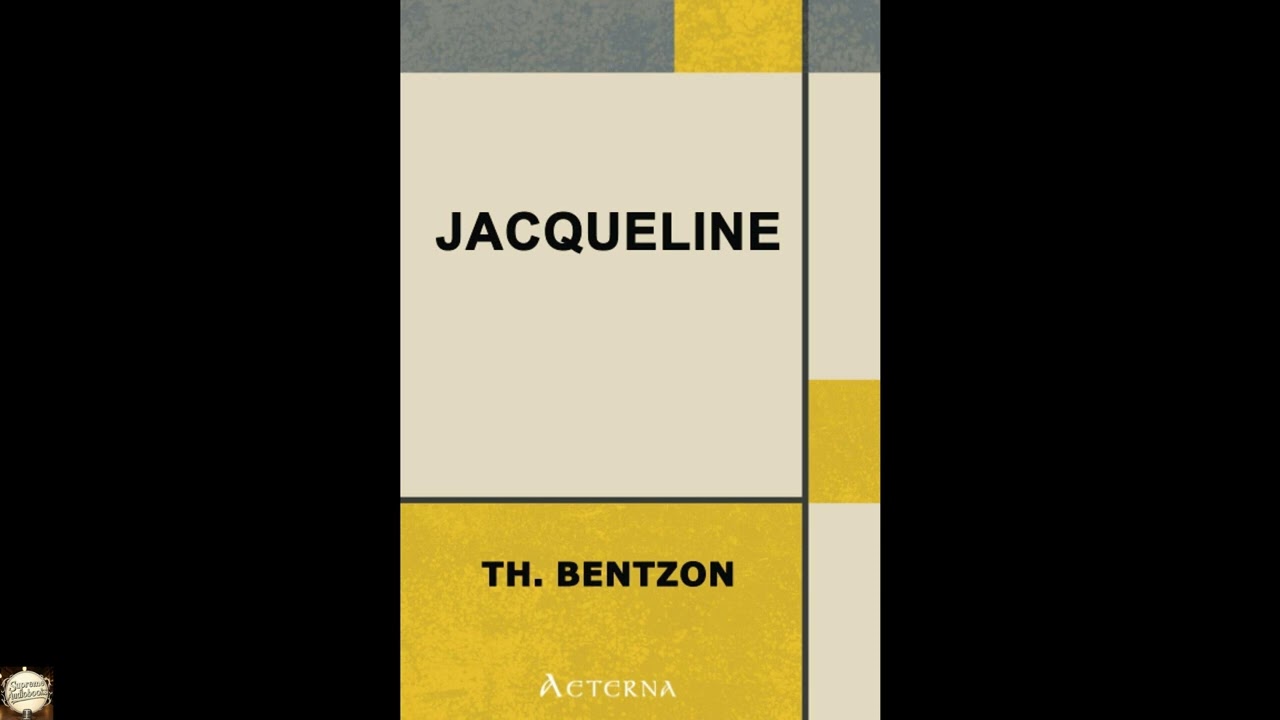
Jacqueline — Complete
Th. Bentzon’s Jacqueline — Complete offers a rare window into the interior life of a woman navigating the constrictions and possibilities of late 19th-century French society. This isn’t merely a story of romantic entanglements, but a keen psychological study, presenting questions about identity, marriage, and the elusive pursuit of personal fulfillment that resonate as strongly today as they did over a century ago. Long recognized by scholars for its sharp social observation and its empathetic portrayal of a woman striving for authenticity, this novel stands as a quietly powerful statement on female agency, waiting to be rediscovered by a new generation of listeners seeking voices from the past that speak directly to contemporary concerns about selfhood and societal expectation. The story introduces us to Jacqueline, a young woman living within the genteel but stifling confines of bourgeois Paris. From her earliest days, she seems destined for a conventional life, marked by the social expectations placed upon women of her class. We meet her as she enters a marriage that, while outwardly respectable and economically advantageous, quickly proves to be devoid of genuine emotional connection or intellectual stimulation. Her husband, though not overtly cruel, is distant and consumed by his own pursuits, leaving Jacqueline isolated in a partnership that feels more like an obligation than a union. She finds herself a prisoner of domesticity, yearning for a deeper sense of purpose and a connection that transcends the superficialities of her daily existence. As the narrative unfolds, Jacqueline’s quiet desperation morphs into a profound inner struggle. She is intelligent and sensitive, possessing a depth of feeling that her circumscribed world cannot accommodate. Her search for meaning leads her down paths both conventional and quietly rebellious, from attempts to find solace in friendships and intellectual pursuits to the stirrings of a forbidden attachment that threatens to shatter the fragile peace of her established life. Bentzon masterfully portrays the subtle shifts in Jacqueline’s emotional landscape, showing her gradual awakening to the limitations of her situation and her courageous, if sometimes faltering, steps toward defining happiness on her own terms, all while hinting at the profound consequences such choices might entail within the rigid social structures of the era. The author behind Jacqueline — Complete was Marie-Thérèse Blanc, who wrote under the pseudonym Th. Bentzon. Born in 1840 in Seine-et-Marne, France, and passing away in 1907, Blanc was an influential literary critic and novelist during a period of intense cultural exchange. She gained significant renown not only for her original fiction but especially for her pivotal role in introducing American literature to French audiences. As a regular contributor to the prestigious Revue des Deux Mondes for decades, she translated and critically analyzed works by authors such as Bret Harte, Mark Twain, and, most notably, Henry James and Edith Wharton, becoming a crucial bridge between two distinct literary traditions. Her fascination with American life and letters was so profound that she traveled extensively through the United States, documenting her observations in various essays and books, including Nouvelles Américaines (1876) and Les Américaines chez elles (1887), which offered French readers vivid insights into American society and the evolving role of women across the Atlantic. This cross-cultural perspective undoubtedly informed her own fiction, lending it a particularly nuanced understanding of social dynamics and individual psychology. Bentzon was not just a chronicler of her time but also a careful observer of the human heart, placing her firmly within the tradition of literary realism, while subtly pushing its boundaries through her focus on the interior lives of women. One of the central themes woven throughout Jacqueline — Complete is the profound search for female autonomy within a patriarchal society. Jacqueline’s yearning for a life beyond the domestic sphere, her intellectual curiosity, and her emotional needs are all presented as valid, yet constantly challenged by the expectations placed upon her as a wife and a woman of her class. We witness her quiet rebellion in scenes where she retreats into books, or when she expresses a nascent, unconventional opinion in a salon, drawing subtle disapproval. Another significant theme is the disillusionment with the institution of marriage itself. Bentzon strips away romantic idealization, showing how a union based on social standing rather than genuine affection can become a gilded cage, leading to profound loneliness. For instance, the sterile formality of Jacqueline’s interactions with her husband stands in stark contrast to the lively conversations she craves, highlighting the emotional void at the heart of her domestic life. The novel also illuminates the restrictive societal roles imposed upon women during the fin de siècle. Jacqueline’s limited options for personal growth or professional engagement serve as a powerful commentary on the era’s gender inequality. Her struggle is not overtly political, but deeply personal, reflecting the broader anxieties about women’s place in a rapidly changing world. Her quiet efforts to define her own identity outside of her prescribed roles speak volumes about the courage required to simply be oneself. The book captures the subtle power dynamics within domestic and social spheres, showing how women were often expected to sacrifice their individuality for the sake of decorum and reputation. Published in 1893, Jacqueline — Complete emerged during France’s Belle Époque, a period of relative peace and prosperity, yet also one marked by significant social and intellectual ferment. The novel reflects a growing European interest in psychological realism, moving beyond the grand narratives of earlier Romanticism to focus on the subtleties of everyday life and internal states, a trend strongly associated with French Realism and Naturalism. At the same time, the era saw nascent women’s rights movements gaining traction, albeit slowly, across Europe and America. Bentzon's novel, though not an overt piece of feminist polemic, aligns with this cultural shift by centering a woman’s internal conflict and validating her desires for independence and self-expression, offering a nuanced perspective on the changing landscape of gender roles and expectations in a society on the cusp of modernity. Listening to Jacqueline — Complete as an audiobook offers a singular opportunity to immerse oneself directly in the protagonist’s interior world. The several hours of narration allow the story to unfold at a contemplative pace, perfectly matching the gradual revelation of Jacqueline’s character and her evolving understanding of her circumstances. A skilled narrator brings Bentzon's prose to life, giving distinct voices to the various characters and deftly conveying the subtle nuances of dialogue and the rich atmosphere of late 19th-century French society. The rhythm of the reading allows listeners to fully appreciate the author’s meticulous character development and her careful construction of a world where polite society often masked deep-seated anxieties and individual longings. It becomes a personal, intimate encounter with a literary voice that deserves renewed attention for its enduring insight into the human condition.
Enjoyed Jacqueline — Complete? A few ways to support us
Audible & Amazon links are affiliate; we may earn a small commission at no extra cost.
About this production
Human narration by a volunteer reader from LibriVox.org, the public-domain audiobook project. LibriVox volunteers record literary works whose copyright has expired in the United States, releasing the resulting recordings into the public domain.
Jacqueline — Complete by Th. (Therese) Bentzon. The underlying text is in the U.S. public domain. We do not republish any modern copyrighted edition, translation, or commentary.
The 4K cinematic visuals accompanying this audiobook are generated by an AI image model from prompts derived from the source text. No copyrighted photos, paintings, or stock footage are used. AI generation is disclosed on every video on our YouTube channel as required by YouTube's altered/synthetic content policy.
English subtitles are transcribed from the LibriVox recording with OpenAI Whisper. Translations into the 11 other supported languages are produced by Meta's NLLB-200 neural translation model. No human translator's copyrighted translation is used.
Questions about sourcing or rights? See our DMCA & Sourcing policy or contact us.
Enjoyed this audiobook?
If you'd like to own a copy of Jacqueline — Complete or hear a professionally produced edition, the links below help support free audiobook production at no extra cost to you.
As an Amazon Associate we earn from qualifying purchases. Audible / print links are affiliate.