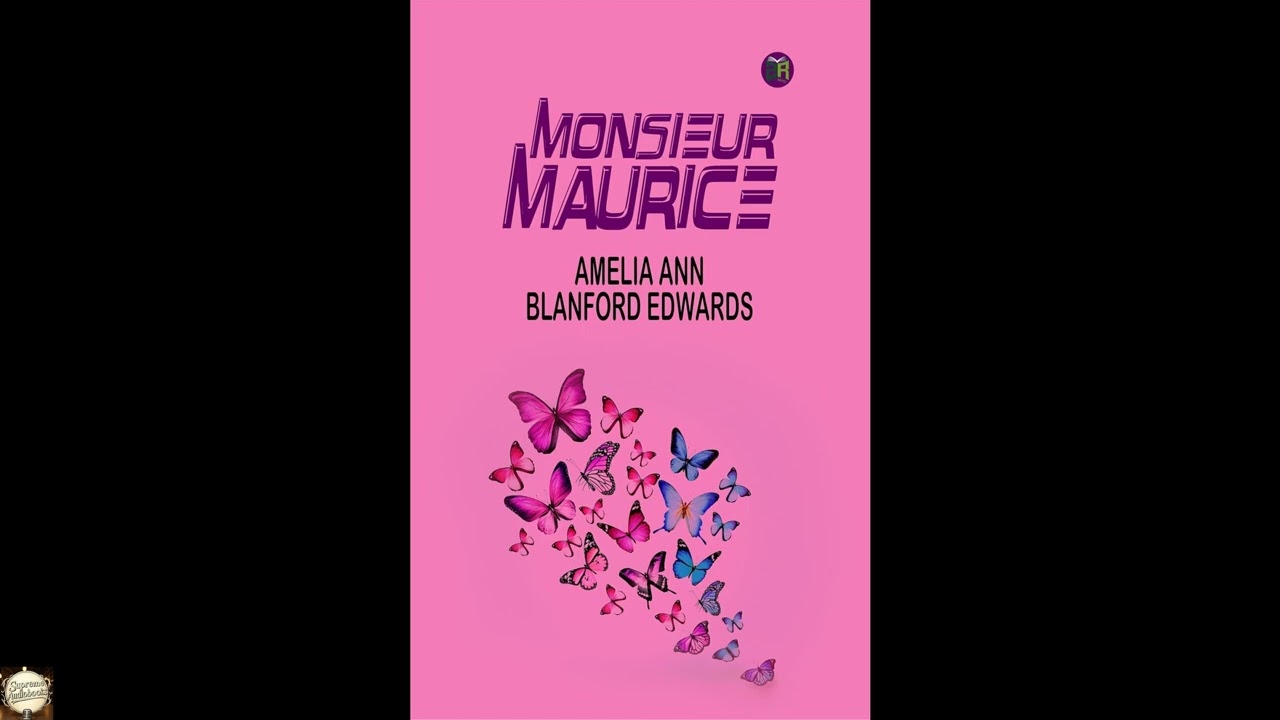
Monsieur Maurice
Step into the hushed, observant world of Amelia Ann Blanford Edwards’s Monsieur Maurice, a literary jewel from the late nineteenth century that continues to hold a mirror to the enduring human fascination with the unknown. This isn’t merely a story; it’s an elegant study in perception, a quiet dissection of how we construct reality from fragments, and how the arrival of an outsider can ripple through the fabric of a seemingly placid community, revealing cracks in its foundations and questions in its certainties. It speaks to our eternal curiosity about the masks people wear, the secrets they keep, and the profound impact a single enigmatic figure can have on the lives around them, making it just as relevant today in an age saturated with surface impressions and hidden profiles. The narrative unfolds within a quaint, picturesque corner of rural England, a setting of bucolic charm and entrenched social norms, where the rhythms of life are predictable and gossip is a primary pastime. The tranquility is gently, yet irrevocably, disturbed by the arrival of the titular Monsieur Maurice, a man of striking appearance and refined manners, whose origins are as nebulous as his future intentions. He is a foreigner, handsome and cultured, quickly becoming an object of intense, often conflicting, interest among the local populace. Is he an eccentric gentleman seeking solace, a man of means escaping a past tragedy, or something far more disquieting? As the story progresses, the focus shifts from general curiosity to a more intense, almost obsessive, scrutiny from certain characters. Maurice’s polite reserve, his continental charm, and his seemingly impeccable conduct begin to subtly fray around the edges, or perhaps, the observers simply begin to see what they are predisposed to find. Whispers turn into suspicions, innocent gestures become portentous signs, and the very air around Maurice seems to thicken with unspoken questions. The novel meticulously details the psychological unraveling not just of Maurice himself, but of those who watch him, painting a compelling picture of how rumor, assumption, and prejudice can distort reality, leading to a mounting sense of unease and a gradual revelation of human frailties. Amelia Ann Blanford Edwards (1831-1892) was far more than just a novelist; she was a woman of formidable intellect and diverse talents, a true polymath of the Victorian era. Born in London, her early life showcased her abilities as an artist, musician, and poet, talents she often wove into her prose. Her career began with journalism and short stories, but she soon turned to the novel, earning considerable popularity during her lifetime. Beyond her literary endeavors, Edwards was a pioneering Egyptologist, a field she pursued with passionate dedication later in her life, eventually co-founding the Egypt Exploration Fund. Her travels, particularly to Egypt and Europe, informed her perspective, broadening her understanding of cultures and people, which often seeped into the backgrounds and characterizations of her fiction. Her place in the literary canon is significant, though sometimes overshadowed by her scientific achievements. She was a prominent figure among women writers of the period, known for her strong plotting, often with elements of sensation fiction, and a keen eye for psychological depth. While Monsieur Maurice may not be as widely recognized as her later, grander novels like Barbara's History or Lord Brackenbury, it nevertheless showcases her distinctive style: a precise, intelligent prose capable of building suspense and exploring complex human motivations. Her body of work reflects the changing literary landscape of the Victorian age, moving from social commentary to more intricate character studies and exotic adventure, proving her adaptability and intellectual range. One of the central themes permeating Monsieur Maurice is the potent conflict between appearance and reality. Monsieur Maurice himself embodies this tension; his elegant exterior and impeccable manners stand in stark contrast to the vague, unsettling rumors that begin to circulate about his past. A seemingly casual comment he makes about a foreign city, or a fleeting, almost imperceptible shift in his expression, becomes magnified and scrutinized, causing characters to doubt the very evidence of their senses, forcing them to confront the possibility that what they see is not necessarily what is true. Another prominent idea is the nature of xenophobia and social judgment. The village community, initially charmed by Maurice, slowly succumbs to suspicion simply because he is an outsider, revealing how easily a lack of verifiable information can be filled with prejudice and fear. The novel also thoughtfully considers the power of obsession and perception. The relentless focus of certain characters on Monsieur Maurice transforms them as much as it defines their understanding of him. Their insistent efforts to uncover his secrets reveal more about their own anxieties, their need for order, and their capacity for projection. The narrative adeptly demonstrates how an ordinary event, like a solitary walk or a quiet conversation, can be reinterpreted through a lens of growing suspicion, highlighting the subjective nature of truth and the dangerous ease with which a narrative, once started, can take on a life of its own, irrespective of fact. The world that Amelia Edwards wrote from was one of immense social and intellectual ferment. The mid-to-late nineteenth century in England was a period grappling with rapid industrialization, burgeoning scientific discoveries (like Darwin’s theories, challenging traditional beliefs), and an expanding empire that brought increased contact with diverse cultures. This era fostered a heightened interest in human psychology, crime, and the darker, more irrational aspects of human nature, which found expression in popular sensation novels and gothic tales. Monsieur Maurice emerged from this climate, reflecting contemporary anxieties about identity, the thin veneer of respectability, and the unsettling idea that profound secrets could be hidden beneath the most conventional surfaces. It speaks to a society increasingly aware of its own complexities, where the simple morality of earlier times was giving way to more nuanced, often disturbing, psychological landscapes. Listening to Monsieur Maurice as an audiobook offers a unique opportunity to immerse yourself in Edwards’s skillful prose and the subtly building atmosphere. The narrator’s voice becomes your guide through the quiet English village, allowing you to catch the nuances of character and the gradual shift in tone as curiosity gives way to unease. The pacing of the narration is crucial here; it mirrors the story’s unhurried unveiling of details, allowing suspense to build organically through carefully articulated dialogue and descriptive passages. A good narrator will perfectly capture the polite surface interactions that conceal deeper anxieties, giving each character a distinct voice that enhances their personality and role in the unfolding mystery. This auditory experience ensures that every hint, every veiled comment, and every moment of rising tension is felt, drawing you deeper into the psychological drama and the enduring enigma of Monsieur Maurice.
Enjoyed Monsieur Maurice? A few ways to support us
Audible & Amazon links are affiliate; we may earn a small commission at no extra cost.
About this production
Human narration by a volunteer reader from LibriVox.org, the public-domain audiobook project. LibriVox volunteers record literary works whose copyright has expired in the United States, releasing the resulting recordings into the public domain.
Monsieur Maurice by Amelia Ann Blanford Edwards. The underlying text is in the U.S. public domain. We do not republish any modern copyrighted edition, translation, or commentary.
The 4K cinematic visuals accompanying this audiobook are generated by an AI image model from prompts derived from the source text. No copyrighted photos, paintings, or stock footage are used. AI generation is disclosed on every video on our YouTube channel as required by YouTube's altered/synthetic content policy.
English subtitles are transcribed from the LibriVox recording with OpenAI Whisper. Translations into the 11 other supported languages are produced by Meta's NLLB-200 neural translation model. No human translator's copyrighted translation is used.
Questions about sourcing or rights? See our DMCA & Sourcing policy or contact us.
Enjoyed this audiobook?
If you'd like to own a copy of Monsieur Maurice or hear a professionally produced edition, the links below help support free audiobook production at no extra cost to you.
As an Amazon Associate we earn from qualifying purchases. Audible / print links are affiliate.