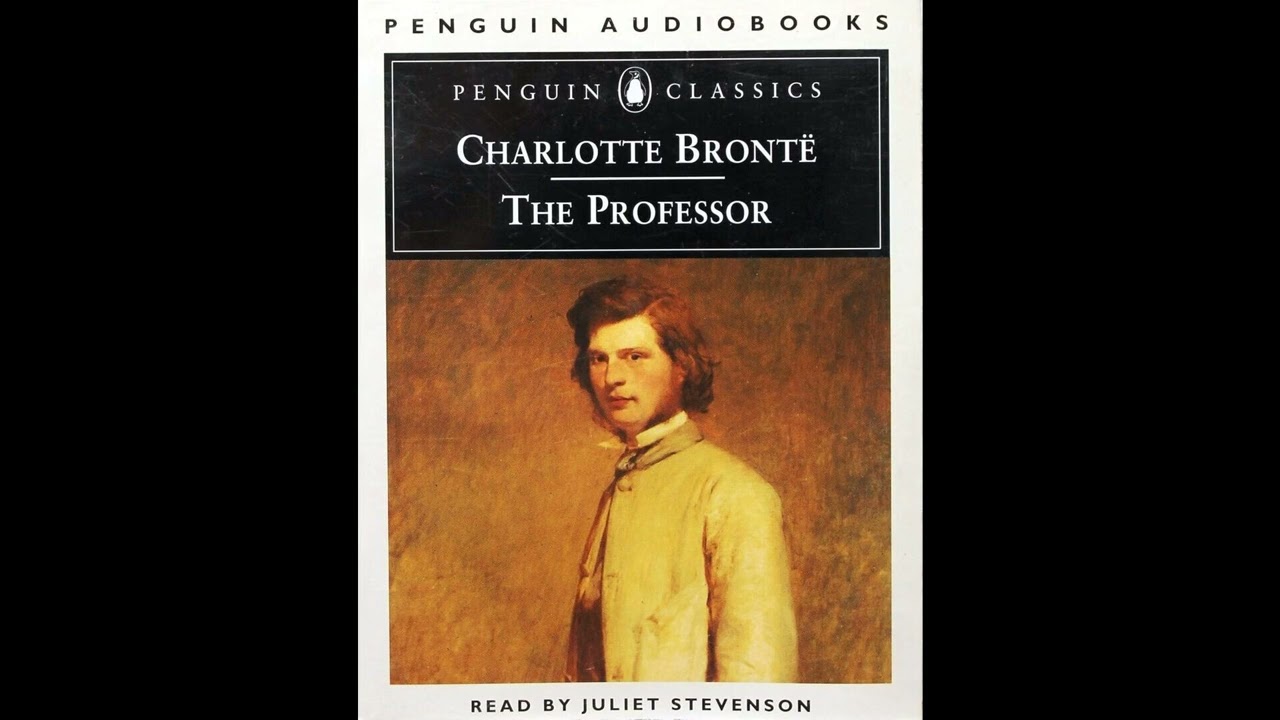
The Professor
The Professor holds a unique and crucial place in Charlotte Brontë's literary legacy, often overshadowed by the volcanic passions of Jane Eyre or the gothic intensity of Villette. Yet, this remarkable novel, her first completed manuscript though published posthumously, offers a more intimate and perhaps more revealing look into the author's formative years and philosophical leanings. It presents a story stripped of grand romantic gestures and dramatic twists, instead focusing on the quiet, determined struggle for independence and integrity in a world often hostile to both. For modern listeners, it resonates with the enduring search for authentic selfhood and the quiet victories of principle over ambition, making it surprisingly relevant in our own complex times where personal values are constantly tested. It’s a compelling listen for anyone seeking to understand the foundations of Brontë’s genius and a poignant reminder that true strength often lies in steadfastness rather than spectacle. The narrative introduces William Crimsworth, a young Englishman of modest means and considerable pride, who, after a stifling experience working for his disdainful older brother, chooses a path of self-reliance. His quest for an honest profession leads him across the Channel to Brussels, where he secures teaching positions at both a boys' school, run by the shrewd M. Pelet, and a girls' establishment. Here, William navigates a new culture and encounters a range of characters, developing his keen observational skills and unwavering moral compass in unfamiliar surroundings. At the girls' school, he confronts the ambitious and subtly manipulative Mademoiselle Zoraide Reuter, whose calculating nature initially intrigues but ultimately repels him. It is there, too, that he encounters Frances Henri, a quiet, diligent teacher of humble Swiss-English origins. Frances's profound dedication to self-improvement and her quiet dignity stand in stark contrast to Zoraide’s superficiality and lack of genuine warmth. Their relationship develops slowly, built on mutual respect and shared intellectual curiosity, as William’s journey through professional frustrations and personal growth gradually unfolds towards a future shaped by genuine companionship and shared principles, offering a more grounded portrayal of affection than typically found in romantic fiction of the era. Charlotte Brontë, born in 1816 in Thornton, Yorkshire, was one of the celebrated Brontë sisters, growing up in the isolated parsonage at Haworth, a setting that profoundly shaped her and her siblings' imaginations. Her early life was marked by both intellectual stimulation and personal hardship, including the early deaths of her elder sisters. Her own experiences as a governess and a teacher, particularly her time studying in Brussels in 1842-1843 with her sister Emily, provided direct inspiration for The Professor, especially its European setting and focus on educational life. Despite significant societal barriers for women writers, Charlotte, like Emily and Anne, adopted a male pseudonym—Currer Bell—to ensure her work would be judged without gender prejudice. Though The Professor was her first completed novel, it was published posthumously, some years after her passing. She achieved widespread fame with Jane Eyre, her iconic novel of psychological realism and a passionate heroine, and later penned Shirley and Villette. Brontë remains a pivotal figure in English literature, recognized for her profound insights into character, society, and the inner lives of women. The Professor addresses several core themes central to Brontë's literary output, presented with a distinct, understated clarity. One prominent theme is the struggle for social independence and integrity in a class-conscious society. William Crimsworth, despite his education, continually battles the condescension of wealthier relatives and the practical limitations of his background. His refusal to accept a degrading position from his brother and his determined pursuit of an honest, self-sufficient life, however humble, exemplify a fierce commitment to personal dignity over material gain, demonstrated in his meticulous budgeting and quiet satisfaction in earning his own way. Another significant theme concerns the nature of education and intelligence, particularly among women. While Mademoiselle Reuter embodies a shrewd, manipulative intellect used for social climbing, Frances Henri represents genuine intellectual curiosity and dedication to self-improvement. Frances’s desire for knowledge, despite her disadvantaged position, challenges William’s somewhat conventional views on female intellect, eventually earning his profound respect. The novel also quietly examines the nuanced dynamics of love and companionship, contrasting superficial charm with a deeper, more enduring connection built on shared values and mutual understanding, suggesting that true affection flourishes on a foundation of respect and equality rather than grand romantic gestures or social status. This work emerged from a mid-19th century landscape grappling with profound social and economic shifts. Britain was undergoing the throes of the Industrial Revolution, creating new wealth alongside stark disparities and challenging established social hierarchies. William Crimsworth's early experiences in the manufacturing world, and his subsequent rejection of it, reflect the anxieties and opportunities of this era. For women like Charlotte Brontë, and indeed for her character Frances Henri, the options for independent livelihood were severely constrained, with teaching being one of the few respectable professions available, a reality that deeply informs the novel's setting and characters' aspirations. Brontë's time in Brussels also offered a window into cultural perceptions of continental Europe, enriching the narrative with firsthand observations of its society and educational systems, all while anticipating a growing literary trend towards realism. Listening to The Professor as an audiobook offers a singular opportunity to immerse oneself in William Crimsworth’s introspective narrative. The spoken word brings a profound intimacy to his often-reserved observations and internal monologues, allowing the listener to truly inhabit his perspective as he navigates the complexities of professional life and burgeoning affection. The pacing of the narration can highlight Brontë’s subtle wit and the gradual unfolding of relationships, particularly the understated yet powerful bond between William and Frances. Listen for the nuances in the voice work that distinguish the various characters—the manipulative allure of Zoraide, the pragmatic ambition of Pelet, and the quiet resilience of Frances. This format makes Brontë’s keen psychological insights and her deft use of dialogue especially vivid, transforming a seemingly quiet story into a compelling dramatic experience that unfolds directly within your imagination. It’s an ideal companion for moments of quiet reflection, bringing Charlotte Brontë's foundational work to life with clarity and emotional depth.
Enjoyed The Professor? A few ways to support us
Audible & Amazon links are affiliate; we may earn a small commission at no extra cost.
About this production
Human narration by a volunteer reader from LibriVox.org, the public-domain audiobook project. LibriVox volunteers record literary works whose copyright has expired in the United States, releasing the resulting recordings into the public domain.
The Professor by Charlotte Brontë. The underlying text is in the U.S. public domain. We do not republish any modern copyrighted edition, translation, or commentary.
The 4K cinematic visuals accompanying this audiobook are generated by an AI image model from prompts derived from the source text. No copyrighted photos, paintings, or stock footage are used. AI generation is disclosed on every video on our YouTube channel as required by YouTube's altered/synthetic content policy.
English subtitles are transcribed from the LibriVox recording with OpenAI Whisper. Translations into the 11 other supported languages are produced by Meta's NLLB-200 neural translation model. No human translator's copyrighted translation is used.
Questions about sourcing or rights? See our DMCA & Sourcing policy or contact us.
Enjoyed this audiobook?
If you'd like to own a copy of The Professor or hear a professionally produced edition, the links below help support free audiobook production at no extra cost to you.
As an Amazon Associate we earn from qualifying purchases. Audible / print links are affiliate.