The Potiphar Papers
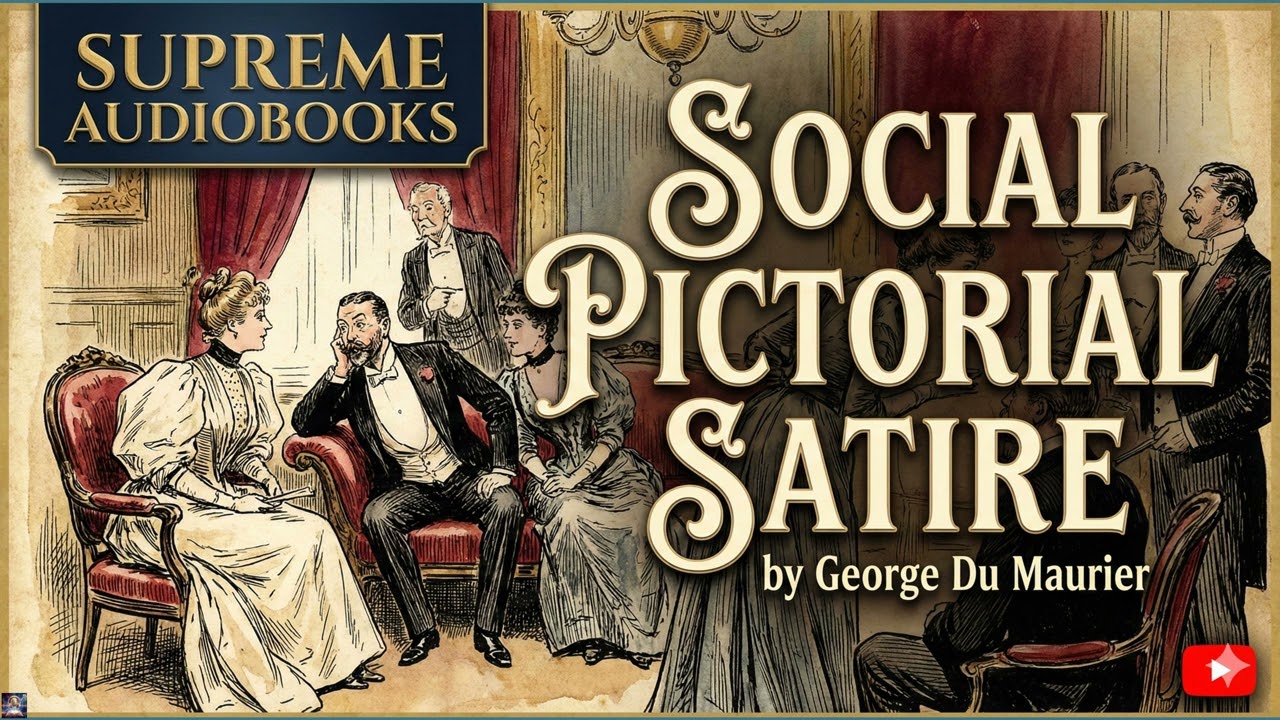
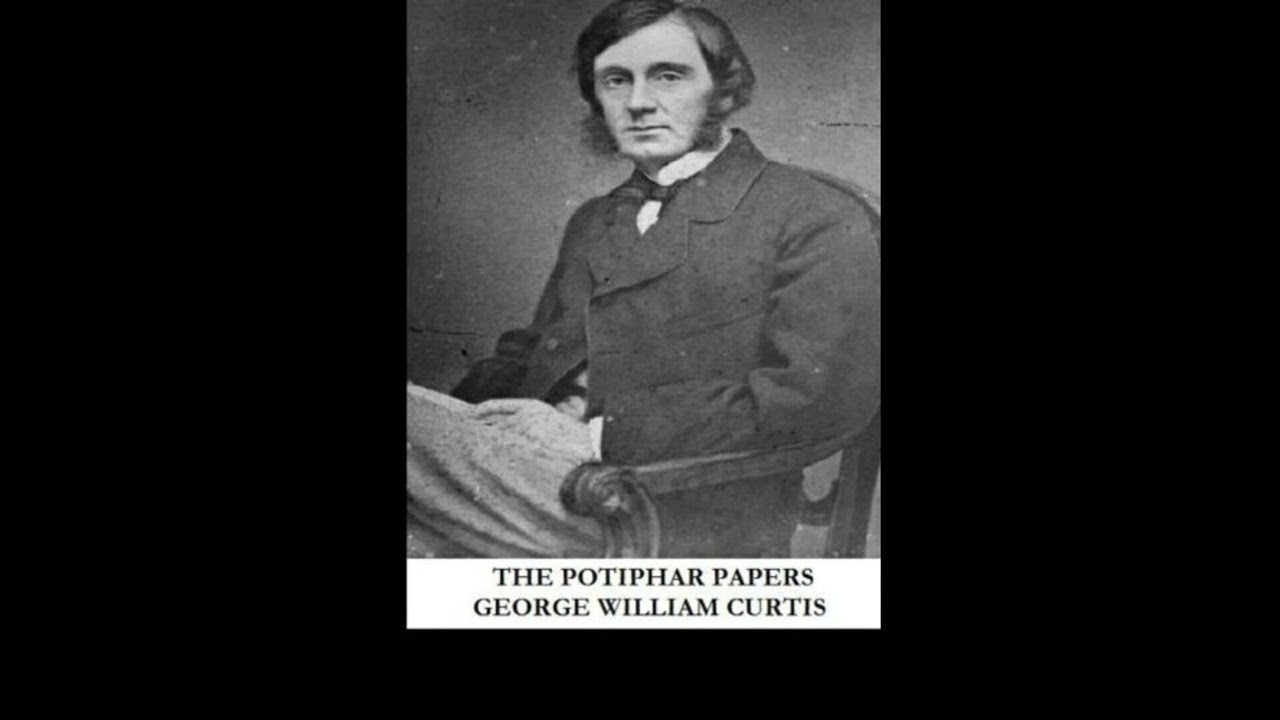
Imagine a world of glittering ballrooms, ostentatious mansions, and social maneuvering so precise it borders on warfare, all observed with a keen, satirical eye. That is the realm of The Potiphar Papers, George William Curtis's biting social commentary from the mid-nineteenth century. This is not merely a historical curiosity; it is a looking glass held up to any era obsessed with status, appearances, and the relentless pursuit of social validation. Long before reality television chronicled the absurdities of the wealthy, Curtis was dissecting the same human foibles with a wit and precision that feels startlingly contemporary. Why should a listener care today? Because the hunger for prestige, the anxieties of keeping up, and the often hollow core beneath a polished exterior are enduring aspects of the human condition, making this work a relevant and often hilarious critique of society's superficial demands. The setting for The Potiphar Papers is the fashionable high society of New York City in the 1850s, a milieu of newly acquired wealth and established gentility perpetually vying for dominance. At the center of this world are Mr. and Mrs. Potiphar, a couple whose lives are entirely dictated by the rigid, often ridiculous, dictates of social climbing. Mrs. Potiphar, in particular, is an unforgettable figure, a woman consumed by the minutiae of social etiquette—from the correct placement of flowers at a dinner party to the precise moment a new opera box should be displayed. Her days are a dizzying succession of calls, receptions, and preparations for elaborate entertainments, all designed to cement her family's position at the very peak of the social pyramid. Mr. Potiphar, a more passive figure, often finds himself swept along by his wife's ambitions, a bewildered participant in a world he only half understands. The narrative unfolds not as a strict plot with a single climax, but rather as a series of incisive sketches and vignettes, each offering a window into the peculiar habits and hypocrisies of the elite. We meet characters like Miss Cœlia Shy, an ambitious young woman navigating the treacherous waters of the marriage market, and the cynical, philosophical artist, Mr. Titbottom, who often serves as the narrator's voice of reason and wry observation. The central conflict lies in the perpetual tension between genuine human feeling and the performative roles demanded by society. Every interaction, every purchase, every social gathering becomes a stage for demonstrating wealth, influence, and impeccable (if often meaningless) taste. The story arc reveals the gradual exposure of the emptiness that often lies beneath this glittering surface, as the relentless pursuit of status leads to moral compromises, intellectual stagnation, and a profound sense of dissatisfaction. George William Curtis (1824-1892) was a prominent American man of letters, orator, and social reformer whose life spanned a significant period of American history. Born in Providence, Rhode Island, Curtis's early experiences were formative; he spent time at the transcendentalist utopian community of Brook Farm, an environment that instilled in him a strong sense of social justice and an idealism that would define his later career. His intellectual curiosity led him to extensive travels through Europe and the Near East, experiences that he vividly chronicled in his travel books, Nile Notes of a Howadji (1851) and The Howadji in Syria (1852), which introduced him to a wider reading public. Upon his return to the United States, Curtis quickly established himself as a leading voice in American journalism and literature. He was best known for his long-running "Easy Chair" column in Harper's Monthly, a widely read feature where he offered thoughtful and often humorous commentary on everything from current events to literary trends and social manners. He also served as the political editor for Harper's Weekly, a platform from which he championed crucial social reforms, including abolitionism, women's suffrage, and civil service reform. His unwavering commitment to principle, even when it meant breaking with his own political party, earned him immense respect and positioned him as a moral compass for the nation. Curtis's diverse output, which included essays like those collected in Prue and I (1856) and numerous influential speeches, cemented his place as a significant literary and public figure in nineteenth-century America, a writer who used wit and eloquence to advocate for a more just and cultured society. At its core, The Potiphar Papers dissects the pervasive themes of vanity and social climbing, using the Potiphar family as a microcosm of the era's grander ambitions. Mrs. Potiphar's frantic efforts to ensure her family’s position at the apex of society drive much of the narrative. Her anxieties over who sits where at dinner, the proper protocol for receiving guests, and the absolute necessity of outdoing her social rivals become absurdly central to her existence. We see this enacted in scenes detailing the elaborate, over-the-top balls she hosts, where every gesture and every article of clothing is meticulously calculated for maximum social impact, and where the competition among guests is as fierce as it is unspoken. Furthermore, the book is a sharp critique of materialism and the superficiality that often accompanies it. The characters' homes are not expressions of personal taste but rather showcases for expensive, often gaudy, possessions acquired purely for display. Art, for instance, is discussed less for its aesthetic merit and more for its price tag or its ability to fill an empty wall and impress visitors. This focus on outward show over substance highlights a profound hypocrisy within the elite, where genuine intellectual curiosity or moral depth is often sacrificed for polished appearances and pre-rehearsed witticisms. The narrator frequently hints at the profound emptiness experienced by characters despite their material comforts, suggesting that beneath the glittering surface of wealth and endless social engagements lies a deep well of boredom and dissatisfaction. The Potiphar Papers was published in 1853, a pivotal moment in American history just prior to the seismic upheaval of the Civil War. This period was marked by rapid industrialization and significant economic growth, particularly in booming urban centers like New York City. This era witnessed the rise of a newly moneyed class—industrialists, merchants, and financiers—who challenged the older, established aristocratic families. This dynamic created intense social anxieties surrounding wealth display, the "proper" way to behave, and the constant fear of social climbers eroding traditional distinctions. Society was rigid in its conventions, yet these very conventions were being tested by the influx of new fortunes and new ways of life. Women, largely confined to the domestic sphere, found an outlet for their ambition and influence in the intricate social management that Mrs. Potiphar so zealously pursues. In the literary world, American letters were still defining themselves, with figures like Ralph Waldo Emerson, Nathaniel Hawthorne, and Herman Melville forging unique voices. While Curtis was not a Romantic in the same vein as these authors, his satirical essays and sketches played a crucial role in commenting on the evolving American character and its inherent societal flaws. His work can be seen as part of a tradition of social commentary that used humor and light fiction to address serious issues, a style influenced by British satirists such as William Makepeace Thackeray. The burgeoning newspaper and magazine industry of the mid-19th century provided the perfect platform for works like The Potiphar Papers, which initially appeared in serial form, reaching a wide audience eager for both entertainment and insightful observation on their changing world. To experience The Potiphar Papers as an audiobook offers a unique gateway into its specific brand of wit and social observation. The several hours of listening time make it an ideal companion for commutes, daily errands, or simply an afternoon spent in reflective amusement. A skilled narrator can bring Curtis's precise irony and subtle digs to life, truly embodying the distinct personalities of the various social types he describes. The formal yet engaging language, often delivered through the discerning lens of an observant, sometimes cynical, narrator, unfolds with grace when read aloud. The listener can fully absorb the nuances of Curtis's prose and his descriptive prowess, allowing the often pompous or vapid dialogue to come alive with different vocalizations. This performance element emphasizes the inherent grandiosity and underlying absurdity of the Potiphar's world, drawing one intimately into the atmosphere of 19th-century New York high society with all its glittering, and often hollow, charm.
Enjoyed The Potiphar Papers? A few ways to support us
Audible & Amazon links are affiliate; we may earn a small commission at no extra cost.
About this production
Human narration by a volunteer reader from LibriVox.org, the public-domain audiobook project. LibriVox volunteers record literary works whose copyright has expired in the United States, releasing the resulting recordings into the public domain.
The Potiphar Papers by George William Curtis. The underlying text is in the U.S. public domain. We do not republish any modern copyrighted edition, translation, or commentary.
The 4K cinematic visuals accompanying this audiobook are generated by an AI image model from prompts derived from the source text. No copyrighted photos, paintings, or stock footage are used. AI generation is disclosed on every video on our YouTube channel as required by YouTube's altered/synthetic content policy.
English subtitles are transcribed from the LibriVox recording with OpenAI Whisper. Translations into the 11 other supported languages are produced by Meta's NLLB-200 neural translation model. No human translator's copyrighted translation is used.
Questions about sourcing or rights? See our DMCA & Sourcing policy or contact us.
Enjoyed this audiobook?
If you'd like to own a copy of The Potiphar Papers or hear a professionally produced edition, the links below help support free audiobook production at no extra cost to you.
As an Amazon Associate we earn from qualifying purchases. Audible / print links are affiliate.