Early Letters of George Wm. Curtis to John S. Dwight: Brook Farm and Concord (Kenni
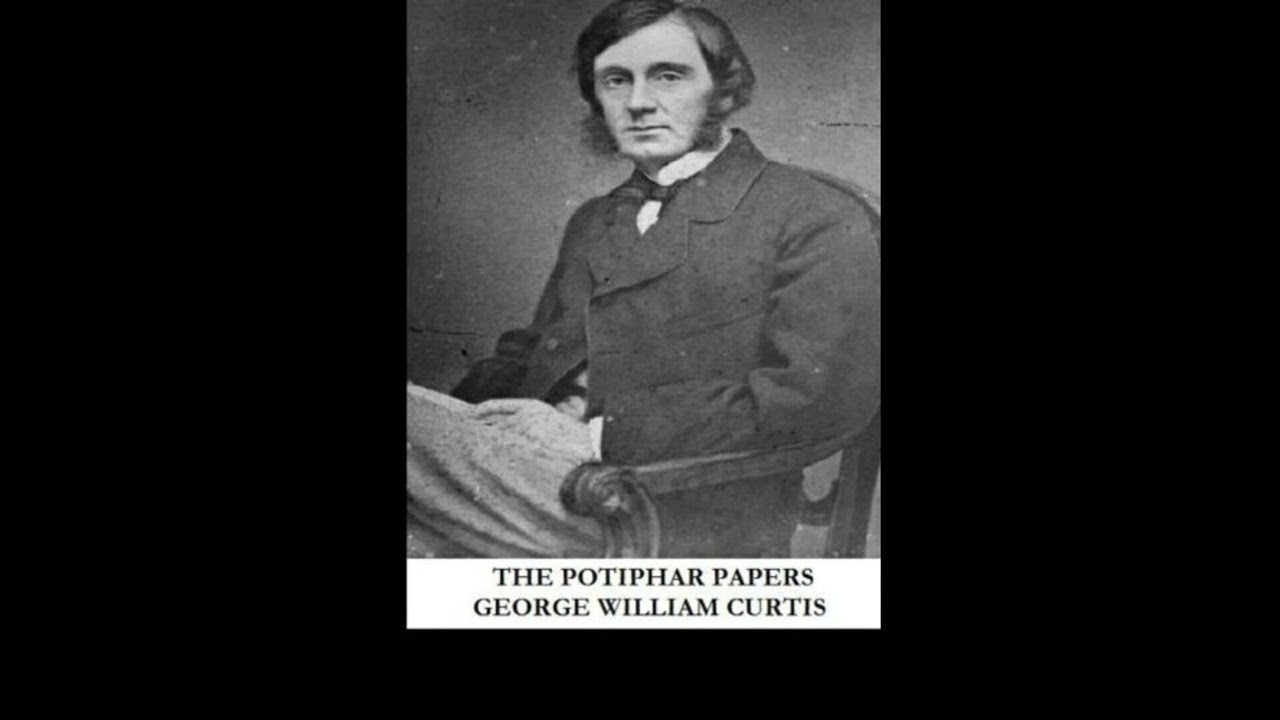
Step back into a pivotal moment of American intellectual history, an era when idealism blossomed in experiments like Brook Farm and profound thought emerged from the woods of Concord. This collection, Early Letters of George Wm. Curtis to John S. Dwight, offers an unvarnished, firsthand account from the heart of this transformative period. It is more than just historical correspondence; it is a vibrant snapshot of a young man’s intellectual awakening, a testament to enduring friendships, and an invaluable window into the minds that shaped American Transcendentalism. For anyone seeking to understand the genesis of American self-reliance, the dream of communal living, or the personal struggles of idealists trying to build a better world, these letters provide an intimate and essential perspective that resonates with timeless questions about society, purpose, and individual growth. The narrative unfolds through the eyes and pen of George William Curtis, a perceptive and articulate young man who immersed himself in the unique social and intellectual landscapes of the 1840s. His early letters detail his experiences at Brook Farm, the utopian socialist experiment in West Roxbury, Massachusetts, where he resided from 1842 to 1844. Here, amid daily farm labor and spirited philosophical debates, Curtis describes the communal dinners, the shared intellectual pursuits, and the aspirations of a diverse group of individuals striving to harmonize labor and leisure, individual development and collective well-being. He recounts encounters with figures like Nathaniel Hawthorne and Charles A. Dana, offering candid observations on the practicality and idealism that mingled within the community's boundaries. Following his time at Brook Farm, Curtis moved to Concord, Massachusetts, where he spent two years, from 1844 to 1846, living near the titans of American letters. These letters chronicle his shift from communal living to the more solitary, yet intellectually fertile, environment of Concord. Here, he engaged with Ralph Waldo Emerson, Henry David Thoreau, and other luminaries, absorbing their philosophies and reflecting on nature, art, and the individual's place in the universe. The letters to John S. Dwight, a close friend and fellow Brook Farmer, serve as a running dialogue, charting Curtis’s personal growth, his evolving ideas about society and spirituality, and his keen observations of the celebrated figures and landscapes around him. They track his journey from an eager participant in a grand experiment to a more reflective, independent thinker grappling with the complex interplay of theory and reality. George William Curtis, born in 1824, would become a prominent American writer, lecturer, and editor, a voice of conscience in a rapidly changing nation. His early experiences at Brook Farm and Concord, as captured in these letters, were foundational to his intellectual and moral development. After leaving Concord, Curtis spent several years traveling extensively through Europe and the Near East, experiences he later documented in travelogues such as Lotus-Eating and Nile Notes of a Howadji. Upon his return to America, he quickly established himself as a prolific and respected literary figure. Curtis's career included significant roles as editor of Putnam's Monthly Magazine and, most notably, as the political editor of Harper's Weekly, a position he held for over three decades. Through his influential editorial columns, he championed crucial social and political reforms, including the abolitionist movement, civil service reform, and women's rights, advocating for ethical governance and social justice. He also authored popular literary works like The Potiphar Papers and Prue and I, which blended social commentary with elegant prose. Curtis’s dedication to public service and his elegant writing style cemented his place as a leading public intellectual of the late nineteenth century, a figure who seamlessly blended literary achievement with an unwavering commitment to moral principles, all rooted in the idealism nurtured in his youth. He passed away in 1892, leaving a legacy of intellectual integrity and a distinguished body of work. The letters convey a profound sense of idealism and the pursuit of utopia. At Brook Farm, Curtis details the earnest attempts to build a society founded on cooperation and intellectual growth, where physical labor was seen as ennobling and mental cultivation was paramount. His descriptions of daily routines—the farming, the schooling, the discussions of Fourierism or transcendental philosophy—illustrate the community's unwavering belief in human perfectibility and the possibility of creating a more equitable social structure. This underlying current of aspirational change forms a central thread, showing how people actively tried to live their ideals. Another significant theme woven through the correspondence is the tension between individualism and community. While deeply appreciative of the communal spirit at Brook Farm, Curtis's move to Concord underscores a growing embrace of the transcendentalist emphasis on self-reliance and the individual's direct connection to nature and divine truth. The letters reveal his internal dialogue as he navigates these two poles, seeking a balance between collective responsibility and personal freedom. His observations of Emerson and Thoreau in Concord highlight this contrast, showing the different paths individuals chose in their quest for meaningful existence and intellectual independence. His descriptions of walks in the woods or solitary reflection articulate the profound connection between the natural world and self-discovery. These letters emerge from the tumultuous and hopeful period of antebellum America, specifically the 1840s. This decade was a crucible of social reform movements—abolitionism gaining momentum, the nascent women's rights movement stirring, and temperance societies advocating for moral improvement. Alongside these practical efforts to reshape society, a powerful intellectual and spiritual movement, Transcendentalism, was flourishing in New England. Figures like Ralph Waldo Emerson championed individualism, intuition, and a profound connection to nature, challenging established religious and social norms. Utopian communities like Brook Farm were a direct outgrowth of this intellectual ferment and the broader social critique of industrialization and materialism. They represented earnest attempts to create alternative societies based on shared labor, intellectual pursuits, and egalitarian principles, often inspired by European socialist theories like Fourierism. Early Letters of George Wm. Curtis to John S. Dwight serves as an intimate record of this pivotal historical moment, capturing the enthusiasm, the challenges, and the everyday realities of those who dared to live out their ideals at the dawn of a distinctly American literary and philosophical tradition. The letters are a testament to how this particular historical context fostered a spirit of experimentation and a deep commitment to intellectual and social change. Listening to Early Letters of George Wm. Curtis to John S. Dwight as an audiobook transforms these historical documents into a deeply personal encounter. The narration allows the listener to experience the letters almost as John S. Dwight himself would have, hearing Curtis's words directly, in his own rhythm and tone. The several hours of listening time provide ample opportunity to settle into the period, absorbing the nuances of Curtis's observations and reflections without the distraction of a printed page. Listen for the youthful earnestness in his voice, the moments of wonder as he describes a philosophical discussion or a walk in the Concord woods, and the evolving confidence in his literary style. The reading aims to convey the atmosphere of intellectual curiosity and heartfelt friendship that permeates these pages, bringing to life the voices and ideas of a foundational era in American thought.
Enjoyed Early Letters of George Wm. Curtis to John S. Dwight: Brook Farm and Concord (Kenni? A few ways to support us
Audible & Amazon links are affiliate; we may earn a small commission at no extra cost.
About this production
Human narration by a volunteer reader from LibriVox.org, the public-domain audiobook project. LibriVox volunteers record literary works whose copyright has expired in the United States, releasing the resulting recordings into the public domain.
Early Letters of George Wm. Curtis to John S. Dwight: Brook Farm and Concord (Kenni by George William Curtis. The underlying text is in the U.S. public domain. We do not republish any modern copyrighted edition, translation, or commentary.
The 4K cinematic visuals accompanying this audiobook are generated by an AI image model from prompts derived from the source text. No copyrighted photos, paintings, or stock footage are used. AI generation is disclosed on every video on our YouTube channel as required by YouTube's altered/synthetic content policy.
English subtitles are transcribed from the LibriVox recording with OpenAI Whisper. Translations into the 11 other supported languages are produced by Meta's NLLB-200 neural translation model. No human translator's copyrighted translation is used.
Questions about sourcing or rights? See our DMCA & Sourcing policy or contact us.
Enjoyed this audiobook?
If you'd like to own a copy of Early Letters of George Wm. Curtis to John S. Dwight: Brook Farm and Concord (Kenni or hear a professionally produced edition, the links below help support free audiobook production at no extra cost to you.
As an Amazon Associate we earn from qualifying purchases. Audible / print links are affiliate.