Lilith: A Romance
Step into a world where the boundaries between dream and reality dissolve, where the mundane gives way to the miraculous, and the human soul is tested in extraordinary ways. George MacDonald's Lilith: A Romance is not merely a novel; it is a profound descent into the heart of spiritual mystery, an allegorical quest that stands as a foundational text for modern fantasy. For listeners today, this tale offers far more than an escape; it presents a deeply resonant exploration of identity, suffering, and redemption, challenging us to look beyond the surface of existence and confront the hidden truths of the universe and ourselves. Its unique blend of philosophical depth and fantastical spectacle continues to inspire and provoke, making it an essential experience for anyone seeking literature that both entertains and transforms. The story begins with John Vane, a young man who inherits an old house and library, finding himself haunted by a recurring vision and a persistent, unsettling sense of unreality. His quiet, academic life is shattered when he discovers a mystical mirror and a dusty portrait that seem to whisper secrets. Driven by an inexplicable urge, John crosses a threshold into a strange, parallel dimension – a cosmic landscape where time and space behave differently, and where every phenomenon carries spiritual weight. Here, he encounters Mr. Raven, a mysterious, ancient figure who is both guide and guardian, and who seems to know more about John's true purpose than John himself. This new world is a realm of shadows and suffering, ruled by the enigmatic and terrifying Lilith, the primordial mother of demons, a beautiful yet destructive queen obsessed with power and immortality. John soon learns that Lilith's vanity and self-will have brought immense pain to her domain, particularly to her gentle, long-suffering daughter, Lona, and to the oppressed, shadowy beings known as the Little Ones. As John navigates this bewildering land, he must confront the profound spiritual laws that govern it, wrestling with his own fears and misconceptions, all while striving to understand his role in a struggle for healing and liberation against Lilith's corrosive influence. His journey becomes one of self-discovery, where sleep is a form of spiritual progress, and true awakening requires a willingness to surrender and embrace a deeper, often painful, truth. George MacDonald, born in Huntly, Aberdeenshire, Scotland, in 1824, was a towering literary figure of the Victorian era. After studying at King's College, Aberdeen, he initially pursued a career as a Congregational minister, but his unconventional theological views, which emphasized God's boundless love and the universal possibility of salvation, led to his resignation. Faced with the need to support his large family, he turned to writing, becoming a prolific author of novels, poetry, essays, and children's stories. His literary output included both realistic domestic fiction, like Robert Falconer and Annals of a Quiet Neighbourhood, and the fantastical allegories for which he is most remembered. MacDonald's lasting legacy lies primarily in his imaginative works, which include Phantastes, At the Back of the North Wind, and The Princess and the Goblin. He is widely acknowledged as one of the earliest and most significant authors in the development of modern fantasy literature. His profound spiritual insights and imaginative storytelling profoundly impacted later generations of writers. Notably, C.S. Lewis, author of The Chronicles of Narnia, publicly credited MacDonald as his "master," stating that he learned more about Christianity from MacDonald than from any other uninspired writer. J.R.R. Tolkien and G.K. Chesterton also counted themselves among his admirers, underscoring MacDonald's enduring place in the literary canon as a visionary who blended deeply held faith with groundbreaking imaginative prose. Lilith enacts several profound themes that resonate deeply with human experience. One central idea is the nature of reality and illusion, often blurring the lines between waking life and the dream world. John Vane’s transition from his ordinary library into a fantastical, symbolic landscape serves as a potent example, suggesting that what we perceive as solid reality might only be a thin veil over deeper spiritual truths. The fluidity of time and space within the mirror-world continually challenges both John and the listener to question their assumptions about existence. Another compelling theme is the interplay of sin, suffering, and redemption. Lilith's immense pride and self-will, demonstrated through her desire to control everything and everyone around her, lead to profound suffering for those in her domain, particularly her daughter Lona. Lona's patient endurance and willingness to accept pain for the sake of love offer a stark contrast, illuminating the novel's insistence that true spiritual growth often emerges from embracing sacrifice and confronting one's own shadow side, as John himself must do. The book also explores the theme of spiritual awakening and transformation. John’s entire journey is less about physical adventure and more about an internal evolution, a gradual shedding of his ego and preconceived notions. The symbolism of sleep and waking throughout the story is not merely literal; it represents a process of spiritual death and rebirth, where profound truths are often revealed in states of vulnerability and surrender. His encounters with Mr. Raven and his growing understanding of the world’s spiritual laws guide him towards a deeper self-awareness. Ultimately, the book champions the power of selfless love and forgiveness as the ultimate antidote to the destructive forces of ego and hatred. This is shown in the gentle, healing presence of characters who offer unconditional love, providing a path toward redemption even for those as deeply corrupted as Lilith. When Lilith was published in 1895, the Victorian era was drawing to a close, a period marked by significant cultural and intellectual shifts. Rapid industrialization and scientific advancements, particularly Darwin's theories of evolution, had begun to challenge traditional religious beliefs and societal structures. While realism and naturalism were gaining prominence in literature, there was also a counter-current of romanticism, symbolism, and a growing interest in spiritualism and the occult, as people sought meaning beyond the material world. MacDonald, with his unique blend of Christian allegory and fantastical storytelling, found himself at the confluence of these trends. He wrote against the backdrop of an increasingly secularizing society, offering narratives that reaffirmed spiritual truths through imaginative, often dreamlike, forms. His work provided an alternative to the prevailing literary realism, suggesting that deeper realities could be accessed not through empirical observation, but through faith, intuition, and the power of myth. Lilith emerged as a bold statement, pushing the boundaries of what fiction could accomplish in exploring psychological depth and spiritual dimensions. To experience Lilith as an audiobook is to immerse oneself in its dreamlike cadence and rich, allegorical language. The narration experience itself becomes an integral part of the story, allowing the listener to truly inhabit John Vane's introspective journey and the otherworldly realms he traverses. With its several-hours run length, the audio format encourages deep engagement, enabling one to absorb the subtle shifts in tone, the profound philosophical discussions, and the often haunting atmosphere MacDonald meticulously crafts. The distinct voices given to characters—John’s initial bewilderment, Mr. Raven's ancient wisdom, Lilith's imperious allure—enhance the narrative, making the complex allegories more accessible. Listening allows the story’s hypnotic rhythm and symbolic weight to truly settle, drawing the listener into a meditative state where the boundaries of the imagined world feel closer than ever, transforming a reading into an unforgettable spiritual encounter.
Enjoyed Lilith: A Romance? A few ways to support us
Audible & Amazon links are affiliate; we may earn a small commission at no extra cost.
About this production
Human narration by a volunteer reader from LibriVox.org, the public-domain audiobook project. LibriVox volunteers record literary works whose copyright has expired in the United States, releasing the resulting recordings into the public domain.
Lilith: A Romance by George MacDonald. The underlying text is in the U.S. public domain. We do not republish any modern copyrighted edition, translation, or commentary.
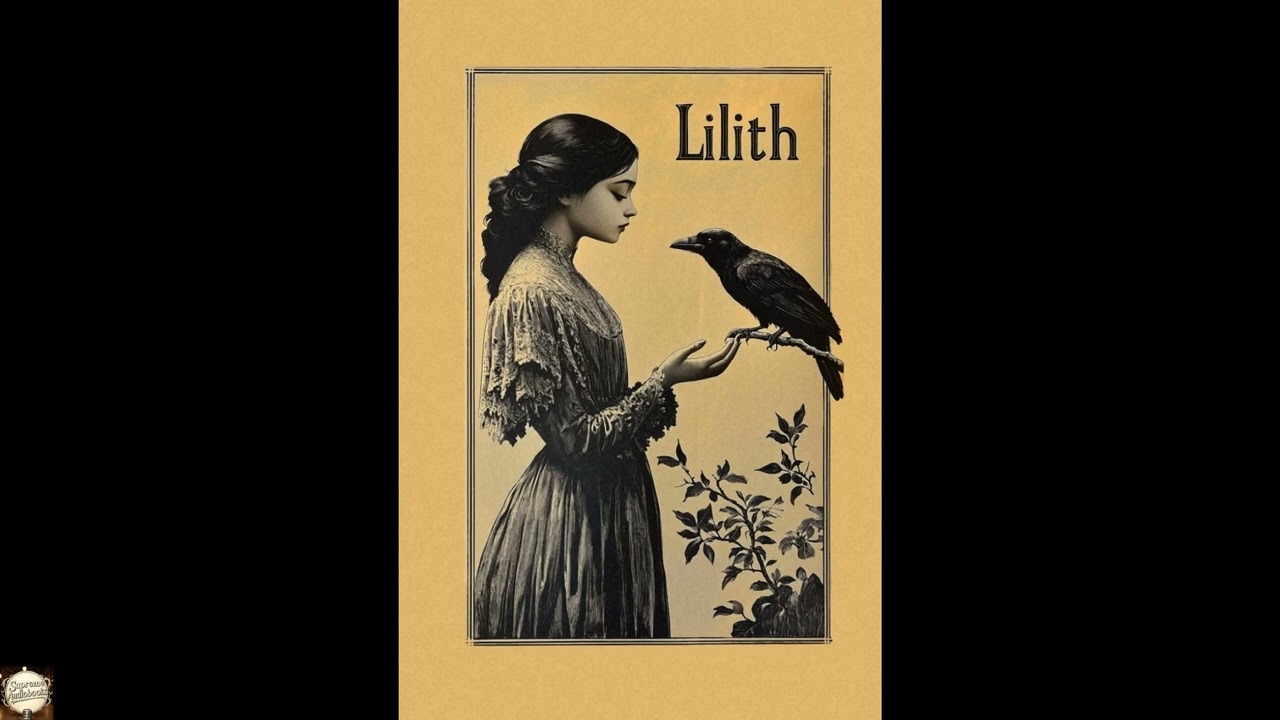
The 4K cinematic visuals accompanying this audiobook are generated by an AI image model from prompts derived from the source text. No copyrighted photos, paintings, or stock footage are used. AI generation is disclosed on every video on our YouTube channel as required by YouTube's altered/synthetic content policy.
English subtitles are transcribed from the LibriVox recording with OpenAI Whisper. Translations into the 11 other supported languages are produced by Meta's NLLB-200 neural translation model. No human translator's copyrighted translation is used.
Questions about sourcing or rights? See our DMCA & Sourcing policy or contact us.
Enjoyed this audiobook?
If you'd like to own a copy of Lilith: A Romance or hear a professionally produced edition, the links below help support free audiobook production at no extra cost to you.
As an Amazon Associate we earn from qualifying purchases. Audible / print links are affiliate.