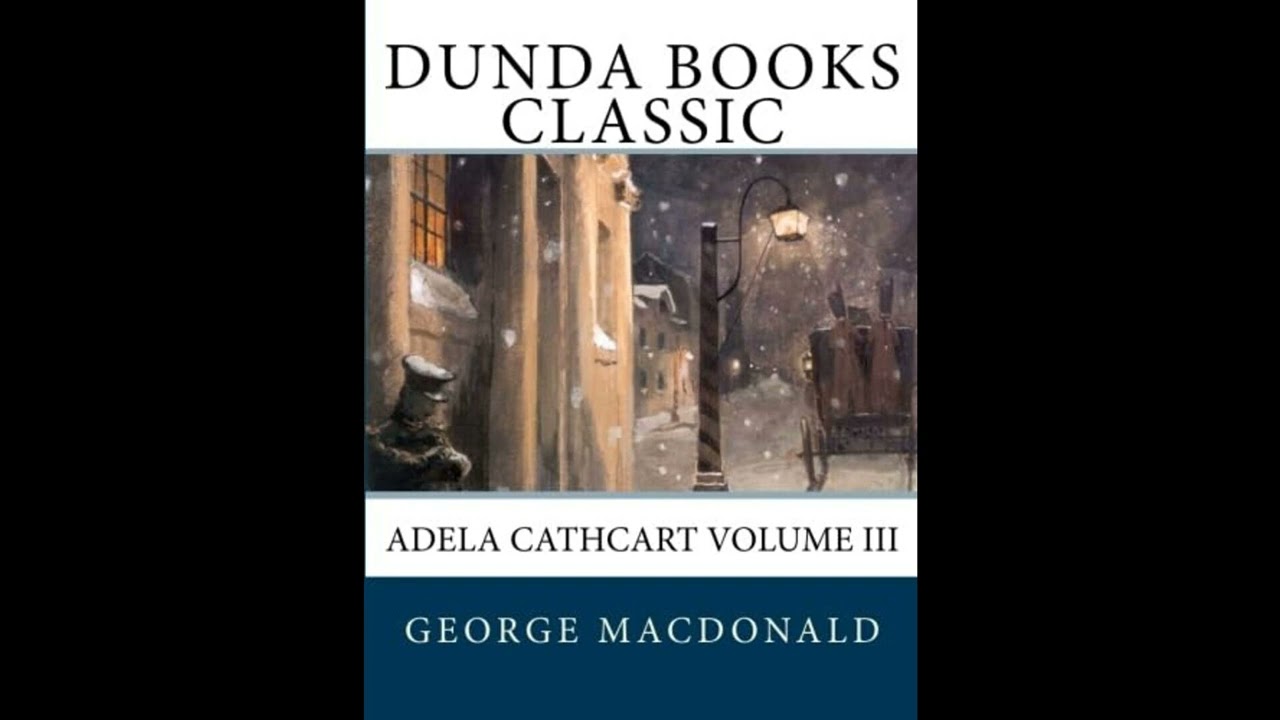
Adela Cathcart Volume III
The concluding chapters of a profound spiritual and intellectual quest await in George MacDonald's Adela Cathcart Volume III. This final installment brings to its culmination the story of a young woman's fervent search for truth amidst the complexities of Victorian society and her own evolving faith. Listeners today will find themselves drawn into Adela's sincere struggles and the stimulating discussions that define MacDonald's unique blend of literary realism and proto-fantasy. Far from a mere period piece, this narrative resonates with anyone who has grappled with doubt, yearned for authentic connection, or sought to reconcile the demands of the world with the whispers of the soul. MacDonald’s enduring appeal lies in his ability to address the deepest human questions with both intellectual rigor and imaginative grace, making Adela's story as relevant and compelling in our present age as it was in its own. Set against the backdrop of Victorian drawing-rooms, country estates, and the inner sanctums of thought, Adela Cathcart Volume III picks up the narrative threads that have guided Adela through earlier volumes. Adela, a thoughtful and deeply sensitive young woman, finds herself navigating a period of profound personal and spiritual introspection. Her world is populated by an array of friends, mentors, and suitors, each representing different facets of belief, skepticism, and human experience. As she engages in long, often passionate, conversations about theology, philosophy, and the nature of reality, Adela strives to forge her own understanding of faith, love, and purpose. The central conflict in this concluding volume is less about external action and more about Adela's internal journey towards conviction and self-acceptance. She grapples with the intellectual challenges to traditional faith emerging in her era, wrestling with questions of divine justice, human suffering, and the true meaning of spiritual devotion. Her relationships, particularly with those who challenge or reinforce her evolving perspectives, serve as catalysts for her growth. The story arc builds towards a resolution not necessarily of external conflicts, but of Adela’s deeply personal quest for spiritual clarity and her place within a world that often seems at odds with her deepest longings. The narrative maintains its focus on Adela's inner landscape, where she confronts her fears, embraces nascent understandings, and prepares to make choices that will shape her future. George MacDonald, born in Huntly, Aberdeenshire, Scotland, in 1824, was a figure of immense influence in Victorian literature and beyond. Originally trained as a Congregational minister, he was eventually forced to resign from his pulpit due to his heterodox theological views, which emphasized God's boundless love and universal salvation over traditional hellfire damnation. This pivotal moment propelled him into a life dedicated to writing and lecturing. MacDonald became a prolific author of realistic novels, volumes of poetry, sermons, and groundbreaking fantasy works that laid the foundation for the modern genre. He counted among his friends and admirers such luminaries as Lewis Carroll, John Ruskin, and Mark Twain, and his imaginative fiction profoundly shaped the spiritual and creative sensibilities of C.S. Lewis and J.R.R. Tolkien, who considered him their "master." MacDonald’s literary output, spanning from the mid-19th century into the early 20th, often grappled with the tension between conventional piety and a more expansive, imaginative understanding of faith. His famous fantasy novels, like Phantastes and Lilith, and children’s tales such as The Princess and the Goblin and At the Back of the North Wind, are celebrated for their allegorical depth and pioneering world-building. However, his "realistic" novels, including Adela Cathcart, Robert Falconer, and Annals of a Quiet Neighbourhood, are equally significant, offering nuanced portrayals of character and profound theological insights clothed in domestic drama. MacDonald died in 1905, leaving behind a body of work that continues to challenge and inspire readers across genres. Adela Cathcart Volume III powerfully enacts several core themes central to MacDonald’s wider philosophy. One prominent theme is the nature of faith and doubt, presented not as opposing forces but as intertwined elements of an honest spiritual search. Adela's frequent internal monologues and the spirited dialogues with her intellectual companions lay bare the struggles of belief in an age of emerging scientific skepticism, showcasing how doubt, when faced squarely, can purify and deepen conviction. For example, scenes where Adela debates the historical veracity of religious narratives or grapples with the seeming harshness of divine decree highlight MacDonald’s own journey through theological complexities. Another significant theme is the redemptive power of love, both human and divine. Throughout the narrative, Adela's relationships – friendships, romantic affections, and her perceived connection to a higher power – serve as crucibles for her spiritual growth. A quiet moment of empathy shared between Adela and a struggling acquaintance, or a sudden realization about the unconditional nature of a friend's care, often mirrors and illuminates the larger divine love that MacDonald believed permeated all existence. The narrative suggests that true love demands self-surrender and a willingness to see beyond surface appearances, leading to profound transformation. The mid-Victorian period, when Adela Cathcart was published, was a time of immense cultural and intellectual upheaval in Britain. The scientific discoveries of Charles Darwin, particularly the publication of On the Origin of Species in 1859, sent shockwaves through traditional religious belief, challenging long-held interpretations of creation and humanity’s place in the universe. Rapid industrialization transformed society, bringing both technological marvels and widespread social problems. Against this backdrop, many intellectuals and writers like MacDonald sought to reconcile new knowledge with enduring spiritual truths, often turning to imaginative literature and philosophical discourse to address the anxieties and questions of the age. MacDonald's work emerged as a vital response to these societal shifts. His dismissal from the ministry for his unconventional views made him acutely aware of the limitations of rigid dogma. Through Adela Cathcart, he offers an alternative path – one where genuine faith is not inherited or blindly accepted, but forged through individual experience, intellectual honesty, and a profound engagement with imagination and intuition. The novel's focus on internal struggle and dialogue over outward action reflects a broader Victorian preoccupation with psychological depth and the complexities of personal belief in a rapidly changing world. Listening to Adela Cathcart Volume III as an audiobook offers a uniquely intimate and absorbing experience. The "several hours" run time provides ample opportunity to truly settle into MacDonald’s distinct narrative rhythm, characterized by thoughtful introspection, extended dialogues, and descriptions that build atmosphere through careful detail. A skilled narrator brings Adela's inner voice to life, allowing listeners to fully appreciate the nuances of her spiritual and intellectual odyssey. The varying cadences of the different characters, from the earnest Adela to her more dogmatic or freethinking companions, become clear through vocal performance, making the philosophical debates feel immediate and personal. It allows the subtle shifts in emotional tone, the moments of profound insight, and the quiet beauty of MacDonald's prose to sink in, creating an immersive journey into the heart of Victorian thought and enduring human questions.
Enjoyed Adela Cathcart Volume III? A few ways to support us
Audible & Amazon links are affiliate; we may earn a small commission at no extra cost.
About this production
Human narration by a volunteer reader from LibriVox.org, the public-domain audiobook project. LibriVox volunteers record literary works whose copyright has expired in the United States, releasing the resulting recordings into the public domain.
Adela Cathcart Volume III by George MacDonald. The underlying text is in the U.S. public domain. We do not republish any modern copyrighted edition, translation, or commentary.
The 4K cinematic visuals accompanying this audiobook are generated by an AI image model from prompts derived from the source text. No copyrighted photos, paintings, or stock footage are used. AI generation is disclosed on every video on our YouTube channel as required by YouTube's altered/synthetic content policy.
English subtitles are transcribed from the LibriVox recording with OpenAI Whisper. Translations into the 11 other supported languages are produced by Meta's NLLB-200 neural translation model. No human translator's copyrighted translation is used.
Questions about sourcing or rights? See our DMCA & Sourcing policy or contact us.
Enjoyed this audiobook?
If you'd like to own a copy of Adela Cathcart Volume III or hear a professionally produced edition, the links below help support free audiobook production at no extra cost to you.
As an Amazon Associate we earn from qualifying purchases. Audible / print links are affiliate.