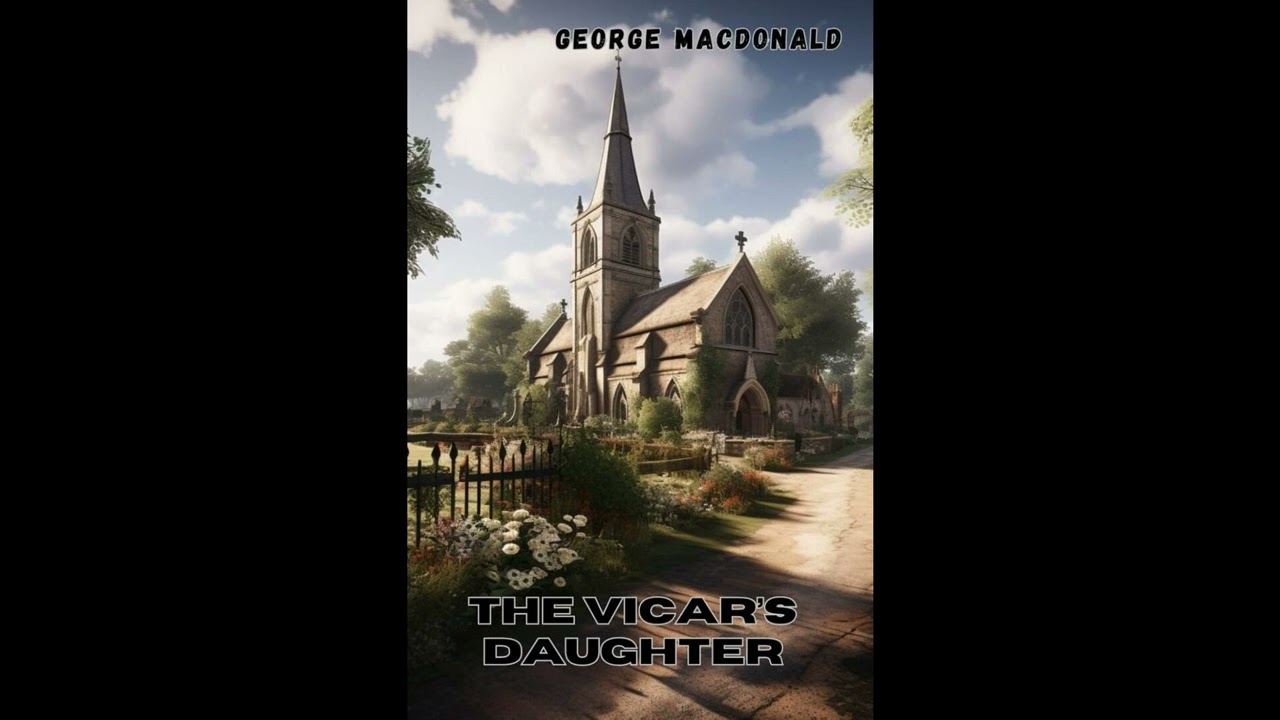
The Vicar's Daughter
Step into the quiet, often profound, world of Victorian England through George MacDonald’s The Vicar's Daughter, a novel that gracefully uncovers the depths of human character and the complexities of spiritual growth. While perhaps overshadowed by MacDonald’s fantastical tales, this work stands as a testament to his profound insight into the human heart, offering a reflective and deeply moving account of a young woman's journey toward understanding herself and her place in a world grappling with faith and social change. Its gentle narrative, rich with observation and moral inquiry, still speaks powerfully today to anyone navigating the path of personal conviction amidst societal expectation, making it a compelling listen for those who appreciate classic literature that explores the enduring questions of existence with warmth and wisdom. The narrative unfolds through the eyes of Mary Marston, the thoughtful and introspective daughter of an Anglican vicar in a modest English parish. Her life in the vicarage is one of relative simplicity, surrounded by her kindly, scholarly father, her more practical and sometimes stern mother, and a scattering of siblings. Mary possesses a keen observational spirit, often reflecting on the lives of those around her, from the hardworking villagers to the more eccentric local gentry. Her world, initially circumscribed by the routines of parish life and her family's gentle intellectual pursuits, begins to expand as she encounters various characters whose lives challenge her sheltered perspectives. She meets individuals who embody different facets of Victorian society: genuine piety, rigid convention, quiet despair, and hopeful resilience. As the story progresses, Mary experiences personal trials and moments of significant awakening. The family faces financial strains, and Mary herself grapples with questions of purpose, charity, and the true meaning of Christian living beyond mere adherence to doctrine. She forms new friendships, encounters potential romantic interests, and navigates the subtle social hierarchies of her community. Each interaction and experience serves as a lesson, gradually deepening her understanding of compassion, forgiveness, and the often-hidden motives behind human actions. The narrative follows her earnest search for spiritual authenticity, as she learns to discern genuine goodness from superficial appearances, and to find strength not only in her inherited faith but in a more personal and deeply felt conviction. Her path is one of patient growth, where even small moments of insight contribute to a significant transformation of spirit and character. George MacDonald, born in Huntly, Aberdeenshire, Scotland, in 1824, lived a life that deeply informed his literary output. Educated at King's College, Aberdeen, and later at Highbury College in London, he initially pursued a career as a Congregational minister. However, his unconventional theological views, particularly concerning issues of universal salvation and the nature of hell, led to his dismissal from his pulpit in Arundel. This pivotal event prompted him to dedicate himself fully to writing and lecturing, a path he followed to support his large family until his passing in 1905. MacDonald became a prolific author, producing a vast body of work that encompassed realistic novels, poetry, sermons, and groundbreaking fantasy. His enduring legacy rests not only on his contributions to realistic fiction but also on his pivotal role in the development of modern fantasy literature. Works such as Phantastes, The Princess and the Goblin, and Lilith are celebrated as foundational texts of the genre, influencing later literary giants like C.S. Lewis and J.R.R. Tolkien, both of whom openly acknowledged his profound impact on their own imaginative worlds and theological perspectives. MacDonald's "realistic" novels, including Annals of a Quiet Neighbourhood and Robert Falconer, often blended sharp social observation with a fervent, mystical spirituality, reflecting his belief that the spiritual dimension was inextricably woven into the fabric of everyday life. He carved a unique niche in the Victorian literary canon, bridging the gap between social commentary and allegorical spiritual inquiry. The Vicar's Daughter powerfully enacts several core themes central to MacDonald's worldview. One prominent theme is the nature of genuine faith versus outward observance. Mary frequently questions the superficial piety she observes in some parishioners, prompting her to seek a deeper, more active spirituality. For instance, she contemplates how true charity extends beyond simple donations, requiring personal sacrifice and understanding, contrasting it with the sometimes-patronizing acts of the wealthy. This ties into the theme of social class and the responsibility of the privileged. Mary learns firsthand, through encounters with struggling families and her family's own financial anxieties, that empathy and practical aid are paramount, often more so than rigid social structures or formal religious pronouncements. Another significant theme is personal growth and the search for identity. Mary's journey is one of maturation, moving from the naive interpretations of a young woman to the more nuanced understanding of an adult grappling with life's complexities. Her internal monologues reveal her wrestling with doubt and certainty, her evolving relationships teaching her about the intricacies of human connection and forgiveness. Through her experiences, MacDonald also explores the hidden truths and spiritual realities that he believed lay beneath the surface of the material world. Mary’s growing spiritual insight allows her to perceive a deeper divine order and purpose even in moments of struggle or confusion, highlighting MacDonald's mystical understanding of a God whose goodness permeates all creation, waiting to be discovered by a searching heart. When The Vicar's Daughter was published in 1872, Victorian England was a society experiencing a dynamic confluence of change and tradition. The era was marked by the ongoing effects of the Industrial Revolution, leading to rapid urbanization and significant disparities in wealth, which in turn spurred social reform movements and intense debates about poverty and class responsibility. Culturally, there was a prevalent emphasis on moral rectitude, domesticity, and the importance of Christian values, yet simultaneously, intellectual challenges to traditional religious dogma, such as Darwin's theories of evolution, were gaining traction, prompting many to re-evaluate their faith. In the literary world, the realistic novel was flourishing, with authors like Charles Dickens and George Eliot crafting detailed portrayals of contemporary life and social issues. MacDonald emerged from this rich environment with a distinctive voice. His work, while engaging with the social realities of the day, distinguished itself by its unwavering focus on spiritual and moral questions, often presented with an allegorical depth uncommon in purely realistic fiction. The Vicar's Daughter reflects this unique blend, offering a gentle yet probing examination of Victorian society through the lens of individual spiritual awakening, a characteristic that set MacDonald apart and provided a counterbalance to the more purely naturalistic or overtly satirical works of his contemporaries. Listening to The Vicar's Daughter as an audiobook offers a unique and intimate way to experience MacDonald's prose. The novel’s reflective tone, often characterized by Mary’s thoughtful internal observations and the gentle rhythm of village life, lends itself beautifully to narration. A skilled voice actor can truly bring Mary's earnestness and growing wisdom to life, allowing listeners to fully immerse themselves in her spiritual and intellectual development. The story's run length, spanning several hours, makes it perfect for extended periods of contemplation—whether during quiet evenings, long walks, or daily commutes—allowing the listener to absorb its subtle lessons at a leisurely pace. Pay attention to the nuanced dialogue, which often reveals more about character and underlying belief than direct exposition, and to the descriptive passages that paint vivid pictures of the English countryside and the social fabric of the period. This is a story to be savored, inviting patience and thought, and the audio format makes that contemplative engagement especially accessible.
Enjoyed The Vicar's Daughter? A few ways to support us
Audible & Amazon links are affiliate; we may earn a small commission at no extra cost.
About this production
Human narration by a volunteer reader from LibriVox.org, the public-domain audiobook project. LibriVox volunteers record literary works whose copyright has expired in the United States, releasing the resulting recordings into the public domain.
The Vicar's Daughter by George MacDonald. The underlying text is in the U.S. public domain. We do not republish any modern copyrighted edition, translation, or commentary.
The 4K cinematic visuals accompanying this audiobook are generated by an AI image model from prompts derived from the source text. No copyrighted photos, paintings, or stock footage are used. AI generation is disclosed on every video on our YouTube channel as required by YouTube's altered/synthetic content policy.
English subtitles are transcribed from the LibriVox recording with OpenAI Whisper. Translations into the 11 other supported languages are produced by Meta's NLLB-200 neural translation model. No human translator's copyrighted translation is used.
Questions about sourcing or rights? See our DMCA & Sourcing policy or contact us.
Enjoyed this audiobook?
If you'd like to own a copy of The Vicar's Daughter or hear a professionally produced edition, the links below help support free audiobook production at no extra cost to you.
As an Amazon Associate we earn from qualifying purchases. Audible / print links are affiliate.