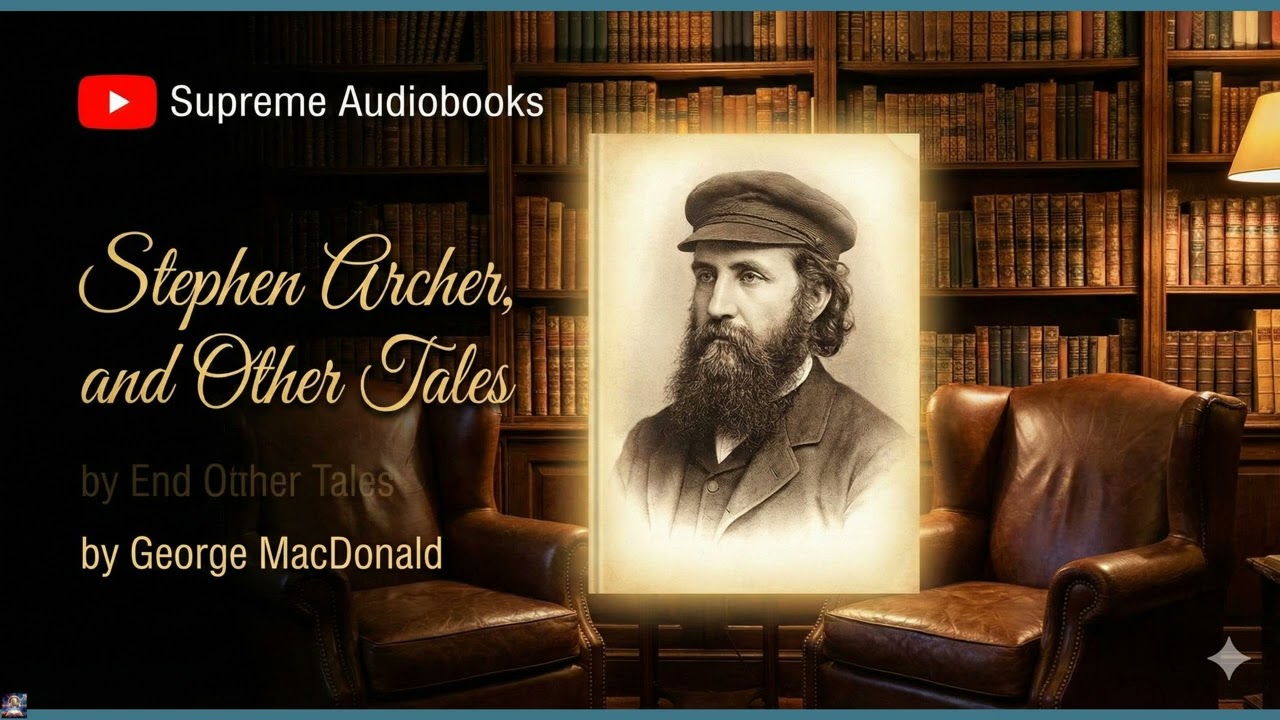
Stephen Archer, and Other Tales
Step into the distinctive world of George MacDonald with Stephen Archer, and Other Tales, a collection that invites listeners to witness the profound moral and spiritual landscapes of Victorian Britain through the eyes of one of its most imaginative and influential authors. More than a simple gathering of stories, this volume offers a window into the human soul, grappling with questions of truth, forgiveness, and the subtle workings of a divine providence that touches even the most ordinary lives. In an age often defined by its stark realism, MacDonald dared to infuse his narratives with a deep, almost mystical sense of wonder and a compassionate understanding of human frailty. His tales resonate today, perhaps more than ever, for their honest portrayal of struggle and their enduring message of hope, offering both a gentle escape and a challenging reflection on what it means to live with integrity. The titular story, "Stephen Archer," places us squarely in a milieu that MacDonald understood well: a society where reputation and hidden pasts carry immense weight. Stephen is a young man whose path seems to be set, but he harbors a secret, a shadow from his earlier life that threatens to unravel his present happiness and future prospects. The narrative builds around the growing tension of this undisclosed history, and the moral choices Stephen faces as he navigates relationships, expectations, and the yearning for acceptance. Will he succumb to the pressure of maintaining a facade, or will he find the courage to confront his truth, no matter the cost? MacDonald masterfully portrays the inner turmoil, the subtle deceptions, and the eventual dawning of self-awareness that often precedes a true turning point. Accompanying "Stephen Archer" are additional narratives that showcase MacDonald's breadth, ranging from domestic dramas steeped in Scottish sensibility to allegorical pieces that hint at the spiritual underpinnings of existence. Each story, though distinct in its specific characters and settings, shares a common thread: the conviction that genuine love, humility, and honesty are the true measures of a life well-lived. George MacDonald, born in 1824 in Huntly, Aberdeenshire, Scotland, remains a towering, if sometimes overlooked, figure in literary history. The son of a farmer, he initially pursued a career in theology, studying at King's College, Aberdeen, and later at Highbury College in London. He became a Congregational minister, but his views on universal salvation, considered heterodox at the time, led to his resignation. This pivotal life event, rather than ending his ministry, redirected it into the realm of literature. From then on, MacDonald poured his spiritual insights and imaginative prowess into novels, poems, and fairy tales, becoming a prolific writer and popular lecturer. He spent significant periods of his life in England and Italy, often for his health, but his Scottish roots and Calvinist upbringing profoundly shaped his understanding of grace and the human condition. His prolific output includes foundational fantasy works like Phantastes and Lilith, beloved children's stories such as The Princess and the Goblin and At the Back of the North Wind, and many realistic novels like David Elginbrod and Robert Falconer. MacDonald passed away in 1905, leaving behind a legacy that would deeply influence later writers, most notably C.S. Lewis, who called him his "master," and J.R.R. Tolkien, both of whom recognized in MacDonald a unique blend of storytelling power and spiritual depth that transcended conventional genre boundaries. At the heart of Stephen Archer, and Other Tales are several compelling themes that resonate throughout MacDonald's entire body of work. One central concern is the nature of truth and deception. Characters frequently grapple with secrets, lies of omission, or self-deception, and the stories often illustrate the painful but ultimately liberating consequences of confronting reality. For Stephen Archer, his concealed past is a constant burden, manifesting as anxiety and a barrier to genuine connection. MacDonald suggests that true freedom and peace come only when one is willing to lay bare their true self, warts and all, before others and before a divine presence. Another pervasive theme is redemption and forgiveness. MacDonald, a man of deep faith, believed profoundly in the possibility of spiritual transformation and the healing power of grace. Even when characters falter and make poor choices, there is always the potential for a change of heart, a sincere repentance, and the experience of being forgiven, often through the steadfast love of another person. The process is rarely easy, demanding humility and courage, but it is presented as the only true path to wholeness. A third prominent theme is the interconnectedness of the spiritual and the mundane. While Stephen Archer is not a fantasy story in the vein of Phantastes, MacDonald imbues his realistic settings with a sense of underlying spiritual reality. Everyday events and moral dilemmas are not merely happenstance but often carry deeper significance, hinting at a guiding hand or an invisible order that subtly shapes human destinies. Finally, the theme of moral courage in the face of social pressure is keenly felt. MacDonald's characters often find themselves at odds with societal expectations or conventional morality, forced to make difficult choices that prioritize integrity over convenience or popularity. These themes are not abstract concepts, but are woven directly into the fabric of the narratives, shown through the characters' internal monologues, their interactions, and the unfolding consequences of their decisions. These tales emerged from the heart of the Victorian era, a period of immense social, scientific, and religious upheaval in Britain. Rapid industrialization brought unprecedented wealth alongside widespread poverty and social injustice, prompting urgent questions about morality and responsibility. Charles Darwin's theories challenged traditional religious beliefs, while burgeoning scientific advancements and philosophical movements questioned long-held assumptions about humanity's place in the universe. In the literary world, realism was gaining ground, but there was also a strong current of romanticism and a yearning for spiritual meaning amidst the growing materialism. MacDonald's work served as a bridge, grounding his stories in the recognizable realities of his time, yet imbuing them with a profound spiritual dimension and an imaginative reach that offered both comfort and challenge. His decision to write rather than preach allowed him to address the anxieties and aspirations of his contemporaries outside the confines of formal dogma, offering a fresh perspective on faith, doubt, and the nature of goodness in a rapidly changing world. His stories provided a unique blend of moral instruction and compelling narrative, appealing to an audience hungry for both. Listening to Stephen Archer, and Other Tales as an audiobook offers a particularly rich and immersive experience. The measured pace of MacDonald's Victorian prose, when brought to life by a skilled narrator, allows listeners to fully appreciate the lyrical quality of his language and the depth of his characterizations. The several hours of listening time provide ample opportunity for contemplation, letting the stories unfold gradually and allowing their moral insights to sink in. A talented voice artist can deftly navigate the nuances of MacDonald's dialogue, bringing out the distinct personalities of each character, from the earnest Stephen Archer to the various figures who challenge or support him. Pay close attention to how the narration conveys the internal struggles of the protagonists, the subtle shifts in atmosphere, and the underlying sense of grace that permeates even the darkest moments. The aural presentation accentuates the emotional texture and the profound wisdom embedded in these classic tales, drawing you into a world where everyday decisions carry eternal weight and the quiet workings of the human heart are brought vividly to life.
Enjoyed Stephen Archer, and Other Tales? A few ways to support us
Audible & Amazon links are affiliate; we may earn a small commission at no extra cost.
About this production
Human narration by a volunteer reader from LibriVox.org, the public-domain audiobook project. LibriVox volunteers record literary works whose copyright has expired in the United States, releasing the resulting recordings into the public domain.
Stephen Archer, and Other Tales by George MacDonald. The underlying text is in the U.S. public domain. We do not republish any modern copyrighted edition, translation, or commentary.
The 4K cinematic visuals accompanying this audiobook are generated by an AI image model from prompts derived from the source text. No copyrighted photos, paintings, or stock footage are used. AI generation is disclosed on every video on our YouTube channel as required by YouTube's altered/synthetic content policy.
English subtitles are transcribed from the LibriVox recording with OpenAI Whisper. Translations into the 11 other supported languages are produced by Meta's NLLB-200 neural translation model. No human translator's copyrighted translation is used.
Questions about sourcing or rights? See our DMCA & Sourcing policy or contact us.
Enjoyed this audiobook?
If you'd like to own a copy of Stephen Archer, and Other Tales or hear a professionally produced edition, the links below help support free audiobook production at no extra cost to you.
As an Amazon Associate we earn from qualifying purchases. Audible / print links are affiliate.