The Queen's Twin: and Other Stories
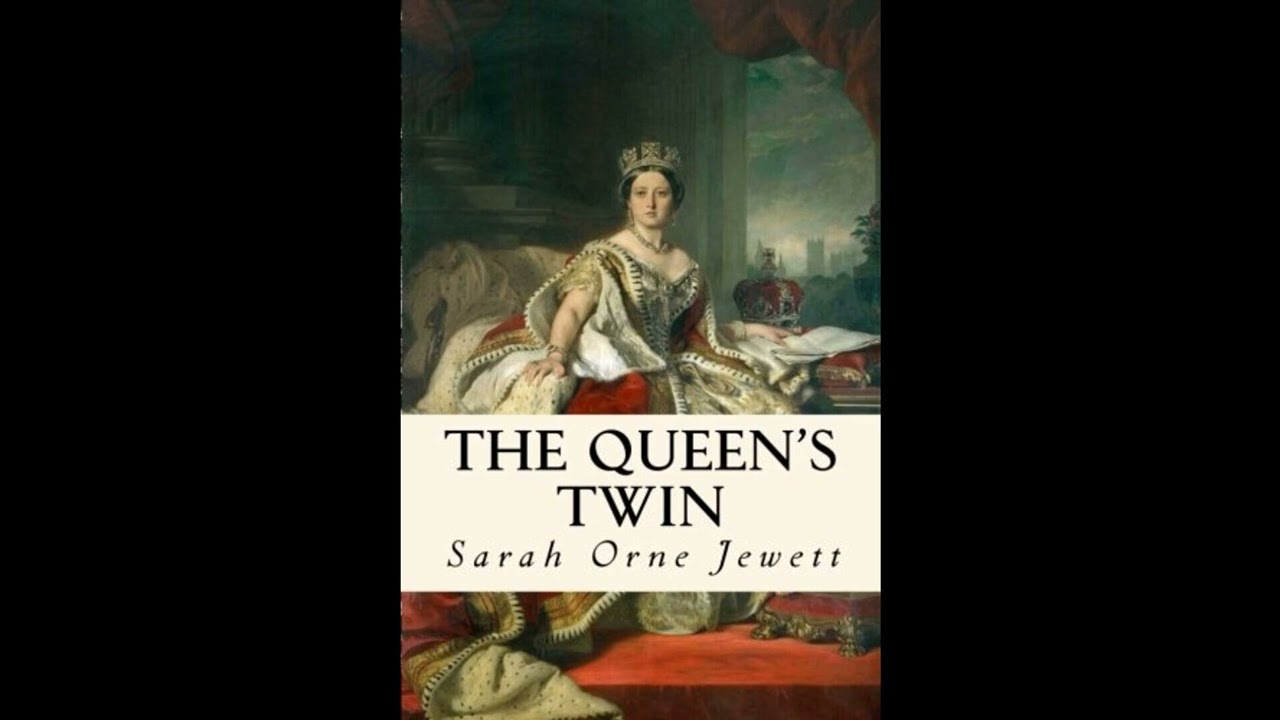
Step into a world where the sea whispers forgotten tales and the quiet dignity of rural life holds profound truths. Sarah Orne Jewett’s The Queen’s Twin: and Other Stories offers a portal to late nineteenth-century coastal New England, a place of dwindling populations, strong community bonds, and individuals whose inner lives resonate with unexpected depth. These stories are not grand sagas of adventure or ambition, but meticulously crafted vignettes, each a miniature portrait painted with remarkable precision and empathy. Why should modern listeners care for such seemingly small narratives? Because Jewett unearths the universal in the local, the enduring in the ephemeral. She reveals the resilience of the human spirit, the solace found in memory and nature, and the subtle humor and heartbreak woven into the fabric of everyday existence. Her gentle observations and lyrical prose offer a meditative pause from the frenetic pace of contemporary life, inviting us to find beauty and meaning in the unadorned realities of a disappearing world. The collection, named for its poignant titular story, immerses listeners in the lives of Maine villagers, farmers, and retired sea captains. Jewett establishes her setting with an artist's eye, detailing the rocky shores, the salt-weathered houses, and the changing seasons that dictate the rhythms of life. Main characters are often elderly women, keepers of local history and tradition, or individuals who have lived lives shaped by the sea and the land. They are characters like Mrs. Todd, the herbalist from Jewett's more famous The Country of the Pointed Firs (though not appearing in this particular collection), who, through their quiet wisdom and sharp wit, embody the spirit of their locale. There is no single overarching plot, but rather a series of encounters, observations, and reminiscences, each story unfolding like a visit with an old friend, revealing a new facet of human nature. In "The Queen's Twin," for instance, we meet an old woman who firmly believes she shares a special, almost mystical connection with Queen Victoria, born on the same day. Her life, though outwardly simple and confined to a small coastal town, is elevated and broadened by this imaginative kinship. Other stories present similar scenarios: a young woman grappling with her future in a changing world, old friends sharing nostalgic conversations over tea, or a community coming together for a simple event that reveals the strength of their collective spirit. The central conflict in many of these pieces is often subtle—the tension between past and present, the struggle for independence in a close-knit community, or the quiet courage required to face loneliness and loss. Jewett’s narratives move with a gentle, reflective pace, building not to dramatic climaxes, but to moments of quiet understanding and profound human insight. Sarah Orne Jewett was born in South Berwick, Maine, in 1849, and lived there until her death in 1909. Her life was deeply intertwined with the landscape and people she would so memorably render in her fiction. Frail health as a child meant she often missed school, but this afforded her ample time for reading in her physician father’s extensive library and accompanying him on his rounds through the countryside. These experiences instilled in her a deep knowledge of rural Maine and its inhabitants, their customs, speech patterns, and individual eccentricities. She began publishing her stories in the 1870s, gaining recognition for her acute observations and elegant prose. Jewett became a leading figure in the American literary movement known as "regionalism" or "local color writing," which sought to capture the distinct character of specific American locales. Her most celebrated work, The Country of the Pointed Firs (1896), is widely considered a cornerstone of American literature, but collections like The Queen's Twin demonstrate the breadth and consistency of her talent. She was not only a gifted writer but also a prominent literary figure, fostering friendships with other notable authors of her time, including William Dean Howells and Annie Fields, with whom she maintained a long and intimate relationship. Jewett’s place in the American literary canon is secure, recognized for her unique contribution to depicting a vanishing way of life with dignity and grace. The stories in The Queen’s Twin resonate with several enduring themes. One prominent thread is the power of memory and the past to shape identity and offer solace. Characters often dwell on bygone days, recounting anecdotes of sea voyages, local legends, or departed loved ones. In "The Queen's Twin," the protagonist's entire self-perception is built upon a connection rooted in history, demonstrating how imagination can intertwine with personal history to create a rich inner world. Another key theme is the strength and resilience of community, often contrasted with individual isolation. While many characters live solitary lives, they are invariably connected by the threads of shared experience, mutual support, and a collective sense of place. Jewett shows us how simple acts of neighborliness or shared storytelling can forge profound bonds. Furthermore, Jewett consistently highlights the intimate relationship between human beings and the natural world, particularly the sea. The Maine coastline is more than just a backdrop; it is a character in itself, influencing livelihoods, moods, and philosophical outlooks. The sound of the waves, the smell of the salt air, and the changing light are woven into the very fabric of her narratives. Finally, the collection offers insightful portrayals of women's lives and their quiet agency within a patriarchal society. Jewett’s female characters are often the emotional and spiritual anchors of their communities, possessing wisdom, fortitude, and a deep understanding of human nature, challenging conventional notions of "feminine" power. Through these characters, Jewett quietly affirms the importance of their perspectives and contributions. These stories emerged during a period of significant cultural and economic transformation in America. The late nineteenth century saw rapid industrialization, urbanization, and the closing of the American frontier, leading to a profound sense of nostalgia for simpler times and vanishing ways of life. For New England, this meant the decline of its traditional maritime and agricultural industries, as younger generations left small towns for the opportunities of the cities. Jewett, deeply rooted in her local environment, felt compelled to document this disappearing world, to capture its unique character and the voices of its people before they were lost entirely. Literarily, this was the era of American Realism, a movement that rejected the romantic idealism of earlier periods in favor of depicting everyday life with accuracy and psychological nuance. Jewett’s work perfectly aligned with this trend, but her "local color" approach added a particular focus on regional dialect, customs, and landscapes. She didn't merely describe; she preserved. Her writing served as an elegy for a fading culture, offering a window into a specific place and time that held universal lessons about human endurance, memory, and the enduring power of community. Listening to The Queen's Twin: and Other Stories as an audiobook offers a singular opportunity to fully immerse oneself in Jewett’s evocative prose and the gentle rhythms of her world. The narrator's voice becomes crucial in conveying the subtle inflections of New England dialect and the quiet dignity of her characters. The unhurried pace of the stories is ideally suited for auditory consumption, allowing listeners to absorb the delicate atmospheric details and the profound observations without rushing. With several hours of content, this collection provides ample time for contemplative listening, whether on a quiet afternoon, during a long drive, or as a meditative companion to daily routines. Listen for the precise descriptions of nature, the authentic cadences of dialogue, and the underlying current of warmth and empathy that suffuses every story, transforming seemingly simple lives into moments of enduring truth.
Enjoyed The Queen's Twin: and Other Stories? A few ways to support us
Audible & Amazon links are affiliate; we may earn a small commission at no extra cost.
About this production
Human narration by a volunteer reader from LibriVox.org, the public-domain audiobook project. LibriVox volunteers record literary works whose copyright has expired in the United States, releasing the resulting recordings into the public domain.
The Queen's Twin: and Other Stories by Sarah Orne Jewett. The underlying text is in the U.S. public domain. We do not republish any modern copyrighted edition, translation, or commentary.
The 4K cinematic visuals accompanying this audiobook are generated by an AI image model from prompts derived from the source text. No copyrighted photos, paintings, or stock footage are used. AI generation is disclosed on every video on our YouTube channel as required by YouTube's altered/synthetic content policy.
English subtitles are transcribed from the LibriVox recording with OpenAI Whisper. Translations into the 11 other supported languages are produced by Meta's NLLB-200 neural translation model. No human translator's copyrighted translation is used.
Questions about sourcing or rights? See our DMCA & Sourcing policy or contact us.
Enjoyed this audiobook?
If you'd like to own a copy of The Queen's Twin: and Other Stories or hear a professionally produced edition, the links below help support free audiobook production at no extra cost to you.
As an Amazon Associate we earn from qualifying purchases. Audible / print links are affiliate.