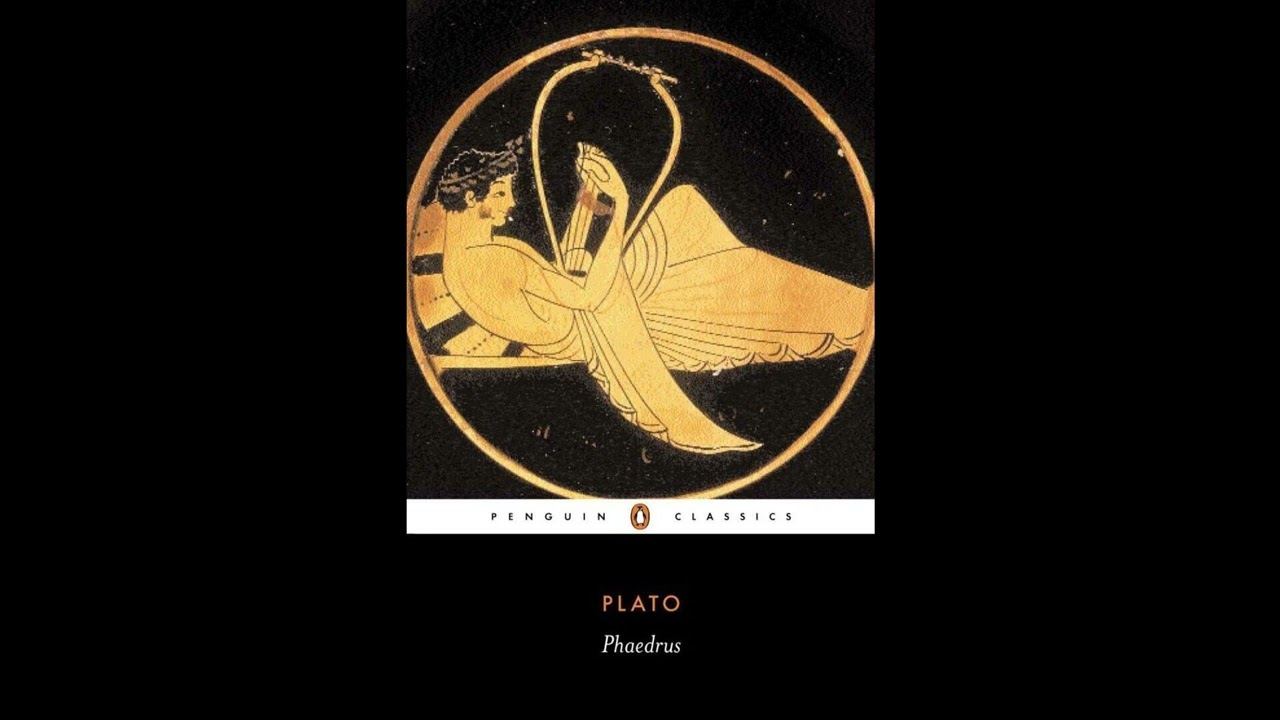
Phaedrus
Plato's Phaedrus offers a rare glimpse into the intellectual heart of ancient Greece, a profound conversation that resonates with questions as urgent today as they were over two millennia ago. This compelling Socratic dialogue, set on a summer's day outside the bustling city of Athens, invites listeners to ponder the very nature of love, the true purpose of rhetoric, and the complex relationship between the spoken and written word. It is a fundamental text for understanding Western thought, questioning how we persuade, how we understand desire, and what methods best lead us towards truth. Why should we care now? Because in a world saturated with information and persuasive appeals, the principles of sound argument, genuine understanding, and the pursuit of meaning remain central to individual and societal well-being. Phaedrus peels back the layers of human communication, asking us to consider if what we say and how we say it genuinely serves the good. The scene opens with the young Phaedrus encountering Socrates as they walk along the Ilissus river, just beyond the city walls. Phaedrus, an avid admirer of oratory, is excitedly clutching a speech by the renowned rhetorician Lysias, which argues provocatively that a non-lover is more advantageous than a lover. Enticed by the prospect of hearing the speech, Socrates agrees to join Phaedrus for a leisurely discussion under the shade of a plane tree. Lysias's speech is then read aloud, presenting a clever but emotionally detached argument for practical, passionless relationships. Socrates, initially playful, eventually finds himself compelled to offer a counter-speech, albeit one that begins by mimicking Lysias's style and still argues against the irrationality of the lover. However, a sudden spiritual unease overtakes Socrates, prompting him to deliver a second, much longer and more inspired discourse. This monumental speech retracts his previous arguments and elevates love from a mere human impulse to a form of divine madness, a powerful, purifying force capable of uplifting the soul. He introduces the celebrated "chariot allegory," depicting the human soul as a charioteer (reason) guiding two winged horses—one noble and disciplined (spirit), the other wild and unruly (appetite). This vivid image describes the soul's struggle to ascend towards the realm of true being, beauty, and knowledge, a vision it once glimpsed before falling to earth. Following these passionate speeches on love, the dialogue takes a decisive turn, shifting its focus from eros to the very craft of persuasion itself. Socrates and Phaedrus then dissect the art of rhetoric, pondering whether it is merely a knack for influencing an audience or a true art grounded in understanding and truth. The conversation continues to examine the nuances of effective communication, weighing the merits and drawbacks of spoken discourse against written texts. Plato, born around 428 or 427 BC in Athens to an aristocratic family, stands as one of the most towering figures in Western philosophy. His youth was marked by political turmoil in Athens, culminating in the execution of his beloved teacher, Socrates, in 399 BC. This profound event deeply disillusioned Plato with Athenian democracy and set him on a philosophical path, seeking to establish a just society and a firm foundation for knowledge. He traveled extensively after Socrates' death, visiting places like Egypt, Sicily, and Italy, absorbing diverse philosophical traditions. Upon his return to Athens, around 387 BC, he founded the Academy, a school of philosophy and science that would become a prototype for later Western universities and continued for over nine centuries. Through his extensive body of work, almost entirely composed of philosophical dialogues, Plato preserved and expanded upon Socratic thought, making Socrates the central character in most of his writings. His literary output is extensive and incredibly influential, including foundational texts such as The Republic, which outlines his vision for an ideal state governed by philosopher-kings; Symposium, another famous dialogue on the nature of love; Apology, Socrates' defense speech at his trial; and Crito, which addresses civil disobedience and justice. Plato's writings established a philosophical system encompassing metaphysics (his theory of Forms), epistemology (the theory of knowledge as recollection), ethics, political theory, and aesthetics, earning him a singular place in the philosophical canon that continues to shape intellectual discourse to this day. His contributions are not merely historical footnotes but living ideas that inform contemporary debates across numerous disciplines. Phaedrus enacts several profound themes. First, it offers a powerful meditation on the nature of love, moving beyond conventional notions to present eros as a divine impulse. Socrates' second speech vividly illustrates this with the chariot allegory, where the soul, propelled by a longing for beauty, strives to recollect the perfect Forms it once witnessed. This love is not merely physical attraction but a yearning for true beauty and goodness, driving the soul upwards towards philosophical contemplation and self-improvement. Second, the dialogue critically examines the art of rhetoric and persuasion. It contrasts Lysias's style—which Socrates views as merely clever and manipulative, designed to appeal to prejudices—with what he considers true rhetoric. Genuine rhetoric, according to Socrates, must be based on a thorough understanding of truth, an intimate knowledge of the human soul, and a careful arrangement of arguments designed to guide the listener towards genuine understanding and justice. A third central theme concerns the limitations and strengths of spoken versus written communication. Socrates expresses significant skepticism about written texts, likening them to static, orphaned offspring that cannot defend themselves, cannot choose their audience, and may foster forgetfulness rather than true wisdom. He argues that true knowledge, like a living seed, can only be sown and cultivated through dynamic, responsive spoken dialogue, which allows for clarification, adaptation, and genuine intellectual engagement. This concern highlights the very medium through which philosophical truths are best transmitted and understood. Finally, Phaedrus also touches upon the immortality and tripartite nature of the soul, fundamental concepts within Plato's broader philosophy, again using the charioteer and horses as a concrete metaphor for the soul's complex inner workings and its enduring quest for higher truth. The period in which Plato composed Phaedrus, roughly the early to mid-4th century BC, was a time of significant cultural and political upheaval in Athens. The devastating Peloponnesian War had concluded, leaving the city weakened and searching for renewed identity and stability. Intellectual life flourished, but it was also a time of moral uncertainty and philosophical questioning, particularly in the wake of Socrates' execution. This era saw the rise of the Sophists, itinerant teachers who offered instruction in rhetoric, logic, and public speaking, often for a fee. Figures like Lysias, whose speech is central to Phaedrus, were prominent orators and logographers—writers of speeches for others—who exemplified the sophisticated rhetorical practices of the time. Plato's work, including Phaedrus, can be understood as a direct response to this intellectual climate. He was deeply concerned that the Sophists' emphasis on persuasion over truth could corrupt the youth and undermine the moral fabric of society, leading to tragedies like Socrates' condemnation. Phaedrus thus emerges as a thoughtful critique of rhetoric unmoored from philosophical wisdom and a defense of a more ethical, truth-oriented approach to public discourse. Furthermore, the dialogue's exploration of writing reflects a crucial transitional moment in Greek culture, moving from a predominantly oral tradition, where knowledge was passed down through spoken word and memory, to an increasing reliance on written texts. Socrates' reservations about writing capture a real cultural anxiety about the impact of this new medium on the acquisition and transmission of wisdom. Listening to Phaedrus as an audiobook offers a particularly immersive and appropriate experience for this classic text. A philosophical dialogue, by its very nature, is designed to be heard, to unfold in conversation, much as it originally occurred between Socrates and Phaedrus. The narration brings the distinct voices of the two characters to life, allowing the listener to follow the intricate back-and-forth of their arguments, the shifts in tone, and the evolving intellectual momentum. The several hours of listening time provide ample opportunity to absorb the complex layers of Plato's thought, allowing the listener to settle into the leisurely pace of the ancient philosophical discussion. You can truly appreciate the precision of Plato's language, the careful construction of his arguments, and the occasional poetic flourishes, such as the grand chariot allegory. The atmosphere of a summer's day by a quiet river, perfect for deep contemplation, is subtly evoked through the reader's performance, drawing you into the serene intellectual space where these profound ideas first took root.
Enjoyed Phaedrus? A few ways to support us
Audible & Amazon links are affiliate; we may earn a small commission at no extra cost.
About this production
Human narration by a volunteer reader from LibriVox.org, the public-domain audiobook project. LibriVox volunteers record literary works whose copyright has expired in the United States, releasing the resulting recordings into the public domain.
Phaedrus by Plato. The underlying text is in the U.S. public domain. We do not republish any modern copyrighted edition, translation, or commentary.
The 4K cinematic visuals accompanying this audiobook are generated by an AI image model from prompts derived from the source text. No copyrighted photos, paintings, or stock footage are used. AI generation is disclosed on every video on our YouTube channel as required by YouTube's altered/synthetic content policy.
English subtitles are transcribed from the LibriVox recording with OpenAI Whisper. Translations into the 11 other supported languages are produced by Meta's NLLB-200 neural translation model. No human translator's copyrighted translation is used.
Questions about sourcing or rights? See our DMCA & Sourcing policy or contact us.
View 10 famous quotes from this book →
Enjoyed this audiobook?
If you'd like to own a copy of Phaedrus or hear a professionally produced edition, the links below help support free audiobook production at no extra cost to you.
As an Amazon Associate we earn from qualifying purchases. Audible / print links are affiliate.