Phaedo
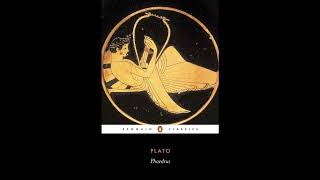
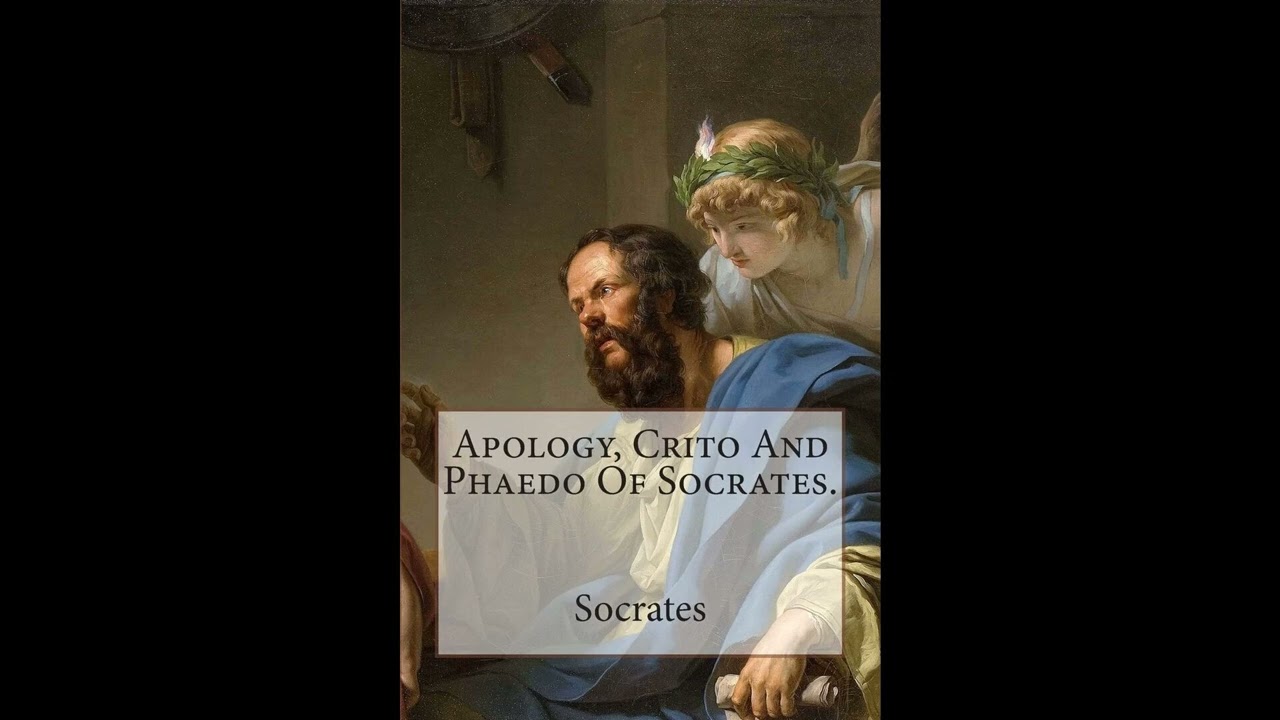
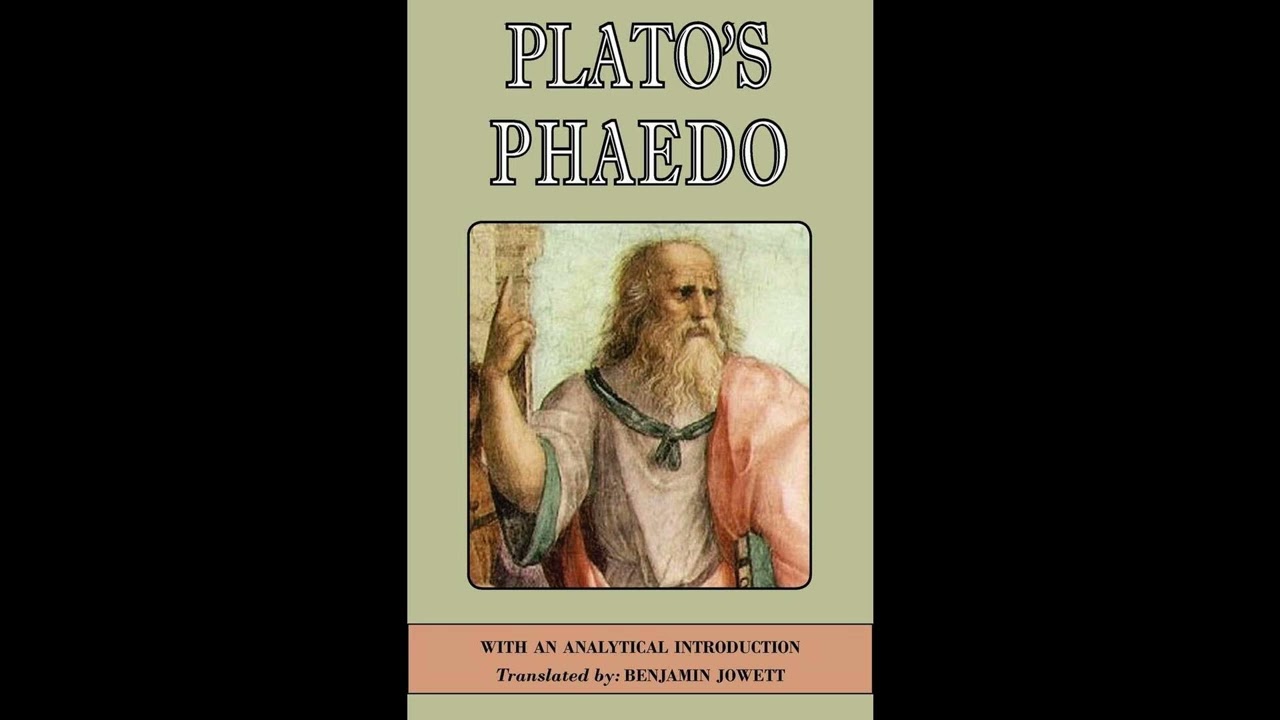
On a quiet morning in an Athenian prison cell, a man renowned for his wisdom and irritating questions prepares to die. He is Socrates, and the events of this day, recorded by his devoted student Plato in the dialogue Phaedo, invite us into a profound meditation on mortality, the human soul, and the very purpose of a philosophical life. Far from a simple historical account, this exchange serves as a vivid argument for why we should face death not with terror, but with intellectual courage and perhaps even a sense of release. Its ancient pronouncements continue to resonate, pressing us to consider our own beliefs about existence, consciousness, and what, if anything, survives the body’s inevitable decay, making it a compelling listen for anyone grappling with life’s ultimate questions. The scene opens in the prison, where Socrates' faithful friends and students have gathered for his final hours. Phaedo, a young man who was present, recounts the day’s events to Echecrates, setting a somber yet intellectually charged atmosphere. The executioner is on standby, awaiting the exact moment the sun will set, signaling the time for Socrates to drink the hemlock. Rather than despairing, Socrates maintains his characteristic calm and good humor, which initially puzzles his companions. They are distraught, weeping and lamenting, unable to reconcile themselves with the loss of their teacher. Against this backdrop of sorrow, Socrates initiates a deep philosophical discussion. His friends, particularly Cebes and Simmias, voice their fears about the soul’s annihilation at death. Socrates, ever the patient guide, systematically presents arguments for the soul’s immortality. He posits that true philosophers spend their lives preparing for death, not by seeking an end, but by striving to free the soul from the limitations and distractions of the body. The conversation progresses through several powerful ideas, including the concept of opposites arising from opposites, the theory of recollection which suggests knowledge is inherent rather than purely learned, and the soul’s affinity with eternal, unchanging truths rather than the transient physical world. While the dialogue reaches deep into metaphysical questions, it never loses its grounding in the immediate, human experience of farewell, building towards an inevitable conclusion that tests Socrates’ own convictions. Plato, born in Athens around 428 or 427 BCE, stands as one of the most influential figures in Western thought. Coming from an aristocratic family, he was initially drawn to politics, but his encounter with Socrates fundamentally altered his path. He became a devoted student, absorbing Socrates' method of inquiry and his insistence on moral and intellectual rigor. The unjust trial and execution of Socrates in 399 BCE deeply disillusioned Plato with Athenian democracy and spurred him to dedicate his life to philosophy, aiming to preserve his teacher’s legacy and develop his own systematic philosophy. After Socrates' death, Plato traveled extensively, visiting Egypt, Italy, and Sicily, before returning to Athens around 387 BCE to establish the Academy, often considered the first institution of higher learning in the Western world. There, he taught and wrote extensively, producing a wide array of dialogues that not only chronicled Socrates’ ideas but also developed his own theories on ethics, metaphysics, politics, and epistemology. Among his numerous acclaimed works are The Republic, an investigation into justice and the ideal state; Symposium, a celebration of love; and Apology, his depiction of Socrates’ defense speech. Plato’s writing style, using the dramatic dialogue, allowed him to present complex philosophical arguments through engaging narratives, ensuring his enduring place as a foundational architect of Western philosophical tradition. Phaedo powerfully enacts several core philosophical themes. Central among them is the immortality of the soul. Socrates argues that the soul, being simple and divine, cannot be broken down or destroyed like composite physical objects. He offers the argument from recollection, suggesting that our understanding of perfect equality or beauty comes from prior knowledge, implying the soul existed before birth. Another crucial idea is philosophy as preparation for death. Socrates consistently maintains that a philosopher's life is about freeing the soul from bodily desires and distractions, allowing it to pursue pure truth. He illustrates this by distinguishing between the transient, sensory world and the eternal, unchanging realm of Forms, which the soul strives to apprehend. For instance, when he discusses the philosopher’s disdain for bodily pleasures and comforts, he demonstrates a practical application of this liberation. The dialogue also touches on the nature of knowledge and reality, arguing for the superiority of intellectual understanding over sensory perception. Socrates explains that true knowledge is not found in the fleeting world we experience through our senses but in the unchanging, perfect Forms accessible only to reason. He presents an example by asking how we could recognize two sticks as "equal" if we didn't already possess an understanding of "equality" itself, an understanding that doesn't come directly from the imperfect sticks. This distinction underpins much of his argument for the soul's ability to grasp eternal truths. The text, in its dramatic culmination, offers a powerful demonstration of courage and intellectual integrity in the face of death, with Socrates embodying the very principles he expounds. Plato composed Phaedo in the decades following Socrates’ execution in 399 BCE, a period marked by considerable intellectual and political ferment in Athens. The city-state was still recovering from the Peloponnesian War, a protracted conflict that had reshaped the political landscape and led to a crisis of values. The public trial and condemnation of Socrates by his fellow citizens deeply impacted Plato, fostering a profound disillusionment with the existing political system. This historical context provides a vital backdrop for the dialogue, as Plato uses Socrates' final hours to not only defend his mentor’s memory against the charges of impiety and corrupting the youth but also to present a compelling vision of the philosophical life as the highest human endeavor, one that transcends the fleeting concerns of politics and society. The work thus emerged as both a eulogy and a foundational philosophical statement, positioning philosophy as a pursuit of eternal truths in an unstable world. Listening to Phaedo as an audiobook offers a particularly rich and immediate experience. The dialogue form, with its natural ebb and flow of conversation and argument, translates wonderfully into the spoken word. You can hear the calm authority in Socrates’ voice, the anxiety and doubt of his friends, and the measured cadence of their philosophical exchange as it unfolds. The narrative progresses with a deliberate pacing, allowing listeners to absorb each argument and counter-argument, creating an immersive atmosphere that captures the solemnity and intellectual intensity of the final gathering. It’s a chance to hear the very foundations of Western philosophy being laid, feeling the weight of the questions and the brilliance of the thought as if you were present in that Athenian prison cell yourself.
Enjoyed Phaedo? A few ways to support us
Audible & Amazon links are affiliate; we may earn a small commission at no extra cost.
About this production
Human narration by a volunteer reader from LibriVox.org, the public-domain audiobook project. LibriVox volunteers record literary works whose copyright has expired in the United States, releasing the resulting recordings into the public domain.
Phaedo by Plato. The underlying text is in the U.S. public domain. We do not republish any modern copyrighted edition, translation, or commentary.
The 4K cinematic visuals accompanying this audiobook are generated by an AI image model from prompts derived from the source text. No copyrighted photos, paintings, or stock footage are used. AI generation is disclosed on every video on our YouTube channel as required by YouTube's altered/synthetic content policy.
English subtitles are transcribed from the LibriVox recording with OpenAI Whisper. Translations into the 11 other supported languages are produced by Meta's NLLB-200 neural translation model. No human translator's copyrighted translation is used.
Questions about sourcing or rights? See our DMCA & Sourcing policy or contact us.
Enjoyed this audiobook?
If you'd like to own a copy of Phaedo or hear a professionally produced edition, the links below help support free audiobook production at no extra cost to you.
As an Amazon Associate we earn from qualifying purchases. Audible / print links are affiliate.