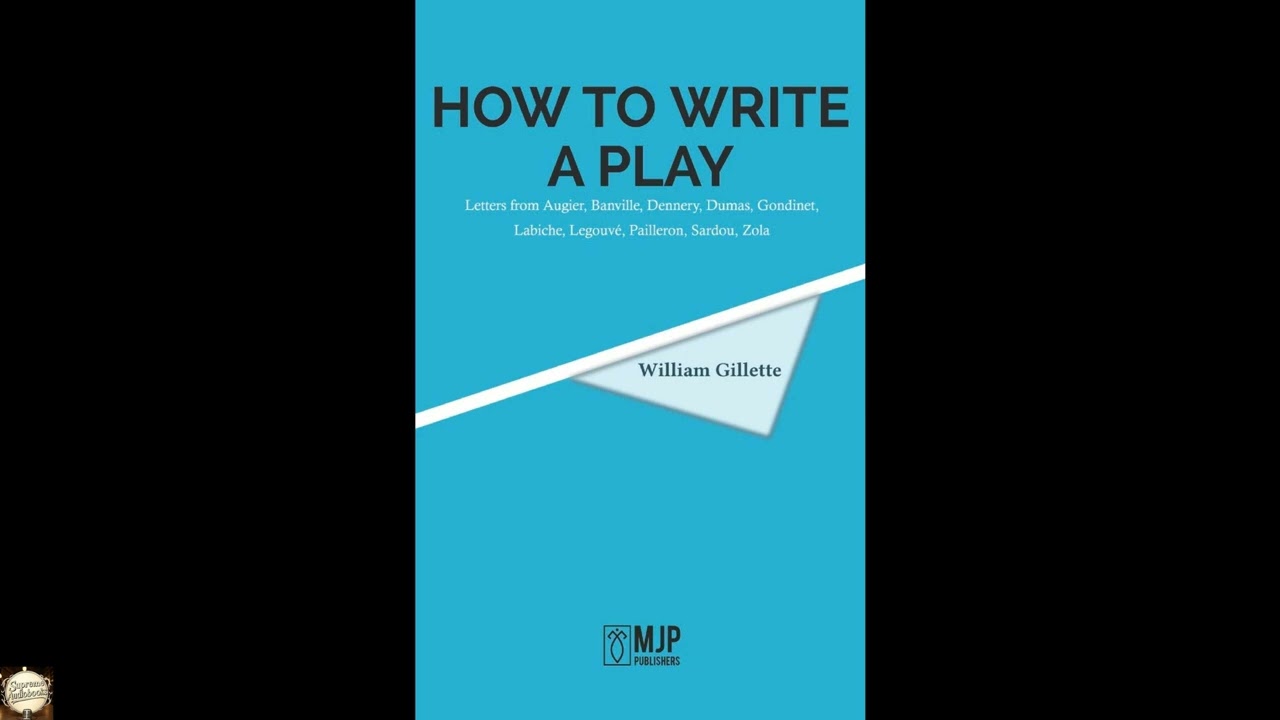
How to Write a Play: Letters from Augier, Banville, Dennery, Dumas, Gondinet, Labic
For anyone who has ever dreamed of seeing their words brought to life on stage, or who simply holds a fascination for the mechanics of storytelling, this unique collection offers an unparalleled invitation into the minds of some of France’s most celebrated dramatists. “How to Write a Play: Letters from Augier, Banville, Dennery, Dumas, Gondinet, Labic” is not a dry textbook, but a living conversation—a chorus of voices from a bygone era, speaking directly to the enduring challenges and exhilarating triumphs of dramatic creation. This is a rare opportunity to eavesdrop on candid advice, spirited opinions, and hard-won wisdom from the very figures who shaped the theatrical landscape of their time, providing not just technical instruction but a profound understanding of the passion and dedication required to master the stage. The "story" within this extraordinary collection unfolds not through character or setting in the traditional sense, but through the evolving dialogue of ideas exchanged between titans of French theatre. The setting is implicitly the vibrant, competitive world of nineteenth-century Parisian stages, where new plays premiered constantly, reputations were forged or broken, and the public held sway. The main "characters" are the distinguished playwrights themselves: Émile Augier, Théodore de Banville, Adolphe Dennery, Alexandre Dumas fils, Edmond Gondinet, and Eugène Labiche. Each contributes their distinct perspective, their letters forming a kind of intellectual symposium on the art and business of playwriting. Listeners are introduced to a dynamic exchange of thoughts, as these writers dissect the fundamental problems of dramatic structure, character development, dialogue, and stagecraft. The central "conflict" of this work is the perennial struggle of any aspiring dramatist: how to transform an idea into a compelling, performable work that resonates with an audience. These letters tackle the practical and philosophical hurdles encountered at every stage of the writing process, from the initial spark of inspiration to the meticulous polishing of a final script. The arc of the "story" progresses from foundational advice on constructing a plot and devising believable characters, through considerations of genre (comedy versus tragedy, farce versus social drama), and ultimately to broader discussions about the purpose of theatre itself—its capacity for entertainment, social commentary, or profound artistic expression. While each playwright offers their individual wisdom, a collective portrait emerges of the dedication, technical skill, and keen observation necessary to succeed in a demanding art form. Although the compiler or editor of this specific collection remains uncredited, the voices within it belong to an illustrious cohort of French playwrights who profoundly influenced the theatre of the 19th century and beyond. Émile Augier, active from the mid-century, was a master of the "well-made play" and a keen observer of bourgeois society, known for works like Le Gendre de M. Poirier, which skillfully blended realism with social critique. Théodore de Banville, a poet and dramatist, represented a different strand of artistic thought, often associated with the Parnassian movement, championing aesthetic beauty and craft over didacticism, famously contributing to works like Gringoire. Alexandre Dumas fils, son of the celebrated novelist, carved his own formidable reputation by pioneering the "problem play"—dramas that tackled controversial social issues of his day, such as his seminal La Dame aux Camélias. Eugène Labiche was a prolific and celebrated writer of farces and vaudevilles, whose comedic genius in works like Un Chapeau de paille d'Italie remains influential, displaying an unparalleled knack for absurd situations and sharp social satire. Adolphe Dennery, another incredibly prolific figure, excelled in melodrama, crafting intricate plots and powerful emotional narratives that captivated audiences. Edmond Gondinet, too, was a successful comic playwright, creating sophisticated farces that often poked fun at the social conventions of his time. This diverse assembly of talent, spanning multiple genres and philosophies, ensures a rich and varied perspective on the craft of playwriting. This collection engages with several core themes essential to dramatic art. One prominent theme is the delicate balance between artistic vision and commercial viability. Listeners will hear playwrights discuss the pressures of pleasing producers and audiences while striving to maintain artistic integrity, reflecting on whether to prioritize profound societal messages or satisfying comedic turns. For example, one letter might argue for the careful construction of a climactic scene designed to elicit a specific audience reaction, while another might emphasize the importance of truthful character psychology regardless of its immediate theatrical impact. Another significant theme is the mechanics of dramatic structure and character development. The various writers offer differing, yet complementary, advice on how to build a compelling plot, manage pacing, and create characters that feel real and multidimensional to the audience. Some may detail specific techniques for exposition or rising action, while others might focus on the internal motivations that drive a character’s choices. The philosophical underpinnings of dramatic writing also surface as a key theme, as the letters ponder the very purpose of theatre. Is it to instruct, to entertain, to provoke thought, or to simply transport the spectator? The writers, through their accumulated experience, demonstrate how dialogue can serve multiple functions: advancing the plot, revealing character, and delivering comedic timing or dramatic tension. They show how a seemingly simple exchange can carry layers of meaning, shaping both the immediate scene and the overall arc of the play. These discussions not only illuminate the practicalities of writing for the stage but also reveal the deeply held beliefs these artists had about their craft and its place in society, offering a nuanced understanding of their individual contributions to literary and theatrical history. The mid-to-late nineteenth century in France was a dynamic period of profound social, political, and cultural shifts, and the theatre was no exception. It was an era that saw the rise of industrialization, the transformation of Parisian society, and a burgeoning middle class demanding entertainment that reflected their lives and concerns. This demand fueled a prolific output of plays across genres, from the grand historical melodramas that thrilled audiences to the witty, often satirical comedies that held up a mirror to contemporary manners. The "well-made play" formula, perfected by figures like Eugène Scribe and later employed by many of the writers represented here, dominated much of the commercial theatre, emphasizing tight plotting, suspense, and logical resolution. Concurrently, movements toward realism and naturalism began to emerge, pushing for greater psychological depth and a more unflinching portrayal of life. This environment of intense theatrical activity, coupled with the increasing professionalization of playwriting, made a collection like "How to Write a Play" not just relevant but essential. Playwrights were no longer just poets writing for the page; they were craftsmen designing experiences for the stage. The exchange of ideas, the articulation of best practices, and the sharing of hard-won wisdom became crucial for navigating this complex and competitive landscape. The need for practical guidance on dramatic construction, coupled with the desire to preserve and pass on the insights of successful practitioners, naturally led to the emergence of such a resource, reflecting the period's fervent engagement with the theatrical arts and its pursuit of both commercial success and artistic integrity. Listening to “How to Write a Play” as an audiobook offers a unique intimacy with these literary giants. A skilled narrator brings these letters to life, their voice becoming the conduit for the varied tones and distinct personalities of Augier, Banville, Dennery, Dumas, Gondinet, and Labiche. Over several hours, the listener can settle into the rhythm of this intellectual discourse, savoring each piece of advice and weighing the different perspectives offered. Pay attention to the subtle shifts in the narrator's delivery, which can illuminate the particular emphasis or conviction behind each playwright's counsel. The pacing allows ample time to absorb complex arguments about dramatic structure or character motivation, transforming what could be a dense text into an engaging, flowing conversation. It fosters an atmosphere of quiet study and profound insight, connecting listeners directly to the enduring wisdom of these theatrical masters as if they were sharing a quiet moment in a Parisian salon.
Enjoyed How to Write a Play: Letters from Augier, Banville, Dennery, Dumas, Gondinet, Labic? A few ways to support us
Audible & Amazon links are affiliate; we may earn a small commission at no extra cost.
About this production
Human narration by a volunteer reader from LibriVox.org, the public-domain audiobook project. LibriVox volunteers record literary works whose copyright has expired in the United States, releasing the resulting recordings into the public domain.
How to Write a Play: Letters from Augier, Banville, Dennery, Dumas, Gondinet, Labic. The underlying text is in the U.S. public domain. We do not republish any modern copyrighted edition, translation, or commentary.
The 4K cinematic visuals accompanying this audiobook are generated by an AI image model from prompts derived from the source text. No copyrighted photos, paintings, or stock footage are used. AI generation is disclosed on every video on our YouTube channel as required by YouTube's altered/synthetic content policy.
English subtitles are transcribed from the LibriVox recording with OpenAI Whisper. Translations into the 11 other supported languages are produced by Meta's NLLB-200 neural translation model. No human translator's copyrighted translation is used.
Questions about sourcing or rights? See our DMCA & Sourcing policy or contact us.
Enjoyed this audiobook?
If you'd like to own a copy of How to Write a Play: Letters from Augier, Banville, Dennery, Dumas, Gondinet, Labic or hear a professionally produced edition, the links below help support free audiobook production at no extra cost to you.
As an Amazon Associate we earn from qualifying purchases. Audible / print links are affiliate.
More by Unknown
Notes and Queries, Index of Volume 1, November, 1849-May, 1850
Modern French Philosophy: A Study of the Development Since Comte
Copyright Law of the United States and Related Laws Contained in Title 17 of the Uni- Full Audiobook