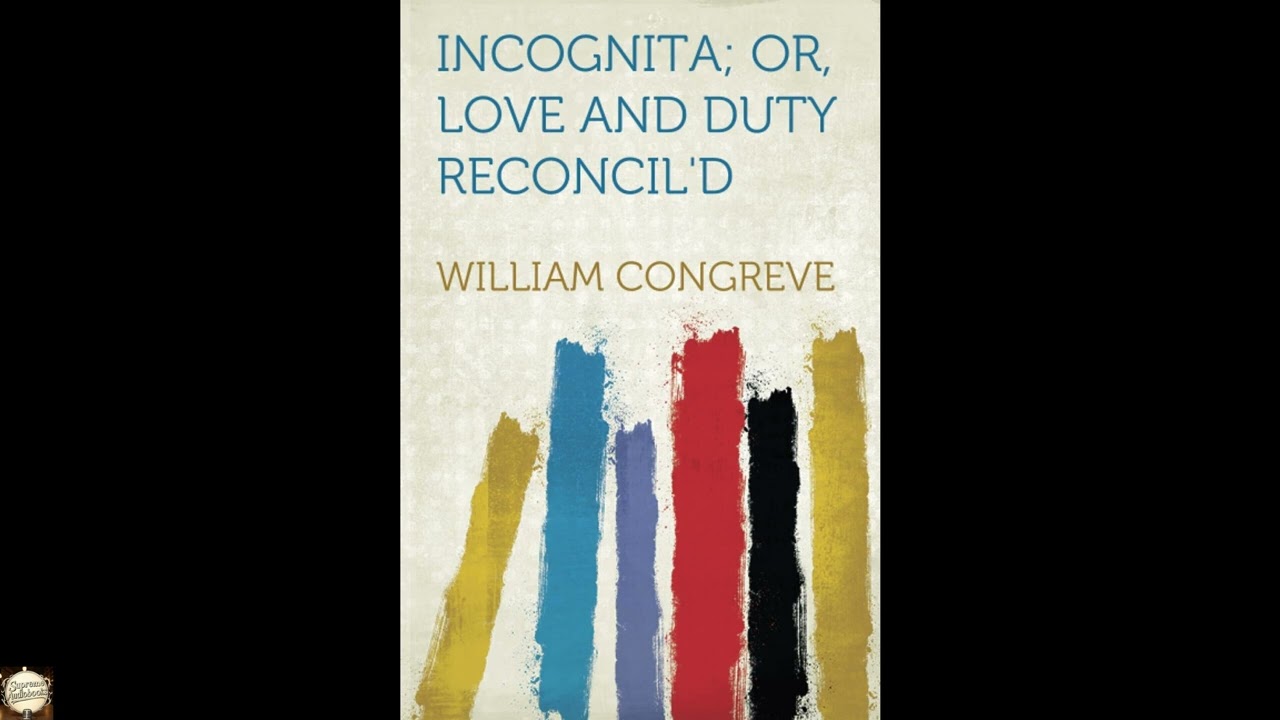
Incognita; Or, Love and Duty Reconcil'd
"Incognita; Or, Love and Duty Reconcil'd" by William Congreve presents a captivating early English novel from a writer celebrated for his dazzling stage plays. Published in 1692, this novella offers a witty, elegant foray into the complexities of love, identity, and social obligation within fashionable late 17th-century European society. "Incognita" grapples with who we are when unburdened by reputation, and how true affection contends with demands of family and station. Its playful deceptions and sophisticated banter resonate today, reminding us that the human heart, and its social dances, remain remarkably consistent. This story promises both entertainment and insight. The story unfolds against the spirited backdrop of Carnival in Florence, a period of sanctioned revelry and masked anonymity. Into this world arrive Aurelian, a young Florentine nobleman, and his friend, Hippolito, both disguised. Coincidentally, Leonora, a lady of Venice, and her cousin, Juliana, also find themselves in Florence, adopting aliases to enjoy Carnival's freedoms. What begins as lighthearted flirtations quickly develops into profound attachments. Aurelian, enchanted by Leonora, falls deeply in love, unaware of her true identity or pre-existing engagement. Leonora, equally captivated, returns his affection, ignorant of his real name and his parents' binding promise. Their friends, Hippolito and Juliana, also become entangled. The anonymity allowing their love to blossom becomes the source of their dilemma: both Aurelian and Leonora are pledged to others by their families, making true love, even under disguise, far from smooth. Congreve masterfully orchestrates a delicate ballet of mistaken identities, secret meetings, and near-discoveries under Florentine society's shimmering veneer. As characters navigate burgeoning feelings against unyielding demands of filial duty and social expectation, they confront potential heartbreak. The narrative builds on tension between personal desire and public obligation, demonstrating how a mask can conceal a heart but not protect it from love's consequences. The plot’s delightful intricacies promise to keep listeners wondering how these affairs might be resolved. William Congreve, born in Bardsey, Yorkshire, in 1670, stands as a preeminent figure of English Restoration drama. Though his family soon moved to Ireland for his education at Kilkenny College and Trinity College, Dublin, his path eventually led him to London. He initially studied law but found his true calling in the literary world, particularly the theatre. Congreve's theatrical career began with immediate, spectacular success. His first play, The Old Bachelor, debuted in 1693 to widespread acclaim. Triumphs like Love for Love (1695) and his greatest work, The Way of the World (1700), quickly followed, cementing his reputation as a master of wit, sharp social observation, and sophisticated dialogue that defined Restoration Comedy. He became a fixture in London's literary circles until his death in 1729. "Incognita," however, holds a unique place in Congreve's output as his only novel, appearing quite early in his career. Written when he was just twenty-two, it showcases his nascent talent for narrative prose and character development. His influence on English letters, particularly in comedy and the art of conversation, remained profound, positioning "Incognita" as a bridge between older prose romance and the emerging novel form. Within "Incognita," Congreve adeptly weaves several enduring themes. One primary concern is identity and disguise. Carnival, with its masks and aliases, allows characters to shed societal roles and interact based purely on personal attraction. Aurelian and Leonora fall in love with versions of each other stripped of family names and social obligations, raising questions about whether true affection blossoms from genuine connection or is influenced by status. The dramatic irony—falling for their destined spouses while unknowingly incognito—highlights this tension between assumed and authentic selves. Another powerful theme is love and duty. All central characters are caught between their hearts' dictates and pre-arranged marriages. Aurelian's internal struggle, torn between honoring his father's wishes and following Leonora's pull, is palpable. This external pressure to conform clashes directly with individualistic desires emerging under anonymity. Congreve's portrayal offers an early, nuanced look at characters wrestling with personal choices in a world of rigid social structures. The novel also touches upon appearance versus reality, questioning whether immediate impressions formed under disguise are more "real" than expectations tied to known identities. As an early example of the English novel, "Incognita" foreshadows the genre's later preoccupation with psychological realism and intricate human relationships. "Incognita" emerged during England's Restoration era, following the monarchy's return in 1660. This period saw a re-flourishing of the arts, especially theatre. Society, particularly among the upper classes, gravitated towards wit, elegance, and a sophisticated view of human nature. London became a hub of intellectual and social activity, fostering an environment ripe for new artistic expression. In the literary world, while Restoration Comedy dominated the stage, the novel as a distinct form was in its nascent stages, evolving from earlier romances. Congreve's "Incognita" contributes remarkably to this burgeoning genre. It moves away from the epic scope and idealized characters of older romances towards a more focused, character-driven plot with greater emphasis on dialogue and social interaction—hallmarks of the future novel. Its existence, written by a dramatist, highlights the experimental spirit of the age, laying groundwork for later great novels. Experiencing "Incognita" as an audiobook offers a unique opportunity to fully appreciate Congreve's masterful prose and its inherent theatricality. His language, precise, elegant, and witty, truly comes alive when read aloud by a skilled narrator. Listeners can savor the sophisticated banter and subtle nuances of emotional states. The run length, several hours, is ideal for focused immersion, allowing absorption of the period atmosphere without rush. A good narration brings out the story's pacing, letting moments of romantic intensity and comedic misunderstanding breathe. Distinct voices for Aurelian, Leonora, Hippolito, and Juliana help delineate personalities and deepen understanding. Through spoken word, the novella's charming Florentine setting, masked balls, and emotional currents are rendered with vivid clarity, making Congreve's early novel an engaging and thoroughly enjoyable listen.
Enjoyed Incognita; Or, Love and Duty Reconcil'd? A few ways to support us
Audible & Amazon links are affiliate; we may earn a small commission at no extra cost.
About this production
Human narration by a volunteer reader from LibriVox.org, the public-domain audiobook project. LibriVox volunteers record literary works whose copyright has expired in the United States, releasing the resulting recordings into the public domain.
Incognita; Or, Love and Duty Reconcil'd by William Congreve. The underlying text is in the U.S. public domain. We do not republish any modern copyrighted edition, translation, or commentary.
The 4K cinematic visuals accompanying this audiobook are generated by an AI image model from prompts derived from the source text. No copyrighted photos, paintings, or stock footage are used. AI generation is disclosed on every video on our YouTube channel as required by YouTube's altered/synthetic content policy.
English subtitles are transcribed from the LibriVox recording with OpenAI Whisper. Translations into the 11 other supported languages are produced by Meta's NLLB-200 neural translation model. No human translator's copyrighted translation is used.
Questions about sourcing or rights? See our DMCA & Sourcing policy or contact us.
Enjoyed this audiobook?
If you'd like to own a copy of Incognita; Or, Love and Duty Reconcil'd or hear a professionally produced edition, the links below help support free audiobook production at no extra cost to you.
As an Amazon Associate we earn from qualifying purchases. Audible / print links are affiliate.