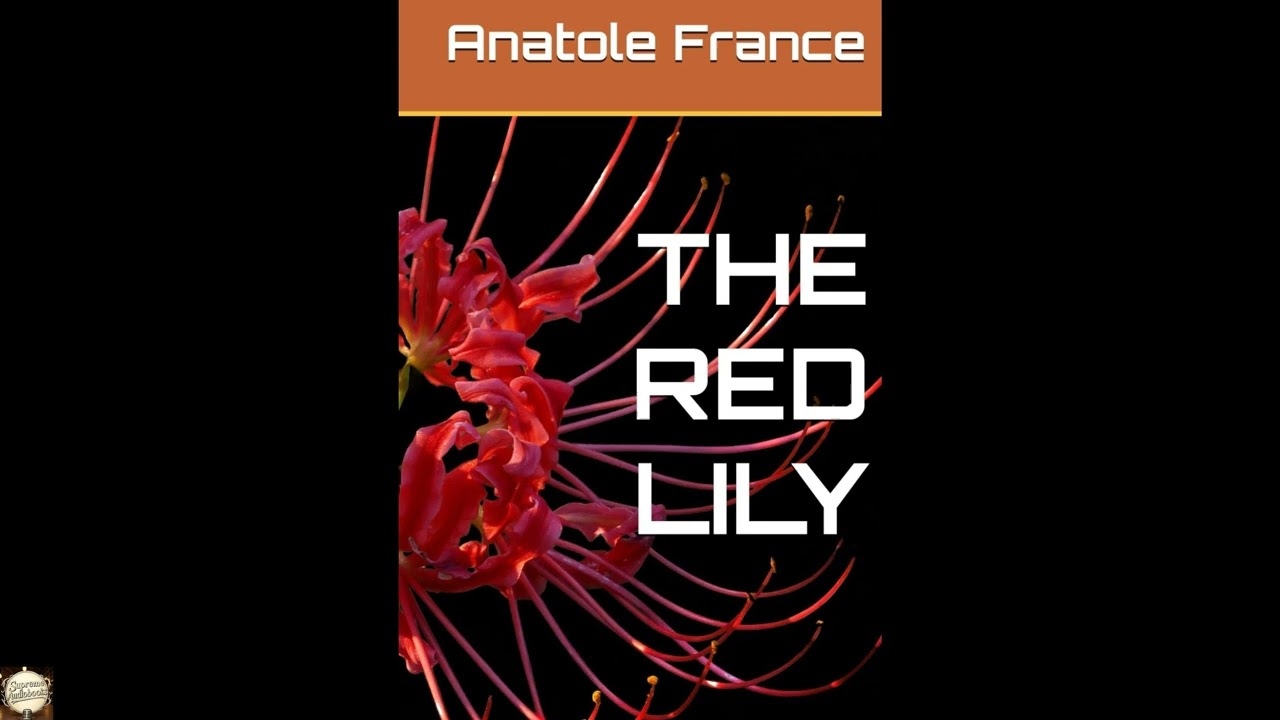
THE RED LILY
Step into the gilded, gaslit world of fin-de-siècle Paris with Anatole France’s The Red Lily, a novel that uncovers the fragile beauty and stark hypocrisies of a society obsessed with appearances, art, and the pursuit of passion. This elegant and incisive narrative plunges into the complexities of human desire and the often-unspoken longings of the heart, painting a vivid portrait of a woman torn between social convention and an overpowering need for authentic connection. More than a century after its initial publication, the book continues to resonate, reminding us that the search for genuine love and self-truth remains a profoundly personal and often perilous quest, especially when societal expectations stand in stark opposition to the deepest emotions. The story centers on Thérèse Martin-Bellème, a woman of refined beauty and sensitive intellect, trapped in a marriage of convenience to a prominent but distant politician. She moves through the glittering salons and intellectual gatherings of Parisian high society, surrounded by artists, writers, and cynical socialites, yet feels a profound emptiness at the core of her existence. Her initial solace comes in the form of Robert Le Ménil, a sophisticated and influential statesman with whom she shares a discreet but ultimately unsatisfying affair. Thérèse yearns for something deeper, something that transcends the polite artifice of her world, a sentiment echoed by the novel’s pervasive atmosphere of intellectual skepticism and a longing for beauty that often clashes with a sense of underlying ennui. Her life takes a dramatic turn when she encounters Jacques Dechartre, a passionate and earnest sculptor who, like her, possesses a soul attuned to beauty and a yearning for an ideal. Their connection is immediate and profound, blossoming into an intense, all-consuming love that sweeps them away from the constraints of Paris to the ancient, artistic heart of Florence. Amidst the Renaissance masterpieces and sun-drenched landscapes of Italy, their affair deepens, seemingly offering Thérèse the spiritual and emotional fulfillment she has always sought. However, even in this idyllic setting, the realities of their situation, the ghosts of past entanglements, and the inherent differences in their temperaments begin to cast a shadow, testing the very foundations of their passionate union and raising questions about whether such an idealized love can truly withstand the pressures of the external world and the vulnerabilities within themselves. Anatole France, born François-Anatole Thibault in 1844, was a towering figure in French letters during the late 19th and early 20th centuries. The son of a bookseller, he grew up immersed in the world of literature and history, which profoundly shaped his intellectual development and artistic sensibility. His early career saw him as a poet and journalist, but it was his prose fiction, characterized by its elegant style, subtle irony, and classical humanism, that earned him widespread acclaim. A prominent intellectual of his time, France became known not only for his literary achievements but also for his engagement with social and political issues, notably his courageous defense of Alfred Dreyfus during the infamous Dreyfus Affair, a stand that underscored his deep commitment to justice and reason. France’s literary output was extensive and varied, including such celebrated novels as Thaïs, a philosophical tale set in ancient Egypt, the satirical Penguin Island, which parodies French history, and the delightful The Crime of Sylvestre Bonnard. Awarded the Nobel Prize in Literature in 1921 for his "brilliant literary achievements, characterized as they are by nobility of style, profound human sympathy, charm, and a truly Gallic temperament," France distinguished himself through his unique blend of skepticism and compassion. He was often seen as a critical observer of human folly and societal hypocrisy, yet his critiques were always tempered by a profound understanding of human nature, making his characters relatable even in their weaknesses. His sophisticated prose style, often imbued with a gentle melancholy and a sharp wit, ensured his enduring place in the pantheon of French authors. At its core, The Red Lily examines the perennial tension between love and societal constraints. Thérèse’s longing for a love that transcends the superficiality of her marriage and the polite cynicism of her social circle highlights the stifling nature of fin-de-siècle conventions. Her clandestine relationships, particularly the all-consuming affair with Dechartre, serve as a desperate bid for authenticity, a challenge to the era’s prescribed roles for women and the often-empty rituals of high society. The novel’s acute observations of Parisian salons, where wit often masks cruelty and ambition, exemplify France’s characteristic skepticism and irony, showing how individuals navigate a world where true feeling is often suppressed in favor of social standing and intellectual posturing. The novel also foregrounds the power and limitations of art and beauty as a means of escape and revelation. Dechartre, the sculptor, embodies artistic passion, and his appreciation for Florence’s masterpieces deeply resonates with Thérèse’s own aesthetic sensibilities. Their shared experience of beauty in Italy offers a temporary haven, suggesting that art can create a space for profound connection and emotional truth. However, France subtly suggests that even the most beautiful ideals can struggle against the messy realities of human jealousy, insecurity, and the inescapable demands of the everyday. The book’s detailed descriptions of art and architecture are not merely decorative; they serve as a backdrop against which the characters’ very human dramas unfold, testing the enduring question of whether love can truly survive outside the realm of the ideal. The Red Lily emerged at a fascinating juncture in European history, published in 1894, squarely in the heart of the Belle Époque. This period, roughly from the late 19th century to World War I, was characterized by relative peace, economic prosperity, and an explosion of artistic and scientific innovation in France. Culturally, it was an era of refinement and excess, of salon culture, Symbolist poetry, and the burgeoning of modern art movements. Yet, beneath the glittering surface lay anxieties about modernity, social inequality, and the decline of traditional values. Anatole France, a keen observer of his age, captured this delicate balance, presenting a society where intellectual brilliance and artistic sensitivity coexisted with moral ambiguity and a profound sense of disillusionment. The novel’s themes of illicit love, the search for meaning beyond societal norms, and the seductive allure of aestheticism were all deeply rooted in the cultural currents of the time. The increasing emancipation of women, even if only within privileged circles, and the ongoing debates about morality and passion, provided fertile ground for France’s nuanced examination of Thérèse’s predicament. The journey to Florence further underscores the fin-de-siècle fascination with Italy as a cradle of art and a site of unbridled emotion, contrasting its ancient beauty with the perceived superficiality of contemporary Parisian life. The book, therefore, serves as a literary time capsule, offering a compelling glimpse into the intellectual and emotional landscape of a pivotal historical moment. Listening to The Red Lily as an audiobook transforms the experience of Anatole France’s elegant prose into an immersive encounter. The several hours of narration allow ample time to sink into the detailed descriptions of Parisian high society and the sun-drenched beauty of Florence, bringing the rich settings vividly to life. A skilled narrator can distinguish the myriad voices of the characters—from Thérèse’s introspective musings and Dechartre’s ardent declarations to the cynical wit of the secondary figures in the Parisian salons—giving each personality a distinct auditory presence. Listen for the subtle shifts in tone that convey France’s signature irony, the careful pacing that builds the emotional tension, and the nuanced delivery that highlights the psychological depth of the central romance. The auditory presentation truly enhances the atmosphere, making the listener feel like an unseen guest in these opulent drawing rooms and ancient Italian villas, privy to the intimate dramas unfolding within.
Enjoyed THE RED LILY? A few ways to support us
Audible & Amazon links are affiliate; we may earn a small commission at no extra cost.
About this production
Human narration by a volunteer reader from LibriVox.org, the public-domain audiobook project. LibriVox volunteers record literary works whose copyright has expired in the United States, releasing the resulting recordings into the public domain.
THE RED LILY by Anatole France. The underlying text is in the U.S. public domain. We do not republish any modern copyrighted edition, translation, or commentary.
The 4K cinematic visuals accompanying this audiobook are generated by an AI image model from prompts derived from the source text. No copyrighted photos, paintings, or stock footage are used. AI generation is disclosed on every video on our YouTube channel as required by YouTube's altered/synthetic content policy.
English subtitles are transcribed from the LibriVox recording with OpenAI Whisper. Translations into the 11 other supported languages are produced by Meta's NLLB-200 neural translation model. No human translator's copyrighted translation is used.
Questions about sourcing or rights? See our DMCA & Sourcing policy or contact us.
Enjoyed this audiobook?
If you'd like to own a copy of THE RED LILY or hear a professionally produced edition, the links below help support free audiobook production at no extra cost to you.
As an Amazon Associate we earn from qualifying purchases. Audible / print links are affiliate.