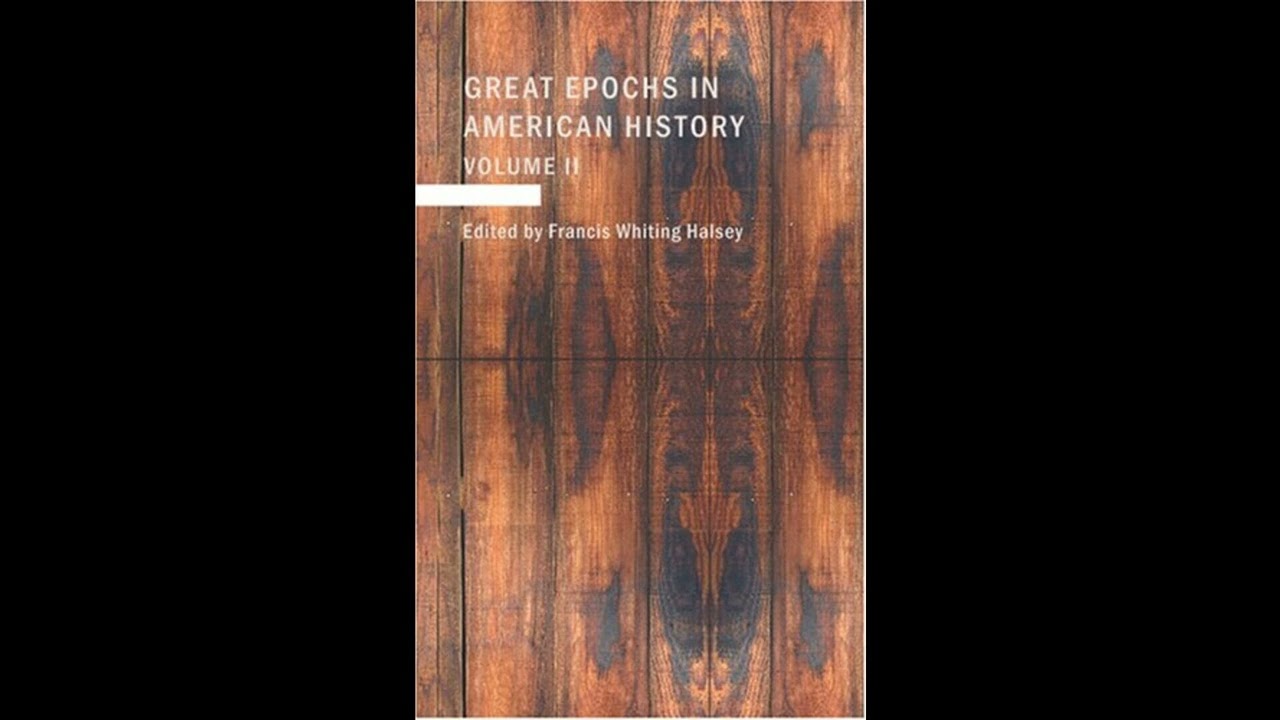
Great Epochs in American History: Volume II: The Planting Of The First Colonies
Stepping back to the very genesis of a nation—to the raw courage, the profound struggles, and the enduring beliefs that forged a continent—listeners encounter Great Epochs in American History: Volume II: The Planting Of The First Colonies. This foundational collection peels back centuries to reveal the initial, perilous attempts to establish a permanent European presence in what would become the United States. It is a chronicle of beginnings, a testament to human will against an unforgiving wilderness, and a vital source for understanding the complex origins of American identity. Far from being a mere dusty collection of facts, this volume pulses with the vivid immediacy of those who first dared to dream of a new world, offering perspectives that resonate with contemporary questions about migration, cultural exchange, and the birth of societies. This historical compilation ushers the listener into the nascent stages of American colonization, primarily focusing on the English settlements along the Atlantic seaboard from the late sixteenth century through the early eighteenth. The "story" unfolds not through a single narrative voice, but through a mosaic of firsthand accounts, reports, and observations from the very individuals who lived through these momentous times. We are introduced to the ambitious, often desperate, European adventurers—merchants seeking fortune, religious dissenters seeking freedom, and families seeking a fresh start—who dared to cross the vast ocean. Their main antagonists are often the land itself: the harsh winters, unfamiliar diseases, and the constant threat of famine, along with the inherent tensions and outright conflicts with the indigenous peoples whose ancestral lands they sought to claim. The arc of this foundational narrative traces the difficult transition from fragile outposts to more established, yet still precarious, communities. From the ill-fated Roanoke colony, often called the "Lost Colony," to the tenacious survival of Jamestown, the first permanent English settlement in 1607, and the devout aspirations of the Plymouth Pilgrims arriving in 1620, the volume reconstructs the unfolding drama. It paints a picture of early colonial life where every harvest was a triumph and every ship from England a lifeline. We witness the gradual assertion of European presence, the establishment of early governmental structures, and the desperate search for economic viability, whether through tobacco cultivation in Virginia or fur trading in the northern territories. This period culminates in the firm entrenchment of several distinct colonies, each with its own character, yet all bound by the shared experience of adapting and enduring in a new world. The nature of Great Epochs in American History as an anthology, with its specific focus and title, strongly suggests it was assembled sometime in the late nineteenth or early twentieth century. During this period, there was a widespread movement to document, compile, and disseminate American historical sources, often with an emphasis on creating a coherent national narrative for an increasingly diverse and industrialized nation. While a specific individual author for this particular volume is not identified, it is characteristic of such comprehensive historical projects from that era that editorial teams, historical societies, or even university presses would undertake such ambitious compilations. The goal was typically to provide accessible, authoritative access to primary documents and significant historical accounts, thereby allowing citizens and scholars alike to directly engage with the voices and records of the past. These types of collections hold a vital place in the literary canon not as original creative works, but as curated gateways to foundational historical understanding, preserving and presenting the collective memory of a nation's beginnings. Among the prominent themes woven through these early colonial accounts is the profound struggle for survival against overwhelming odds. The entries vividly recount the diseases that decimated settlements, the periods of extreme hunger, such as Jamestown's "Starving Time," and the sheer physical effort required to clear land and build shelter in a wild, unfamiliar environment. These experiences forge a deep sense of resilience within the nascent communities. Another central theme is the complex and often fraught interaction between European colonists and the various Native American tribes. Accounts detail initial alliances and trade, but also the inevitable misunderstandings, territorial disputes, and brutal conflicts that marked these encounters, such as the early clashes between the Powhatan Confederacy and the Virginia settlers. Furthermore, the texts reveal the powerful role of ideology, particularly religious conviction, in motivating and sustaining these new societies. For the Puritan settlers of New England, their arrival was not merely an economic venture but a divine mission to create a "city upon a hill," a beacon of reformed Christianity. Their writings frequently refer to God's providence and judgment, framing their hardships as tests of faith and their successes as divine blessings. Simultaneously, the underlying drive for economic gain and expansion, an early form of resource exploitation and imperial ambition, runs through many of the Virginian accounts. The search for gold, the cultivation of cash crops like tobacco, and the desire for land and trade routes underscore the material motivations that shaped the colonial project. This work likely emerged from a distinct cultural and intellectual moment in American history, perhaps in the decades following the Civil War, extending into the turn of the twentieth century. This was a time of immense national introspection, expansion, and a burgeoning professionalization of historical study. As the United States rapidly industrialized and absorbed waves of immigrants, there was a keen interest in defining the nation's character and understanding its origins. Historians and educators sought to compile primary sources to illustrate the narrative of American progress and destiny, often emphasizing the fortitude and pioneering spirit of the early settlers. Such collections served both an academic purpose, providing scholars with accessible documents, and a public one, shaping a shared national identity and fostering a sense of patriotic continuity from the first fragile settlements to a powerful modern nation. Listening to Great Epochs in American History: Volume II as an audiobook transforms these historical documents from static texts into an immediate, flowing experience. A skilled narrator becomes a guide, lending clarity and coherence to the often-disparate voices and accounts of centuries past. The several hours of listening time offer an ideal companion for extended periods of focus—a lengthy commute, a cross-country drive, or simply while engaging in tasks around the home. Listen for the steady, measured pacing, which allows the weight of historical detail to settle without becoming overwhelming. The narrator's voice, in its measured tones and clear articulation, can breathe life into the archaic language, rendering the pronouncements of colonial leaders, the desperate pleas of common settlers, and the descriptions of a wild landscape with an atmosphere of both gravitas and intimacy. This oral presentation allows the listener to absorb the unfolding drama of America's birth, creating a powerful, resonant connection to the individuals and events that laid the cornerstones of a nation.
Enjoyed Great Epochs in American History: Volume II: The Planting Of The First Colonies? A few ways to support us
Audible & Amazon links are affiliate; we may earn a small commission at no extra cost.
About this production
Human narration by a volunteer reader from LibriVox.org, the public-domain audiobook project. LibriVox volunteers record literary works whose copyright has expired in the United States, releasing the resulting recordings into the public domain.
Great Epochs in American History: Volume II: The Planting Of The First Colonies by Francis W. Halsey. The underlying text is in the U.S. public domain. We do not republish any modern copyrighted edition, translation, or commentary.
The 4K cinematic visuals accompanying this audiobook are generated by an AI image model from prompts derived from the source text. No copyrighted photos, paintings, or stock footage are used. AI generation is disclosed on every video on our YouTube channel as required by YouTube's altered/synthetic content policy.
English subtitles are transcribed from the LibriVox recording with OpenAI Whisper. Translations into the 11 other supported languages are produced by Meta's NLLB-200 neural translation model. No human translator's copyrighted translation is used.
Questions about sourcing or rights? See our DMCA & Sourcing policy or contact us.
Enjoyed this audiobook?
If you'd like to own a copy of Great Epochs in American History: Volume II: The Planting Of The First Colonies or hear a professionally produced edition, the links below help support free audiobook production at no extra cost to you.
As an Amazon Associate we earn from qualifying purchases. Audible / print links are affiliate.