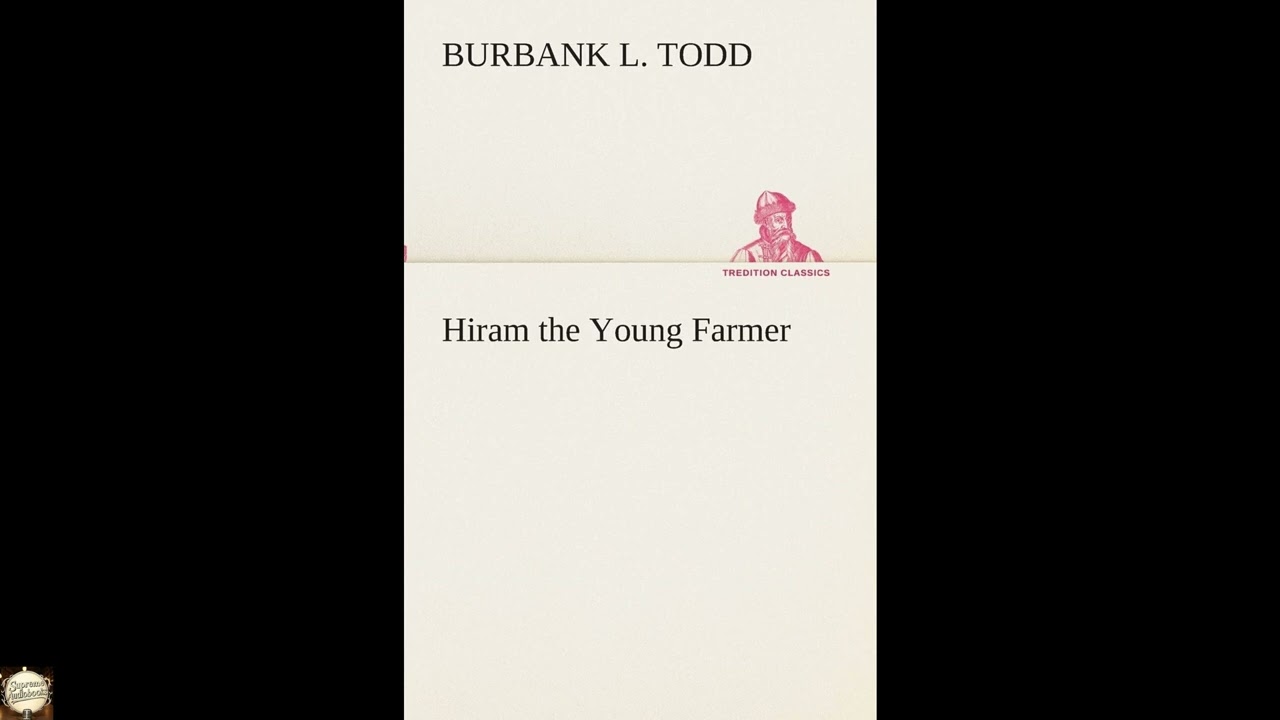
Hiram the Young Farmer
Among the enduring works of American letters, Burbank L Todd's Hiram the Young Farmer stands as a quiet testament to the rhythms of rural life and the profound challenges of forging an existence from the land. This classic novel, first published at the turn of the twentieth century, resonates with a simple, yet potent wisdom that speaks to fundamental human concerns still pertinent today. It is a story not merely of agriculture, but of self-discovery, resilience in the face of nature’s indifference, and the search for purpose amidst the fertile fields and changing seasons. Listeners will find in Hiram's struggles and triumphs a mirror to their own confrontations with ambition, setback, and the quiet satisfaction of honest endeavor. It offers a powerful reminder of our connection to the earth and the timeless virtues of patience, perseverance, and community. The story introduces us to young Hiram, barely out of his boyhood, standing on the cusp of an uncertain future. Orphaned at a tender age and inheriting little more than a modest plot of land—a homestead already worn by neglect and years of struggling harvests—Hiram faces the daunting task of making the farm his own. The setting is a vividly rendered landscape of rolling hills and winding creeks, a world still largely untouched by the encroaching industrial age, where the cycles of planting and harvest dictate the very pulse of life. His only immediate companion is his elderly, taciturn aunt, Elara, whose own years of hardship have left her with a practical, if somewhat grim, outlook on life’s prospects. Hiram dreams of revitalizing the farm, not just to survive, but to honor the memory of his parents and prove his worth to a skeptical local community who see him as just another boy playing at a man's work. Hiram’s initial attempts are met with the harsh realities of farm life: stubborn soil, unpredictable weather, the unending physical toll of manual labor, and the constant threat of pests and blight. He learns the hard way that farming demands not only strength, but foresight, knowledge, and an intimate understanding of the natural world. Along the way, he encounters a cast of memorable characters: the gruff but ultimately kind-hearted blacksmith, Silas, who offers Hiram not just tools but fragments of wisdom; the enigmatic botanist, Miss Adelaide Finch, whose unconventional methods and deep reverence for the earth spark new ideas in the young farmer; and the spirited farm girl, Lily, whose laughter and sharp wit challenge Hiram's often solitary focus. The narrative steadily builds as Hiram grapples with failed crops, financial strain, and moments of profound doubt, each setback forcing him to dig deeper, both literally into the soil and figuratively into his own resolve, as he slowly begins to cultivate not just his fields, but his own character and understanding of what it truly means to belong. Burbank L Todd, the author behind Hiram the Young Farmer, was a figure deeply attuned to the nuances of rural American life during a period of immense social and economic upheaval. Born in the late nineteenth century in a small agricultural community, Todd spent his formative years observing firsthand the rhythms and struggles of farming families. While later moving to urban centers for his education, he consistently returned to his roots, often spending months living on working farms, meticulously documenting the customs, language, and challenges faced by those who lived off the land. This dedication to authentic detail would become a hallmark of his writing. His prose, though straightforward, possessed a keen observational eye, capturing the subtle beauty and harsh realities of a disappearing way of life. Todd’s literary output, though not extensive, secured his place as a significant voice in American Regionalism, a movement that sought to depict the distinctive characteristics of specific geographic areas. Beyond Hiram the Young Farmer, he penned a collection of short stories, Field Notes, which continued his focus on agrarian themes, and a lesser-known but equally poignant novella, The Plowman’s Song, a generational saga about a family's enduring connection to their homestead. He was known for his understated narrative style and his commitment to portraying characters with psychological depth and resilience, often against the backdrop of an indifferent or demanding natural world. Todd's work is considered essential for understanding the transition of American society from its agrarian foundations to its industrial future, providing an invaluable literary window into the lives of ordinary people navigating extraordinary change. At its heart, Hiram the Young Farmer enacts several profound themes that grant it enduring literary significance. One central theme is the dignity of labor and humanity’s connection to the land. Hiram’s calloused hands, his aching back, and the sweat that waters his fields are not merely signs of hardship but symbols of a profound, almost spiritual, bond with the earth. Consider the scene where Hiram finally coaxes a stubborn patch of rock-strewn earth into yielding a modest crop of potatoes. It is not just a harvest; it is a victory of will and cooperation with nature, demonstrating the intrinsic worth found in purposeful, physical work. Another key theme is resilience and self-reliance. Early in the story, Hiram is overwhelmed by the sheer scale of work ahead, but with each failed attempt—a collapsed fence, a blight on the corn—he learns, adapts, and pushes forward. The winter sequence, where he meticulously repairs tools and studies seed catalogs by lamplight, illustrates his burgeoning independence and his steadfast refusal to be defeated by circumstances. The novel also thoughtfully renders the theme of community and mutual support. Despite moments of isolation, Hiram is not entirely alone. The small, often unspoken acts of kindness from neighbors—a shared meal during a lean period, an elderly woman’s advice on planting, collective efforts during harvest time—underscore how individuals thrive within a supportive network. The subplot involving the shared burden of mending the community's irrigation ditch, requiring collective effort, highlights this theme powerfully. Finally, the changing seasons and the cycles of growth and decay prominently feature the enduring power and indifference of nature. The text never romanticizes nature completely; it shows both its bounty and its destructive force, reminding characters and listeners alike of the delicate balance that defines existence. The spring floods and the autumn frosts are not just plot devices but active characters, shaping destinies and instilling a deep respect for forces beyond human control. Hiram the Young Farmer emerged during a period of significant transition in American society, roughly coinciding with the turn of the twentieth century. This era saw the rapid expansion of industrialization, the growth of cities, and a corresponding decline in the relative importance of agrarian life. Railroads were connecting distant markets, factories were drawing populations away from farms, and new technologies were beginning to reshape traditional ways of living and working. Culturally, there was a growing sense of nostalgia for a perceived simpler past, even as progress was celebrated. In the literary world, authors were increasingly embracing Realism, moving away from the romanticized ideals of earlier periods to depict life as it truly was, often focusing on the struggles and details of ordinary people. Burbank L Todd’s novel can be seen as a direct response to this profound societal shift. It captures the essence of a way of life that was rapidly receding, serving as a chronicle of rural America before its widespread transformation. The book’s focus on the hard-won triumphs and quiet dignity of a farmer directly countered the narrative of urban advancement and industrial might, offering a perspective on enduring values like self-sufficiency, connection to the land, and the strength of community that many felt were being lost. It stood as both a celebration and a elegy for a particular kind of American experience, one rooted in the soil and the cycles of the natural world, giving voice to a segment of the population whose stories were often overshadowed by the clamor of the modernizing nation. Listening to Hiram the Young Farmer as an audiobook brings the subtle nuances of Burbank L Todd’s writing to vivid life. The several hours of narration provide ample opportunity to settle into the gentle, yet compelling rhythm of the story, making it an ideal companion for long drives, quiet evenings, or mindful walks. A skilled narrator will artfully convey the unhurried pace of rural life, allowing listeners to fully absorb the atmospheric descriptions of sun-drenched fields, crackling hearths, and the sounds of the changing seasons. Pay close attention to the distinct voices of the characters—Hiram's initial uncertainty giving way to quiet determination, Aunt Elara's clipped, practical tones, or Silas the blacksmith's gruff pronouncements—each rendered with care to deepen the listener's connection to their world. The descriptions of physical labor and the natural world, often sparse in text, gain a visceral presence through an evocative vocal performance, allowing the beauty and harshness of Hiram’s existence to unfold with compelling immediacy.
Enjoyed Hiram the Young Farmer? A few ways to support us
Audible & Amazon links are affiliate; we may earn a small commission at no extra cost.
About this production
Human narration by a volunteer reader from LibriVox.org, the public-domain audiobook project. LibriVox volunteers record literary works whose copyright has expired in the United States, releasing the resulting recordings into the public domain.
Hiram the Young Farmer by Burbank L Todd. The underlying text is in the U.S. public domain. We do not republish any modern copyrighted edition, translation, or commentary.
The 4K cinematic visuals accompanying this audiobook are generated by an AI image model from prompts derived from the source text. No copyrighted photos, paintings, or stock footage are used. AI generation is disclosed on every video on our YouTube channel as required by YouTube's altered/synthetic content policy.
English subtitles are transcribed from the LibriVox recording with OpenAI Whisper. Translations into the 11 other supported languages are produced by Meta's NLLB-200 neural translation model. No human translator's copyrighted translation is used.
Questions about sourcing or rights? See our DMCA & Sourcing policy or contact us.
View 10 famous quotes from this book →
Enjoyed this audiobook?
If you'd like to own a copy of Hiram the Young Farmer or hear a professionally produced edition, the links below help support free audiobook production at no extra cost to you.
As an Amazon Associate we earn from qualifying purchases. Audible / print links are affiliate.