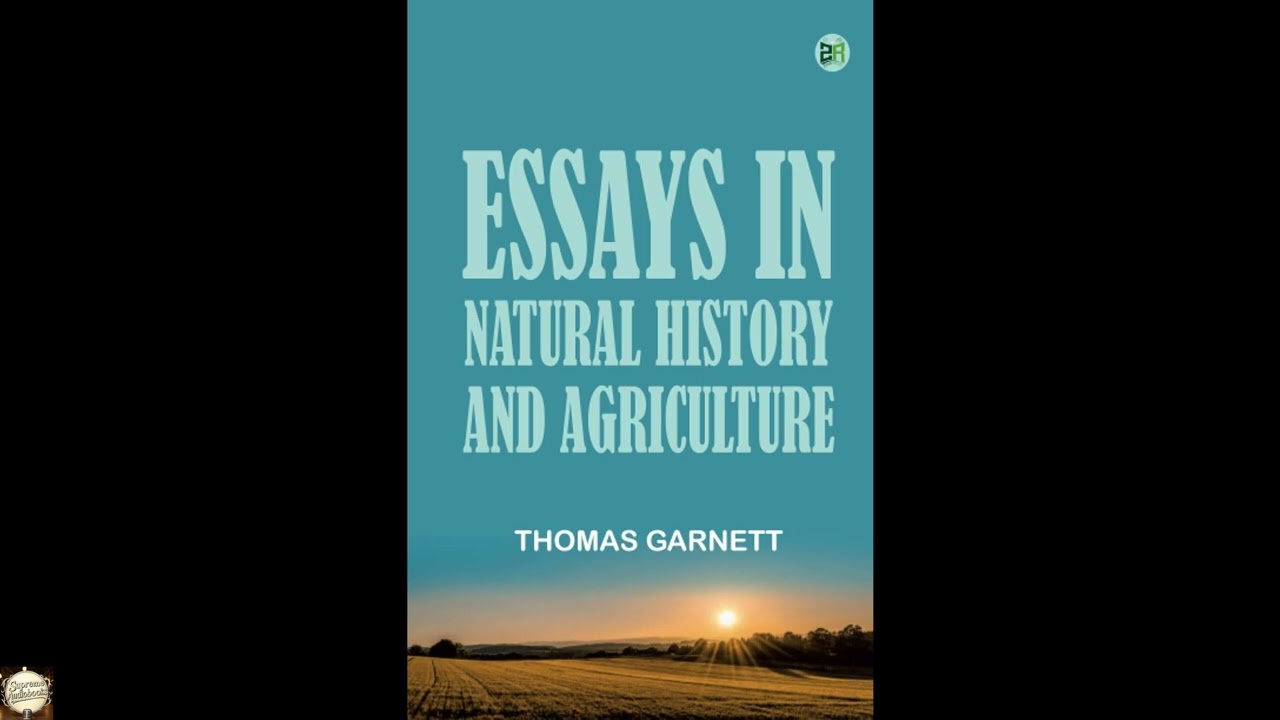
Essays in Natural History and Agriculture
Step into a mind from an earlier age, one that sought to meticulously catalog the natural world and unlock its agricultural secrets. Thomas Garnett’s “Essays in Natural History and Agriculture” offers a rare glimpse into the scientific curiosity and practical genius of a man keenly attuned to the rhythms of the earth. This collection, born from an era of profound intellectual awakening, resonates powerfully today as we grapple with ecological awareness and sustainable practices. It asks us to consider how our understanding of nature has evolved, and how much wisdom still lies in the careful observations of those who lived closer to the land. For anyone fascinated by the roots of modern science, the history of environmental thought, or simply a deeper connection to the living world around us, Garnett’s precise and thoughtful prose provides both illumination and a quiet wonder. The collection sets its stage primarily in the British countryside, often through the lens of Garnett’s own travels and observations. We are introduced not to conventional characters, but to the varied subjects of his intense scrutiny: the intricate structure of a plant, the migratory habits of a bird, the geological strata of a particular region, or the most effective methods for enriching depleted soil. Garnett’s voice emerges as the guiding presence – a diligent scientist, a keen observer, and a pragmatic reformer. He moves through topics with a methodical clarity, first presenting detailed observations, then applying a rigorous, empirical approach to understand the underlying principles at play. The central thrust of these essays is humanity’s ongoing endeavor to comprehend and, where possible, to improve upon nature’s bounty, particularly through the lens of agriculture. The “story” within these essays is one of intellectual pursuit. Each piece functions as a self-contained investigation, yet together they form a coherent picture of late 18th and early 19th-century scientific inquiry. Garnett often begins with a specific natural phenomenon – perhaps the peculiar properties of a certain mineral or the life cycle of an insect – and systematically breaks it down, referencing existing knowledge while also adding his own findings. His agricultural essays, equally detailed, examine challenges such as crop rotation, livestock breeding, or land drainage, always seeking to balance traditional wisdom with innovative, evidence-based practices. The narrative arc, if one can call it that, traces the expansion of human understanding, showing how focused observation can lead to practical advancements and a more profound appreciation for the natural order. The reader is invited to join Garnett in this process of discovery, witnessing the scientific method unfold through the precise articulation of his findings and hypotheses. Thomas Garnett, born in Casterton, Westmorland, England, in 1766, lived a life devoted to science, education, and medicine before his untimely death in 1802. Educated at the University of Edinburgh, a prominent center for medical and scientific learning, Garnett initially pursued a career in medicine. However, his interests quickly broadened to encompass natural philosophy and chemistry, fields in which he became a respected lecturer and popularizer. He held significant academic positions, including teaching at the Manchester Literary and Philosophical Society and later as the inaugural Professor of Chemistry and Natural Philosophy at the prestigious Royal Institution in London. His tenure at the Royal Institution, though brief, was instrumental in establishing the institution's commitment to public scientific education, setting the stage for future luminaries like Humphry Davy, who succeeded him. Garnett’s contributions were not limited to teaching; he was also an accomplished author of scientific works. His travelogue, "Observations on a Tour Through the Highlands and Part of the Western Isles of Scotland" (1800), showcases his blend of scientific observation with a descriptive appreciation for landscape, a characteristic that hints at the evolving sensibilities of his time. He also published "Popular Lectures on Zoonomia" (1800), demonstrating his facility for making complex scientific ideas accessible to a broader audience. Garnett belonged to a generation of thinkers who bridged the Enlightenment's emphasis on reason and classification with the nascent scientific revolutions of the 19th century. His work is representative of the era's robust spirit of inquiry, where the boundaries between fields like medicine, chemistry, geology, and agriculture were more fluid and interconnected. He stands as an important figure in the development of scientific education and the dissemination of empirical knowledge. One prominent theme threading through Garnett’s essays is the paramount importance of empirical observation. He consistently emphasizes direct engagement with the natural world as the bedrock of all true understanding. For instance, in an essay discussing soil composition, he might detail the specific layers he observed in a field, the types of vegetation they supported, and the precise chemical tests he performed to analyze their properties. This methodical approach underscores his belief that knowledge must be built from specific, verifiable facts rather than abstract theory alone. Another significant theme is the interconnectedness of natural systems. Garnett frequently illustrates how seemingly disparate elements—a certain climate, a particular plant, and a specific animal species—all interact within an ecosystem. An essay on crop rotation, for example, might explain not only the immediate benefits to soil fertility but also the long-term effects on pest populations and the overall health of the farming landscape, demonstrating a holistic view of agricultural ecology. Furthermore, Garnett’s writing consistently highlights humanity’s role as both observer and manager of nature, particularly through agricultural practices. He champions innovation and careful stewardship, believing that scientific understanding empowers humans to improve their environment for the collective good. One can imagine an essay discussing new methods of irrigation, where Garnett details the engineering principles and the expected increase in crop yields, presenting humanity as an intelligent agent capable of shaping the land responsibly. Finally, an underlying thread is the optimistic pursuit of knowledge and progress. Garnett’s passion for discovery, his drive to classify and explain, and his commitment to public education all speak to a profound belief that increasing scientific understanding leads inevitably to societal betterment. His essays are not merely descriptive; they often advocate for better practices, showing how intellectual curiosity can translate into tangible improvements in daily life. These essays emerged from a particularly fertile period in British history, at the confluence of several transformative movements. The late 18th and early 19th centuries witnessed the accelerating Agricultural Revolution, characterized by innovations like new crop rotation systems, selective breeding of livestock, and advancements in farm machinery. Garnett’s detailed focus on agricultural improvements directly reflects these contemporary concerns, offering scientific perspectives on the pressing need to increase food production for a growing population. Concurrently, the Enlightenment’s emphasis on reason, scientific inquiry, and systematic classification profoundly influenced Garnett’s approach to natural history. Scientists like Carl Linnaeus had established robust systems for categorizing life, and Garnett applied similar methodical principles to his own observations, contributing to the broader scientific understanding of his era. The nascent Industrial Revolution also played a role, creating new technologies and an increasing demand for raw materials and efficient food supply. While primarily focused on nature, Garnett’s scientific mindset was part of the wider intellectual ferment that also fueled industrial progress. Though a scientist, his detailed and often appreciative descriptions of landscapes and natural phenomena also aligned with the burgeoning Romantic sensibility, which emphasized emotion, individualism, and a deep reverence for nature, even as his primary mode remained empirical. Garnett’s work, therefore, did not appear in a vacuum; it was a direct product of an age that valued rational inquiry, practical application, and a growing fascination with both the detailed workings and the grand scale of the natural world. This was a time when intellectuals actively sought to understand, document, and ultimately harness the power of nature for human flourishing. Listening to “Essays in Natural History and Agriculture” as an audiobook provides a unique and immersive experience. The calming, often scholarly tone of Garnett’s prose lends itself beautifully to the spoken word, allowing his meticulous descriptions and thoughtful arguments to unfold at a deliberate pace. With several hours of content, it offers a substantial yet manageable engagement, perfect for thoughtful listening during a long walk in the park, a quiet afternoon of gardening, or while tending to daily chores. A skilled narrator can bring Garnett’s precise language and intellectual enthusiasm to life, highlighting his keen observations and the sense of wonder that often underpins his scientific explanations. The auditory experience can allow the listener to absorb the intricate details and historical context without the visual distractions of a printed page, fostering a deeper connection to Garnett’s world. It creates an atmosphere of gentle discovery, inviting contemplation of the natural world and the enduring human quest to understand it.
Enjoyed Essays in Natural History and Agriculture? A few ways to support us
Audible & Amazon links are affiliate; we may earn a small commission at no extra cost.
About this production
Human narration by a volunteer reader from LibriVox.org, the public-domain audiobook project. LibriVox volunteers record literary works whose copyright has expired in the United States, releasing the resulting recordings into the public domain.
Essays in Natural History and Agriculture by Thomas Garnett. The underlying text is in the U.S. public domain. We do not republish any modern copyrighted edition, translation, or commentary.
The 4K cinematic visuals accompanying this audiobook are generated by an AI image model from prompts derived from the source text. No copyrighted photos, paintings, or stock footage are used. AI generation is disclosed on every video on our YouTube channel as required by YouTube's altered/synthetic content policy.
English subtitles are transcribed from the LibriVox recording with OpenAI Whisper. Translations into the 11 other supported languages are produced by Meta's NLLB-200 neural translation model. No human translator's copyrighted translation is used.
Questions about sourcing or rights? See our DMCA & Sourcing policy or contact us.
View 10 famous quotes from this book →
Enjoyed this audiobook?
If you'd like to own a copy of Essays in Natural History and Agriculture or hear a professionally produced edition, the links below help support free audiobook production at no extra cost to you.
As an Amazon Associate we earn from qualifying purchases. Audible / print links are affiliate.