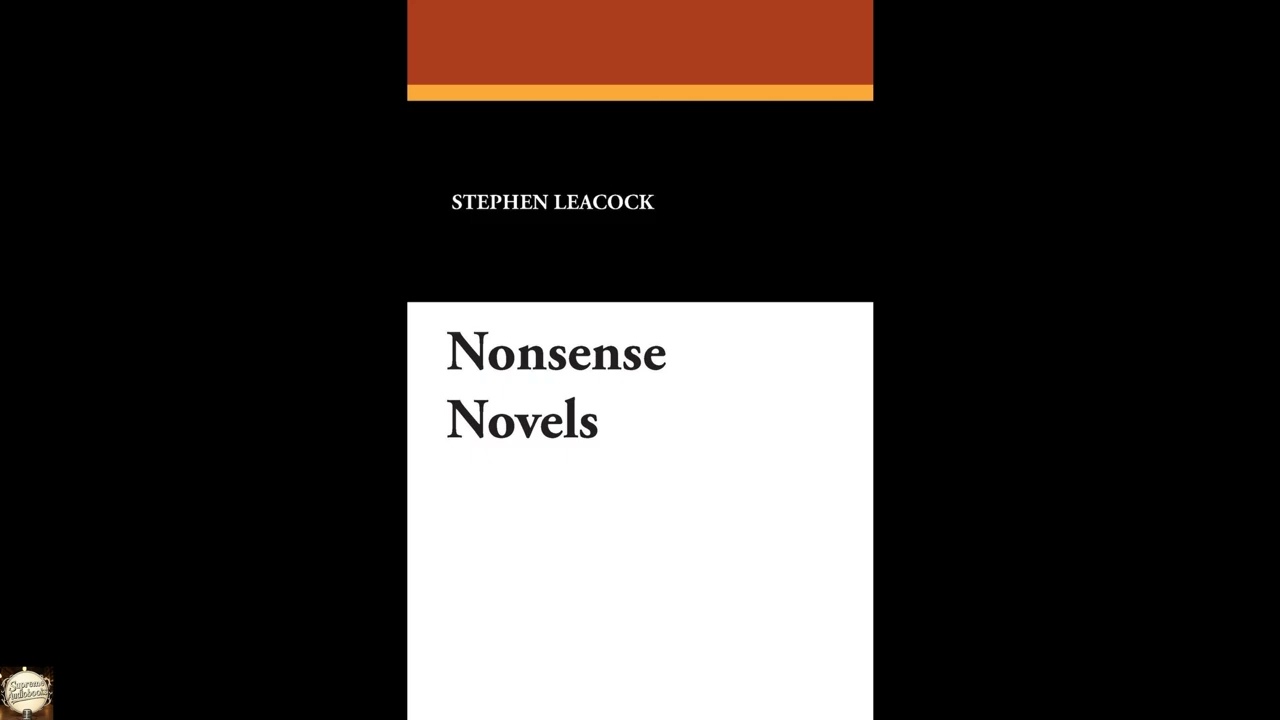
Nonsense Novels
Step into a world where literature itself becomes the punchline, where the grand pronouncements of popular fiction are turned on their head with a sly grin and an incisive wit. Stephen Leacock's "Nonsense Novels" is not merely a collection of humorous sketches; it is a brilliant and enduring act of literary sabotage, a joyful dismantling of the clichés and conventions that populated the bestsellers of his era. Published in 1911, this collection of parodies remains startlingly fresh today, proving that while literary trends may shift, the underlying patterns of human storytelling—and the humorous predictability they often reveal—persist. For anyone who has ever rolled their eyes at a saccharine romance, groaned at an overly dramatic detective story, or sighed at the manufactured heroics of an adventure tale, Leacock offers a hilarious and ultimately affirming experience, reminding us that sometimes, the best way to appreciate the art of fiction is to laugh at its most familiar excesses. "Nonsense Novels" does not present a single overarching narrative, but rather invites the listener into a kaleidoscopic series of self-contained, miniature "novels," each a meticulously crafted send-up of a distinct genre popular in the early 20th century. Imagine the drawing rooms of Edwardian romance, the dimly lit offices of a hard-boiled detective, the rugged frontiers of a Western, or the melodramatic stage of a historical epic, all thrown into a literary blender and served with a healthy dose of the absurd. Each story introduces us to characters who embody the stock figures of their respective genres, but with a crucial twist: Leacock consistently highlights their inherent ridiculousness, their logical flaws, or their utterly mundane humanity beneath a veneer of manufactured drama. Consider "Gertrude the Governess: Or, Simple Seventeen," which skewers the sentimental romance novel with its long-suffering heroine, a dashing but dim-witted hero, and a series of improbable coincidences designed to thwart their love. Or "Sorrows of a Super Soul; Or, The Memoirs of My Past Life," a brilliant take on the pretentious, introspective novel, where the protagonist's profound inner turmoil is revealed to be nothing more than the exaggerated anxieties of a rather ordinary man. In "A Hero in Homespun; Or, The Life Struggles of P. K. Snaggs," Leacock satirizes the rugged individualist narrative, painting a picture of an adventurer whose bravery is inversely proportional to his common sense. Through these and other "novels," the collection builds a cumulative effect, inviting the listener to recognize the formulaic structures that underpinned—and still underpin—much of popular storytelling, culminating not in a dramatic twist but in a profound appreciation for the liberating power of laughter. The author behind this brilliant lampoonery was Stephen Leacock, a figure whose intellectual rigor often found its perfect counterbalance in his playful humor. Born in Swanmore, Hampshire, England, in 1869, Leacock moved with his family to a farm near Lake Simcoe, Ontario, Canada, when he was just seven years old. This formative experience in rural Canada would later inspire some of his most beloved works. He pursued a distinguished academic career, earning a Bachelor's degree from the University of Toronto and later a PhD in political economy from the University of Chicago. From 1901 until his retirement in 1936, Leacock served as a professor and the head of the Department of Economics and Political Science at McGill University in Montreal. His academic pursuits were rigorous, producing significant works on political science and economic theory, but it was his parallel career as a humorist and essayist that earned him widespread fame and affection. Leacock published his first collection of humorous sketches, "Literary Lapses," in 1910, just a year before "Nonsense Novels." He followed this with other enduringly popular titles such as "Sunshine Sketches of a Little Town" (1912) and "Arcadian Adventures with the Idle Rich" (1914), both of which offered gentle but sharp social commentary on Canadian life. He became a beloved and prolific writer, known for his lucid prose, keen observational skills, and a humor that was both sophisticated and accessible. Leacock's place in the literary canon is secure as one of Canada's most important humorists, a writer whose wit transcended national borders and spoke to universal human foibles and the peculiarities of the written word. He passed away in 1944, leaving behind a legacy of laughter and intellectual clarity. At its core, "Nonsense Novels" functions as a masterful satire of literary convention and genre parody. Leacock meticulously dissects the tropes of popular fiction from his era, from the overblown emotional declarations of romance novels to the improbable deductions of detective stories. In "Gertrude the Governess," for example, he parodies the sentimental romance novel by constructing a plot so convoluted and reliant on deus ex machina that it exposes the contrived nature of the genre itself. Gertrude, "simple seventeen," is not merely an innocent heroine; she is a vehicle for every damsel-in-distress cliché, her every utterance a send-up of Victorian melodrama. Another key theme is the critique of superficiality and pretension. Leacock consistently strips away the grandiosity of literary language to reveal the ordinary, sometimes even absurd, realities beneath. In "Sorrows of a Super Soul," the protagonist's supposed profound philosophical struggles are shown to be nothing more than common anxieties dressed up in pompous prose, highlighting how easily readers can be swayed by affected intellect rather than genuine depth. A further layer of significance lies in the collection's celebration of the power of humor itself. Leacock demonstrates that humor is not just a source of amusement but a vital critical tool. It allows him to engage with popular culture in a way that is both entertaining and intellectually stimulating, offering a refreshing counterpoint to the more serious literary trends of his time. He uses laughter to gently prod at human folly, at our collective susceptibility to formulaic narratives, and at the writers who provide them. Ultimately, the book asserts that recognizing and laughing at the absurdity in literature, and by extension in life, is a profoundly intelligent act. "Nonsense Novels" arrived at a fascinating juncture in literary and cultural history. Published in 1911, it emerged from the twilight of the Edwardian era, a period often characterized by its rigid social codes, sentimental sensibilities, and a burgeoning mass-market for popular fiction. The early 20th century saw the proliferation of distinct literary genres, often serialized in magazines or published as inexpensive paperbacks, catering to a rapidly expanding readership. There was a huge appetite for romance, adventure, detective stories, and historical sagas, many of which adhered to predictable formulas. Leacock, with his background as a keen observer of society and human behavior through his academic work, was perfectly positioned to comment on this cultural landscape. He recognized the patterns in the popular literature of his day and saw them as ripe for comedic examination, offering a witty antidote to the earnestness and often uncritical acceptance of these formulaic tales. His work stood apart from the emerging modernist movements, which were beginning to experiment with form and language, opting instead for clear, accessible prose to deliver his satirical jabs, making his critique widely understood and enjoyed. Listening to "Nonsense Novels" as an audiobook offers a unique and highly rewarding experience. The collection's episodic nature, with each "novel" presenting a distinct world and set of characters, makes it ideal for flexible listening—whether you're enjoying a single story during a short commute or immersing yourself in several during a longer session. A skilled narrator truly brings Leacock's varied parodies to life, masterfully shifting vocal tones and inflections to differentiate between the melodramatic declarations of a romance heroine, the gruff pronouncements of a detective, or the exaggerated heroism of an adventurer. The humor in these stories often relies heavily on timing, vocal pauses, and the subtle nuances of delivery, all of which are amplified through auditory performance. The exaggerated dialogue, the ironic asides, and the perfectly pitched absurdity of the situations leap off the page when spoken aloud, allowing the listener to fully appreciate the author's wry observations and the brilliant satirical atmosphere he creates. It is an experience that transforms reading into a shared, comedic performance.
Enjoyed Nonsense Novels? A few ways to support us
Audible & Amazon links are affiliate; we may earn a small commission at no extra cost.
About this production
Human narration by a volunteer reader from LibriVox.org, the public-domain audiobook project. LibriVox volunteers record literary works whose copyright has expired in the United States, releasing the resulting recordings into the public domain.
Nonsense Novels by Stephen Leacock. The underlying text is in the U.S. public domain. We do not republish any modern copyrighted edition, translation, or commentary.
The 4K cinematic visuals accompanying this audiobook are generated by an AI image model from prompts derived from the source text. No copyrighted photos, paintings, or stock footage are used. AI generation is disclosed on every video on our YouTube channel as required by YouTube's altered/synthetic content policy.
English subtitles are transcribed from the LibriVox recording with OpenAI Whisper. Translations into the 11 other supported languages are produced by Meta's NLLB-200 neural translation model. No human translator's copyrighted translation is used.
Questions about sourcing or rights? See our DMCA & Sourcing policy or contact us.
Enjoyed this audiobook?
If you'd like to own a copy of Nonsense Novels or hear a professionally produced edition, the links below help support free audiobook production at no extra cost to you.
As an Amazon Associate we earn from qualifying purchases. Audible / print links are affiliate.