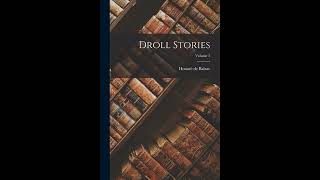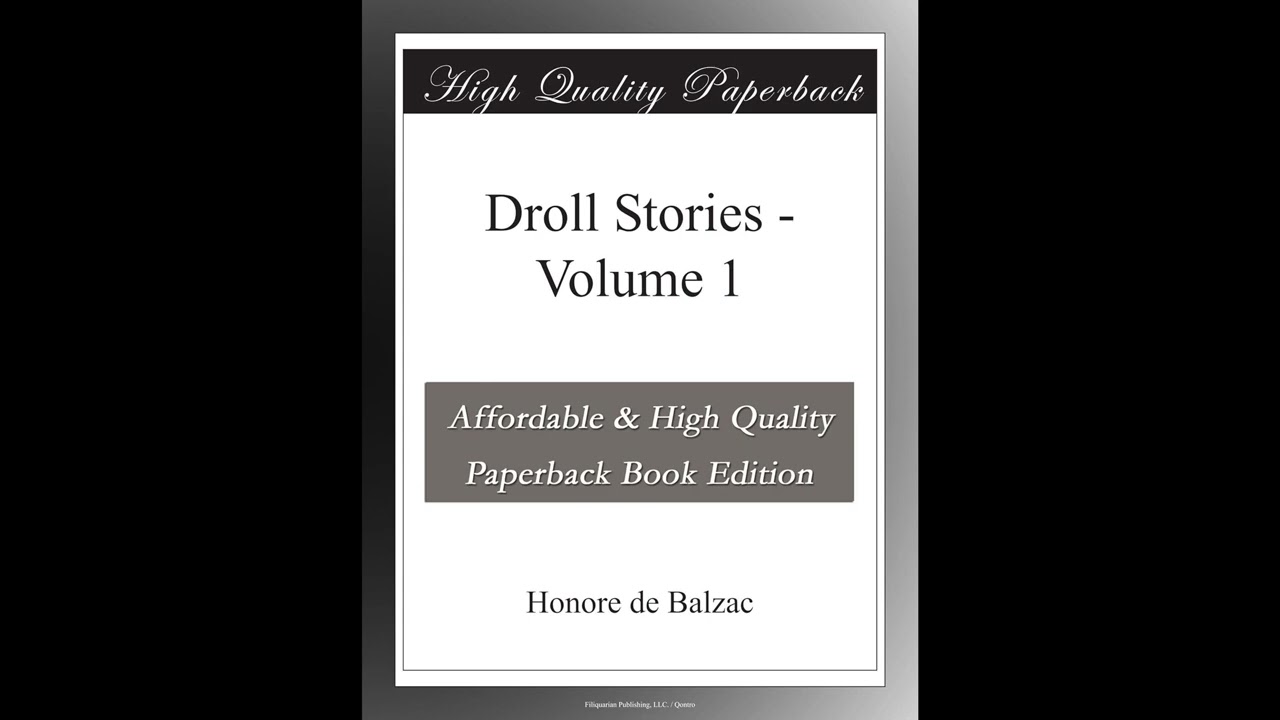
Droll Stories - Volume 1
Step into a world where wit reigns supreme, where human foibles are celebrated with mischievous glee, and where the past echoes with surprisingly contemporary humor. Honore de Balzac's Droll Stories - Volume 1 is not merely a collection of tales; it is a boisterous, irreverent romp through the imagined sensibilities of Renaissance France, crafted with a pen dipped in both satire and affection. Far from dry academic exercise, these narratives offer a refreshing perspective on classic literature, proving that even centuries-old texts can deliver genuine laughs and shrewd observations about human nature that remain startlingly relevant in our own era of social paradox and enduring desires. This initial volume introduces us to a world populated by archetypal figures: the pious yet secretly lustful cleric, the naive young maiden, the scheming widow, the cunning peasant, and the often-gullible nobleman. The settings are typically rural chateaux, bustling market towns, or the secluded cloisters of monasteries, all rendered with a vivid, almost theatrical sense of place. Each story, presented as if unearthed from ancient manuscripts and re-told with a playful, faux-archaic tone, unfolds a situation of moral dilemma, romantic intrigue, or outright mischief. The central conflict in many instances arises from the tension between rigid societal expectations—particularly those of the church or feudal honor—and the irrepressible human urges for love, money, or simple pleasure. Whether it's a tale of a clever servant outwitting a lord, a monk finding creative ways to circumvent vows of chastity, or a husband and wife engaging in a battle of wits over domestic power, the narrative arc generally follows a problem, a series of often-absurd complications, and a resolution that frequently hinges on a clever twist of fate or a triumph of ingenuity. Balzac masterfully employs dramatic irony and situational comedy, inviting the audience to revel in the characters' predicaments while appreciating the underlying critique of the institutions and customs that bind them. The collective experience of these stories is one of an unvarnished, often bawdy, look at the human comedy, presented with an endearing lack of self-seriousness. Honore de Balzac, born in Tours, France, in 1799, lived a life as dramatic and ambitious as many of his fictional characters. A prolific and driven writer, he spent years accumulating massive debts while pursuing various ill-fated business ventures before dedicating himself fully to literature. From the late 1820s until his death in 1850, Balzac worked at an astonishing pace, sometimes writing for fifteen hours a day, fueled by strong coffee and an insatiable desire to succeed. His personal struggles with financial insolvency and his relentless pursuit of fame and fortune deeply influenced his worldview, leading him to scrutinize the social and economic forces shaping his contemporary French society. He is principally recognized for his monumental achievement, La Comédie humaine (The Human Comedy), a vast sequence of nearly 100 novels and novellas designed to paint a comprehensive portrait of French life during the Bourbon Restoration and the July Monarchy. Works such as Père Goriot, Eugénie Grandet, and Lost Illusions established him as a foundational figure in literary realism, demonstrating an unparalleled ability to create complex characters and meticulously detailed settings. Balzac's meticulous observation of social classes, his psychological insight, and his often cynical depiction of ambition and corruption cemented his place as one of France's most important literary figures, an author whose influence can be seen in generations of subsequent novelists across Europe. Among the specific concerns woven into the fabric of Droll Stories is the theme of human folly and hypocrisy. Characters frequently espouse high moral principles only to be revealed as slaves to their own base desires. For instance, in one story, a seemingly devout abbot finds himself in a comedic predicament as he tries to maintain his holy facade while secretly indulging in earthly pleasures, his internal conflict rendered with both humor and subtle critique. Another prominent theme is social satire, particularly aimed at the established powers of the church and the aristocracy. Balzac consistently lampoons the pomposity and self-serving nature of these institutions, using the supposedly anachronistic setting of the Renaissance to comment on the enduring flaws he observed in his own society. We see this when a character uses a convoluted legal technicality, cloaked in religious piety, to secure an unjust inheritance, exposing the absurdity of systems meant to uphold justice. Furthermore, the collection frequently examines the power of wit and ingenuity. Many protagonists are not powerful by birth or wealth, but by their quick thinking and cleverness. They often triumph over their social superiors or overcome difficult circumstances through cunning plans or verbal dexterity, showcasing intelligence as a potent weapon against oppression or dullness. Consider a story where a young woman, through a series of ingenious deceptions, manages to outsmart several would-be suitors and secure her true love, highlighting the triumph of cleverness over convention. Finally, the stories frequently consider the consequences of desire, both romantic and carnal. Balzac treats human passion with a blend of frankness and amusement, often depicting the chaotic, comical, or unexpected outcomes when lust, love, or greed drive people's actions, demonstrating the timeless human struggle between impulse and decorum. Balzac wrote Droll Stories across the 1830s, a period of significant societal upheaval in France following the July Revolution of 1830, which saw the overthrow of the Bourbon monarchy and the establishment of the more liberal July Monarchy. While his other works were intensely focused on the contemporary social landscape, this collection offered a distinct departure, looking back to an imagined, more unrestrained era of the 16th century. This retrospective gaze allowed Balzac a different kind of freedom—to comment on enduring human traits and social structures without the immediate political pressures of depicting his exact moment. The choice of setting also linked him to the great French satirist François Rabelais, whose bawdy wit and zest for life he consciously sought to emulate. By invoking the spirit of the Renaissance, Balzac could create a space for humor and frankness that might have been less palatable in his more serious, realist novels of the period, allowing him to subtly challenge the moralizing tendencies of his own time by contrasting it with a supposedly less inhibited past. Listening to Droll Stories - Volume 1 as an audiobook is a particularly rewarding experience, especially given the collection's inherent theatricality and Balzac's playful prose. The stories, designed to be told and heard, truly come alive through skilled narration. Over several hours, a good reader can perfectly capture the faux-archaic language and the mischievous tone, allowing the listener to fully appreciate the comedic timing and the subtle nuances of character. The varied voices required for the diverse cast—from pompous prelates to wily peasants—enhance the vivid atmosphere, drawing one deeply into each scenario. It's an opportunity to savor Balzac's unique rhythm and wit, making it ideal for moments of relaxation, for breaking up a long journey, or simply for adding a touch of classic, intelligent humor to one's day.
Enjoyed Droll Stories - Volume 1? A few ways to support us
Audible & Amazon links are affiliate; we may earn a small commission at no extra cost.
About this production
Human narration by a volunteer reader from LibriVox.org, the public-domain audiobook project. LibriVox volunteers record literary works whose copyright has expired in the United States, releasing the resulting recordings into the public domain.
Droll Stories - Volume 1 by Honore de Balzac. The underlying text is in the U.S. public domain. We do not republish any modern copyrighted edition, translation, or commentary.
The 4K cinematic visuals accompanying this audiobook are generated by an AI image model from prompts derived from the source text. No copyrighted photos, paintings, or stock footage are used. AI generation is disclosed on every video on our YouTube channel as required by YouTube's altered/synthetic content policy.
English subtitles are transcribed from the LibriVox recording with OpenAI Whisper. Translations into the 11 other supported languages are produced by Meta's NLLB-200 neural translation model. No human translator's copyrighted translation is used.
Questions about sourcing or rights? See our DMCA & Sourcing policy or contact us.
Enjoyed this audiobook?
If you'd like to own a copy of Droll Stories - Volume 1 or hear a professionally produced edition, the links below help support free audiobook production at no extra cost to you.
As an Amazon Associate we earn from qualifying purchases. Audible / print links are affiliate.