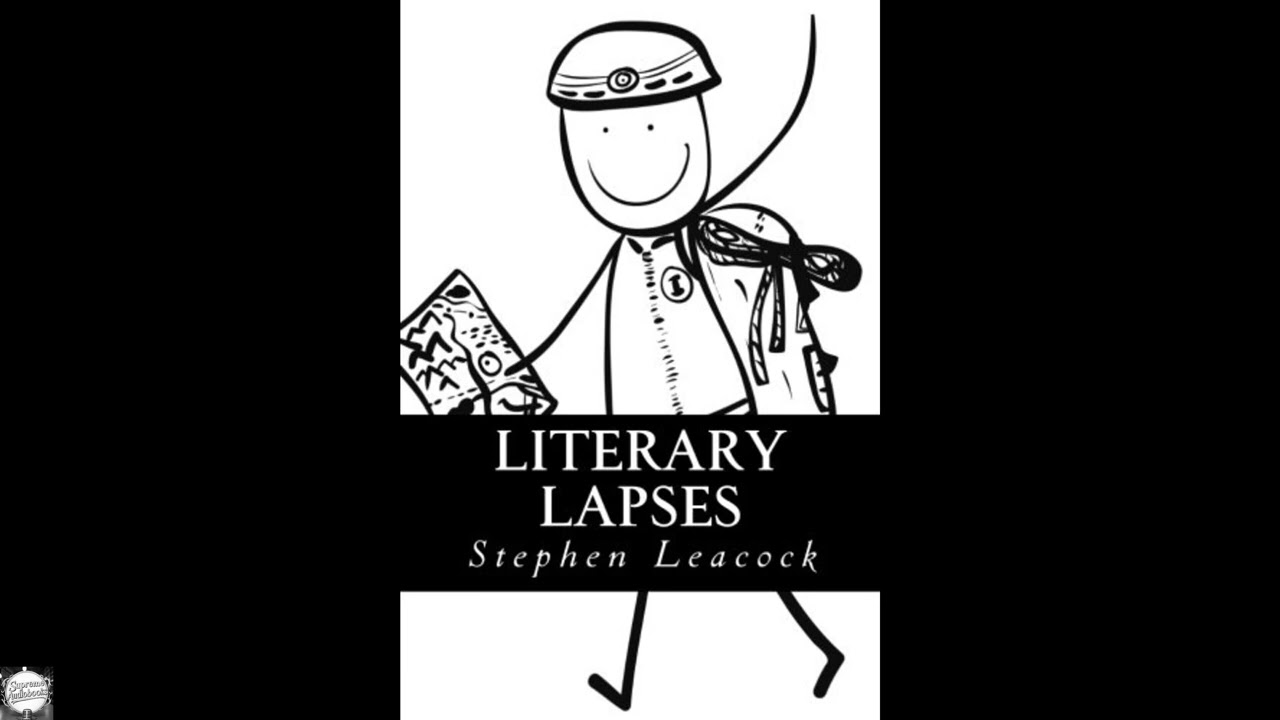
Literary Lapses
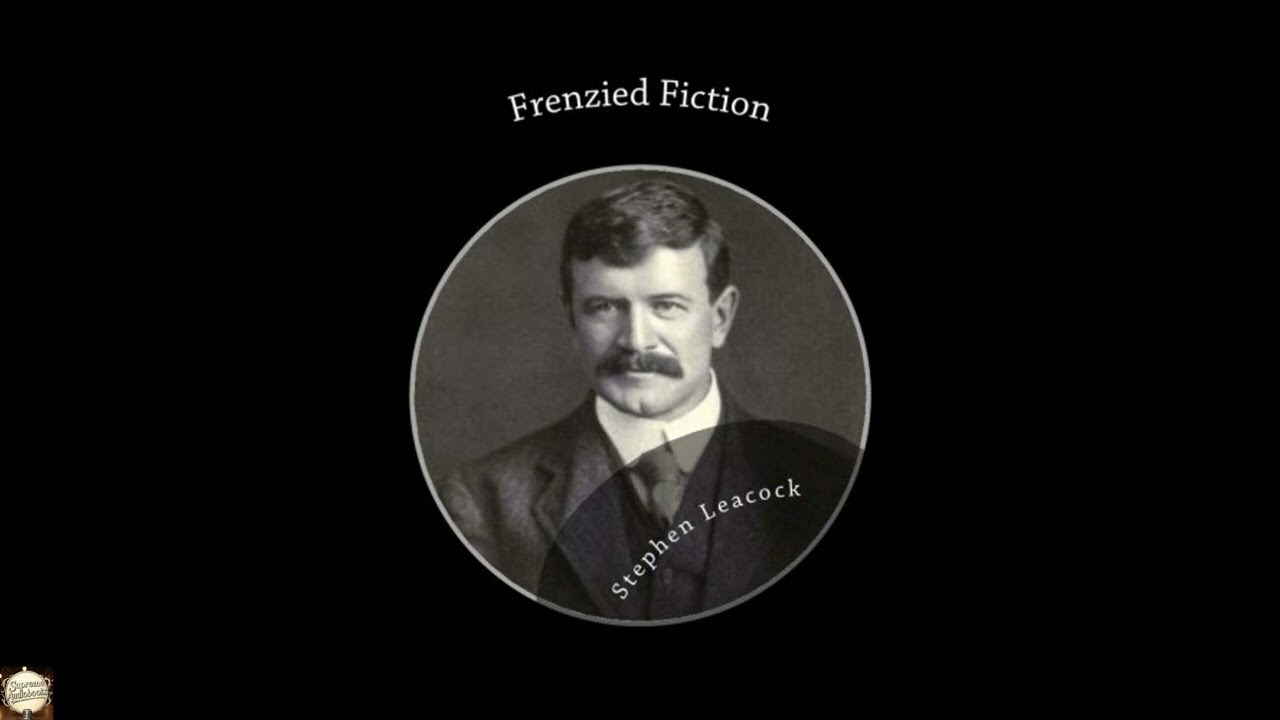
Step into the wry, insightful world of Stephen Leacock with Literary Lapses, a collection of essays and sketches that offers a truly unique brand of humor, as relevant today as it was over a century ago. This isn't merely a book of jokes; it's a keen observation of human nature, societal absurdities, and the pretenses of intellectual life, all wrapped in a deceptively simple and charming prose style. For anyone who appreciates the subtle art of satire, who finds mirth in the everyday illogicalities of institutions, or who delights in the gentle skewering of pomposity, Leacock provides a delightful escape and a refreshing perspective. It stands as a testament to the enduring power of wit to illuminate the unchanging quirks of humanity, making it a compelling listen for contemporary audiences seeking both laughter and thoughtful reflection. The literary landscape Leacock draws us into with Literary Lapses is less a linear narrative and more a series of brilliantly crafted vignettes, each acting as a window into the peculiar corners of early twentieth-century life, though their essence remains universal. Imagine sitting in a cluttered study, listening to a brilliant mind muse aloud on everything from the intricacies of banking to the perils of literary criticism, from the existential dread of a shopping trip to the baffling complexities of the English language. The "setting" shifts with each essay, moving from academic halls and bustling city streets to quiet suburban homes, always presented through the filter of Leacock's distinctive comedic lens. We meet a parade of "characters"—not individuals in a developing plot, but rather archetypes of human experience: the bumbling amateur, the overly serious scholar, the bewildered citizen navigating bureaucratic mazes, and the author himself, often appearing as a self-deprecating participant in the absurdities he describes. The central conflict, if one can be said to exist across these disparate pieces, is the ongoing, often hilarious clash between idealism and reality, between logical expectation and absurd outcome. Leacock constructs scenarios where the simplest tasks—like opening a bank account or responding to a book review—unfold into epic, farcical struggles. One moment, he might be delivering a mock-scientific paper on the various forms of "difficulties of modern life," meticulously categorizing the frustrations that plague us all. The next, he might be offering a parody of a popular literary genre, demonstrating its inherent silliness by taking its conventions to their most illogical extremes. The collection's arc isn't about reaching a resolution but rather about consistently peeling back layers of societal veneer, revealing the comical contradictions and inherent silliness that lie beneath, without ever resorting to cynicism or malice. Listeners will find themselves chuckling at recognizable predicaments, recognizing the shared human experience of stumbling through life with a mixture of earnestness and ineptitude. Stephen Leacock, the brilliant mind behind these observations, was a truly fascinating figure, equally accomplished as an academic and a humorist. Born in Swanmore, Hampshire, England, in 1869, he immigrated with his family to a farm near Lake Simcoe, Ontario, Canada, as a child, an experience that deeply shaped his understanding of both rural life and the evolving Canadian identity. He pursued an extensive education, earning his PhD in political economy from the University of Chicago, and subsequently embarked on a distinguished career at McGill University in Montreal. From 1908 to 1936, he served as the Chairman of the Department of Economics and Political Science, publishing numerous scholarly books on political science and economics, often to critical acclaim. Yet, alongside this serious academic pursuit, Leacock cultivated a parallel literary career that brought him international fame. His first collection of humor, Literary Lapses, published in 1910, marked his breakthrough, quickly followed by other hugely popular titles such as Sunshine Sketches of a Little Town (1912) and Arcadian Adventures with the Idle Rich (1914). His unique blend of gentle satire, keen observation, and robust prose established him as one of the English-speaking world's foremost humorists of the early 20th century. He received numerous accolades throughout his life, including the Lorne Pierce Medal for distinguished service to Canadian literature, and his literary legacy continues to influence subsequent generations of writers, securing his place as a foundational figure in Canadian letters. The true genius of Literary Lapses lies in its ability to simultaneously entertain and subtly critique through specific, relatable scenarios. One prominent theme is the satire of academic pedantry and literary pretentiousness. Leacock, a scholar himself, had an intimate understanding of the often-absurd language and self-importance that could infiltrate intellectual circles. Consider the essay "A New Pathology," where he proposes a humorous new field of medical study focusing on the psychological ailments caused by the stress of modern living, parodying the overly complex and specialized language of scientific journals. Similarly, his lampooning of literary criticism, where he exaggerates the often-vague and self-congratulatory pronouncements of reviewers, offers a gentle reminder that art and its analysis can sometimes lose touch with common sense. Another recurring theme is the absurdity of modern bureaucratic systems and institutions. Leacock often places an ordinary person—or a thinly veiled version of himself—into commonplace situations that quickly devolve into farcical ordeals due to rigid rules, baffling procedures, or sheer human incompetence. "My Financial Career" serves as a perfect example; the simple act of opening a bank account escalates into an anxiety-ridden, utterly humiliating experience for the protagonist, who is utterly overwhelmed by the imposing grandeur of the bank and the stern demeanor of its employees. This piece brilliantly captures the common feeling of being lost and inadequate within large, impersonal organizations, using hyperbole to highlight the comedic pathos of the situation. Leacock's gift was making these universal frustrations not just recognizable, but profoundly funny. Literary Lapses emerged from a pivotal moment in history, published in 1910, just as the Edwardian era was beginning to give way to the profound changes of the early 20th century. It was a period characterized by rapid industrialization, growing urbanization, and an expanding middle class. This brought with it new social norms, evolving technologies, and increasingly complex bureaucratic structures that Leacock so deftly targeted. Culturally, there was a lingering Victorian earnestness, yet also a burgeoning sense of modernity and a readiness for new forms of expression. Leacock's humor, though sometimes reflecting the social mores of his time, often served as a gentle corrective to the era's self-seriousness, puncturing the balloons of societal pretension and academic pomposity with a sharp but not unkind pin. His work resonated widely because it spoke to the shared human experience of navigating a rapidly changing world, finding humor in the gap between ideal expectations and messy reality. The audiobook format offers a particularly engaging way to experience Leacock's distinct voice. His humor relies heavily on tone, pacing, and the precise delivery of his mock-serious arguments and understated punchlines. A skilled narrator brings to life the various personas Leacock adopts—the bumbling observer, the academician attempting to analyze trivialities, the exasperated citizen. Listening allows the subtle shifts in his prose, the unexpected turns of phrase, and the careful build-up to each comedic climax to fully register. With a run length of several hours, this collection makes for an ideal companion for a quiet afternoon, a daily commute, or any moment needing intelligent diversion. Pay attention to the way the narrator handles the author's precise vocabulary and the rhythm of his sentences, as these elements are often crucial to unlocking the full comedic potential of Leacock's delightful observations.
Enjoyed Literary Lapses? A few ways to support us
Audible & Amazon links are affiliate; we may earn a small commission at no extra cost.
About this production
Human narration by a volunteer reader from LibriVox.org, the public-domain audiobook project. LibriVox volunteers record literary works whose copyright has expired in the United States, releasing the resulting recordings into the public domain.
Literary Lapses by Stephen Leacock. The underlying text is in the U.S. public domain. We do not republish any modern copyrighted edition, translation, or commentary.
The 4K cinematic visuals accompanying this audiobook are generated by an AI image model from prompts derived from the source text. No copyrighted photos, paintings, or stock footage are used. AI generation is disclosed on every video on our YouTube channel as required by YouTube's altered/synthetic content policy.
English subtitles are transcribed from the LibriVox recording with OpenAI Whisper. Translations into the 11 other supported languages are produced by Meta's NLLB-200 neural translation model. No human translator's copyrighted translation is used.
Questions about sourcing or rights? See our DMCA & Sourcing policy or contact us.
Enjoyed this audiobook?
If you'd like to own a copy of Literary Lapses or hear a professionally produced edition, the links below help support free audiobook production at no extra cost to you.
As an Amazon Associate we earn from qualifying purchases. Audible / print links are affiliate.