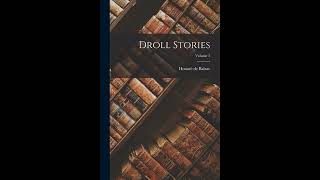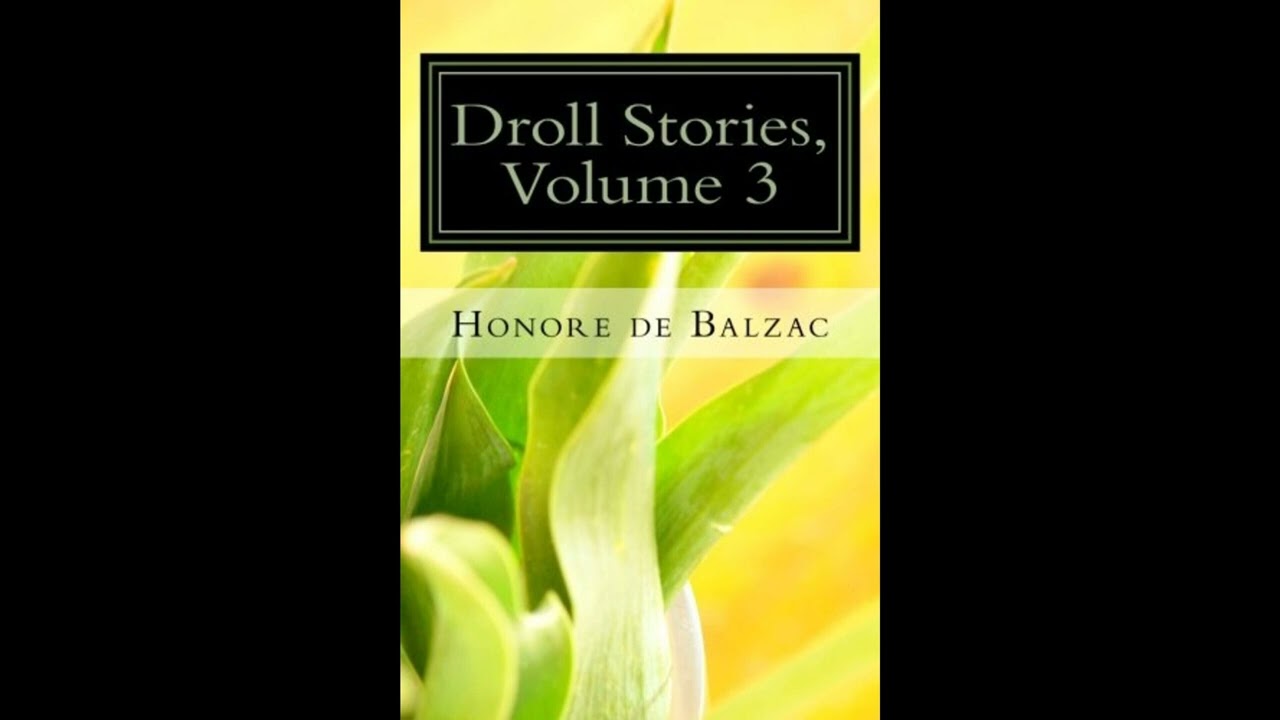
Droll Stories, Volume 3
Step back from the grand sweep of nineteenth-century French realism, and you discover another Honore de Balzac – one who delighted in the bawdy, the whimsical, and the purely comedic. Droll Stories, Volume 3 offers a rare opportunity to hear the often-serious author of La Comédie humaine loosen his cravat and revel in the earthy humor of a bygone age. This collection, far from his usual deep social analyses, presents a series of irreverent tales brimming with wit and human folly, penned in a mock-archaic style that echoes the very eras it lampoons. To listen is to be transported to a time when storytelling was an oral art, when a good joke trumped decorum, and when human nature, in all its carnal and clever manifestations, was a source of endless amusement. It is a refreshing dip into the lighter side of a literary giant, proving that even the most profound observers of society possess a knack for the genuinely funny, and it resonates today because the follies it skewers remain eternally familiar. Within this volume, listeners will encounter a colorful cavalcade of characters plucked from medieval and Renaissance France, their lives unfolding in castles, monasteries, and bustling provincial towns. The narratives typically center around a clever trick, a forbidden desire, or a humorous misunderstanding, often involving members of the clergy, the nobility, or astute common folk. You might find a resourceful knight attempting to outwit a jealous husband, or a cunning lady devising an ingenious scheme to maintain her reputation while pursuing a secret romance. Abbots, monks, students, and gossiping wives populate these vignettes, each driven by desires that frequently run contrary to their outward vows or social standing. The central conflict in these stories often arises from the clash between strict societal or religious codes and the irrepressible urges of the human heart. Characters are constantly navigating a world of moralistic pronouncements while simultaneously seeking pleasure, advantage, or simply a good laugh. The arc of each story is a miniature drama, building with quick-witted dialogue and escalating predicaments, usually culminating in a wry punchline or a situation where human ingenuity (or folly) is hilariously laid bare, all without revealing the ultimate twists or outcomes of specific tales. Honore de Balzac, born May 20, 1799, in Tours, France, and passing away on August 18, 1850, in Paris, remains one of the titans of French literature. His early life was marked by ambitious but often unsuccessful business ventures and numerous pseudonymous literary experiments before he found his true voice. Balzac’s vision crystallized in La Comédie humaine (The Human Comedy), an ambitious project comprising nearly one hundred interconnected novels and short stories. This monumental sequence aimed to mirror French society in its entirety, offering a panoramic view of its social classes, professions, and psychological intricacies during the post-Napoleonic era. Works such as Eugenie Grandet, Le Père Goriot, and Illusions perdues cemented his reputation as a pioneering figure of literary realism. He meticulously documented the material conditions and psychological states of his characters, often drawing from his observations of Parisian and provincial life. His influence on subsequent generations of writers, both in France and beyond, was immense, shaping the course of the novel for decades to come. Droll Stories, however, stands as a delightful deviation, written with a lightness and historical pastiche that contrasts sharply with the gritty, often tragic realism for which he is most celebrated. It showcases Balzac's astonishing range, demonstrating his ability to mimic earlier literary styles and tap into a different vein of storytelling altogether. At the heart of Droll Stories, Volume 3, listeners will discern the persistent themes of human folly and desire. Balzac masterfully illustrates how easily individuals, regardless of their station, succumb to their baser urges – be it lust, greed, or vanity. Consider, for instance, the recurring image of a supposedly pious cleric who, under the cloak of night or within the privacy of a chamber, contrives elaborate ways to circumvent his vows, often with a mischievous glint in his eye. These scenes consistently demonstrate that the human animal, for all its grand pronouncements, remains tethered to its earthly appetites. Another prominent theme is that of social hypocrisy, particularly within institutions like the Church and the aristocratic classes. The contrast between outward piety and hidden motivations provides much of the comedic tension. Balzac repeatedly shows characters maintaining a facade of virtue while secretly engaging in all manner of worldly pleasures. This is often paired with a celebration of wit and cunning, where cleverness becomes the ultimate tool for navigating a morally ambiguous world. Characters who can outsmart their rivals, deceive their spouses, or simply talk their way out of a predicament are often presented not as villains, but as admirable figures of ingenuity, proving that quick thinking can overcome even the most rigid of social barriers. Balzac wrote Droll Stories in the 1830s, a period of significant cultural and political transition in France. Following the fall of Napoleon and the subsequent Bourbon Restoration, the nation was grappling with its identity, moving towards the July Monarchy and the rise of the bourgeoisie. While his major realist novels chronicled these contemporary shifts, Droll Stories looked backward. It drew inspiration from earlier French literary traditions, notably those of François Rabelais and the medieval fabliaux, as well as the Italian novellas of Giovanni Boccaccio. This backward glance was not merely nostalgic; it was a conscious decision by Balzac to demonstrate his versatility and perhaps to offer a counterpoint to the more serious concerns of his contemporary fiction. It allowed him to playfully critique universal human foibles by setting them in a historical frame, suggesting that certain aspects of human nature are constant, irrespective of the era. The emergence of these stories reflected a broader nineteenth-century interest in historical research and the revival of national literary heritage, but Balzac infused it with his unique blend of satirical observation and vivacious storytelling. Listening to Droll Stories, Volume 3 as an audiobook brings these rollicking narratives to life in a uniquely engaging way. The oral tradition inherent in these types of tales – stories meant to be shared aloud, generating laughter and collective amusement – makes the audiobook format particularly fitting. A skilled narrator can deftly switch between the distinct voices of the diverse characters, from the pompous pronouncements of a lord to the sly whispers of a lady or the earthy drawl of a peasant, making each vignette feel immediate and vivid. The narrator’s pacing can underscore the comedic timing, allowing the witty dialogue and clever twists to land with maximum impact. You will hear the atmosphere shift from the solemn quiet of a monastery to the boisterous energy of a tavern, all conveyed through vocal nuance. The run length, several hours in total, makes it perfect for extended listening sessions, providing a rich source of entertainment and a delightful escape into the humor and history of an earlier age.
Enjoyed Droll Stories, Volume 3? A few ways to support us
Audible & Amazon links are affiliate; we may earn a small commission at no extra cost.
About this production
Human narration by a volunteer reader from LibriVox.org, the public-domain audiobook project. LibriVox volunteers record literary works whose copyright has expired in the United States, releasing the resulting recordings into the public domain.
Droll Stories, Volume 3 by Honore de Balzac. The underlying text is in the U.S. public domain. We do not republish any modern copyrighted edition, translation, or commentary.
The 4K cinematic visuals accompanying this audiobook are generated by an AI image model from prompts derived from the source text. No copyrighted photos, paintings, or stock footage are used. AI generation is disclosed on every video on our YouTube channel as required by YouTube's altered/synthetic content policy.
English subtitles are transcribed from the LibriVox recording with OpenAI Whisper. Translations into the 11 other supported languages are produced by Meta's NLLB-200 neural translation model. No human translator's copyrighted translation is used.
Questions about sourcing or rights? See our DMCA & Sourcing policy or contact us.
Enjoyed this audiobook?
If you'd like to own a copy of Droll Stories, Volume 3 or hear a professionally produced edition, the links below help support free audiobook production at no extra cost to you.
As an Amazon Associate we earn from qualifying purchases. Audible / print links are affiliate.