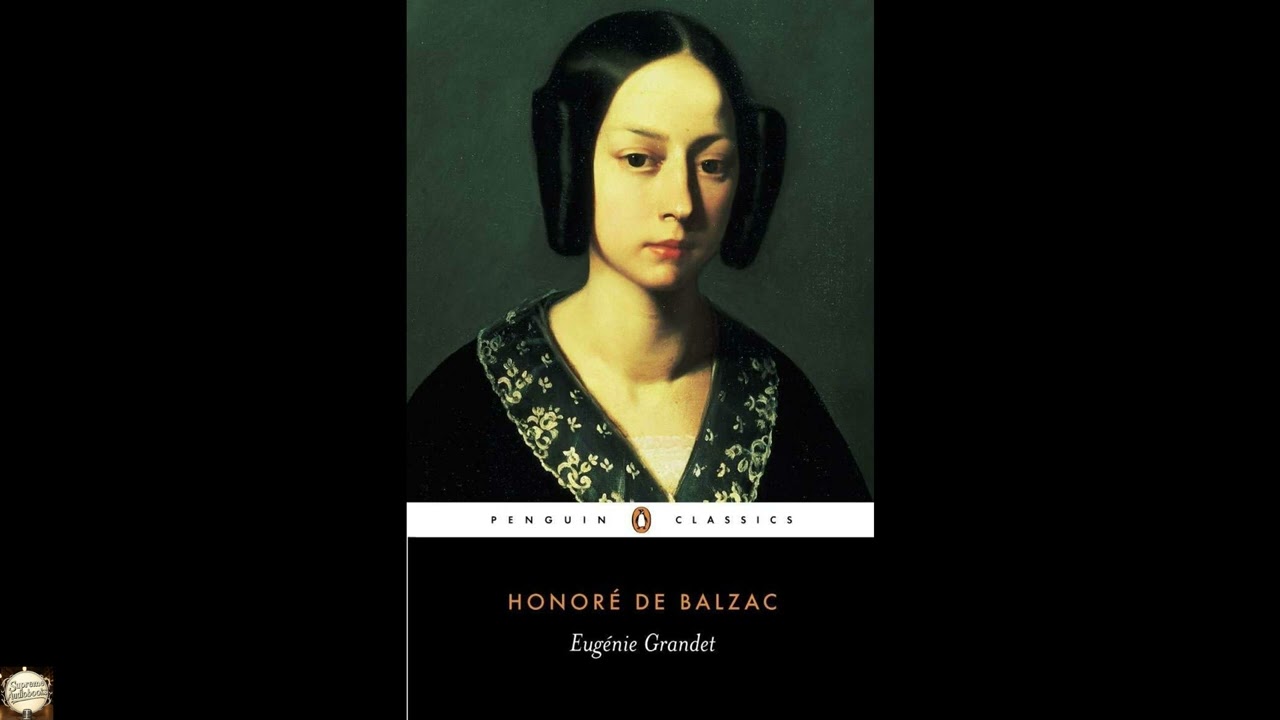
Eugenie Grandet (The Human Comedy)
In the quiet, often overlooked corners of human experience, where the everyday struggles against grand passions, some narratives rise with the stark clarity of a moral fable. Honoré de Balzac’s Eugenie Grandet, a foundational piece of his monumental La Comédie humaine, is just such a story. It pulls back the curtain on the suffocating power of avarice, revealing how the relentless pursuit and hoarding of wealth can warp souls, stifle affection, and ultimately leave a devastating legacy. Why should a listener care about a tale from early 19th-century provincial France? Because the questions it poses about the value of money versus the value of love, about freedom versus control, remain fiercely relevant. It is a haunting study of human nature, a reminder that the chains of materialism bind just as tightly today as they did generations ago, offering a profound reflection on what truly constitutes a life well-lived or tragically diminished. The story unfolds in the sleepy, tightly-knit town of Saumur, nestled in the Loire Valley, a place where time seems to stand still and secrets fester beneath a veneer of decorum. Here resides Félix Grandet, a man of formidable cunning and legendary parsimony, whose entire existence revolves around the accumulation and veneration of gold. Having made his fortune through shrewd, often ruthless, dealings during the tumultuous years of the Revolution, Grandet lives a life of extreme austerity, denying himself and his family—his long-suffering wife and their innocent, devoted daughter, Eugénie—even the most basic comforts. Their house is a monument to deprivation, a place where cold reigns and every expenditure is a source of agony for its master. Into this stifling, monotonous world, a sudden, disruptive force arrives: Charles Grandet, Eugénie’s fashionable and somewhat frivolous cousin from Paris. Charles is everything the Grandet household is not—charming, elegant, and accustomed to a life of ease and luxury. He has been sent to Saumur by his father, Grandet’s brother, who faces financial ruin and plans to take his own life. The appearance of Charles ignites a spark of tenderness and romantic longing in Eugénie, who, isolated and unschooled in the ways of the world, falls deeply and innocently in love. This burgeoning affection, however, immediately clashes with the unyielding, calculating spirit of her father, setting in motion a tragic sequence of events where love, hope, and generosity are pitted against the cold, implacable will of a man obsessed with his fortune. The subsequent struggles, betrayals, and sacrifices trace the arc of a young woman's awakening to a harsh world, shaped irrevocably by the oppressive hand of her father and the indifferent whims of fate. Honoré de Balzac, born in Tours in 1799, began his literary career under a cloud of financial ambition and struggle, much like many of the characters he would later create. His early attempts at business ventures and writing for hire met with little success, leading him into debt that would plague him for most of his life. This firsthand experience with the crushing pressures of money and the allure of social advancement provided him with an unparalleled understanding of 19th-century French society, which he committed to chronicling in what he called La Comédie humaine. This vast collection of interconnected novels and short stories aimed to create a complete social history of his era, examining every class, profession, and moral dimension of post-Napoleonic France. Balzac's method involved meticulous observation and a relentless pursuit of detail, capturing not just individual personalities but also the broader forces shaping their lives. He often used real places and infused his narratives with the political, economic, and social currents of the time. Among his other significant contributions to literature are Le Père Goriot, a study of paternal love and ingratitude, Lost Illusions, which follows a young poet's disillusionment in Paris, and Cousin Bette, a chilling tale of vengeance and social climbing. He wrote with furious energy, often sustained by massive amounts of coffee, producing some ninety-one novels and novellas before his death in Paris in 1850, leaving behind a body of work that established him as a towering figure of literary realism and profoundly influenced subsequent generations of novelists. One of the central themes permeating Eugenie Grandet is the destructive nature of avarice. Félix Grandet embodies this theme with chilling precision, seeing human relationships and even his own family purely through the lens of monetary gain. Consider the scene where he meticulously counts his gold coins in the presence of his daughter, almost caressing them, an act that underscores his true devotion—not to people, but to his fortune. This obsession leads him to deny comfort to his dying wife, to ruthlessly exploit his tenants, and most tragically, to manipulate and isolate his daughter, effectively robbing her of a normal life and true happiness. This intense focus on wealth as the ultimate goal also gives rise to a second prominent theme: the profound sacrifices made for love and loyalty. Eugénie, in stark contrast to her father, possesses a generous and selfless heart. She secretly gives Charles her modest fortune, a handful of gold coins, to help him rebuild his life, an act of pure, uncalculating love that defines her character and stands in stark opposition to her father’s miserliness. Her silent suffering and enduring loyalty, even in the face of betrayal and neglect, highlight the novel's examination of unrequited affection and the often-unrewarded purity of heart. The novel also incisively comments on the rigid class structures and the pervasive materialism of early 19th-century French society. The families vying for Eugénie's hand – the Cruchots and the des Grassins – are not interested in her as a person but solely as the heiress to Grandet's immense wealth. Their social maneuvering, gossip, and calculated attempts to win favor with the old miser vividly illustrate a society where financial status dictates reputation and marriage is often a transaction. This societal pressure on wealth and status acts as a powerful backdrop against Eugénie's innocence, showing how the economic realities of the era could crush individual desires. Furthermore, the theme of patriarchal control is powerfully depicted through Grandet’s absolute dominion over his household and his daughter's life. He controls Eugénie’s finances, her social interactions, and her very perception of the world, reflecting the deeply entrenched authority fathers held within families during this period. Eugenie Grandet emerged in a France still grappling with the aftermath of the Revolution and the Napoleonic Wars. The novel, published in 1833, reflects a society in transition: the old aristocracy's influence was waning, replaced by the ascendancy of the bourgeoisie, a class whose power was rooted in commerce and property rather than lineage. Balzac was acutely aware of this shift and the new moral landscape it created, one where money became the ultimate measure of worth and ambition. The provincial setting of Saumur serves as a microcosm for these broader societal changes, highlighting how the drive for accumulation affected even the most remote corners of the nation, often fostering a narrow-mindedness and a ruthless pragmatism that Balzac critiques. This period saw the rise of industrialization and capitalism, further cementing the importance of financial success and the anxieties that came with it, all of which are keenly observed and depicted in Balzac's detailed social canvas. Listening to Eugenie Grandet as an audiobook allows the listener to become fully immersed in the oppressive atmosphere of the Grandet household and the slow, inexorable march of fate. The subtle shifts in a narrator's voice can keenly differentiate the gruff, laconic pronouncements of Félix Grandet from the soft, often melancholic tones of Eugénie, or the charming, yet ultimately shallow, words of Charles. The pacing of the narration can perfectly capture the deliberate, almost suffocating rhythm of life in Saumur, allowing moments of tension and emotional weight to build with powerful effect. Over several hours, this auditory experience allows for a deep appreciation of Balzac’s precise characterizations and his detailed descriptions, bringing to life the rustle of old gowns, the creak of floorboards, and the chilling silence that often surrounds the miser's calculating presence. It offers an opportunity to truly hear the subtle nuances of dialogue and internal thought, pulling the listener into the heart of this enduring human drama.
Enjoyed Eugenie Grandet (The Human Comedy)? A few ways to support us
Audible & Amazon links are affiliate; we may earn a small commission at no extra cost.
About this production
Human narration by a volunteer reader from LibriVox.org, the public-domain audiobook project. LibriVox volunteers record literary works whose copyright has expired in the United States, releasing the resulting recordings into the public domain.
Eugenie Grandet (The Human Comedy) by Honoré de Balzac. The underlying text is in the U.S. public domain. We do not republish any modern copyrighted edition, translation, or commentary.
The 4K cinematic visuals accompanying this audiobook are generated by an AI image model from prompts derived from the source text. No copyrighted photos, paintings, or stock footage are used. AI generation is disclosed on every video on our YouTube channel as required by YouTube's altered/synthetic content policy.
English subtitles are transcribed from the LibriVox recording with OpenAI Whisper. Translations into the 11 other supported languages are produced by Meta's NLLB-200 neural translation model. No human translator's copyrighted translation is used.
Questions about sourcing or rights? See our DMCA & Sourcing policy or contact us.
Enjoyed this audiobook?
If you'd like to own a copy of Eugenie Grandet (The Human Comedy) or hear a professionally produced edition, the links below help support free audiobook production at no extra cost to you.
As an Amazon Associate we earn from qualifying purchases. Audible / print links are affiliate.