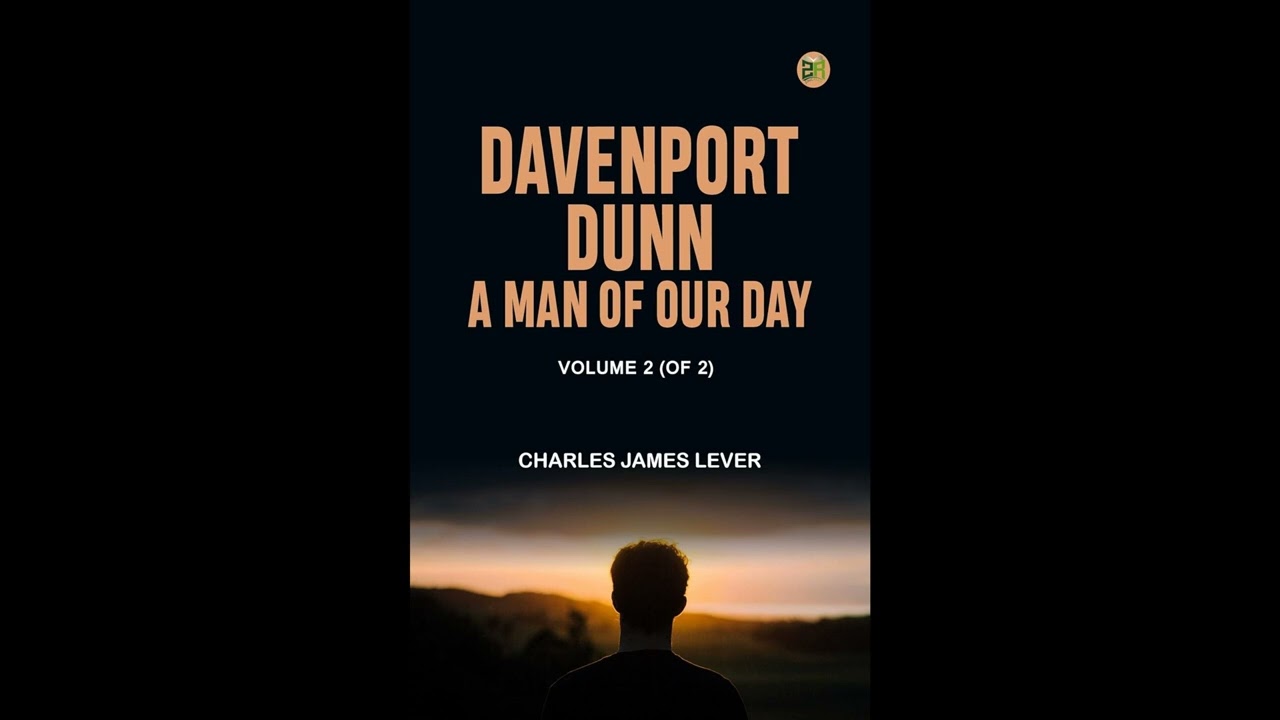
Davenport Dunn, a Man of Our Day. Volume 2 (of 2)
"Davenport Dunn, a Man of Our Day" by Charles James Lever, even with its second volume standing alone, presents a remarkably prescient and relevant examination of ambition, finance, and social standing. This novel, though penned in a different century, speaks directly to contemporary concerns about the allure of quick wealth, the manipulation of public trust, and the intricate dance between old money and new influence. It is a cautionary tale, a social satire, and a deeply human drama that asks fundamental questions about character and reputation. What truly constitutes success? And what is the ultimate cost of striving for it, especially when built on precarious foundations? This is not merely a historical curiosity; it is a mirror held up to any era where fortunes rise and fall, and where the line between legitimate enterprise and speculative risk blurs. Volume Two of "Davenport Dunn" resumes the narrative as the titular character—a seemingly self-made financial wizard, a man of uncanny foresight and boundless energy—finds his carefully constructed empire beginning to show cracks. Having risen from humble origins to become a celebrated financier, advisor to the aristocracy, and even a political power-broker, Dunn's methods have always teetered on the edge of the ethical. His genius lies in his ability to inspire confidence, to forecast market trends, and to leverage the trust of others for his own gains. We find him at the zenith of his influence, managing vast estates and even larger expectations, yet the consequences of his audacious schemes are starting to accumulate, touching the lives of many individuals who have placed their faith—and their fortunes—in his hands. The story follows not only Dunn's machinations but also the interconnected lives of several other characters. There are the haughty aristocrats, like the financially strained Lord Glengariff, whose inherited position clashes with his dwindling assets, making him ripe for Dunn's "assistance." There are also the young lovers, whose prospects depend entirely on the stability of Dunn's enterprises—their romances blossoming or withering in the shadow of his financial dealings. The narrative gradually reveals the true nature of Dunn's operations: not always fraudulent in the legal sense, but certainly morally dubious, built on a foundation of speculation, borrowed capital, and a certain willingness to exploit human credulity. The central conflict intensifies as rivals emerge, former associates grow suspicious, and the very weight of his accumulated promises threatens to crush the seemingly invincible Dunn, forcing him to ever more desperate measures to maintain his illusion of control. Charles James Lever, born in Dublin, Ireland, in 1806, was a novelist whose career spanned much of the Victorian era, offering readers a distinctive blend of rollicking adventure, social commentary, and a deep understanding of Irish character. Initially trained as a physician, Lever served for a time as a ship's doctor before practicing medicine in Ireland. His early experiences, particularly his time among the colourful characters of rural Ireland, provided ample material for his first successful novels. He eventually abandoned medicine for literature, becoming the editor of the Dublin University Magazine in 1842. Lever’s early works, such as "The Confessions of Harry Lorrequer" and "Charles O’Malley, The Irish Dragoon," established his reputation for lively narratives featuring boisterous heroes, military escapades, and a distinctly Irish wit. These novels were immensely popular, earning him comparisons to his contemporary, William Makepeace Thackeray, though Lever’s tone was often lighter and more overtly adventurous. As he matured as a writer, and particularly after he left Ireland to serve as a British diplomat—first as Vice-Consul at La Spezia, Italy, and later as Consul at Trieste—his fiction gained a sharper edge of social criticism. "Davenport Dunn," published in 1859, stands as a notable example of this evolution, showcasing a more serious, satirical engagement with the social and financial anxieties of his time, moving beyond mere military comedy to dissect the complexities of modern wealth and influence. He passed away in 1872, leaving behind a substantial body of work that continues to offer insights into nineteenth-century life. The novel renders several persistent themes with an acute observation that still resonates. One prominent concern is social mobility and the pretense of status. Dunn, despite his immense wealth and power, never truly sheds his "new money" origins in the eyes of the established aristocracy. Lever illustrates this through the often-humorous interactions between Dunn and the old families, highlighting the ingrained snobbery and resistance to outsiders, even when those outsiders hold the purse strings. A scene where Dunn attempts to advise an impoverished peer on estate management, only to be met with condescension disguised as politeness, sharply underscores this tension between inherited privilege and earned fortune. Another central idea is the very nature of integrity versus ambition. Dunn's relentless drive to accumulate wealth and influence leads him down a path of moral compromise. The story shows how small ethical concessions, made in the name of progress or expediency, gradually erode a man's character until the initial goals are lost in a maze of deception. The increasingly desperate financial maneuvers Dunn undertakes, always with the rationalization of preventing a larger collapse, provide concrete examples of this corrosive process. The novel also addresses the perilous allure of speculative finance, detailing how the promise of quick returns can blind individuals to the inherent risks and the moral responsibilities of those orchestrating such schemes. Lever meticulously portrays the speculative bubbles, the sudden crashes, and the ripple effect these events have on ordinary lives, making a powerful statement about the fragility of trust in a rapidly changing economic landscape. "Davenport Dunn" emerged during a period of considerable social and economic upheaval in mid-Victorian Britain. The 1850s and 1860s were decades of accelerated industrial growth, urban expansion, and the consolidation of the British Empire. This era saw the rise of a powerful middle class, whose fortunes were often built on trade, manufacturing, and increasingly, financial speculation. Traditional aristocratic power, though still culturally dominant, faced challenges from this burgeoning class of self-made men. There was a palpable anxiety about the stability of fortunes, the ethics of business, and the blurring lines between legitimate enterprise and outright swindling, especially following various railway manias and financial crashes of the preceding decades. Lever’s novel reflects these concerns by pitting the old world against the new. The established gentry, often portrayed as charming but fiscally inept, find themselves increasingly dependent on men like Dunn, who understand the mechanisms of modern finance. The book captures a specific moment when personal reputation and financial acumen were becoming intertwined, and when the public’s gullibility could be expertly exploited by charismatic, if unscrupulous, figures. It also offers a commentary on the Victorian fascination with appearances—the emphasis on respectability and outward success—even when the underlying reality was far less solid. Listening to "Davenport Dunn, Volume Two" as an audiobook offers an immersive experience that brings Lever's detailed world to life. The narrator's voice becomes essential in navigating the various social strata and regional accents, from the clipped tones of the English gentry to the more expansive brogues of the Irish characters, allowing the listener to distinguish between the cynical manipulators and their earnest victims. The novel's length provides ample opportunity to sink into the rhythms of Lever's prose, allowing his subtle satire and dramatic tension to build naturally. Pay attention to the nuanced dialogue, which often carries multiple layers of meaning, revealing character and advancing the plot through seemingly casual conversations. The spoken performance amplifies the novel's atmosphere, whether it's the hushed anxiety of a financial crisis meeting or the buoyant optimism of young love momentarily untouched by worldly cares, making the unfolding drama feel immediate and personal.
Enjoyed Davenport Dunn, a Man of Our Day. Volume 2 (of 2)? A few ways to support us
Audible & Amazon links are affiliate; we may earn a small commission at no extra cost.
About this production
Human narration by a volunteer reader from LibriVox.org, the public-domain audiobook project. LibriVox volunteers record literary works whose copyright has expired in the United States, releasing the resulting recordings into the public domain.
Davenport Dunn, a Man of Our Day. Volume 2 (of 2) by Charles James Lever. The underlying text is in the U.S. public domain. We do not republish any modern copyrighted edition, translation, or commentary.
The 4K cinematic visuals accompanying this audiobook are generated by an AI image model from prompts derived from the source text. No copyrighted photos, paintings, or stock footage are used. AI generation is disclosed on every video on our YouTube channel as required by YouTube's altered/synthetic content policy.
English subtitles are transcribed from the LibriVox recording with OpenAI Whisper. Translations into the 11 other supported languages are produced by Meta's NLLB-200 neural translation model. No human translator's copyrighted translation is used.
Questions about sourcing or rights? See our DMCA & Sourcing policy or contact us.
Enjoyed this audiobook?
If you'd like to own a copy of Davenport Dunn, a Man of Our Day. Volume 2 (of 2) or hear a professionally produced edition, the links below help support free audiobook production at no extra cost to you.
As an Amazon Associate we earn from qualifying purchases. Audible / print links are affiliate.