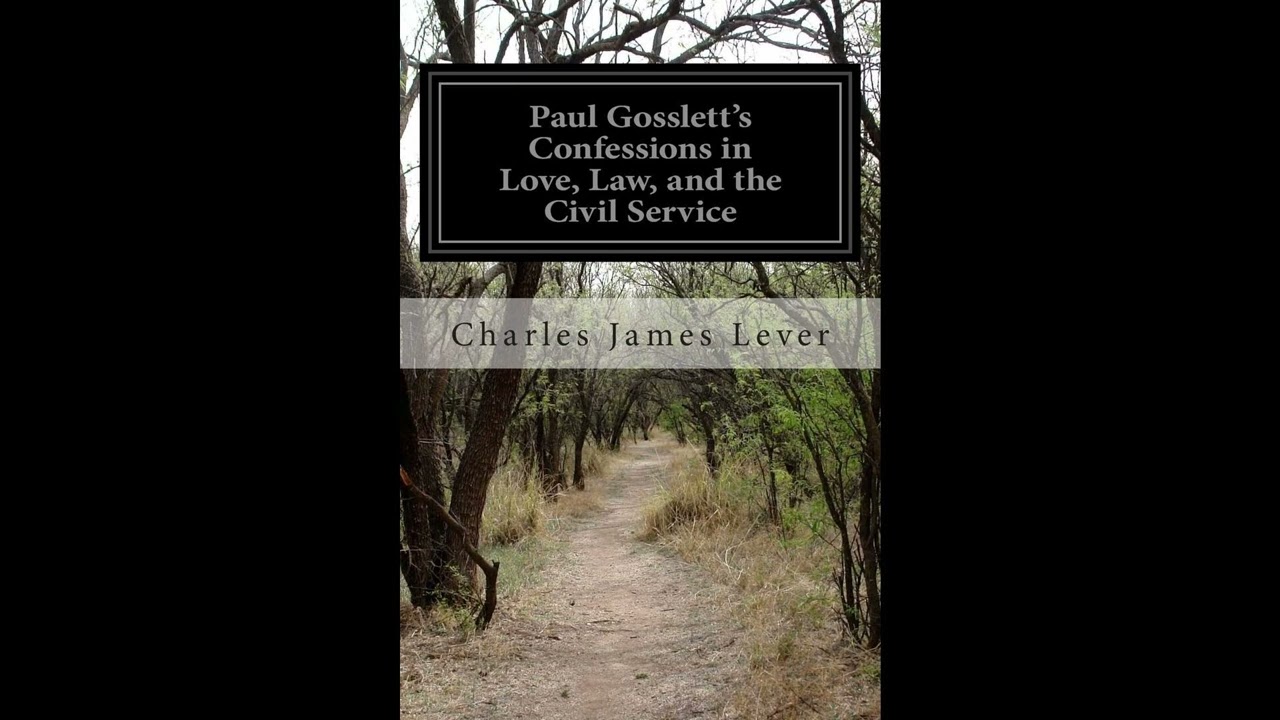
Paul Gosslett's Confessions in Love, Law, and the Civil Service
Step into the bustling, sometimes absurd, world of late Victorian and Edwardian society with Charles James Lev’s rarely celebrated yet keenly observant novel, Paul Gosslett’s Confessions in Love, Law, and the Civil Service. This remarkable work, a quiet gem of social commentary and personal introspection, offers listeners a unique window into the inner life of a man grappling with the era's conflicting demands for professional ambition, romantic fulfillment, and bureaucratic rectitude. Far from a mere historical curiosity, Gosslett’s frank admissions and humorous predicaments resonate deeply today, speaking to anyone who has ever felt caught between their aspirations and the rigid structures of modern life, or who has navigated the bewildering maze of love and expectation in an ever-changing world. It is a testament to the enduring human comedy played out in the offices and drawing-rooms of a bygone age, yet strangely familiar in its anxieties and triumphs. Paul Gosslett, our earnest and somewhat bumbling protagonist, begins his tale as a promising but untested junior clerk in a significant government department. His professional ambitions, while sincere, are often undermined by his own self-doubt, the labyrinthine procedures of the Civil Service, and the machinations of colleagues who are either overly zealous or suspiciously idle. Lev paints a vivid picture of this world, where minor promotions feel like Herculean achievements and the smallest infraction can ripple through an entire career. Alongside his professional aspirations, Gosslett finds himself increasingly entangled in matters of the heart. He yearns for a respectable match, one that aligns with his station and prospects, yet he is prone to infatuations and misunderstandings that complicate his path to matrimonial bliss. From discreet glances across crowded ballrooms to awkward tea visits, his romantic misadventures often mirror the bureaucratic follies of his working life, each a series of unwritten rules and social protocols he struggles to decipher. The central conflict of Gosslett’s story arises from this constant tension between his personal desires and the expectations imposed upon him by his career and society. He strives to be a man of principle and order, yet his emotions and circumstances frequently lead him astray from his carefully planned trajectory. We see him grappling with minor ethical dilemmas in the office, questioning the fairness of the system, and wrestling with his own conscience regarding his romantic pursuits. Will he manage to climb the ladder in his chosen profession, or will the weight of protocol and his own character flaws prove too great a burden? Can he secure the love and companionship he so desperately craves, or will his romantic entanglements leave him isolated and disappointed? The narrative follows Gosslett's attempts to reconcile his inner world with the outward pressures, often through a series of self-deprecating observations and rueful confessions. Charles James Lev, though perhaps not as widely canonized as some of his contemporaries, stands as an acute observer of turn-of-the-century British life. Born in the mid-19th century, Lev’s background included a period working within the burgeoning administrative offices of London, granting him an intimate understanding of the bureaucratic machinery he so skillfully satirizes. This direct experience imbued his writing with a palpable authenticity, allowing him to capture the minutiae of office politics and the subtle class distinctions that defined his era. He was a writer who favored meticulous detail and character-driven narratives, often focusing on the inner turmoil of seemingly ordinary individuals caught in the currents of social change. While Paul Gosslett’s Confessions remains his most celebrated offering, Lev also penned several shorter works that appeared in literary magazines of the period, often under pseudonyms. These pieces frequently touched upon themes of social mobility, the pressures of Victorian morality, and the quiet rebellions of the individual against institutional norms. Though he never achieved the widespread commercial success of a Dickens or a Thackeray, Lev earned a reputation among discerning readers and critics for his sharp wit, his empathetic portrayal of human foibles, and his ability to infuse everyday life with both humor and pathos. His position within the literary canon, while perhaps not at the very forefront, is that of a skilled craftsman who provided valuable insights into the social fabric of his time, often with a subtle, wry smile. The novel deftly explores several significant themes. One prominent theme is the absurdity and dehumanizing nature of bureaucracy. Throughout the book, Gosslett is constantly confronted with rules, regulations, and hierarchical structures that seem designed more to maintain themselves than to achieve any sensible goal. For instance, an early sequence describes Gosslett’s painstaking efforts to obtain a necessary signature, a process that involves a comical circuit of offices, each clerk passing the buck, highlighting the inherent inefficiency and sometimes nonsensical logic of the Civil Service. Another key theme is the clash between individual desire and societal expectation. Gosslett genuinely wants to succeed and find love, but his personal inclinations frequently collide with the rigid social conventions of his time. We see this acutely in his hesitant, often overthought attempts at courtship, where a single misplaced word or an unconventional gesture could spell social ruin, exemplifying the suffocating pressure of conformity. A third theme that emerges is the search for authentic selfhood in a world of performative roles. Gosslett often reflects on the various personas he adopts—the diligent clerk, the aspiring suitor, the respectable gentleman—and the difficulty of reconciling these roles with his true feelings and insecurities. He constantly questions his own motives and actions, offering a candid glimpse into the internal monologue of a man striving for integrity while navigating a world that often rewards artifice. His “confessions,” therefore, become a means of self-examination, a way to understand himself outside of the roles society dictates. Finally, the book touches upon the limitations of social mobility and the subtle barriers of class. Despite his ambitions, Gosslett often finds his progress hampered not just by his own shortcomings but by the unspoken rules of a society still largely stratified, where lineage and established connections sometimes matter more than merit. Paul Gosslett’s Confessions emerged during a period of profound social and political transformation in Britain. The late 19th and early 20th centuries witnessed the consolidation of the British Empire, the expansion of its administrative apparatus, and a burgeoning middle class seeking respectability and upward mobility. The Civil Service itself was a relatively new and expanding career path, offering stable employment but also breeding its own unique culture of rules and quiet ambitions. This era also saw shifts in gender roles and expectations, particularly for women, which inevitably influenced courtship rituals and marriage prospects, areas where Gosslett’s struggles are particularly poignant. The rise of realism in literature, a movement focused on portraying everyday life and characters with psychological depth, provided a fertile ground for Lev’s observational style, allowing him to dissect the social mechanisms of his time with both humor and critical insight. The book speaks to a society increasingly grappling with the complexities of modern life, the tension between tradition and progress, and the individual's place within increasingly large and impersonal systems. Listening to Paul Gosslett’s Confessions as an audiobook transforms the experience of this understated classic. The several hours of narration allow the listener to sink fully into Gosslett’s world, to absorb the rhythms of his internal musings and the nuanced social interactions that define his life. A skilled narrator brings Gosslett’s self-deprecating wit and earnest anxieties to life, allowing his "confessions" to feel truly intimate and direct, as if he were speaking directly to you. Pay close attention to the subtle shifts in voice that distinguish the various characters, from the pompous superior to the demure love interest, creating a clear and immersive sonic landscape. The pacing, often deliberate and reflective, perfectly matches Gosslett’s own methodical approach to life, building a palpable atmosphere of the era. Through this audio performance, the dry humor and understated pathos of Lev’s prose become wonderfully apparent, making Gosslett’s struggles and small triumphs all the more engaging and relatable.
Enjoyed Paul Gosslett's Confessions in Love, Law, and the Civil Service? A few ways to support us
Audible & Amazon links are affiliate; we may earn a small commission at no extra cost.
About this production
Human narration by a volunteer reader from LibriVox.org, the public-domain audiobook project. LibriVox volunteers record literary works whose copyright has expired in the United States, releasing the resulting recordings into the public domain.
Paul Gosslett's Confessions in Love, Law, and the Civil Service by Charles James Lever. The underlying text is in the U.S. public domain. We do not republish any modern copyrighted edition, translation, or commentary.
The 4K cinematic visuals accompanying this audiobook are generated by an AI image model from prompts derived from the source text. No copyrighted photos, paintings, or stock footage are used. AI generation is disclosed on every video on our YouTube channel as required by YouTube's altered/synthetic content policy.
English subtitles are transcribed from the LibriVox recording with OpenAI Whisper. Translations into the 11 other supported languages are produced by Meta's NLLB-200 neural translation model. No human translator's copyrighted translation is used.
Questions about sourcing or rights? See our DMCA & Sourcing policy or contact us.
Enjoyed this audiobook?
If you'd like to own a copy of Paul Gosslett's Confessions in Love, Law, and the Civil Service or hear a professionally produced edition, the links below help support free audiobook production at no extra cost to you.
As an Amazon Associate we earn from qualifying purchases. Audible / print links are affiliate.