Silas Marner
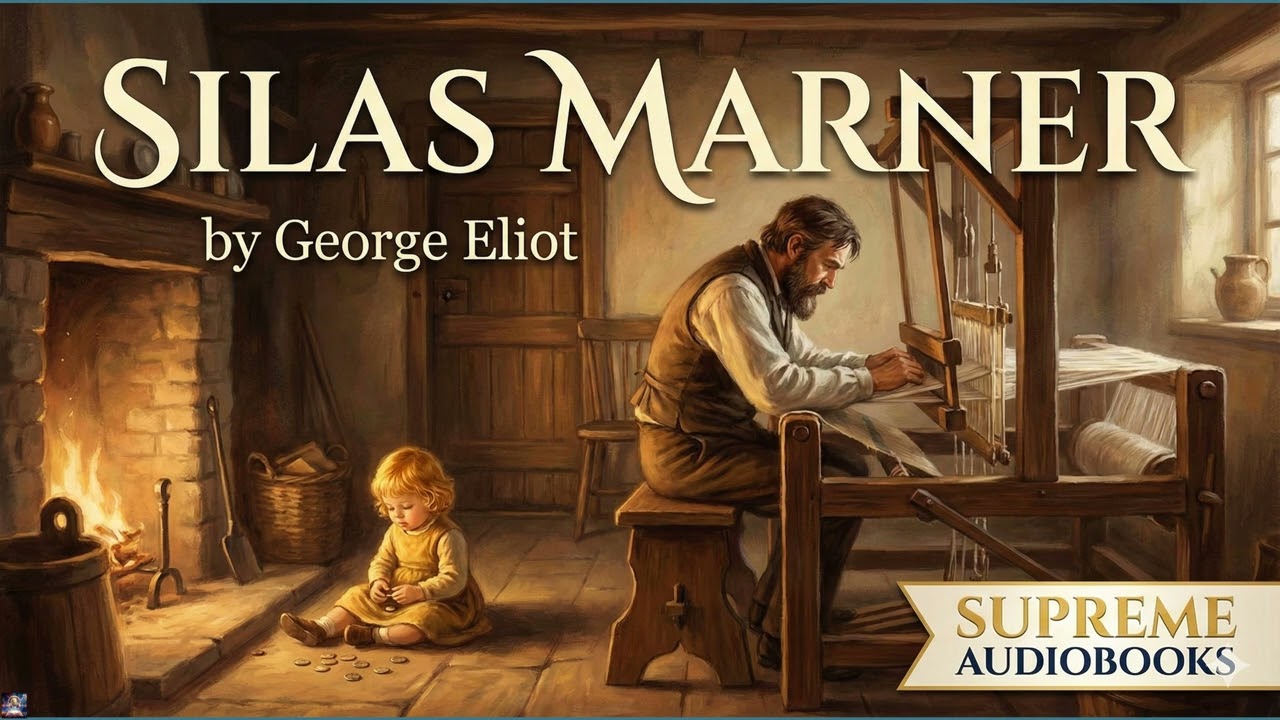
Silas Marner: The Weaver of Raveloe stands as a quiet yet powerful testament to the transformative potential of human connection and the unexpected places we find redemption. George Eliot's enduring novella, first published in 1861, invites us into a world where a man's heart, hardened by betrayal and solitude, is slowly, miraculously thawed by an innocent child. It is a story that asks profound questions about what truly constitutes wealth, happiness, and belonging, making its message resonate with keen relevance even today. In an era often characterized by materialism and isolation, Silas's poignant arc from a miserly recluse to a loving figure offers a gentle reminder of the enduring power of compassion and the simple, profound joy of human love. Our story begins in the early years of the nineteenth century, in the secluded, tradition-bound English village of Raveloe. Here we meet Silas Marner, a linen weaver, whose hunched figure and pale, unblinking eyes mark him as an outsider. Silas carries a deep wound from his past in Lantern Yard, a pious, industrial town where he was once a respected member of a close-knit religious community. Falsely accused of theft by his supposed best friend and abandoned by the woman he loved, Silas fled to Raveloe, his faith shattered, his spirit broken. He lives a life of mechanical toil, his only solace the gold coins he meticulously hoards in his cottage, counting them each night as a surrogate for human affection. He is a solitary figure, regarded with a mixture of suspicion and curiosity by the villagers, who attribute his fits of catalepsy to supernatural influence. Silas's solitary existence is dramatically ruptured by two events that redefine his life. First, his beloved gold is stolen, plunging him into a despair even deeper than that caused by his initial betrayal. This theft, orchestrated by the ne'er-do-well Dunstan Cass, a son of the local squire, leaves Silas utterly bereft, stripped of his last comfort. Soon after, on a snowy New Year's Eve, a golden-haired child wanders into his cottage, drawn by the light and mistaking the warmth of his hearth for the gleam of his lost gold. This child, whom Silas names Eppie, becomes an unexpected, living treasure, gradually filling the void left by his stolen coins and rekindling his dormant capacity for love and joy. The novella then follows Silas's slow, beautiful transformation as he raises Eppie, contrasting his newfound paternal devotion with the tangled moral failings and eventual comeuppance of the privileged Cass family. The author behind this tender yet morally acute story was Mary Ann Evans, known to the world by her pen name, George Eliot. Born in 1819 in Warwickshire, England, Evans was a woman of extraordinary intellect and fierce independence. Her early life was marked by extensive self-education and a serious, inquiring mind, which led her to question the rigid religious doctrines of her upbringing. This intellectual journey led her to London, where she became involved with a circle of leading Victorian thinkers and writers, editing the Westminster Review and becoming a prominent literary critic. It was in 1857, while living in an unconventionally open relationship with the philosopher and critic George Henry Lewes, that she began to write fiction. She adopted the male pseudonym George Eliot, partly to ensure her work was taken seriously in a male-dominated literary world, and partly to protect her private life from the scrutiny of the Victorian public. Her novels, including Adam Bede, The Mill on the Floss, and the magisterial Middlemarch, quickly established her as one of the preeminent voices of Victorian realism. She approached fiction not merely as entertainment, but as a vehicle for profound moral and psychological inquiry, cementing her place as a titan in the English literary canon. Silas Marner offers a rich ground for considering several fundamental human themes. Central among these is the theme of redemption and transformation. Silas’s character arc provides a striking illustration of this. Initially, he is a man dead to the world, finding no joy or purpose beyond the accumulation of inert gold. His life is a monotonous rhythm of weaving and counting, his human spirit withered. The arrival of Eppie, a tangible, demanding, and utterly dependent presence, forces him to look beyond himself. We see this transformation in small, telling ways: Silas’s initial bewilderment at caring for a child, his fumbling attempts to make her comfortable, and eventually, his fierce, protective love for her. His happiness becomes tied not to what he possesses, but to whom he cherishes, demonstrating how genuine connection can resurrect a lost soul. Another significant theme is the nature of true wealth and value. Eliot contrasts the sterile, destructive pursuit of material riches with the enriching power of human relationships. Silas’s gold, though meticulously hoarded, brings him only isolation and sorrow. Its loss is devastating, yet it paradoxically clears the way for a more profound gain. Eppie, the human "gold," embodies a different kind of treasure—one that grows, demands nurturing, and offers boundless love in return. This is vividly shown when Silas, in his despair after the gold is stolen, is unable to find comfort, yet when Eppie wanders in, her bright presence becomes a new, far more precious form of "gold" to him, bringing warmth and light back into his barren cottage and his barren life. Eliot published Silas Marner in the early 1860s, a period of significant social and intellectual ferment in Victorian England. While the novella itself is set decades earlier, it reflects many of the concerns of Eliot’s contemporary world. It emerged during a time when rapid industrialization was altering the fabric of traditional rural communities, and Eliot, with her keen eye for social dynamics, often depicted these vanishing ways of life with both nostalgia and critical insight. The book’s focus on moral choices, community bonds, and the individual's place within society spoke to a culture grappling with shifting class structures, growing urbanization, and evolving religious beliefs. As a pioneer of literary realism, Eliot was deeply interested in the psychological motivations of her characters and the nuanced portrayal of everyday life, moving away from the more overtly didactic or romanticized narratives of earlier periods. Silas Marner stands as a testament to her particular genius for observing the quiet details of human existence and imbuing them with universal significance, offering a deeply humanistic perspective in a world increasingly preoccupied with scientific and material progress. Listening to Silas Marner as an audiobook provides a uniquely immersive experience, allowing the listener to truly inhabit the world of Raveloe and the interior landscape of its inhabitants. A skilled narrator can bring alive the subtle rhythms of Eliot's prose, allowing her richly descriptive language and the distinctive voices of her characters to truly shine. One can almost hear the soft whir of Silas’s loom, the crackle of his hearth, and the gentle wisdom in Dolly Winthrop's counsel, enhancing the novel’s deep sense of atmosphere. The run length, measured in several hours, makes it an ideal companion for long commutes, quiet evenings, or contemplative walks, inviting you to absorb Eliot's moral insights and psychological observations without the need for a physical book. Pay close attention to the shifts in Silas's voice, from his initial monotone despair to the softened tones of paternal affection, and to the authentic dialects of the villagers, which anchor the story firmly in its rural English setting.
Enjoyed Silas Marner? A few ways to support us
Audible & Amazon links are affiliate; we may earn a small commission at no extra cost.
About this production
Human narration by a volunteer reader from LibriVox.org, the public-domain audiobook project. LibriVox volunteers record literary works whose copyright has expired in the United States, releasing the resulting recordings into the public domain.
Silas Marner by George Eliot. The underlying text is in the U.S. public domain. We do not republish any modern copyrighted edition, translation, or commentary.
The 4K cinematic visuals accompanying this audiobook are generated by an AI image model from prompts derived from the source text. No copyrighted photos, paintings, or stock footage are used. AI generation is disclosed on every video on our YouTube channel as required by YouTube's altered/synthetic content policy.
English subtitles are transcribed from the LibriVox recording with OpenAI Whisper. Translations into the 11 other supported languages are produced by Meta's NLLB-200 neural translation model. No human translator's copyrighted translation is used.
Questions about sourcing or rights? See our DMCA & Sourcing policy or contact us.
Enjoyed this audiobook?
If you'd like to own a copy of Silas Marner or hear a professionally produced edition, the links below help support free audiobook production at no extra cost to you.
As an Amazon Associate we earn from qualifying purchases. Audible / print links are affiliate.