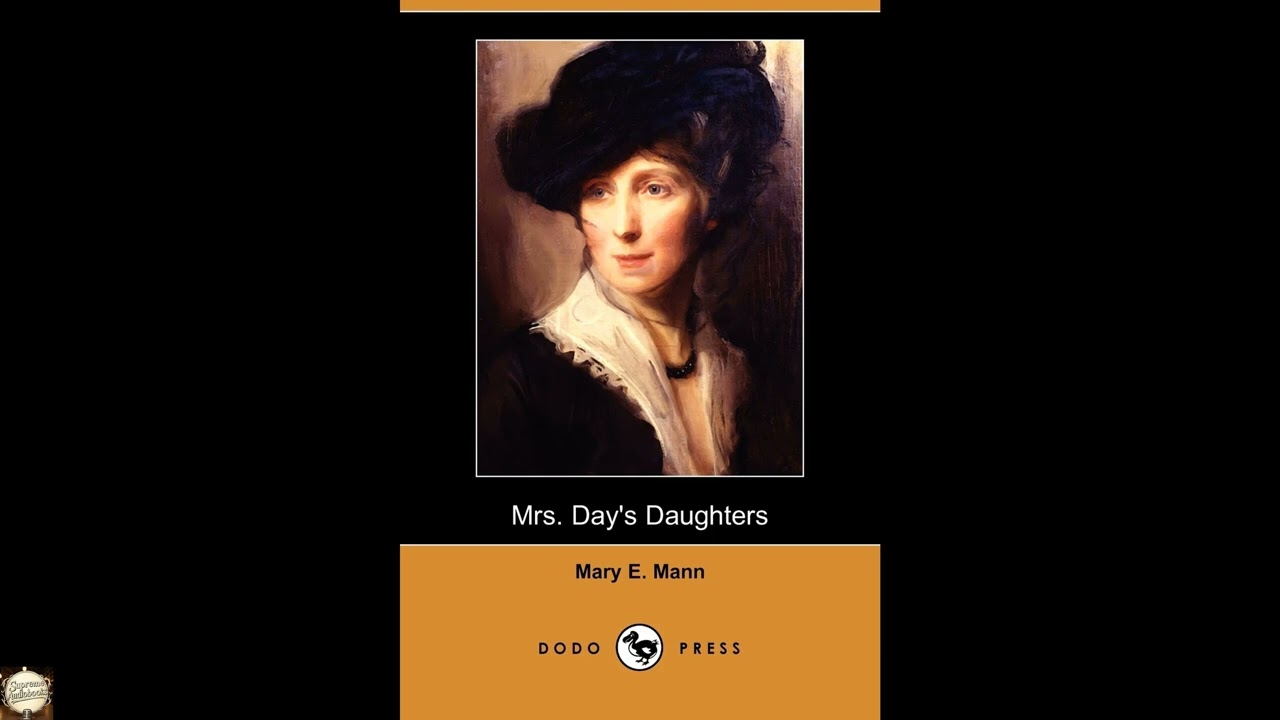
Mrs. Day's Daughters
Step into the parlor of Mrs. Day, a woman striving with every fiber of her being to navigate the treacherous currents of late Edwardian society, and you will find yourself intimately acquainted with the hopes, fears, and quiet desperation that shaped women's lives more than a century ago. Mary E. Mann's "Mrs. Day's Daughters," first published in 1906, offers a piercingly honest portrayal of a mother and her adult daughters attempting to maintain a semblance of respectability and secure their futures in an era where a woman's worth was often measured by her marital prospects and her family's dwindling finances. This is not a tale of grand adventures or scandalous affairs, but a clear-eyed look at the daily anxieties and subtle compromises forced upon women of the lower gentry, making it as relevant today for its insights into social pressure and personal agency as it was at its debut. The story unfolds in a quiet English provincial town, a setting that initially appears idyllic but soon reveals its suffocating expectations and rigid social strata. At the center is the widowed Mrs. Day, a woman perpetually burdened by genteel poverty. She finds herself in the unenviable position of having to marry off her three adult daughters—Clare, Gertrude, and the youngest, Daisy—each possessing distinct personalities but sharing the common vulnerability of their sex and station. Their small income, derived from a modest annuity, is barely enough to cover the necessary appearances and maintain their fragile social standing. Clare, the eldest, is practical and somewhat resigned, bearing the weight of family responsibility and the fading hope of her own romantic fulfillment. Gertrude, more vivacious, possesses a charm that attracts attention, yet her lack of fortune makes any suitor hesitant to commit. Daisy, the youngest, is idealistic and perhaps naive, yearning for genuine affection amidst the calculated considerations of the marriage market. As the narrative progresses, each daughter grapples with the limited choices available to her. They encounter various bachelors—some earnest, some mercenary, some simply unsuitable—and face the heartbreaking reality that love and financial security rarely align. Mrs. Day, for her part, maneuvers with a blend of maternal affection and social ambition, often making decisions that, while intended for her daughters' good, inadvertently highlight their lack of true independence. The central conflict lies in the tension between individual desires for happiness and the overwhelming societal and economic pressures to make a "sensible" match, one that will rescue the family from an ever-present fear of destitution. The story is a slow-burn observation of their daily existence, their small triumphs, and their significant heartbreaks, all leading to individual fates that illuminate the sacrifices inherent in their time. The author, Mary Eliza Mann (née Rann), was born in Norwich, England, in 1848, and lived until 1929. Her literary output, primarily during the late Victorian and Edwardian periods, carved out a significant niche for her as a perceptive social realist. Married to a schoolmaster, Ashley Mann, in 1876, she often drew upon her experiences in rural Suffolk, where she lived much of her adult life, to paint vivid, unromanticized pictures of provincial existence. Her early works often appeared anonymously or under a pseudonym, but by the turn of the century, she was a recognized name, known for her keen observation of domestic life and the often-grim realities faced by women. Mann was prolific, penning over two dozen novels that consistently addressed themes of class struggle, economic dependency, and the often-unspoken tragedies of marriage and spinsterhood. While perhaps not as widely celebrated as contemporaries like Thomas Hardy or George Eliot, her work stands alongside authors such as George Gissing and Arnold Bennett in its commitment to depicting life without saccharine illusions. Her writing offered a distinctly female lens on the social landscape, often giving voice to the frustrations and constrained ambitions of women who were expected to be decorative and domestic, yet faced severe consequences if they failed to meet those expectations. Her novels, including "The Parish of Hilby" (1899), "Moonlight" (1901), and "The Mating of a Dove" (1905), are increasingly recognized today for their social commentary and their unflinching honesty. "Mrs. Day's Daughters" particularly shines a light on two profound themes: the economic vulnerability of women and the societal pressures surrounding marriage. Mann starkly illustrates how, in the absence of independent means or professional opportunities, marriage became not merely a choice for love but an absolute economic imperative for women like the Day sisters. We witness Clare's pragmatic assessment of her limited options, Gertrude's struggle between inclination and prudence, and Daisy's gradual disillusionment as she confronts the realities of her position. The characters constantly weigh affection against financial stability, highlighting the often-cruel calculus women were forced to perform. Another central theme is the illusion of social appearances and the quiet sacrifices made to maintain them. Mrs. Day's relentless efforts to project an image of genteel solvency, even as her family verges on destitution, reveals the crushing weight of public opinion and the desperate lengths to which people would go to preserve their standing. The subtle details, from carefully mended gowns to strategically vague answers about their future, demonstrate the constant performance required to navigate their social world. The novel's emergence in 1906 places it firmly in the Edwardian era, a fascinating period of transition following Queen Victoria's long reign. While outwardly a time of prosperity and relative calm in Britain, underneath the surface bubbled significant social and political anxieties. The women's suffrage movement was gaining momentum, challenging traditional gender roles and demanding greater rights for women beyond the domestic sphere. Mann’s novel quietly contributes to this wider conversation by showing, rather than telling, the profound limitations placed upon women, even those from respectable backgrounds. It reflects a society still grappling with the legacies of Victorian morality and class distinction, even as industrialization and calls for social reform began to reshape the landscape. "Mrs. Day's Daughters" therefore serves as a valuable social document, illustrating the real human cost of a society that offered few avenues for female independence. Listening to "Mrs. Day's Daughters" as an audiobook allows the inherent nuances of Mary E. Mann's storytelling to come to the forefront. The narrator's careful pacing helps listeners sink into the rhythms of provincial life, allowing the subtle shifts in character emotion and social dynamics to unfold naturally over several hours. Pay close attention to the distinct voices given to Mrs. Day and her daughters; a skillful narrator will distinguish their personalities and struggles not just through dialogue but also through intonation and subtle changes in demeanor. The spoken word can amplify the atmosphere of genteel struggle and quiet yearning, allowing the listener to fully appreciate the unvarnished realism Mann brought to her observations of human nature and the societal structures that shaped individual destinies.
Enjoyed Mrs. Day's Daughters? A few ways to support us
Audible & Amazon links are affiliate; we may earn a small commission at no extra cost.
About this production
Human narration by a volunteer reader from LibriVox.org, the public-domain audiobook project. LibriVox volunteers record literary works whose copyright has expired in the United States, releasing the resulting recordings into the public domain.
Mrs. Day's Daughters by Mary E. Mann. The underlying text is in the U.S. public domain. We do not republish any modern copyrighted edition, translation, or commentary.
The 4K cinematic visuals accompanying this audiobook are generated by an AI image model from prompts derived from the source text. No copyrighted photos, paintings, or stock footage are used. AI generation is disclosed on every video on our YouTube channel as required by YouTube's altered/synthetic content policy.
English subtitles are transcribed from the LibriVox recording with OpenAI Whisper. Translations into the 11 other supported languages are produced by Meta's NLLB-200 neural translation model. No human translator's copyrighted translation is used.
Questions about sourcing or rights? See our DMCA & Sourcing policy or contact us.
Enjoyed this audiobook?
If you'd like to own a copy of Mrs. Day's Daughters or hear a professionally produced edition, the links below help support free audiobook production at no extra cost to you.
As an Amazon Associate we earn from qualifying purchases. Audible / print links are affiliate.