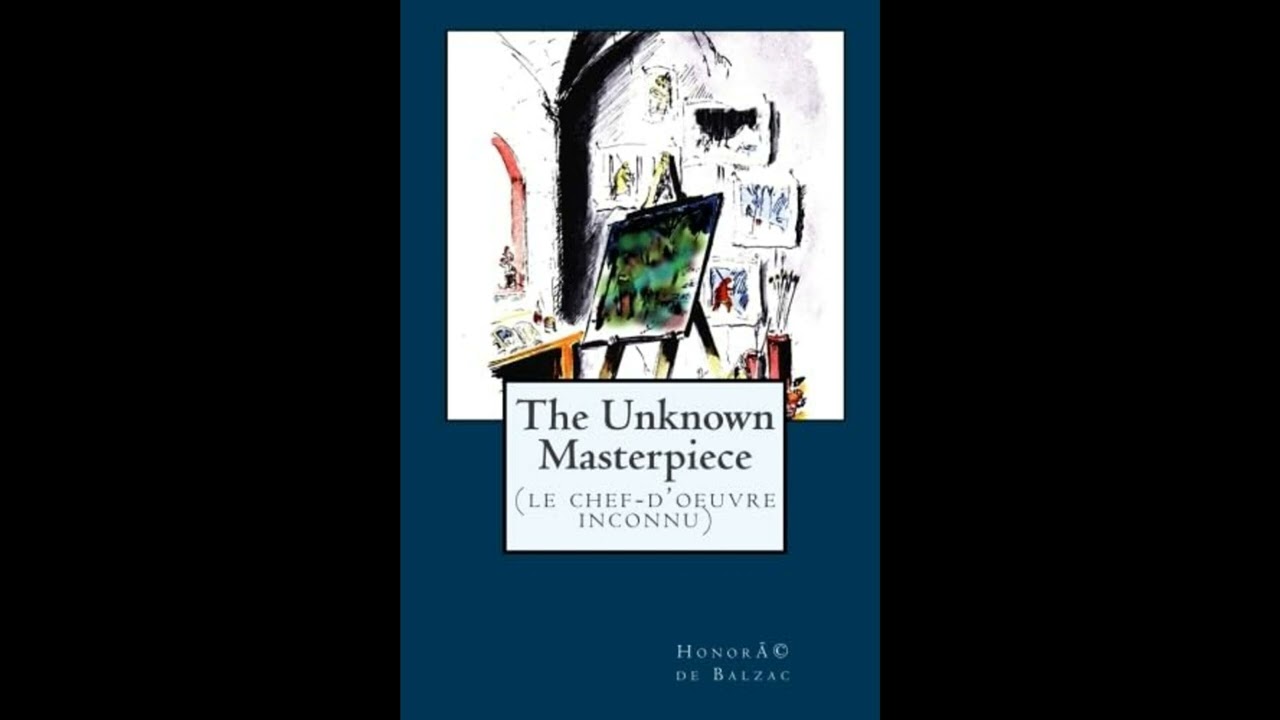
The Unknown Masterpiece: (Le Chef-d'oeuvre inconnu)
Step into a world where paint and canvas become battlegrounds for the soul, where the pursuit of ultimate beauty can lead to both transcendence and destruction. This remarkable novella stands as a profound meditation on the very essence of artistic creation, questioning the line between genius and madness, the ideal and the real. It offers listeners a rare glimpse into the intense struggles of artists grappling with their visions, and asks what it truly means to complete a work of art. More than just a story of painters, it is a contemplation of human ambition, the nature of perception, and the elusive quest for perfection that continues to resonate with artists and thinkers today. The story transports us to 17th-century Paris, a city bustling with artistic endeavor and intellectual ferment. A young, ambitious painter, Nicolas Poussin, fresh from the provinces and eager to make his mark, finds himself drawn into the orbit of two contrasting figures. One is Porbus, an established and respected artist of the day, renowned for his skilled and beautiful portraits. The other is the enigmatic and much older Frenhofer, a legendary painter whose reputation precedes him, yet whose current work remains shrouded in intense secrecy. Poussin, fascinated by the promise of learning from these masters, quickly becomes entangled in their artistic philosophies and personal dramas. Central to the narrative is Frenhofer’s decades-long obsession with a hidden painting he calls “Catherine Lescault.” He believes this work will be the pinnacle of human artistry, a living representation of beauty itself, and he has labored on it in isolation for years. Porbus, intrigued and frustrated by his friend's secretive ways, also longs to see this elusive creation. Poussin, fueled by youthful idealism and a desire for artistic enlightenment, makes an extraordinary offer: he will present his own beautiful lover, Gillette, as a model for Frenhofer, if the old master will finally reveal his fabled canvas. This exchange sets the stage for a dramatic unraveling, exploring the costs of artistic pursuit and the subjective nature of perception as all three men confront the true face of Frenhofer’s monumental endeavor. The literary figure who brought this profound narrative into being was an extraordinary chronicler of French society, a writer whose ambition was as boundless as his imagination. Born Honoré Balzac in Tours, France, in 1799, he arrived in Paris eager to conquer its literary world. His early years were marked by financial struggle and prolific, though often uncredited, writing. It was through sheer determination and an immense capacity for work that he would come to construct one of the most comprehensive and influential bodies of fiction ever created: "La Comédie humaine" (The Human Comedy). This vast, interconnected series of nearly 100 novels and novellas aimed to depict every facet of French life, from the aristocracy to the peasantry, the artists to the financiers, across several decades of the 19th century. Balzac's method was distinguished by its meticulous realism, his keen eye for social detail, and his psychological penetration of character. He often drew from his own observations of Parisian life, populating his stories with recurring figures who moved between different books, lending his fictional world an unparalleled sense of continuity and depth. Despite constant financial pressures, which often saw him writing through the night fueled by strong coffee, his dedication to his literary project was unwavering. He became a towering figure of French Realism, influencing generations of writers with his innovative approach to narrative and his relentless pursuit of capturing the complexities of human nature and society. He passed away in 1850, leaving behind a monumental literary legacy that continues to be studied and admired worldwide. Among the central ideas enacted in the text is the profound tension between the ideal and the real in artistic creation. Frenhofer dedicates his life to capturing an ultimate form of beauty, a living presence on canvas that transcends mere paint. He insists his "Catherine Lescault" is not a portrait but a complete, breathing entity. Yet, this absolute ideal becomes a destructive force, preventing him from ever truly finishing or presenting his work. For instance, his protracted effort highlights how an artist's inner vision can become so pure and demanding that the physical limitations of paint and canvas feel insufficient, creating an insurmountable gap between conception and execution. Another prominent idea is the nature of artistic obsession, and its proximity to madness. Frenhofer's single-minded devotion to his "masterwork" isolates him, consumes his resources, and ultimately warps his perception. His inability to compromise, to declare a work "done," illustrates how the pursuit of perfection can turn self-destructive. This is vividly shown in his increasingly secretive behavior and his almost mystical descriptions of his painting, which suggest a mind more occupied with an internal, ethereal image than with the tangible object before him. The novella also probes the idea of creation itself—what gives a work its value, and who is truly qualified to judge it? The early 19th century in France, the era in which this novella was written and published, was a period of immense social and cultural transformation. Following the tumultuous years of the French Revolution and the Napoleonic Empire, the nation was undergoing the Bourbon Restoration, marked by political conservatism alongside rapid economic and industrial change. This environment fostered a growing middle class and new forms of patronage, shifting the landscape for artists. Literary movements were also in flux, with the grand, emotional sweeps of Romanticism beginning to give way to a burgeoning interest in the precise observation and faithful depiction of everyday life, a style that would come to be known as Realism. It was in this dynamic context that Balzac, keenly aware of the changing social fabric and the evolving role of the artist, sought to dissect the human condition and the enduring challenges of creative endeavor, anchoring his philosophical speculations in the vivid reality of his time. Listening to this novella as an audiobook offers a unique gateway into its potent atmosphere and philosophical depths. The relatively concise length, typically several hours, makes it an ideal choice for focused listening, perhaps during a commute or a quiet evening. A skilled narrator can bring out the distinct personalities of Poussin's youthful idealism, Porbus's seasoned experience, and Frenhofer's impassioned, increasingly erratic genius through nuanced vocalizations. Pay close attention to the shifts in pacing, especially during Frenhofer's lengthy, poetic monologues about his painting, where the voice can convey both his conviction and his escalating detachment from reality. The spoken word allows the listener to fully immerse in the artistic debates and the underlying tension, appreciating the profound questions it poses about art and life with an immediacy that mirrors the directness of its narrative.
Enjoyed The Unknown Masterpiece: (Le Chef-d'oeuvre inconnu)? A few ways to support us
Audible & Amazon links are affiliate; we may earn a small commission at no extra cost.
About this production
Human narration by a volunteer reader from LibriVox.org, the public-domain audiobook project. LibriVox volunteers record literary works whose copyright has expired in the United States, releasing the resulting recordings into the public domain.
The Unknown Masterpiece: (Le Chef-d'oeuvre inconnu) by Honoré de Balzac. The underlying text is in the U.S. public domain. We do not republish any modern copyrighted edition, translation, or commentary.
The 4K cinematic visuals accompanying this audiobook are generated by an AI image model from prompts derived from the source text. No copyrighted photos, paintings, or stock footage are used. AI generation is disclosed on every video on our YouTube channel as required by YouTube's altered/synthetic content policy.
English subtitles are transcribed from the LibriVox recording with OpenAI Whisper. Translations into the 11 other supported languages are produced by Meta's NLLB-200 neural translation model. No human translator's copyrighted translation is used.
Questions about sourcing or rights? See our DMCA & Sourcing policy or contact us.
Enjoyed this audiobook?
If you'd like to own a copy of The Unknown Masterpiece: (Le Chef-d'oeuvre inconnu) or hear a professionally produced edition, the links below help support free audiobook production at no extra cost to you.
As an Amazon Associate we earn from qualifying purchases. Audible / print links are affiliate.