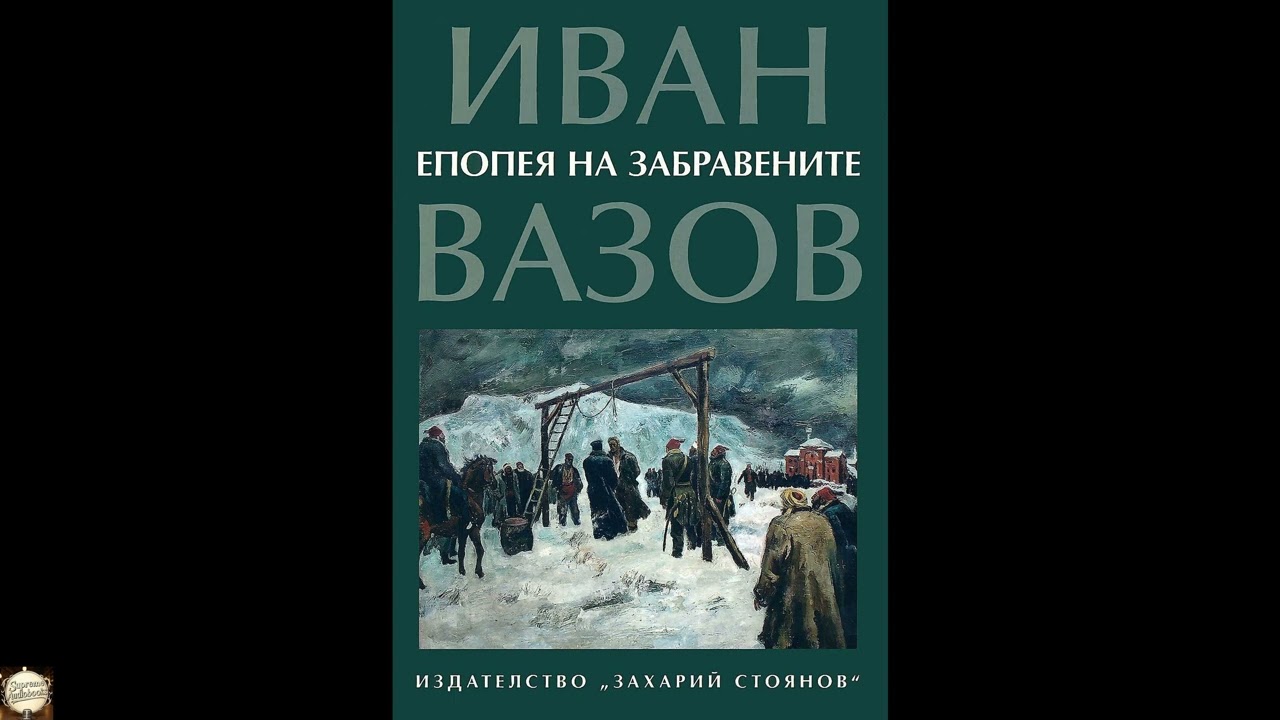
Епопея на забравените (Epic of the Forgotten)
Enter a world of fervent patriotism, heroic sacrifice, and the enduring spirit of a nation forging its identity. "Епопея на Забравените" — known in English as "Epic of the Forgotten" — stands as a monumental work in Bulgarian literature, a powerful collection of odes that breathes life into the figures and events that shaped a people's destiny. More than just a literary composition, it is a testament to the human will for freedom, a passionate call to remember those who laid down their lives for an ideal, and a vital cornerstone of national memory. Even today, its ringing verses resonate with anyone who understands the fight for self-determination and the profound importance of collective remembrance in the face of tyranny and historical amnesia. This isn't a story with a single protagonist or a linear novelistic plot, but rather a grand poetic chronicle, a gallery in verse dedicated to the unsung heroes and pivotal moments of Bulgaria's long struggle for liberation from Ottoman rule. The "Epic of the Forgotten" unfurls across twelve distinct odes, each one a vivid tableau focusing on a different facet of the national revival and the April Uprising of 1876. We encounter the spiritual leaders who ignited the spark of national consciousness, the courageous revolutionaries who plotted in secret, and the ordinary people who rose up in desperate revolt. The arc of the work progresses from the initial stirrings of dissent, through acts of profound personal sacrifice and collective bravery, to the tragic but ultimately galvanizing events that led to the eventual re-establishment of the Bulgarian state. Listeners will be introduced to figures like Vasil Levski, the legendary "Apostle of Freedom," whose unwavering commitment to the cause serves as a beacon, and Hristo Botev, the poet-revolutionary who met a heroic end. Beyond the iconic names, the poems also spotlight the less celebrated, the villagers and volunteers whose blood watered the tree of freedom. The central conflict that runs through these odes is the desperate fight against overwhelming odds, the clash between an oppressive empire and a burgeoning national will. It is a story told through the lens of individual acts of courage, defiant last stands, and the collective yearning for an independent future, all woven into a grand narrative that compels the nation to look upon its past with reverence and pride. The author of this seminal work, Ivan Vazov, holds an almost sacred place in Bulgarian culture. Born in Sopot, then part of the Ottoman Empire, in 1850, Vazov witnessed firsthand the ferment of the National Revival and the dramatic events leading to Bulgaria's liberation in 1878. His early education exposed him to both Bulgarian folk traditions and European literary trends, shaping his multifaceted talent. His life was deeply intertwined with the political struggles of his time; he participated in revolutionary committees, suffered periods of exile in Romania and Russia, and later served in various governmental roles in the newly independent Bulgaria, including a brief tenure as Minister of Education. Vazov's literary output was prodigious and diverse, earning him the title "Patriarch of Bulgarian Literature." Beyond the "Epic of the Forgotten," he penned the groundbreaking historical novel "Under the Yoke," which offers a panoramic view of the April Uprising. He also wrote numerous plays, short stories, and travelogues, all contributing to the formation of a distinct Bulgarian national literature. His work often blended romantic idealism with a grounded realism, celebrating the heroic past while also examining the complexities of contemporary life. Vazov passed away in Sofia in 1921, leaving behind an unparalleled legacy that continues to define Bulgarian literary identity. The "Epic of the Forgotten" enacts several profound themes. Foremost among them is the theme of national identity and memory. Vazov understood that for a newly liberated nation to truly coalesce, it needed to acknowledge and honor its martyrs. The ode "Levski," for example, doesn't just recount the revolutionary's actions; it elevates him to a symbolic figure, a repository of national conscience and a reminder of the ultimate sacrifice for freedom. By commemorating these forgotten heroes, the text actively constructs and reinforces a shared historical consciousness. Another powerful theme is that of sacrifice and patriotism. Many odes, such as "The Volunteers at Shipka," vividly depict the grim reality of battle and the selfless devotion of those who fought. This specific ode recounts the pivotal defense of the Shipka Pass against overwhelming Ottoman forces, illustrating how collective resolve and individual bravery, even unto death, secured a crucial victory. The text makes it clear that nationhood is earned through the blood and tears of its people, and that true patriotism is an active, often painful, commitment to a greater ideal. The odes serve as a rallying cry, urging present and future generations to remember the cost of their freedom. This collection of odes emerged during a pivotal moment in Bulgarian history, written between 1881 and 1884, just a few years after the Russo-Turkish War of 1877-1878 had resulted in the liberation of Bulgaria from nearly five centuries of Ottoman rule. This was a period of intense nation-building, political instability, and cultural fermentation. The young Bulgarian state was grappling with defining its borders, establishing its institutions, and, crucially, solidifying its national narrative. Vazov recognized the urgent need to memorialize the recent struggles and to provide the nascent nation with a pantheon of heroes and a shared sense of purpose. In a time of transition and uncertainty, "Епопея на Забравените" served as a powerful cultural anchor. It provided a foundational text that not only celebrated past heroism but also offered moral guidance and inspiration for the challenges ahead. It spoke to a collective yearning for affirmation and identity, cementing the memory of the April Uprising and its participants as integral to the Bulgarian story, transforming suffering and defeat into a source of national pride and resolve. This work became a literary monument, ensuring that the sacrifices would not truly be forgotten. Listening to "Епопея на Забравените" as an audiobook offers a singular opportunity to connect with the raw emotional power and rhythmic grandeur of Vazov's verse. Poetry, especially epic poetry, is inherently an aural art form, designed to be heard and felt. The run length, extending over several hours, allows for a deep, immersive experience with each ode, letting the listener fully absorb the gravity and beauty of Vazov's language. A skilled narrator can bring out the impassioned rhetoric, the stirring calls to action, the solemn elegies, and the vivid characterizations with a voice that captures the full spectrum of patriotic fervor and profound sorrow. The spoken word amplifies the atmospheric quality of the poems, making the historical settings and the voices of the past feel immediate and resonant.
Enjoyed Епопея на забравените (Epic of the Forgotten)? A few ways to support us
Audible & Amazon links are affiliate; we may earn a small commission at no extra cost.
About this production
Human narration by a volunteer reader from LibriVox.org, the public-domain audiobook project. LibriVox volunteers record literary works whose copyright has expired in the United States, releasing the resulting recordings into the public domain.
Епопея на забравените (Epic of the Forgotten) by Ivan Vazov. The underlying text is in the U.S. public domain. We do not republish any modern copyrighted edition, translation, or commentary.
The 4K cinematic visuals accompanying this audiobook are generated by an AI image model from prompts derived from the source text. No copyrighted photos, paintings, or stock footage are used. AI generation is disclosed on every video on our YouTube channel as required by YouTube's altered/synthetic content policy.
English subtitles are transcribed from the LibriVox recording with OpenAI Whisper. Translations into the 11 other supported languages are produced by Meta's NLLB-200 neural translation model. No human translator's copyrighted translation is used.
Questions about sourcing or rights? See our DMCA & Sourcing policy or contact us.
Enjoyed this audiobook?
If you'd like to own a copy of Епопея на забравените (Epic of the Forgotten) or hear a professionally produced edition, the links below help support free audiobook production at no extra cost to you.
As an Amazon Associate we earn from qualifying purchases. Audible / print links are affiliate.