Olive
Dinah Maria Mulock Craik's Olive, first published in 1850, stands as a quiet yet powerful testament to the enduring human struggle for acceptance and self-worth. This novel introduces listeners to a protagonist whose physical difference sets her apart from birth, challenging her to find beauty and purpose within herself when the world around her often refuses to see it. It is a story that resonates profoundly even today, speaking to anyone who has ever felt like an outsider, questioned their own value, or yearned for genuine connection beyond superficial judgments. Olive's quest for belonging, understanding, and love in a society obsessed with appearances makes her story a poignant reminder that true worth lies not in outward perfection, but in strength of character, resilience of spirit, and the capacity to love and be loved in return. The story opens in a picturesque English village, introducing us to Olive Rothesay, a sensitive and intelligent child born with a severe facial birthmark. From her earliest days, Olive understands she is different, marked both literally and figuratively by a society that values conventional beauty above all else. Her devoted father offers unconditional love, shielding her as best he can, but her stepmother, and many others, view Olive with a mixture of pity, discomfort, and even disdain. This early isolation fuels Olive's introspective nature and her deep appreciation for kindness and genuine affection, while also fostering a profound insecurity about her place in the world. As she grows into young womanhood, Olive grapples with the pain of social ostracism and the yearning for companionship, friendship, and eventually, romantic love. Her world gradually expands beyond her immediate family, bringing her into contact with various individuals who either reinforce her sense of alienation or offer glimpses of acceptance. She encounters superficial acquaintances who recoil from her appearance and kinder souls who see past it to her thoughtful mind and gentle spirit. The narrative follows Olive through several transformative periods: her friendships, her intellectual pursuits, and her first encounters with potential romantic partners. These relationships are often complicated by her physical appearance and the societal prejudices surrounding it, forcing Olive to confront her own insecurities and the misconceptions of others. The core conflict becomes whether Olive can ever truly find a love that transcends the visible, and whether she can ultimately embrace her authentic self, scars and all, regardless of external validation. The author, Dinah Maria Mulock Craik, born Dinah Maria Mulock in 1826 in Stoke-on-Trent, experienced a life that, in many ways, mirrored the resilience she often portrayed in her characters. She faced early hardship when her parents separated, prompting her to move to London to support herself and her younger brothers through her writing. This was a remarkable feat for a woman in the mid-nineteenth century, establishing her as one of the era’s earliest self-supporting female professional authors. Mulock quickly found success, publishing her first novel at the age of 23. Her most celebrated work, John Halifax, Gentleman (1856), became a bestseller and a classic of Victorian domestic realism, lauded for its moral tone and strong characterization. Mulock Craik’s literary output was prodigious, encompassing novels, short stories, essays, and children's books, many of which focused on themes of female independence, the dignity of labor, and the challenges of social mobility. In 1865, she married George Lillie Craik, a partner in the publishing firm Macmillan and Company, and later, the couple adopted a daughter. Craik’s work, including A Life for a Life and The Woman's Kingdom, consistently champions courage, integrity, and the power of individual agency against societal pressures. She occupied an important place in Victorian letters, respected not only for her compelling storytelling but also for her advocacy of women's intellectual and professional development, long before such ideas became widely accepted. She died in 1887, leaving behind a legacy of deeply human and morally resonant fiction. Olive enacts several profound themes that give it lasting power. Central among these is the stark contrast between inner character and outer appearance. Olive's birthmark serves as a powerful metaphor for superficial judgments, forcing both the characters within the story and the listener to question what true beauty entails. Scenes where others react with shock or pity to Olive's face, juxtaposed with her quiet acts of kindness or her sharp intelligence, highlight society's often-flawed perception of worth. The novel also powerfully examines social prejudice and the quest for acceptance. Olive frequently encounters individuals who dismiss or mistreat her solely based on her looks, showcasing the cruelty inherent in judging a person by superficial traits rather than their genuine nature. Moreover, the narrative thoughtfully considers the development of self-worth and identity. Olive’s progression from a timid, self-conscious girl to a mature woman capable of asserting her value, regardless of external validation, forms the core of her personal growth. We witness her internal battles and her gradual realization that her true worth is intrinsic, not dependent on societal approval. The story also contemplates the various forms of love—familial, platonic, and romantic—and their capacity to heal and transform. Olive’s relationships, particularly those where she is truly seen and cherished, offer glimpses of the profound solace and strength that genuine connection can provide, proving that love has the power to transcend any perceived flaw. The period in which Olive was written and published—the mid-nineteenth century—was a time of immense social and cultural transformation in Victorian England. It was an era marked by rapid industrialization, the growth of a powerful middle class, and rigid social hierarchies. Gender roles were strictly defined, with women primarily expected to inhabit the domestic sphere, embodying ideals of purity and submissiveness. However, this was also a period of burgeoning discussions about women’s education, their professional opportunities, and their place in society. Novelists like Dinah Mulock Craik, Charlotte Brontë, Elizabeth Gaskell, and George Eliot were pushing boundaries, creating complex female characters who challenged these conventions. Olive emerged from this fertile literary and social landscape, reflecting and participating in these ongoing debates. It speaks to the era’s preoccupation with moral character, social respectability, and the challenges faced by individuals who deviated from societal norms. The novel's focus on a woman striving for independence and emotional fulfillment, despite a significant physical impediment, resonated with a public grappling with questions of individual agency and the nature of compassion. It provided a powerful narrative lens through which to examine prejudice and the often-unseen struggles of those deemed "different," offering both a mirror to society and a beacon of hope for personal resilience. Listening to Olive as an audiobook offers a uniquely immersive way to experience this classic story. A skilled narrator brings Dinah Mulock Craik’s elegant Victorian prose and nuanced characterizations to life, making the language accessible and the emotional depths palpable. The novel’s run length, spanning several hours, makes it an ideal companion for commutes, extended walks, or quiet evenings at home, allowing the listener to truly settle into Olive's world. Pay close attention to the narrator’s pacing, which will allow the story’s intricate emotional arcs to unfold gradually, building a strong connection with Olive’s inner life. The distinct voices given to each character enhance the dialogue, drawing out the social nuances and the underlying tensions of Victorian interactions. This auditory experience deepens the atmosphere of the novel, allowing the listener to fully appreciate the struggles and triumphs of Olive Rothesay's unforgettable quest for self-acceptance and love.
Enjoyed Olive? A few ways to support us
Audible & Amazon links are affiliate; we may earn a small commission at no extra cost.
About this production
Human narration by a volunteer reader from LibriVox.org, the public-domain audiobook project. LibriVox volunteers record literary works whose copyright has expired in the United States, releasing the resulting recordings into the public domain.
Olive by Dinah Maria Mulock Craik. The underlying text is in the U.S. public domain. We do not republish any modern copyrighted edition, translation, or commentary.
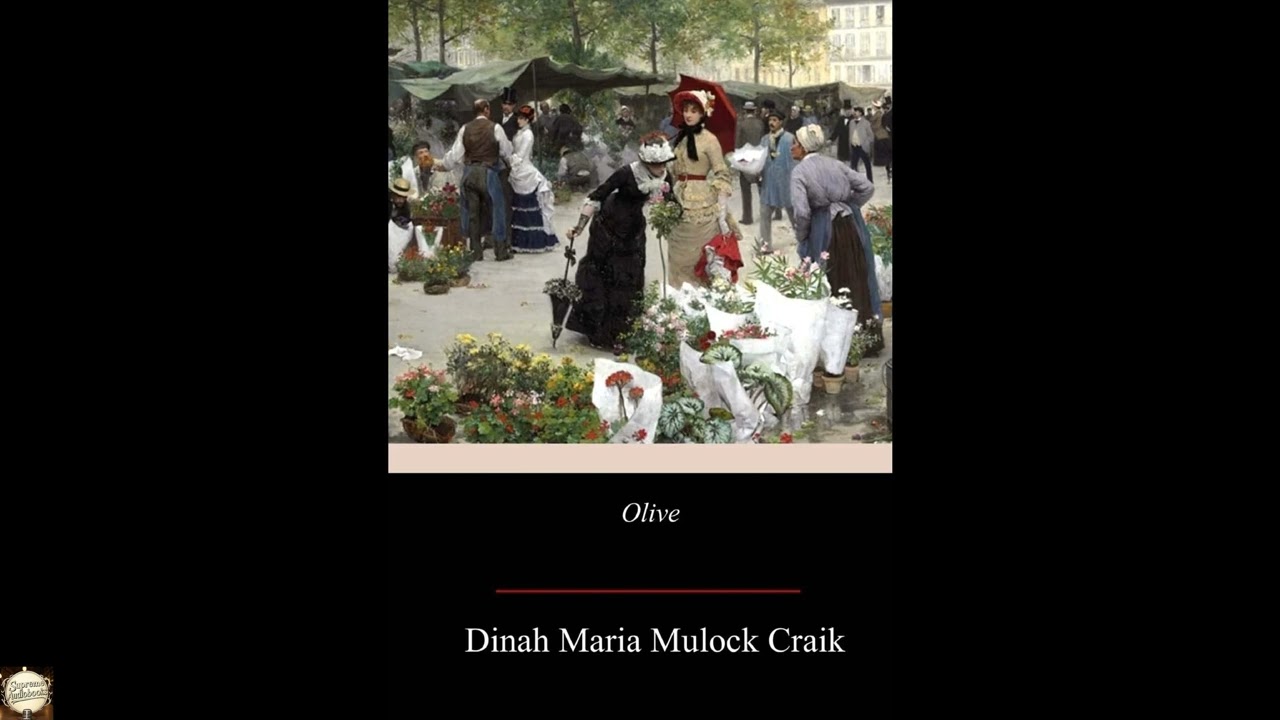
The 4K cinematic visuals accompanying this audiobook are generated by an AI image model from prompts derived from the source text. No copyrighted photos, paintings, or stock footage are used. AI generation is disclosed on every video on our YouTube channel as required by YouTube's altered/synthetic content policy.
English subtitles are transcribed from the LibriVox recording with OpenAI Whisper. Translations into the 11 other supported languages are produced by Meta's NLLB-200 neural translation model. No human translator's copyrighted translation is used.
Questions about sourcing or rights? See our DMCA & Sourcing policy or contact us.
Enjoyed this audiobook?
If you'd like to own a copy of Olive or hear a professionally produced edition, the links below help support free audiobook production at no extra cost to you.
As an Amazon Associate we earn from qualifying purchases. Audible / print links are affiliate.