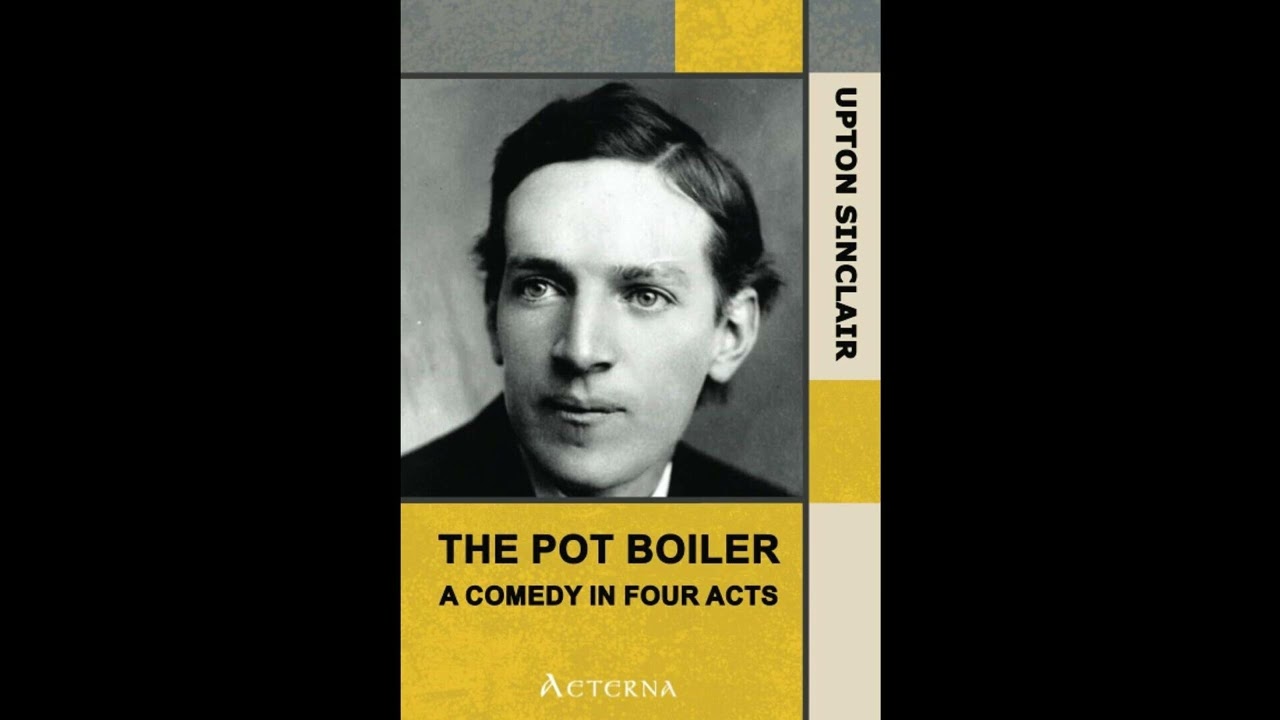
The Pot Boiler: A Comedy in Four Acts
Upton Sinclair. The name immediately calls to mind powerful, investigative novels that ripped the lid off industrial America, stirring public outcry and legislative reform. Yet, tucked away in his extensive bibliography is a delightful and surprisingly relevant deviation: The Pot Boiler: A Comedy in Four Acts. This play, published in 1913, reveals a different facet of Sinclair's prodigious talent—a keen satirist with an ear for witty dialogue and a sharp eye for human foibles. Far from the gritty realism of his most famous works, this theatrical offering plunges listeners into the often-absurd world of early 20th-century artistic ambition, where idealism clashes comically with the commercial demands of the stage. It’s a hilarious yet pointed examination of the pressures faced by creators, the compromises made for success, and the enduring debate over art versus commerce—a struggle that resonates just as strongly with writers, artists, and audiences today. The stage is set within the bustling, sometimes pretentious, literary and theatrical circles of early 20th-century America. At its heart is Richard Keating, a young idealistic playwright convinced of art's transformative power. His serious, socially conscious drama seeks meaningful impact. However, commercial theater prioritizes popular appeal. He meets cynical producers viewing plays as products, ambitious actors focused on roles, and various artistic hangers-on. Adding to Richard’s challenges is Mrs. Almont, a wealthy socialite and self-proclaimed patroness. She believes her taste impeccable, and her financial backing could be key—but at a price. Mrs. Almont has definite ideas about "good art," which involve less challenging themes and more palatable entertainment. As his serious work faces rejections and financial strain, Richard feels pressured to abandon his principles, considering a "pot boiler"—a superficial, crowd-pleasing piece for money, compromising his vision. The play follows humorous entanglements as Richard balances integrity with commercial lure. Upton Sinclair, born in Baltimore, Maryland, in 1878, lived an impactful life. Despite genteel poverty, he showed remarkable intellect, graduating City College of New York and attending Columbia. His early years included penning "dime novels" for support, an experience likely informing The Pot Boiler's themes. Sinclair’s dedication to social justice then established him as a foremost muckraking journalist and novelist of the Progressive Era, turning his pen against societal ills. His groundbreaking 1906 novel, The Jungle, exposed horrifying conditions in Chicago meatpacking, creating a sensation that led directly to the Pure Food and Drug and Meat Inspection Acts. Sinclair wrote over ninety books, including King Coal, Oil!, and Boston. His Lanny Budd series earned a Pulitzer for Dragon's Teeth in 1943. A staunch socialist and activist, he ran for California Governor in 1934 on an "End Poverty in California" (EPIC) platform. He passed away in 1968. His place in the American literary canon is secured as a pivotal realist writer and an unwavering advocate for social reform, making The Pot Boiler a fascinating glimpse into his broader observations. A comedy, The Pot Boiler skillfully addresses profound, relevant themes. One central idea is the tension between artistic integrity and commercialization. Richard Keating’s fervent belief in his "serious" play clashes with producers prioritizing ticket sales. A producer, for instance, dismisses Richard's dialogue as "too intellectual," suggesting a "happy ending," comically highlighting the gap. Sinclair questions what success means for an artist: mass applause, or staying true to one's vision? Another theme is hypocrisy and pretension within social and artistic circles. Mrs. Almont exemplifies this, portraying herself as a cultural arbiter while dictating changes revealing her superficial understanding. She might praise a work's "soulful depth" then suggest a minor costume change based on whims. This satirizes how wealth and social standing masquerade as connoisseurship. The play also subtly examines the power dynamics of patronage, showing how financial support can impose restrictive expectations. Published in 1913, The Pot Boiler emerged from early 20th-century America—the Progressive Era. Culturally, a growing appetite for entertainment fueled a burgeoning theater industry where popular melodramas and light comedies often overshadowed serious drama. Celebrity culture and commercialism influenced all art forms, creating tension between artistic aspirations and market realities. In literature, American realism and naturalism were prominent, with writers like Sinclair critiquing society, alongside popular fiction. Against this backdrop of intense social commentary, The Pot Boiler offers a unique perspective. It demonstrates Sinclair's keen observation of not just industrial injustices, but also subtle corruption within cultural institutions. He turned his critical lens inward, towards the world that nurtured yet sometimes stifled creative expression. The play highlights anxieties about cultural value erosion amidst mass production and consumerism, showing that artistic integrity was a pressing concern for artists trying to make a living and be heard. Listening to The Pot Boiler: A Comedy in Four Acts as an audiobook offers an immersive, enjoyable experience. As a play, it’s inherently designed for performance. A skilled narrator—or ideally, a cast—can bring Sinclair’s witty dialogue and sharp characterizations to life in a way reading cannot. The several hours allow settling into the fast-paced repartee and shifting moods, letting comedic timing and dramatic irony land with maximum impact. Distinct voices for characters like Richard and Mrs. Almont enhance the satire and deepen understanding. The audio format truly captures the lively atmosphere of Sinclair’s parodied theatrical world.
Enjoyed The Pot Boiler: A Comedy in Four Acts? A few ways to support us
Audible & Amazon links are affiliate; we may earn a small commission at no extra cost.
About this production
Human narration by a volunteer reader from LibriVox.org, the public-domain audiobook project. LibriVox volunteers record literary works whose copyright has expired in the United States, releasing the resulting recordings into the public domain.
The Pot Boiler: A Comedy in Four Acts by Upton Sinclair. The underlying text is in the U.S. public domain. We do not republish any modern copyrighted edition, translation, or commentary.
The 4K cinematic visuals accompanying this audiobook are generated by an AI image model from prompts derived from the source text. No copyrighted photos, paintings, or stock footage are used. AI generation is disclosed on every video on our YouTube channel as required by YouTube's altered/synthetic content policy.
English subtitles are transcribed from the LibriVox recording with OpenAI Whisper. Translations into the 11 other supported languages are produced by Meta's NLLB-200 neural translation model. No human translator's copyrighted translation is used.
Questions about sourcing or rights? See our DMCA & Sourcing policy or contact us.
Enjoyed this audiobook?
If you'd like to own a copy of The Pot Boiler: A Comedy in Four Acts or hear a professionally produced edition, the links below help support free audiobook production at no extra cost to you.
As an Amazon Associate we earn from qualifying purchases. Audible / print links are affiliate.