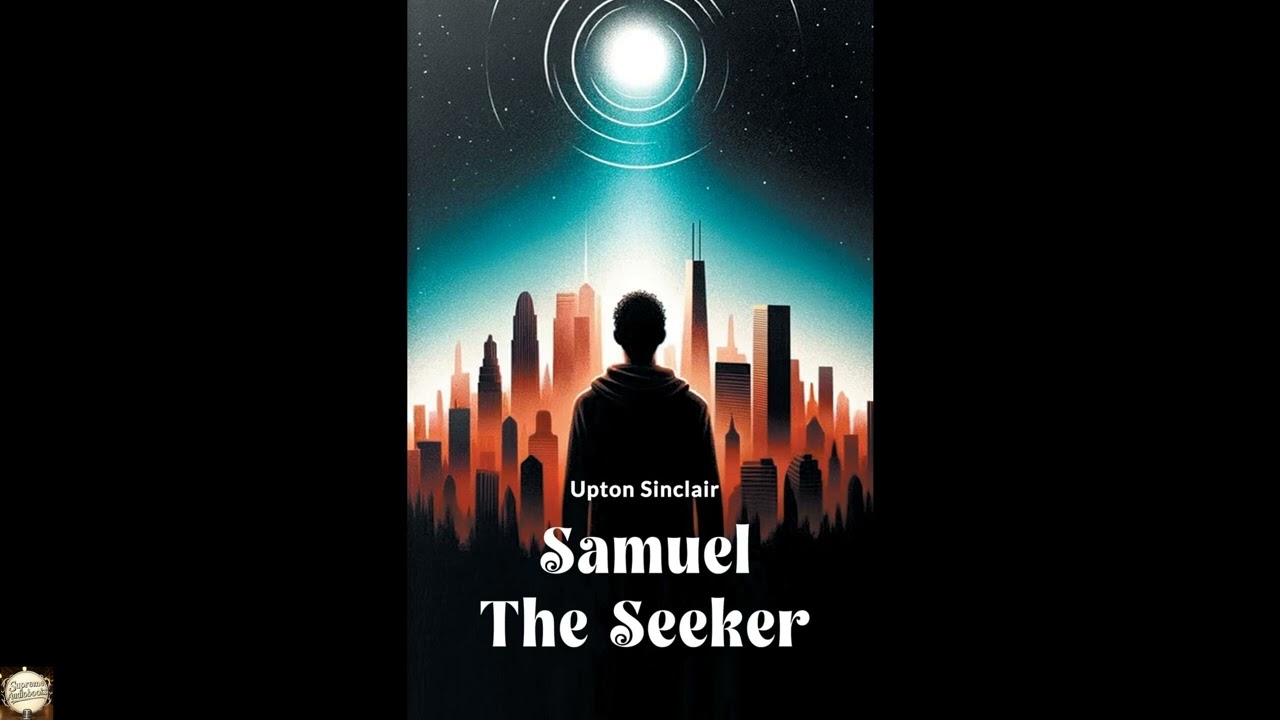
Samuel the Seeker
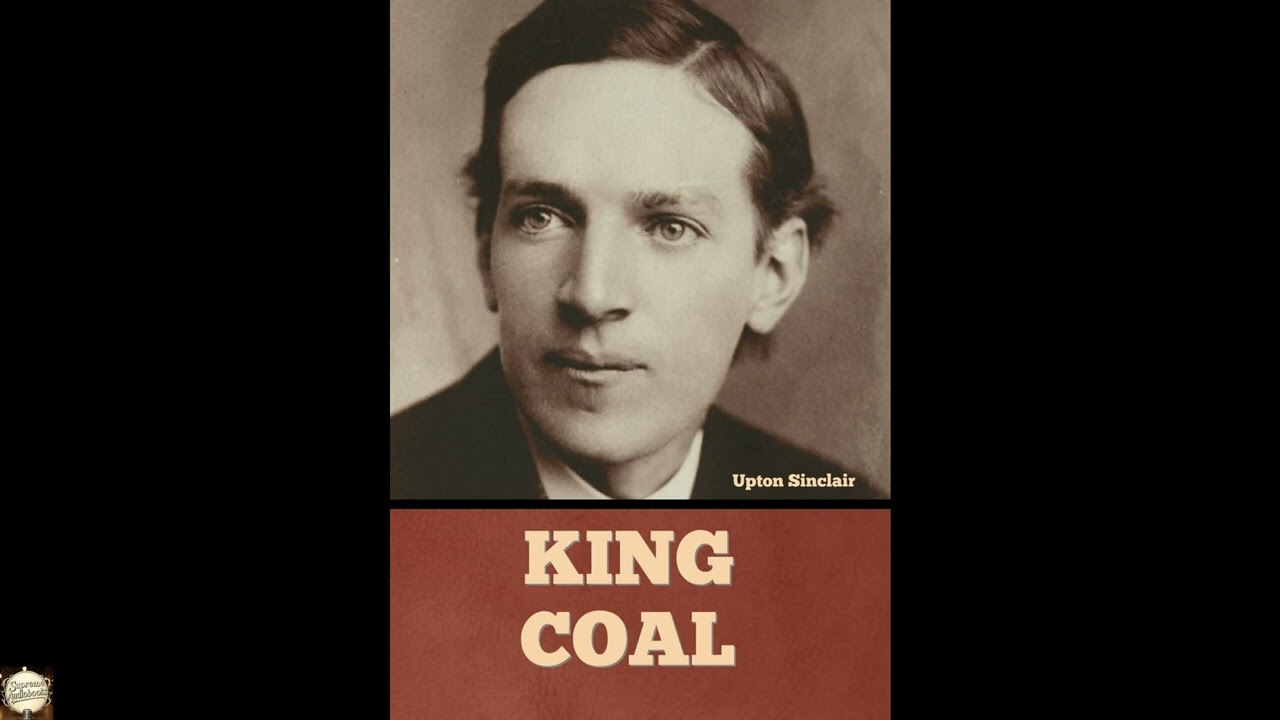
Upton Sinclair's "Samuel the Seeker," though perhaps less immediately recognized than his searing exposé of the meatpacking industry, The Jungle, offers a profound and essential counterpoint to the more sensational works of its author. Published in the early twentieth century, this novel presents a compelling narrative about a young man's quest for truth, purpose, and a just way of living in a rapidly industrializing America. It is a story that speaks directly to anyone who has ever questioned the status quo, sought meaning beyond material gain, or wrestled with the contradictions inherent in societal progress. For today's listener, "Samuel the Seeker" provides not just a window into the intellectual and social ferment of a bygone era, but also a resonant reflection on enduring human struggles—the search for identity, the conflict between idealism and pragmatism, and the relentless pursuit of a life lived with integrity amidst a world often demanding compromise. The narrative introduces us to Samuel Prescott, a young man of remarkable intelligence and earnest conviction, born into the humble circumstances of rural New England. From his earliest days, Samuel possesses an insatiable curiosity and an unwavering moral compass, which soon puts him at odds with the narrow confines of his upbringing and the conventional wisdom of his community. Dissatisfied with the superficial answers provided by traditional religion and the limited opportunities of his small town, Samuel resolves to forge his own path, setting out into the wider world to find a system of thought, a profession, and a life that aligns with his deeply held principles. His journey takes him from the quiet contemplation of philosophical texts to the bustling, often bewildering, urban landscapes that define early twentieth-century America. As Samuel ventures into the burgeoning cities, he encounters the stark realities of industrial society. He tries his hand at various vocations, from manual labor to office work, each experience peeling back another layer of the American dream to reveal the often-harsh mechanisms underneath. He witnesses firsthand the grinding poverty endured by the working class, the ethical compromises made by those striving for success, and the immense power wielded by institutions that seem more concerned with profit than human welfare. Samuel's encounters with a diverse cast of characters—benevolent reformers, cynical businessmen, devout believers, and radical thinkers—continually challenge his preconceived notions and force him to refine his understanding of justice, truth, and the nature of humanity itself. His quest becomes not just an external search for a place in the world, but an internal struggle to maintain his idealism and intellectual honesty in the face of widespread corruption and disillusionment. Upton Sinclair, the author behind "Samuel the Seeker," was born in Baltimore, Maryland, in 1878, and lived until 1968. His early life was marked by a peculiar contrast: a childhood spent in genteel poverty, shadowed by the faded aristocracy of his Southern family, yet constantly exposed to the opulent world of his wealthier relatives. This early exposure to both extremes of American society undoubtedly fueled his lifelong fascination with social inequality. A precocious intellect, Sinclair entered City College of New York at fourteen and later attended Columbia University for graduate studies, supporting himself by writing pulp fiction and dime novels. This period of intense, often desperate, writing honed his craft and deepened his empathy for those struggling on the margins. Sinclair became a committed socialist early in his career, convinced that the capitalist system was fundamentally unjust. His most famous work, The Jungle, published in 1906, was an immediate sensation, exposing the horrific conditions in Chicago's meatpacking plants and directly leading to the passage of the Pure Food and Drug Act and the Meat Inspection Act. He went on to pen over ninety books, including other significant social novels like Oil! (1927), which satirized the Teapot Dome scandal, and King Coal (1917), based on the Ludlow Massacre. Sinclair was a prolific muckraker, a term coined to describe investigative journalists and novelists who exposed corruption and social ills, and his writing cemented his place as a leading voice in American social reform and literature, often blurring the lines between fiction and journalism. His later career included a notable, though unsuccessful, run for governor of California on a socialist platform during the Great Depression. "Samuel the Seeker" powerfully enacts several core themes, making it a significant literary statement. Foremost among these is the theme of social inequality and the pursuit of justice. Samuel repeatedly confronts the glaring disparities between the rich and the poor, witnessing how systemic forces perpetuate poverty and exploitation. For example, his experiences in various workplaces illustrate how individual merit and hard work often count for little against the impersonal machinery of industrial capitalism, where workers are treated as expendable commodities. This firsthand observation of suffering and injustice fuels his intellectual search for a societal model that prioritizes human dignity over profit. Another central theme is the search for truth and meaning in an increasingly secular and complex world. Samuel's initial rejection of traditional religious dogma does not lead to a void, but rather to an earnest quest for philosophical and ethical certainty. He grapples with different ideologies, reading widely and engaging in spirited debates, trying to construct a coherent worldview that can explain the injustices he sees and offer a path forward. His personal intellectual struggle reflects a broader cultural questioning of established truths during his era. Furthermore, the novel interrogates the myth of the American Dream, showing how Samuel's repeated efforts to achieve success through conventional means are thwarted by circumstances beyond his control, revealing the systemic barriers that often make upward mobility an illusion for many. This novel emerged from a specific and turbulent period in American history, known as the Progressive Era, roughly spanning the turn of the 20th century. It was an age defined by rapid industrialization, massive waves of immigration, and unprecedented urban growth, all of which led to immense social upheaval. Corporate trusts gained immense power, labor unrest was frequent, and the gap between the incredibly wealthy and the working poor widened dramatically. Culturally, there was a growing awareness of these societal problems, spurred on by investigative journalism—muckraking—which sought to expose the corruption and injustices hidden beneath the veneer of progress. "Samuel the Seeker" directly reflects this cultural and political landscape. Sinclair, deeply immersed in the socialist movements and reform efforts of his time, used the novel as a vehicle to articulate the intellectual and moral struggles of an individual trying to navigate these profound societal shifts. The novel provides a more personal, intellectual counterpart to the broader institutional critiques found in The Jungle, illustrating how the burgeoning social consciousness of the era played out in the mind and life of an earnest young idealist. It stands as a testament to the period's fervent desire for reform and its deep skepticism towards unchecked corporate power and social apathy. Listening to "Samuel the Seeker" as an audiobook allows for an immersive appreciation of Sinclair's powerful prose and the earnestness of Samuel's quest. A skilled narrator can bring Samuel's internal monologues and his often-passionate dialogues to life, giving voice to his unwavering idealism and the subtle shifts in his perspective as he confronts the harsh realities of the world. The several hours of listening time provide ample opportunity to sink into the atmosphere of early 20th-century America, from the quiet contemplation of intellectual ideas to the cacophony of bustling city streets and the somber tones of social critique. Listeners can particularly focus on the narrator's ability to differentiate the diverse characters Samuel encounters, conveying their distinct social classes and worldviews, and thereby enriching the narrative's exploration of a society in flux. The pacing of the narration can underscore Samuel's dogged persistence and the dramatic weight of his various revelations, making his intellectual and moral evolution feel immediate and deeply personal.
Enjoyed Samuel the Seeker? A few ways to support us
Audible & Amazon links are affiliate; we may earn a small commission at no extra cost.
About this production
Human narration by a volunteer reader from LibriVox.org, the public-domain audiobook project. LibriVox volunteers record literary works whose copyright has expired in the United States, releasing the resulting recordings into the public domain.
Samuel the Seeker by Upton Sinclair. The underlying text is in the U.S. public domain. We do not republish any modern copyrighted edition, translation, or commentary.
The 4K cinematic visuals accompanying this audiobook are generated by an AI image model from prompts derived from the source text. No copyrighted photos, paintings, or stock footage are used. AI generation is disclosed on every video on our YouTube channel as required by YouTube's altered/synthetic content policy.
English subtitles are transcribed from the LibriVox recording with OpenAI Whisper. Translations into the 11 other supported languages are produced by Meta's NLLB-200 neural translation model. No human translator's copyrighted translation is used.
Questions about sourcing or rights? See our DMCA & Sourcing policy or contact us.
Enjoyed this audiobook?
If you'd like to own a copy of Samuel the Seeker or hear a professionally produced edition, the links below help support free audiobook production at no extra cost to you.
As an Amazon Associate we earn from qualifying purchases. Audible / print links are affiliate.